
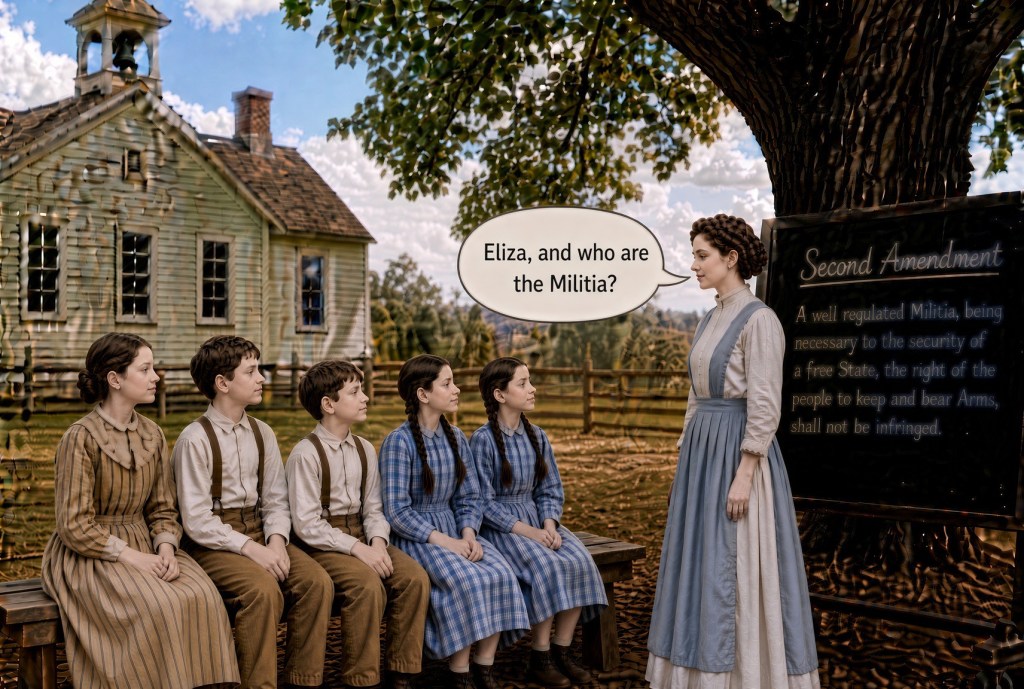
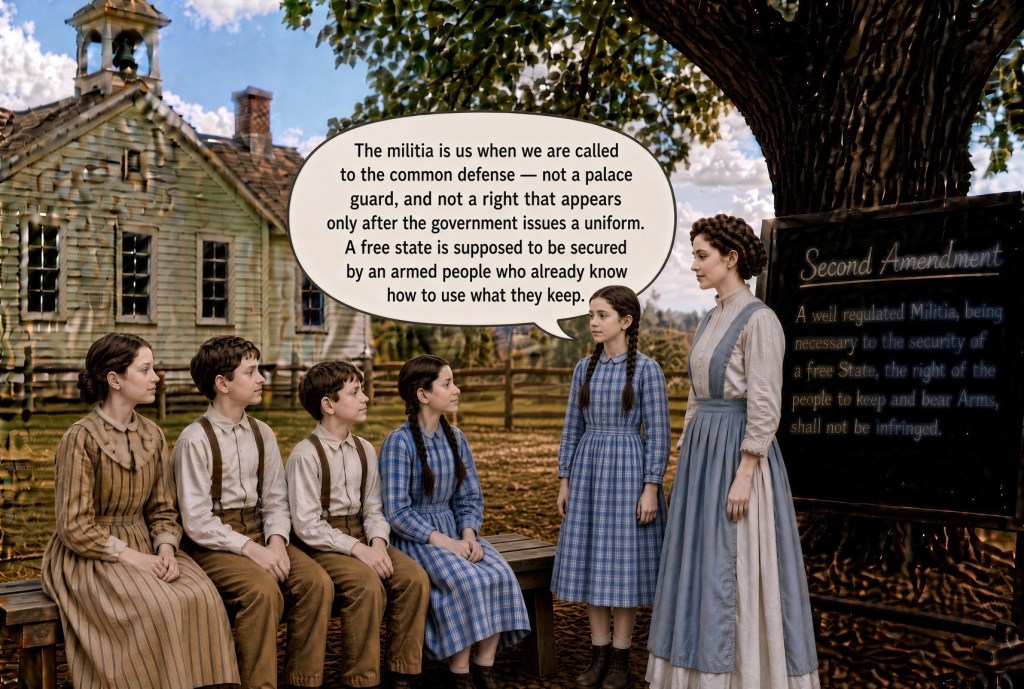
In the Second Amendment’s own world, the militia is the people who can fight, not a separate government corps.
In 1791 that meant the able-bodied citizenry — ordinary men expected to keep a working firearm and turn out if the community or the country were attacked. It was the opposite of a standing army: no permanent professional force living apart from the public, paid and housed by the state, and answerable only to officers in a capital. The Founders had just fought that kind of army.
Congress said so in law a year later. The Militia Act of 1792 enrolled the militia as the male citizen body of military age and required them to provide their own arms. That is the historical picture behind “a well regulated Militia.” “Well regulated” meant trained and orderly — able to form ranks — not “kept on a short leash by statutes until it barely exists.”
There was also a narrower idea of a select militia: a smaller, more drilled part of that same body. The amendment’s wording does not limit the right to that smaller group. It says the right of the people to keep and bear arms. The militia clause is the reason. The people are the militia in reserve.

 KatNap Fever!