
Yesterday I went to the range to mentally requalify with the two firearms most likely to be on my person. Because they are there for a specific purpose, they just don’t get aired out enough. Same thing with bedroom guns.
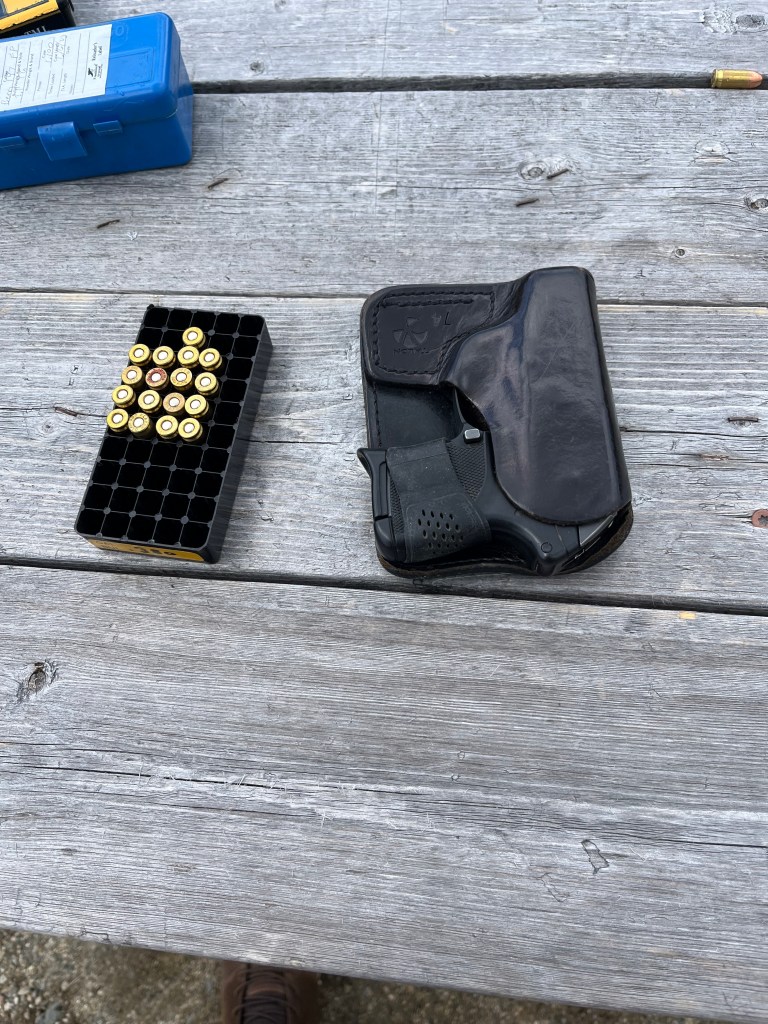
Above is my Ruger LCP in .380 ACP. It lives in a pocket holster that prints like a wallet. It is light, highly concealable, and easily fits the role of EDC with no excuses for not having it. Downside? .380 ACP, 6+1. Spare mag (also easy to carry) adds only six more. It has poor sights that I’ve painted with phosphorescent paint, and a long DAO trigger pull. The long DAO means I have no hesitation to carry with one in the chamber, even without a safety.
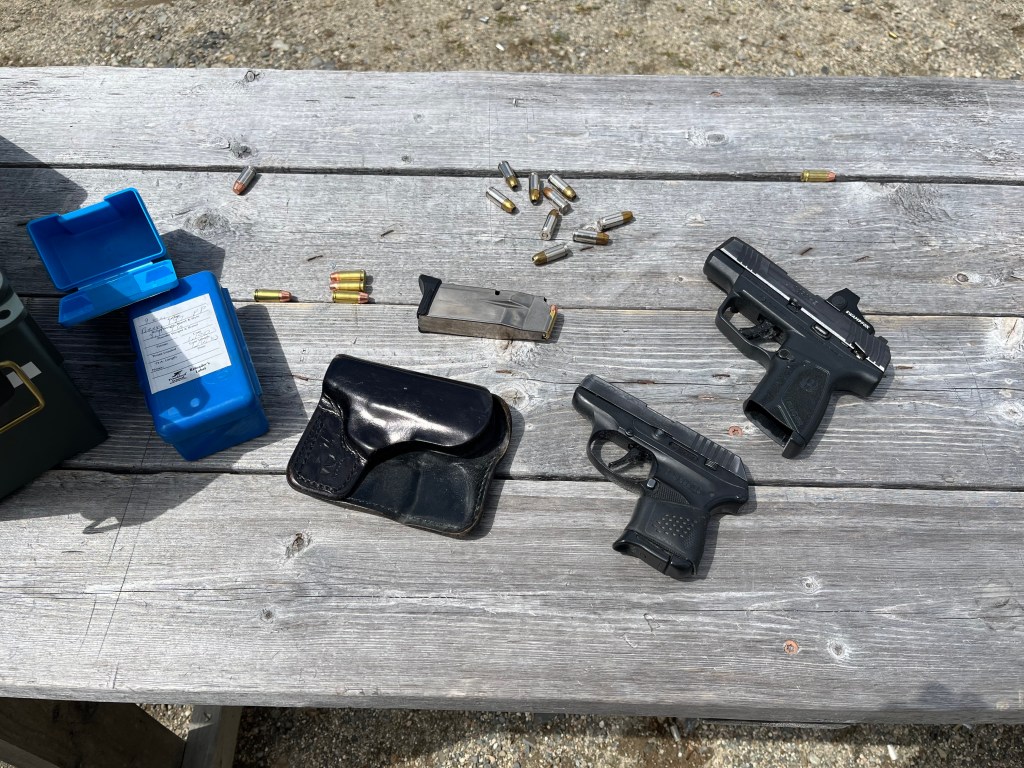
The second gun is my Ruger Max 9 in 9 mm Luger. Standard capacity is 10 + 1, extended mag is 12 + 1. Spare mag rides in a horizontal holder on the right front, just ahead of the holster. Concealed carry just requires a shirt or jacket over it. Even a t shirt in the summer is ok; most people aren’t actively looking for printing.
So both guns meet the “must have” feature for EDC – easy concealability.
But EDC means nothing if you don’t practice, so yesterday was an in-earnest practice day. Not just a few rounds shot at rest. Manual of arms drills: Recognize threat, move clothing to access, proper grip to draw, thumb down the safety (for the Max 9), acquire target and sights, press trigger. Shoot until you hear steel, safe and reholster. Then do it again. Over and over. Then do it with multiple targets. Over and over again. Then practice movement, getting off the X. Add magazine changes and malfunctions. Do it as your arthritic wrists hurt, then do it again.
Final shots were not with practice ammo, but with regular defensive rounds, making sure they fed and were still reliable.
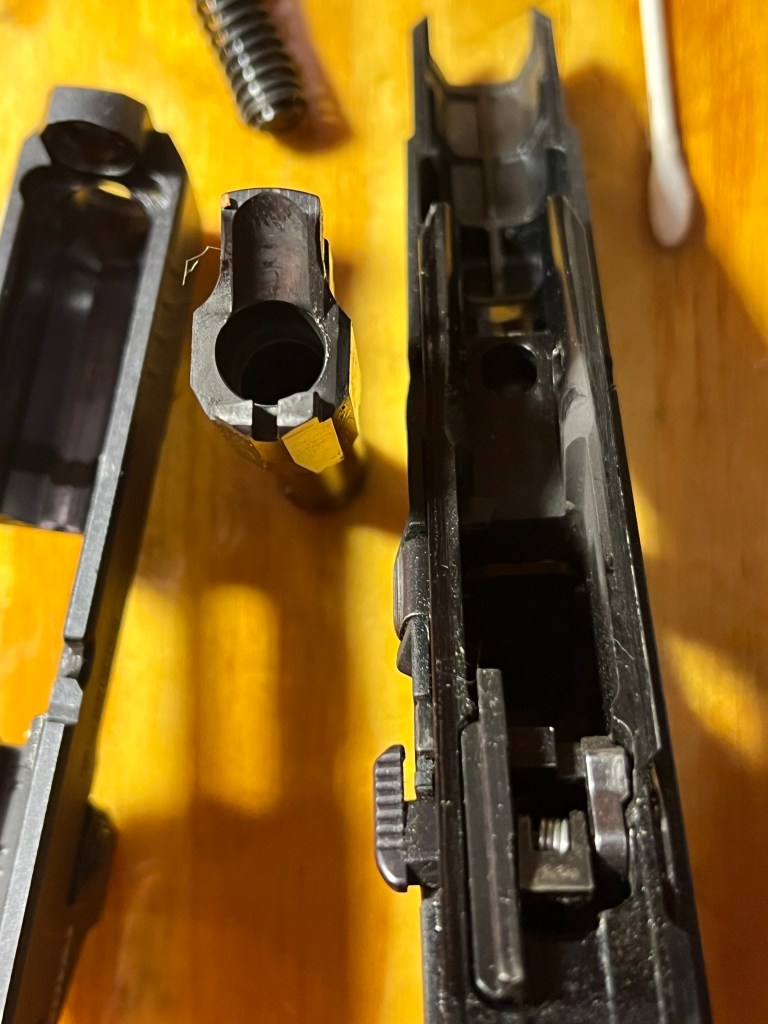
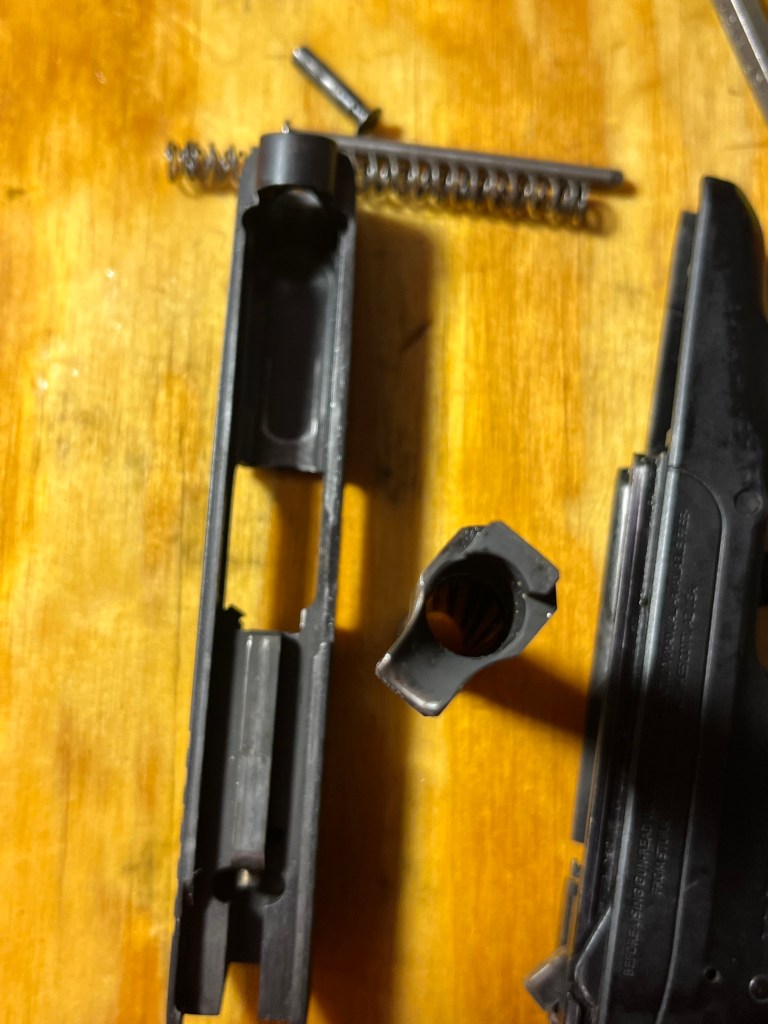
Afterwords, thinking about what was not smooth, not effective. Then go home and strip, clean and lube the guns and get them ready for carry again. No pocket lint in the spare mags.
Lessons learned for me: the LCP holster is super for concealment – you don’t look armed. At the same time, it requires a deep dive into a cargo or rear pocket, and some finesse to get fingers on the grip and inside the wallet flap – constant use has bent some of the leather edges. Therefore, it’s not going to be a quick draw, probably more surreptitious.
Second lesson: 7 rounds go fast. While I tell myself to count 6 and then reload with one left in the chamber, in real shooting it rarely is remembered. The mag change is not fast with a tiny gun and a dive into a pocket for the spare, which always came out reversed. And those 6 rounds go fast as well. So, 13 rounds of a smaller caliber from a short barrel may not get the job done.
One positive – the long trigger pull allows me to see the sight alignment for longer, resulting in usual first round hits, even under pressure and heart pumping from moving around.
The Max 9: yes, adding thumbing the safety off during the draw adds to the mental checklist. Only continued practice makes it natural. And it really slows up things when the trigger goes nowhere at first. And red dot acquisition does take practice.
Capacity of 11-13 is a relief, and the mags are easier to grip and manipulate during a reload. And 147 grains of 9 is definitely better than 95 grains of .380.
Takeaways: the LCP will always be on me, but really is a BUG – Back Up Gun. Individual close encounters with the unkind.
The Max has already moved into the primary EDC. But 9 mm from a short barrel may also just not be enough. I’ve been trying to get used to .45 ACP, but the Glock 21 is a large hip-carry, conceals poorly, and does not ride well in a vehicle.
I think I’ll work the G32 in .357 Sig back into the rotation.


Very good point about the difference in drawing speed and effort with various carry choices.
The difference for me between a polo shirt and a button down shirt is vast! I had absolutely no idea until I stood in front of a mirror and tried! Add a coat and gloves, and everything is like molasses in January.
LikeLike
In IDPA shooting, the competitive shooters wear a light open vest that qualifies as covering the firearm. It sweeps aside easily; in fact, one technique is to grab the left side with the left hand and yank it forward to pull the right side of the vest behind the shooter, thereby clearing the holster as the right hand goes for the draw.
I tried it with normal clothing and it wasn’t very effective.
LikeLike