
The down side of all that free once-fired brass is that it still has to be worked – trimmed, deburred, chamfered. The primer pocket needs cleaning. And, in certain cases, needs more.
In this group, I got Federal, PPU, Sig and Hornady brass. I like Hornady brass, but when produced for the military, they crimp the primer into the pocket, like this:
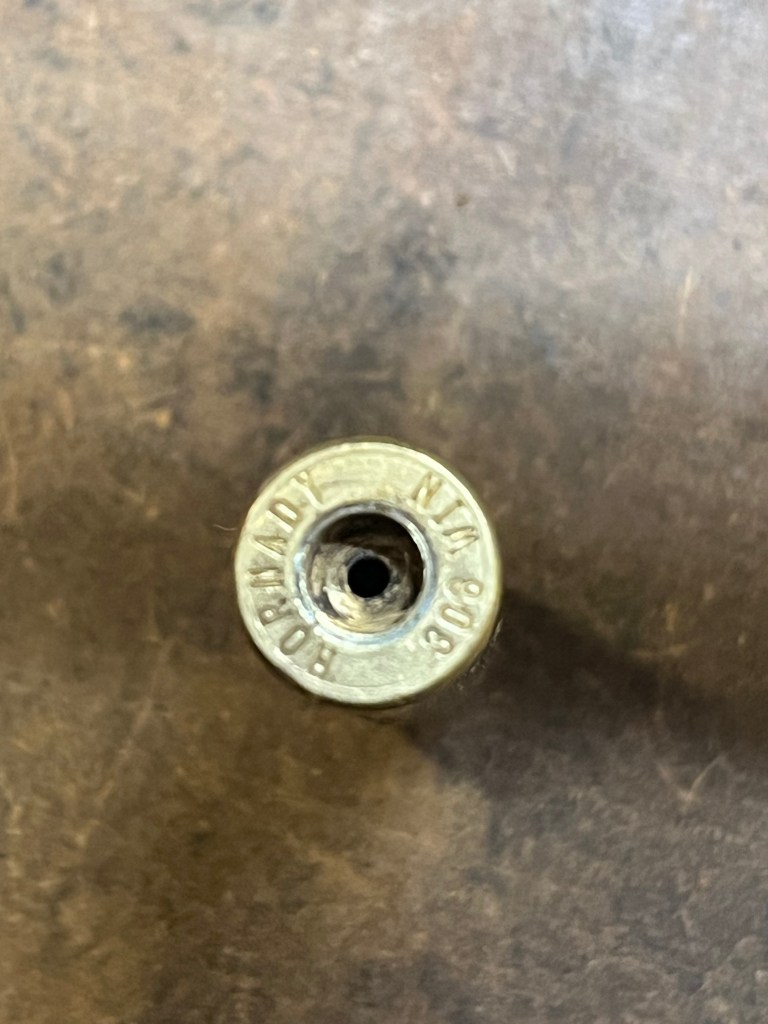
You can see the ring around the primer pocket. This is mostly to keep a primer in place during automatic fire. But if you try to seat a new primer, the pocket is much too small. So, you swage (swedge) the pocket or ream it out.
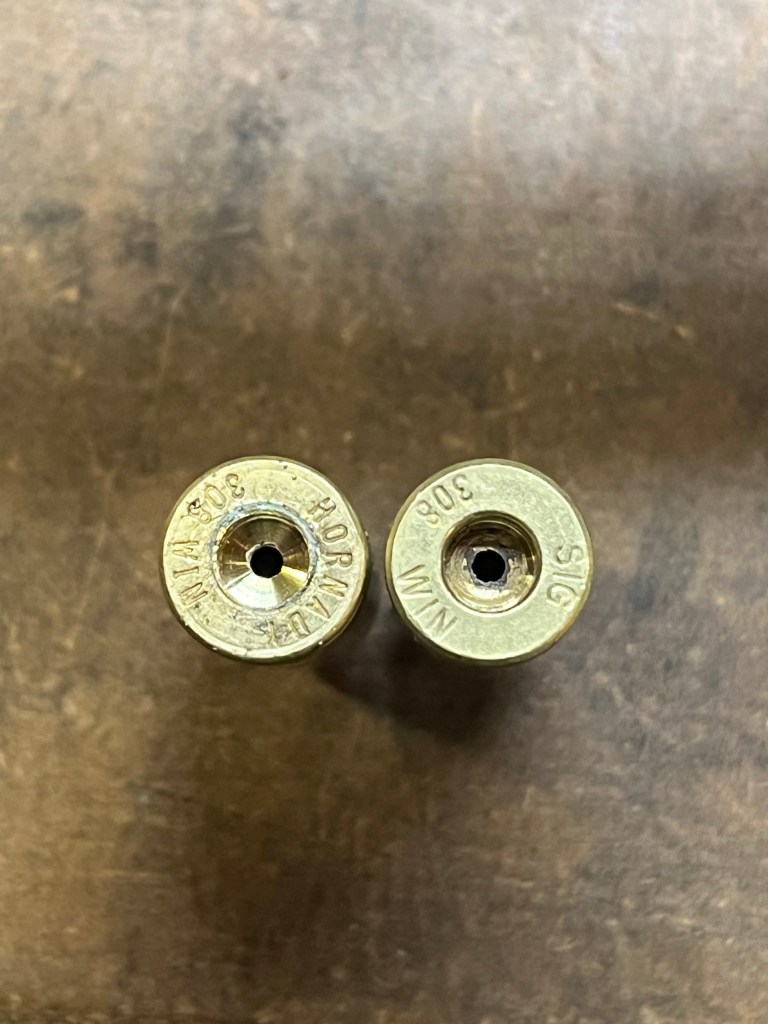
I did not have much luck in my earlier tries with swaging, so I ream:
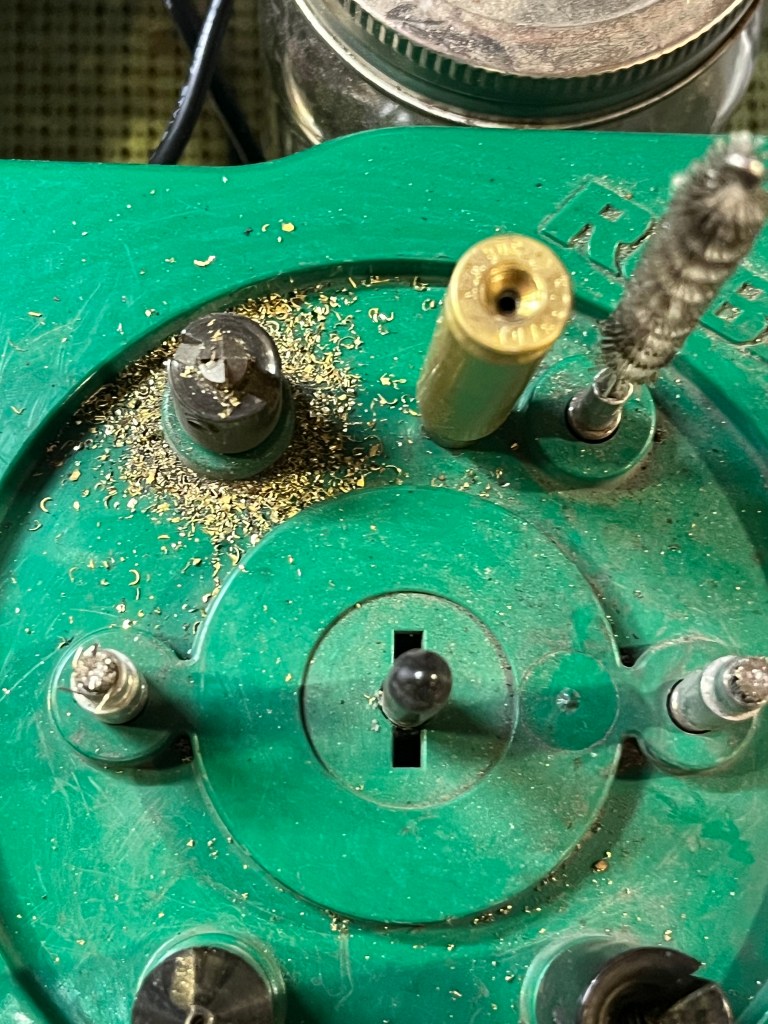
It takes a lot of pressure to ream out copper, so I jury-rig:
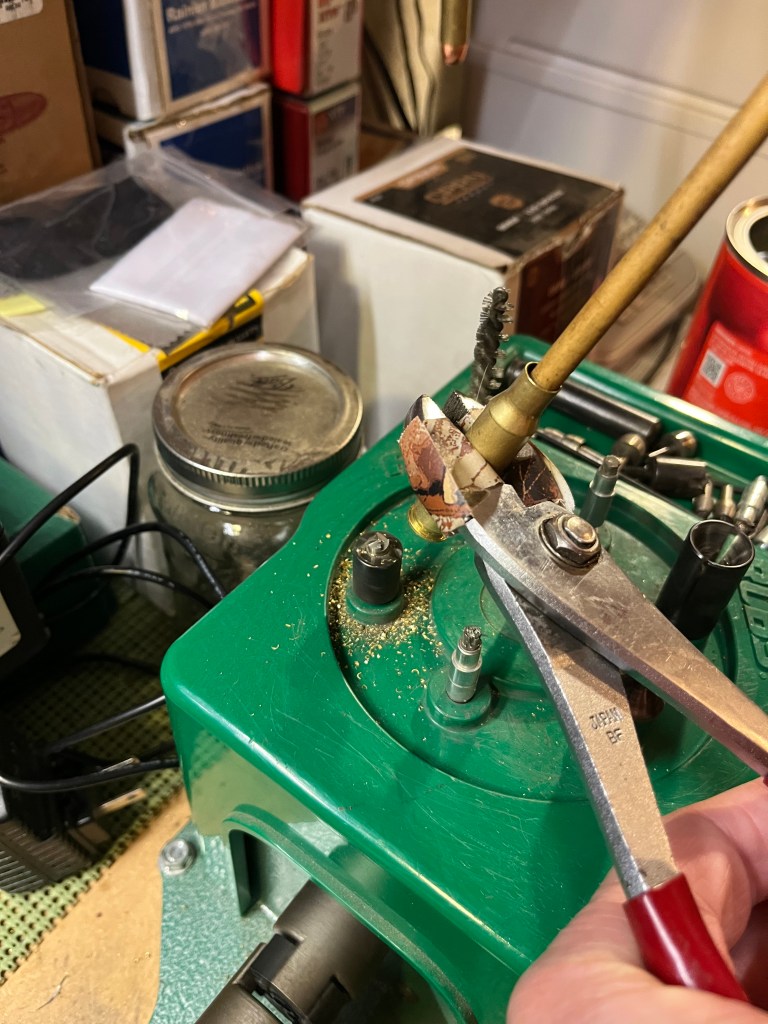
There’s a fair amount of torque involved:
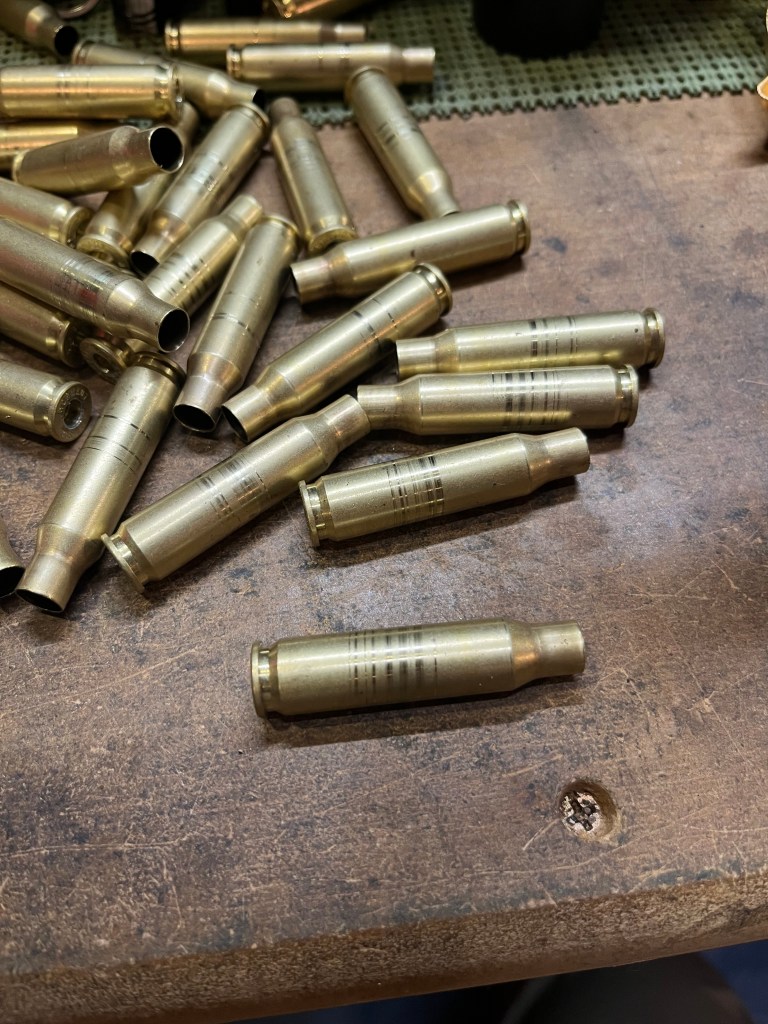
And it’s still very tight, leading to some seating failures:
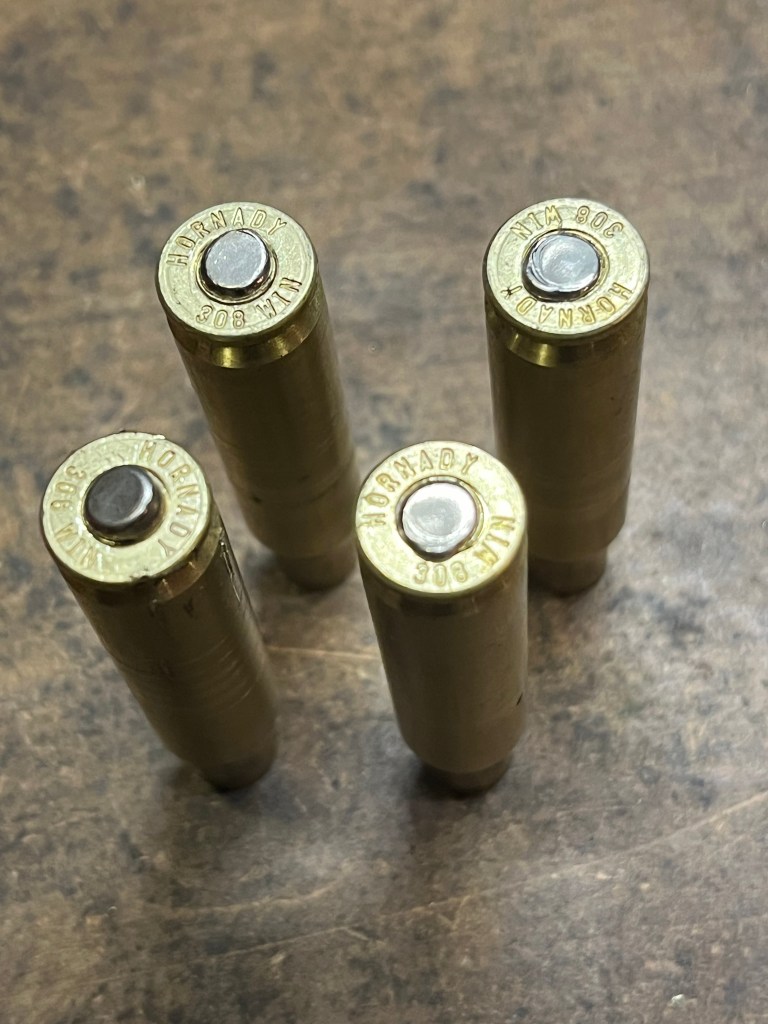
But, it was free brass! Tomorrow, I’ll load some up and see what happens.

 KatNap Fever!
I have never had to do either reaming or swaging, so I might be off-base, but I’m not totally confident that there aren’t some bugs yet in the reaming that you show. For one, I really don’t like the case scratches from the case spinning in the pliers. Maybe try padding the jaws with leather instead of cloth?
Another thought is that the reamer is probably taking more of a bite than it really should, but there’s not much that you can do about that other than using slow and light pressure. How about a small dish or pad of lubricant that you could press the base against before reading to lube the cutter?
LikeLike