Next up in Bangsticks for Beginners

This is a bit of a misleading title. A shotgun is more like a Bangtree than a Bangstick. And in the recommended order of Beginning, I’d put this one after rifles larger than a .22. But, since I brought it up before, away we go.

Now, I DON’T recommend the way I did it. After starting out at age 12 with a .22, I decided at 16 that I needed a Man’s Firearm. What better than the vaunted 12 gauge? Oops, best back up. We’ve indirectly covered “caliber”, .22 caliber being (approximately) .22 inches in bullet diameter. What is this “gauge” measurement? Well, by my recollection and by the inner tubes, it means how many balls of lead the size of the barrel diameter would total one pound. So, 12 balls is a 12 gauge, 28 balls a 28 gauge and so on. (However, see the exception, .410 gauge, comparable to .45 caliber Long Colt. Well, never mind, we’ll get to that later).

And what are we firing through this kind of firearm? Well, “shot”. Meaning round pellets as small as .08” up to .22”, then buckshot from .24” to .39”, and then slugs, which are more like fat rifle bullets the diameter of the barrel.

But one major difference – we are not sending shot through a rifled barrel (which imparts stabilizing spin to the bullet). We are sending it through a smooth bore, so it just comes out of the muzzle with no spin and spreads out the further it goes. Which is the raison d’etre for a shot gun – lots of pellets hitting a larger area. For fast moving things like birds. Or squirrels. Or fast, fearsome felons.

So, how’s this for a manly firearm?
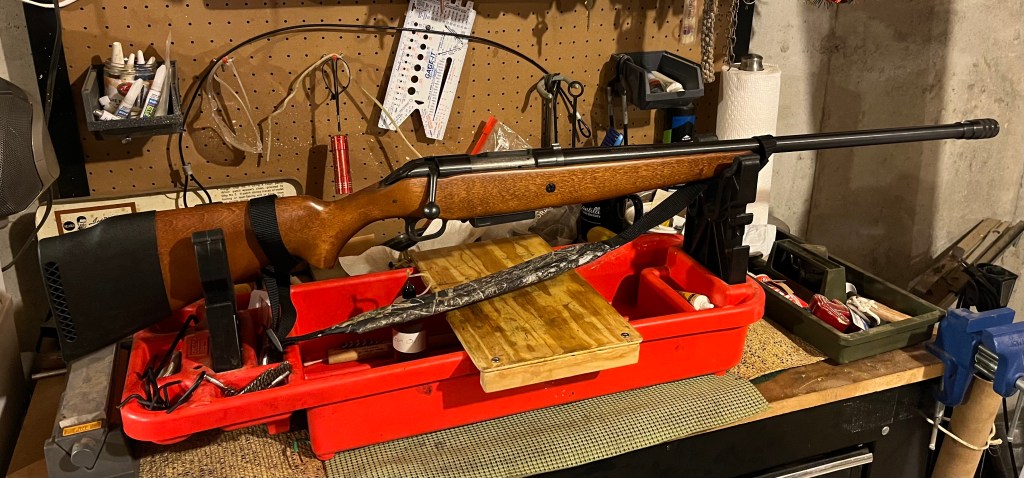
12 gauge, bolt action shotgun. With a 2 round magazine!
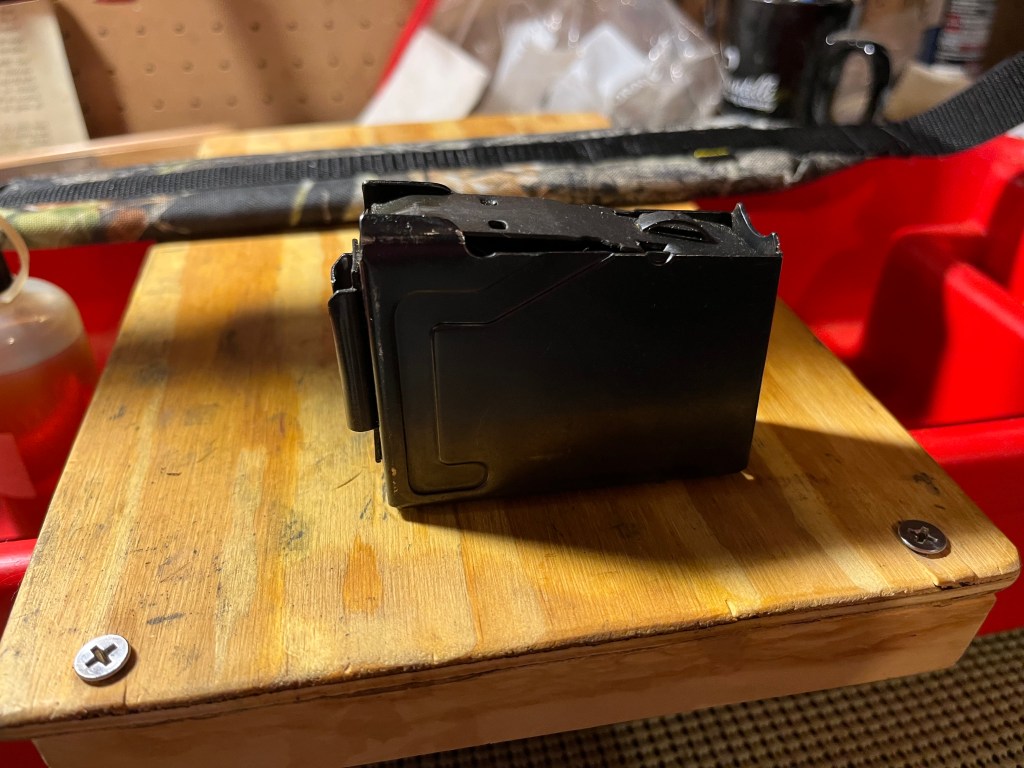
And an adjustable choke on the muzzle!
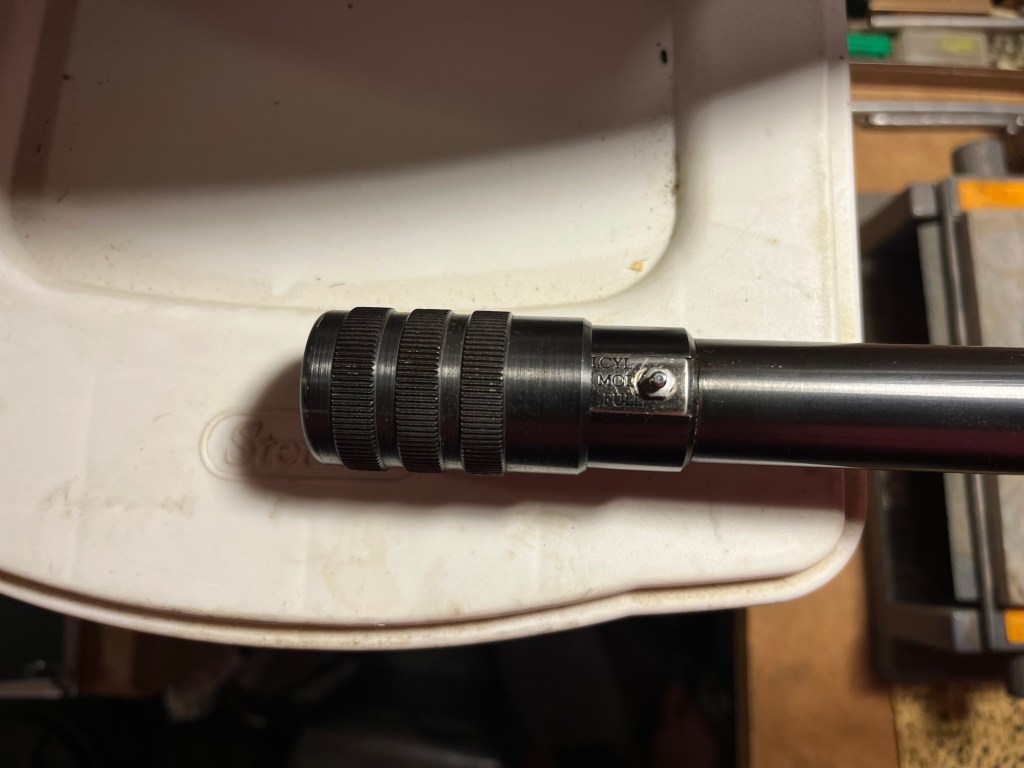
Improved Cylinder, Modified, and Full choke. Oh. Yeah, choke. It chokes the muzzle diameter to allow a smaller or larger spread of the shot. The “Pattern”.
So, with a basic, entry level shotgun, we’ve been able to cover a lot of shotgun topics. One more thing:
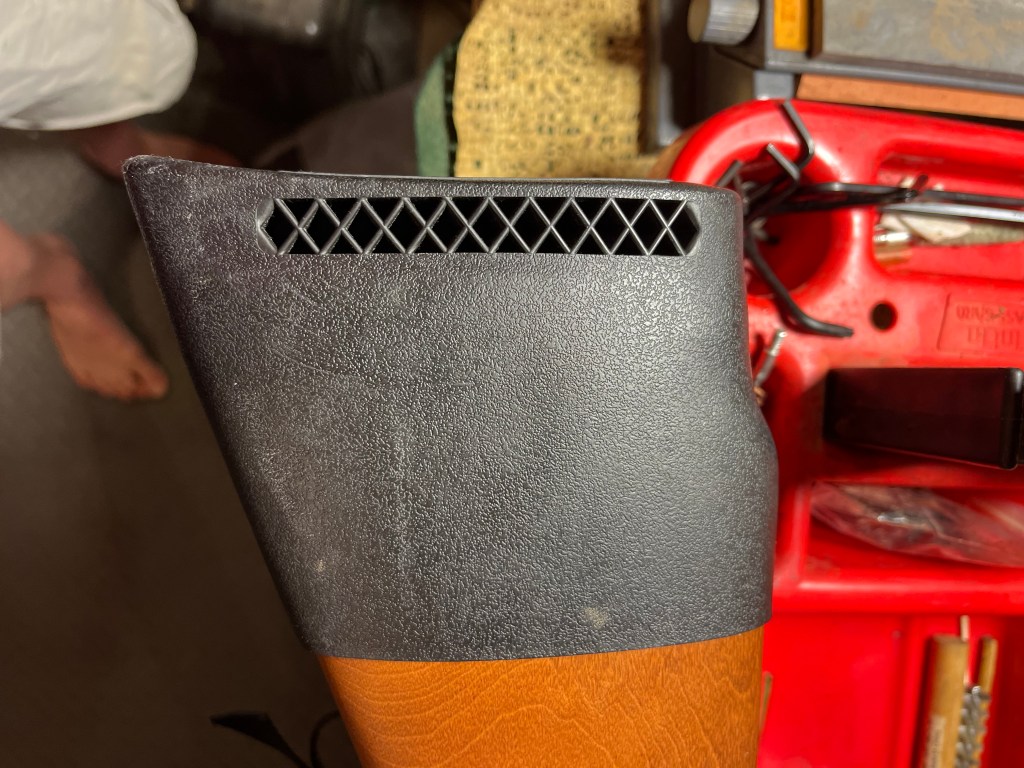
Even with a heavy duty rubber recoil pad, it kicks like a mule. One reason I would start beginners with something else. More to come.
Garand Love

Going from one end of the spectrum to the other – .22 to .30-‘06.
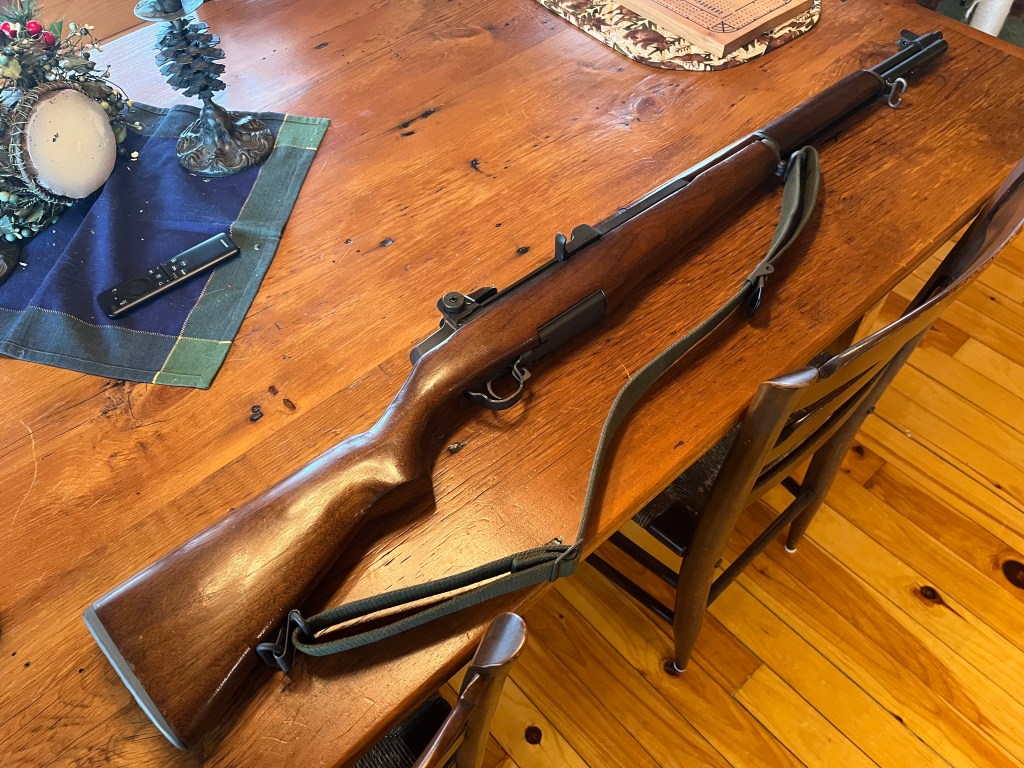
About a dozen and a half years ago I got serious about CMP – Civilian Marksmanship Program. The allure of “a Garand for a Grand” was overwhelming. After jumping through minor hoops (belong to a CMP-affiliated gun club, not be a prohibited person, send check),I received at my front door a cardboard box containing a green gun case and a beautiful M-1 Garand rifle.
Yes, you heard right, no FFL and right to my door. And I was a resident of a very gun-unfriendly state at the time.

The serial number indicated a manufactured date of March, 1945, probably intended for the invasion of Japan. Thank you, President Truman, no invasion needed. And my dad came home on two feet, so I am here. And so is my Garand. Let’s take a look:

The stock arrived new and unfinished. I applied the Birchwood Tru-Oil, 00 steel wool, Birchwood Gun Wax and elbow grease.

Yesterday I was reorganizing a cabinet and moved several ammo boxes of Greek .30-‘06 made in the mid-70s. I had ordered a thousand rounds from CMP (at less than $0.50 per round, as I recall). The forecast was bluebird and 50 degrees, so a range trip was in order. I wanted to shoot some of the 50 year-old ammo and compare it to some modern American Eagle 150 grain FMJ.
I also brought my Savage Axis boltie along as a control test.

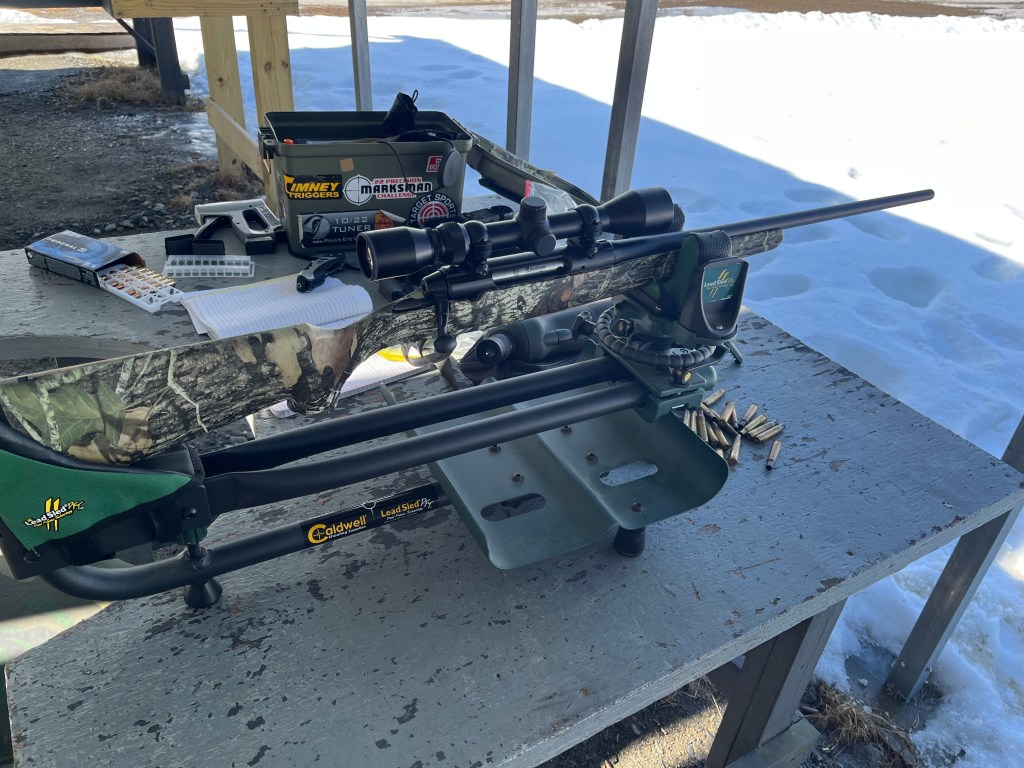
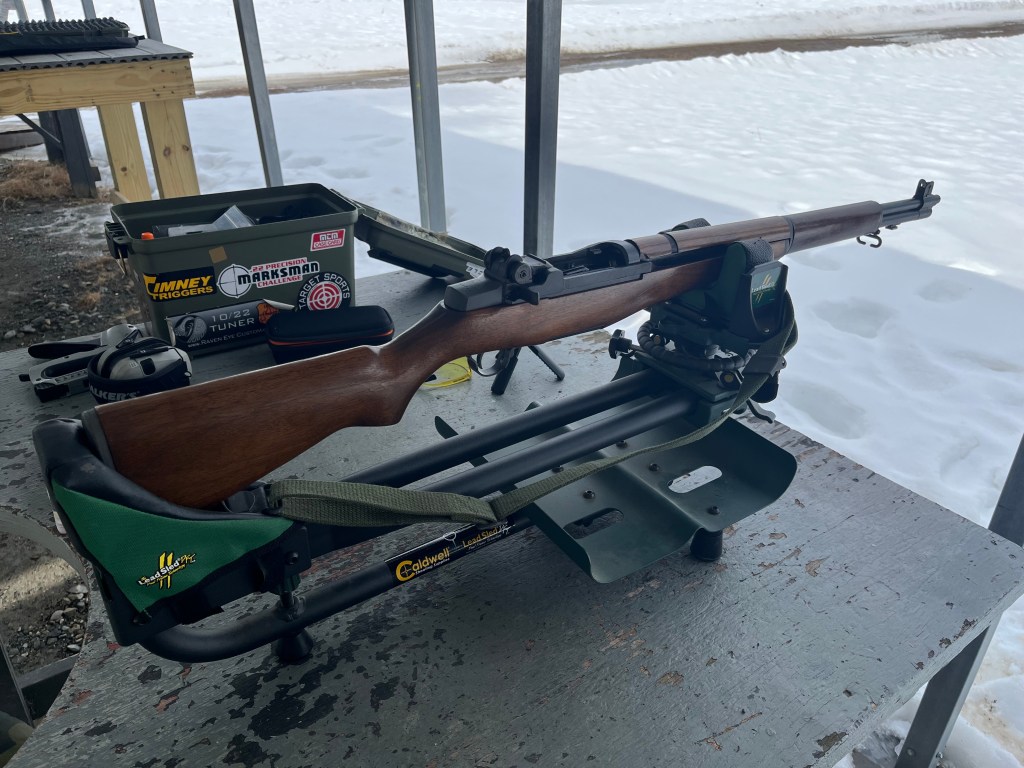
Beautiful day at the range with a beautiful tool:

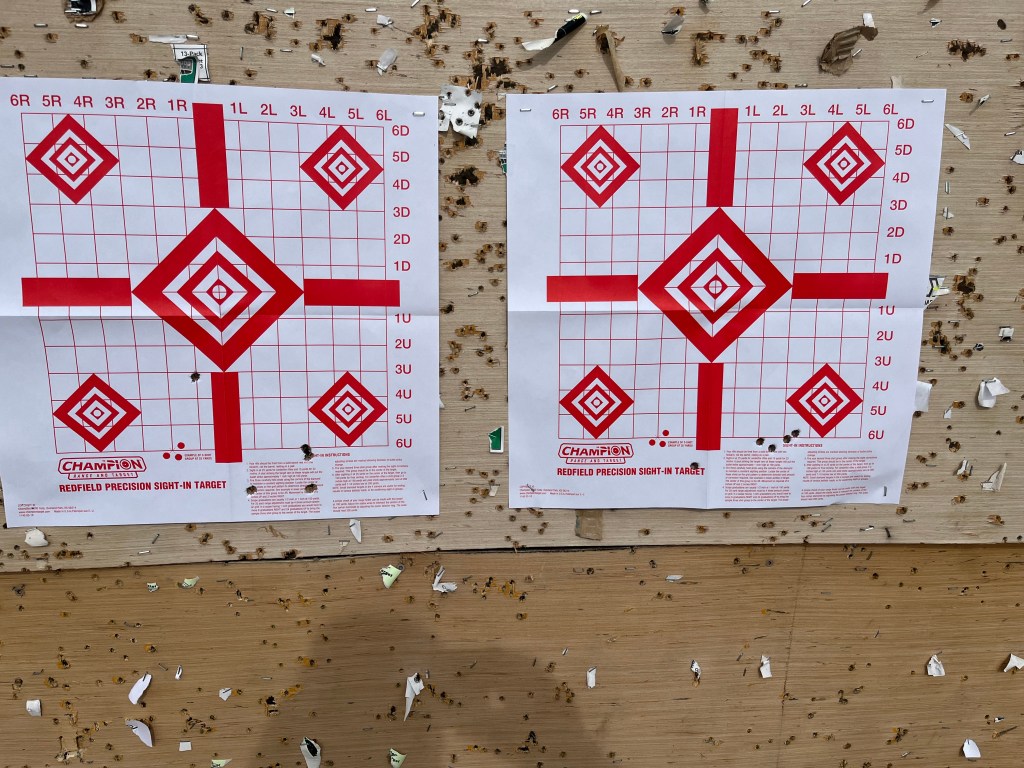
Yes, it’s in a lead sled. I once shot over a hundred rounds at one sitting and the shoulder bruising was remarkable. So, Greek on the left and American Eagle on the right. One hundred yards with aging eyes that could barely see the center of the target.

Clearly a fouling shot high left, then came together at about 2.5”. The American Eagle grouped nicely at about 1.4” with one flyer. The Greek averaged 2729 fps muzzle velocity, Standard Deviation of 37 and Extreme Spread of 94 fps; the American came in at 2637 fps mv, SD of 21 and ES of 54 fps. Seems as if sitting around for a half century did not faze the old ammo.

Thereafter, I spent a lot of time and all of the ammo I had brought trying to bring up the zero. The elevation knob screw would loosen, but the knob would not loosen enough to reset the zero. Drat. Down to the workshop in a bit.

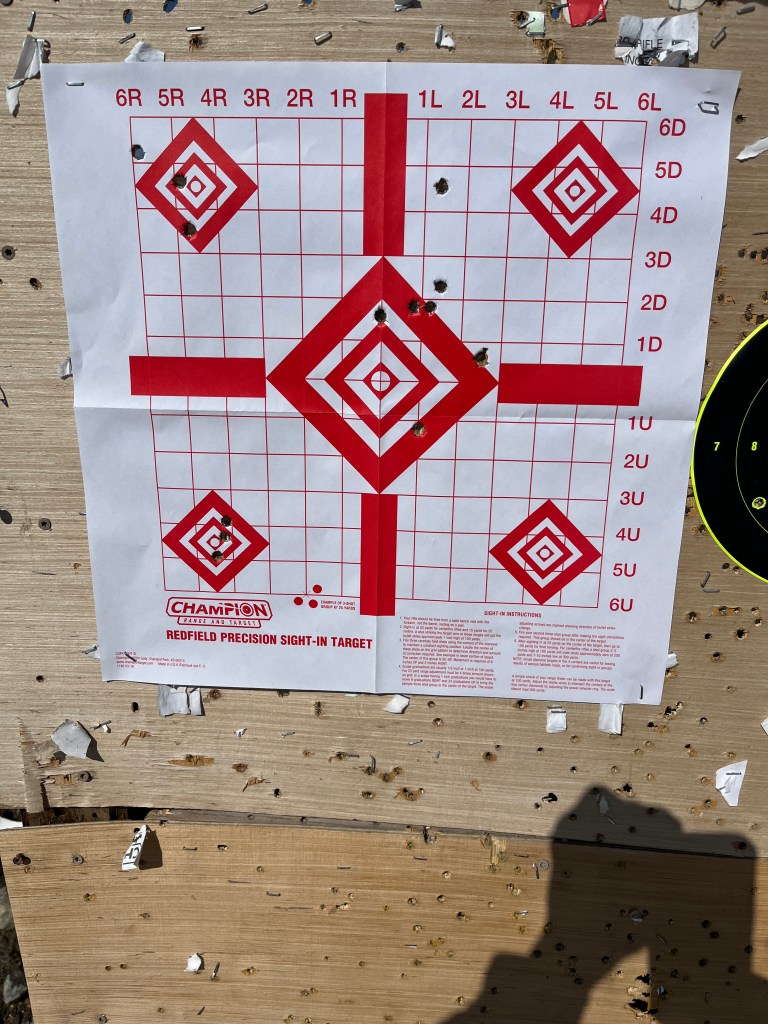
But I still had the Savage and a box of Federal 180 grain. Not really a fair comparison since the Savage has a 1×9 scope and the ammo is different. But it’s a beautiful day, I’m at the range and have ammo. So:

Upper and lower left. Better group was an inch.
So, old and new, same caliber, both effective. The Garand is heavier and much more pleasant to shoot. The Savage is accurate, but light and packs a punch. But there’s nothing like the ping of an en banc clip ejecting.