Here are the deets on adjusting your sights for the 25/300 meter zeroing for M 4 and M 16 style ARs. Shamelessly ripped from the internet.
To achieve a 25/300 meter zero for your AR-15, follow these detailed instructions.
Hang the target so that the center cross is at the shooter’s eye level. For best results, shoot from a benchrest.
Set the rear sight to the appropriate position for your rifle model. For M4-style sights, turn the rear sight to the “8/3” position. For M16A2 and M16A3 sights,
turn up one click past “8/3”. For M16A4 sights, turn up two clicks past the “6/3” setting to the “Z” mark.
Hang the target at 25 meters. Fire precise, three-shot groups at the center dot and adjust your sights according to the targets above. This gives you a battle-zeroed rifle out to 300 meters
And this hack will amaze you! Simply aim at the belt buckle of any ‘target’ out to 300 meters. The round will impact there at 25 and 300. In between it will rise up the torso. At 400, aim at the head and gravity will get you a center of mass hit.
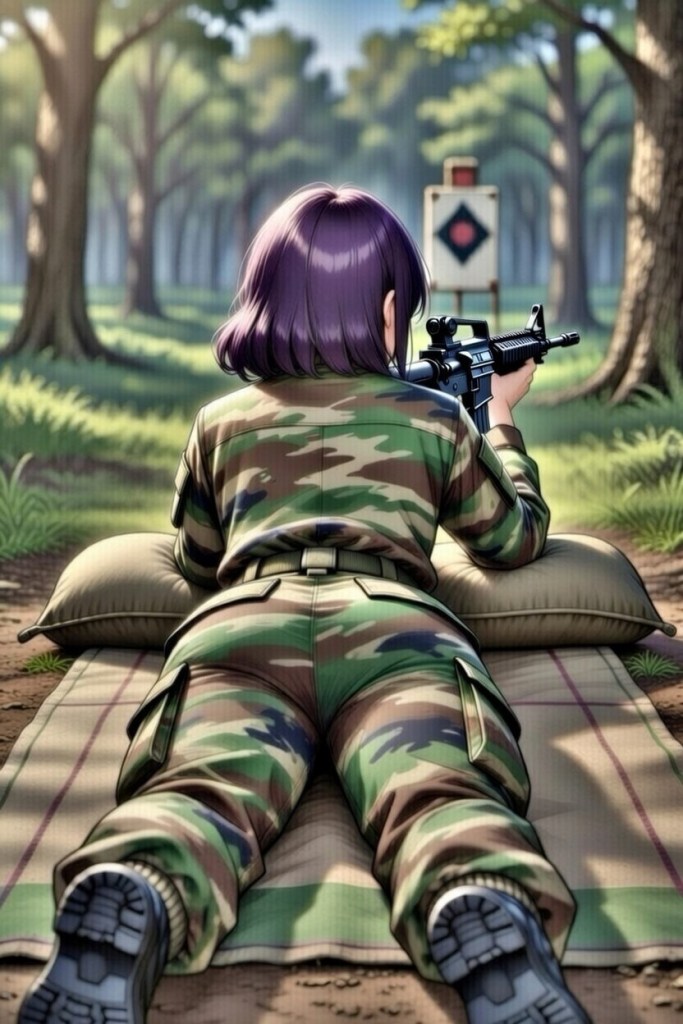
When last we visited Emily, she had shown us how to load and make safe her AR 15. Now, she is ready to shoot.
But how do you aim? How do you hit what you are aiming at?
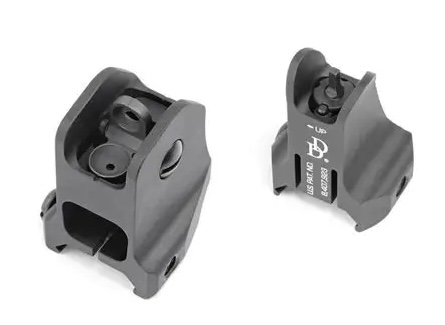
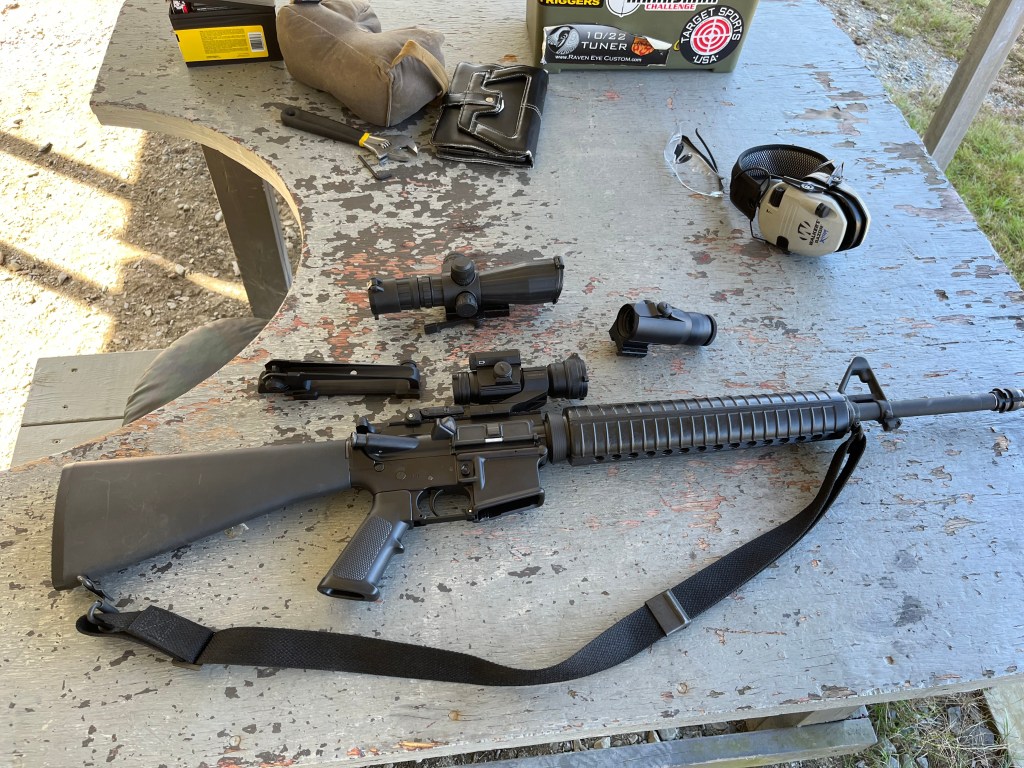
Great questions! First, you aim using sights, that sounds simple. But nooo. There are as many sights as there are AR variants. So, let’s start with the basics – “iron sights”. That really means “not optical” sights. They are mechanical and are made of steel, aluminum or plastic. They can look like this, front and rear:
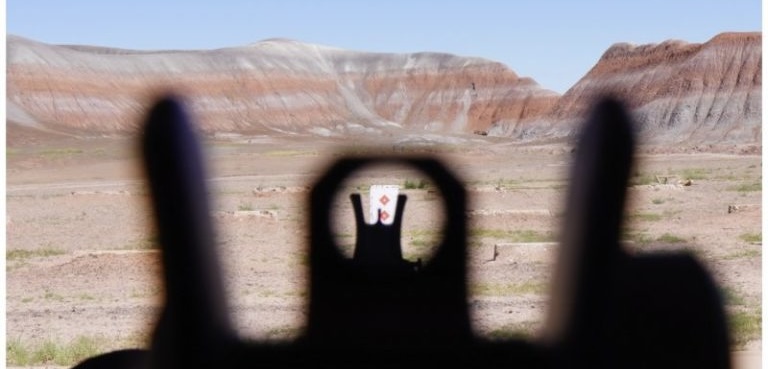
And you look through them like this:
Simple, right?
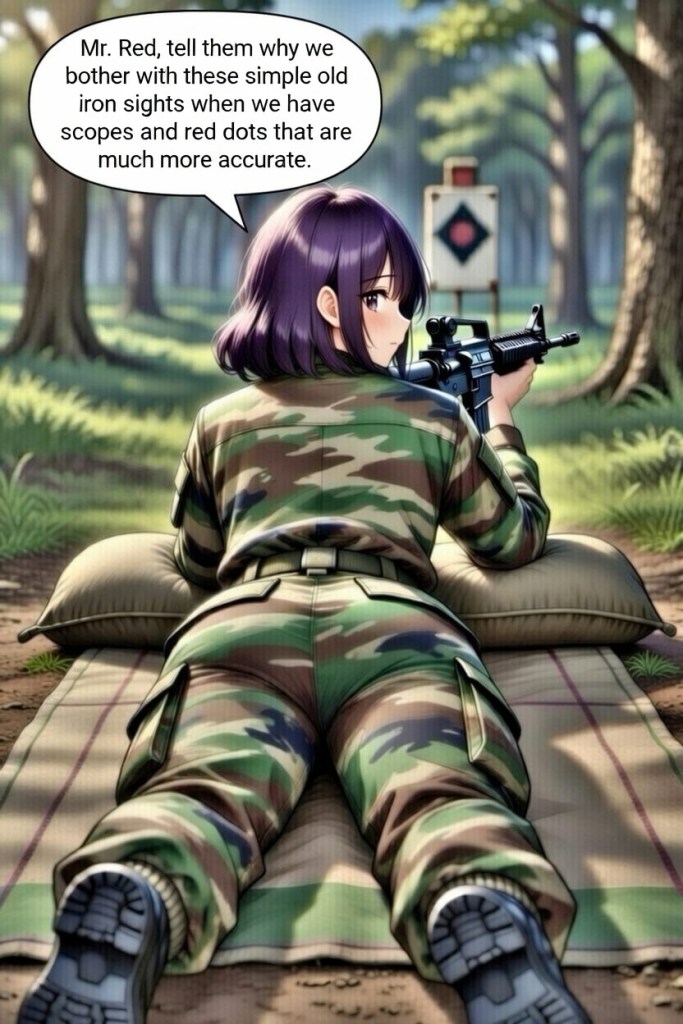
Here, you can see Emily aiming off to the right of the target with the early “carrying handle” and fixed front sight of the original M16 and AR 15.
Precisely because they are simple. No batteries, no fragile optics, and they are hard to damage. They are good out to several hundred yards (depending on your eyes). If you are looking at an AR 15 for general self defense, you can sight in iron sights so that they are zeroed at 25 and 300 meters, and the bullet will only rise a few inches in between. That means you can aim at the center of mass of any target within that range and you will ballistically be guaranteed of a hit. That is why you will see most AR platforms with BUS – Back Up Sights – in addition to optics, red dots, thermals, etc. When all else fails, you can fall back to the simple solution.
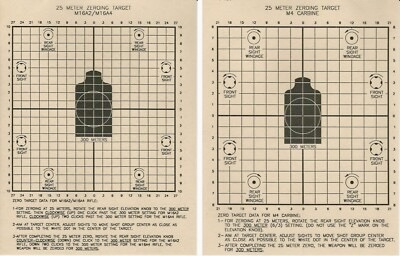
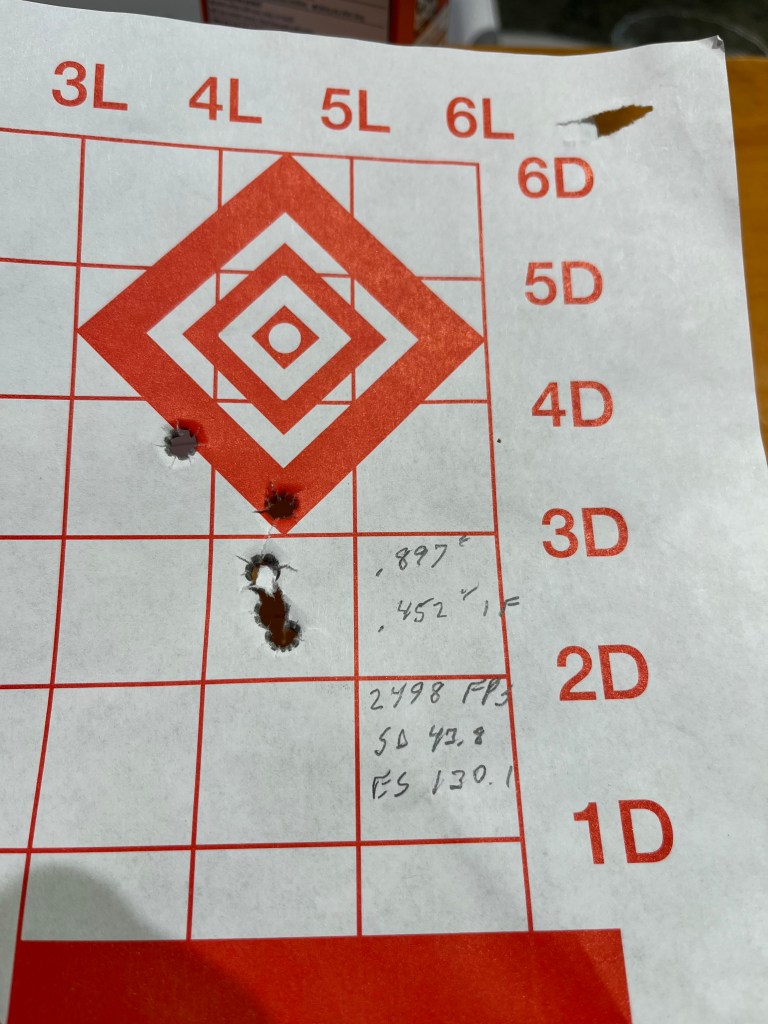
These are the targets that the US military sets out at 25 meters (just over 27 yards). By shooting at these close up targets, you can make the required adjustments to the front and rear sights to zero the rifle to the center of the target.
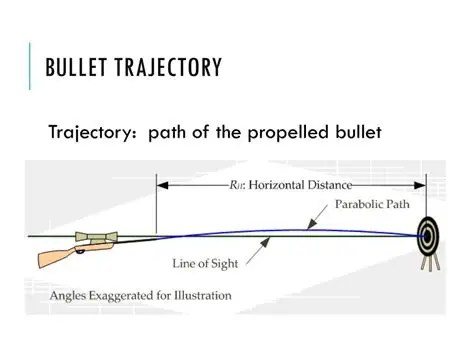
Uncle Sam has made it extremely easy for Pvt. Snuffy to follow these directions. Once zeroed, it will hit the center of the target at both 25 and 300 meters. That’s because the bullet trajectory looks like this:
You can see that the first vertical line is at 25 meters where the bullet climbs through the line of sight, continues climbing and then descends through the line of sight at 300 meters.
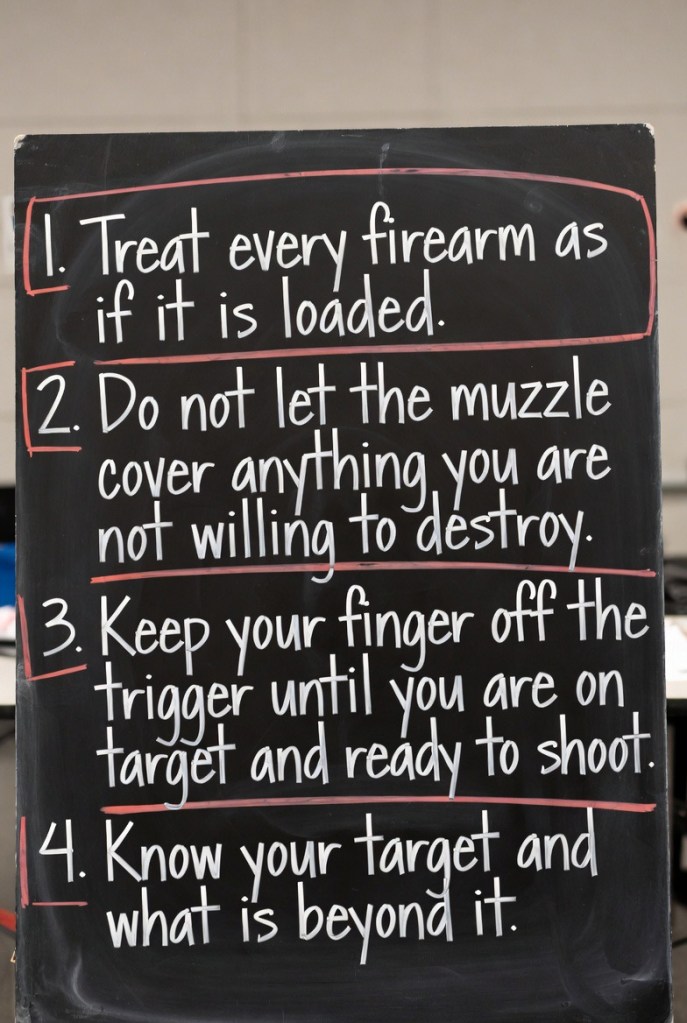
No one may touch a firearm until they know the Four Rules by heart, and can recite them back to you.
Next, what is a AR? It is Not an “Assault Rifle”! The AR comes from Armalite, the first maker of Eugene Stoner’s iconic design. It is a semiautomatic rifle, NOT a select fire (machine gun). It requires one trigger pull for each round fired. Select fire (such as on the military M 16 or M 4) will continue to fire so long as the trigger is held back and ammunition remains.
There are so many designs of the original that they are now known as “AR pattern” rifles. They function similarly and are quite modular and can be tricked out in many ways. There are somewhere between 20 and 30 million AR 15s in the USA; hence, it is sometimes known as America’s Modern Sporting Rifle.
It fires a quite small bullet, but very fast. There are many variations of rounds, but the original military round was 5.56 millimeters in diameter, weighing 55 grains and had a muzzle velocity around 3,000 feet per second. The civilian version is the .223 Remington – there are some differences we will get to later.
It is a magazine-fed rifle with a standard capacity of 30 rounds.
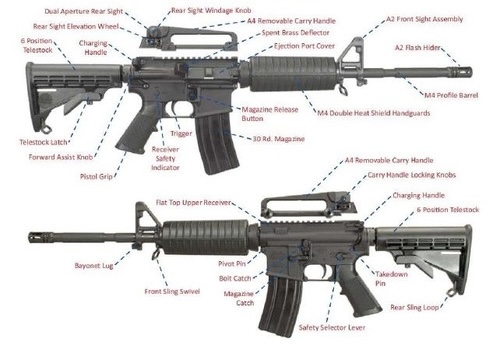
Today, we are going to cover loading by looking at the Charging Handle, the Bolt Release and the Magazine Release Button. Below, locate the Charging Handle at the rear of the receiver, the Bolt Release on the left side near the magazine well, and the Magazine Release Button on the right side magazine well.
Found them? Now (observing the Four Rules!), pick up your AR, right hand on the pistol grip, finger outside the trigger guard and left hand on the barrel handguards. Pull the stock butt against your hip. Does the rifle have a magazine in it? Remove it by taking your trigger finger and pressing the Magazine Release Button. Catch the magazine with your left hand and set aside. Left hand back into position.
Now, with the first two fingers of your right hand, pull all the way back on the Charging Handle. If there was a round in the chamber, it will have ejected off to the right. Keeping the Charging Handle all the way to the rear, depress the bottom of the Bolt Release and slowly let the Charging Handle forward until the bolt is caught, then push the handle all the way forward. Rotate the rifle 90 degrees to the left and look in the chamber. It should be empty. You can now turn the safety lever to Safe from Fire.
Take a loaded magazine and energetically push it into the mag well; you should hear and feel a click. If not, rap the bottom of the mag with your left hand. Check that mag is secure by trying to pull down on it.
To load a round into the chamber, smack the Bolt Release with the heel of your left hand. The bolt should go energetically forward, stripping a round off the top of the magazine and ramming it into the chamber. You are now ready to start the shooting process.
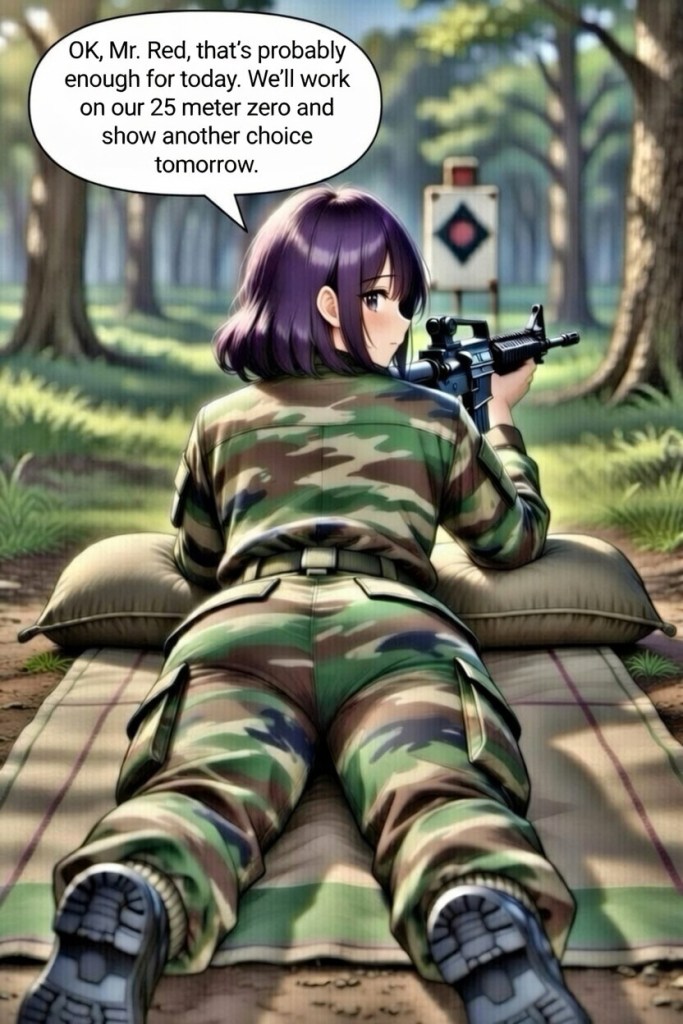
Awhile ago, some of us were responding to some “Ette” requests to learn more about shooting rifles. I’ve been pondering the best way to do this. Then, just this morning, I came across the “Pathway Amelia” meme phenomenon in Great Britain (just Gurgle it, you’ll see), and I thought, “That’s it!. Instruction and pushback at the same time!” So here is my first attempt.
Before you think this is too creepy, Mr. Red is a 73 year-old man married more than 50 years! And Mrs. Red knows how to shoot!
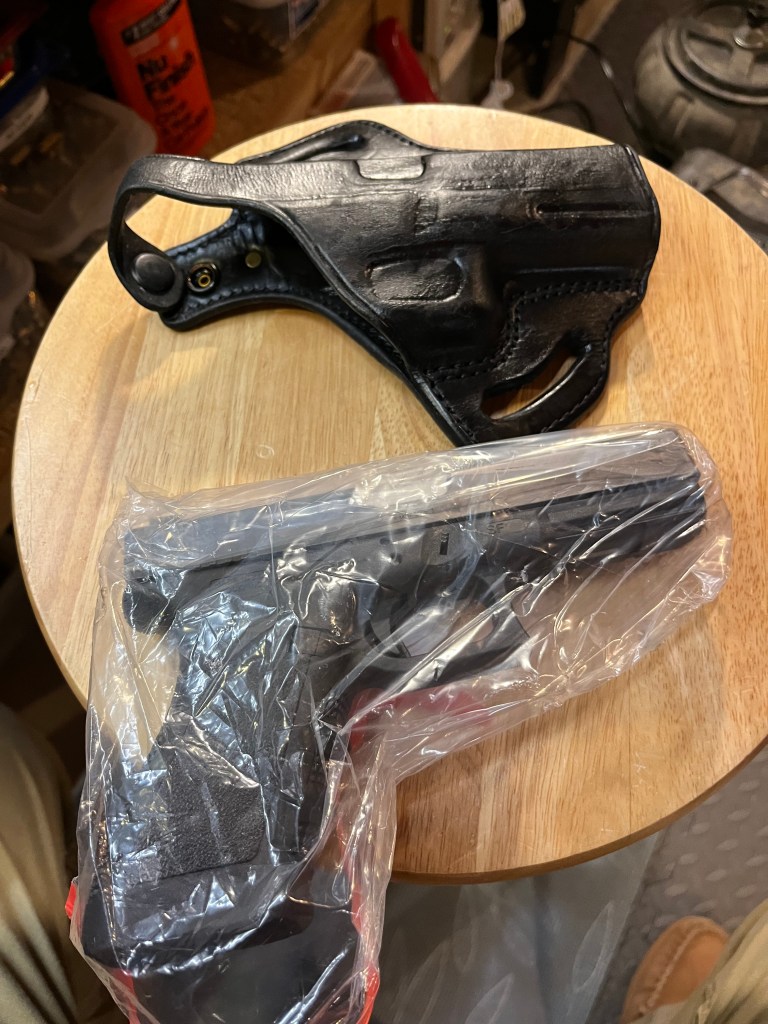
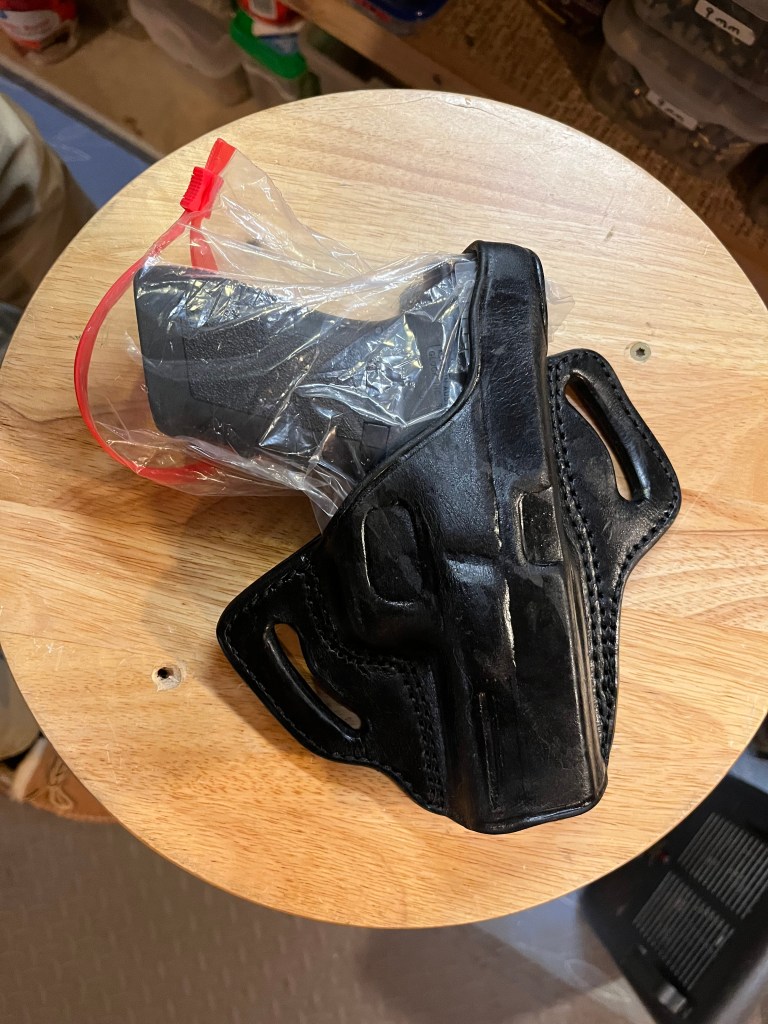
To borrow a phrase, today’s First World Problem is that my new Tagua leather holster for the G 21 is very tight. And the thumb break won’t snap on.
First, the old standby – put the (unloaded) gun into a plastic baggie and jam as hard as possible into the holster. Make sure to push on the back of the slide; otherwise, you’ll just be pushing the frame in. (And, if loaded, you could end up chambering a round.)
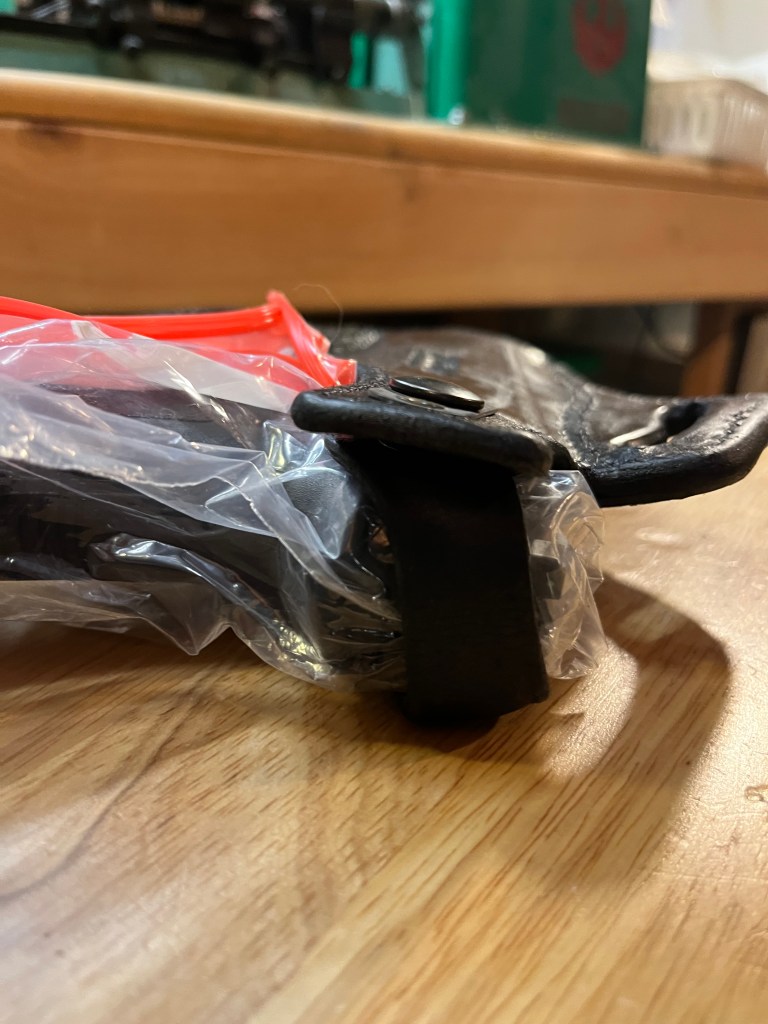
After sitting a couple of days, it was better, but the thump break still was not close enough to snap. Solution – per good interwebs feedback, apply 90% rubbing alcohol to inside surface and then try again. Caution: the alcohol will loosen up the black leather dye.
After two applications, some direct attention to the break strap, and some pulling, the leather stretched enough to snap.
I’m going to let it set for a day. Then break out some LPC black shoe polish.
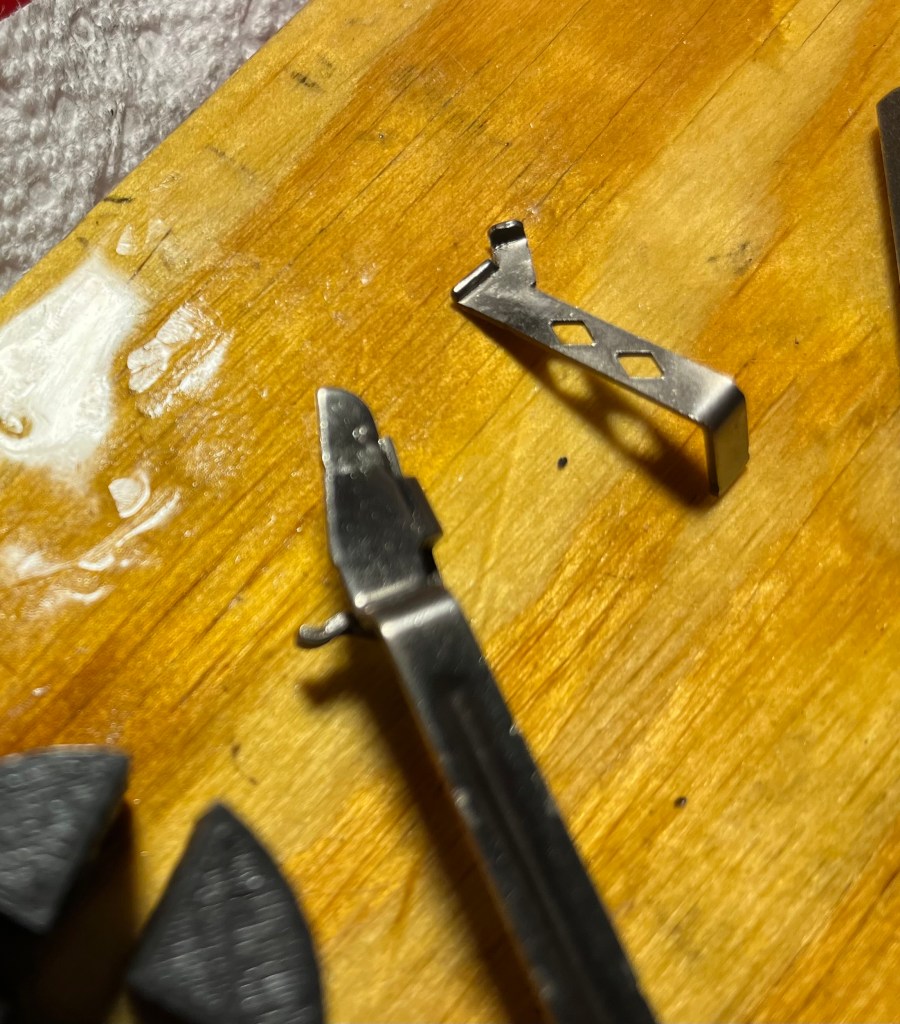
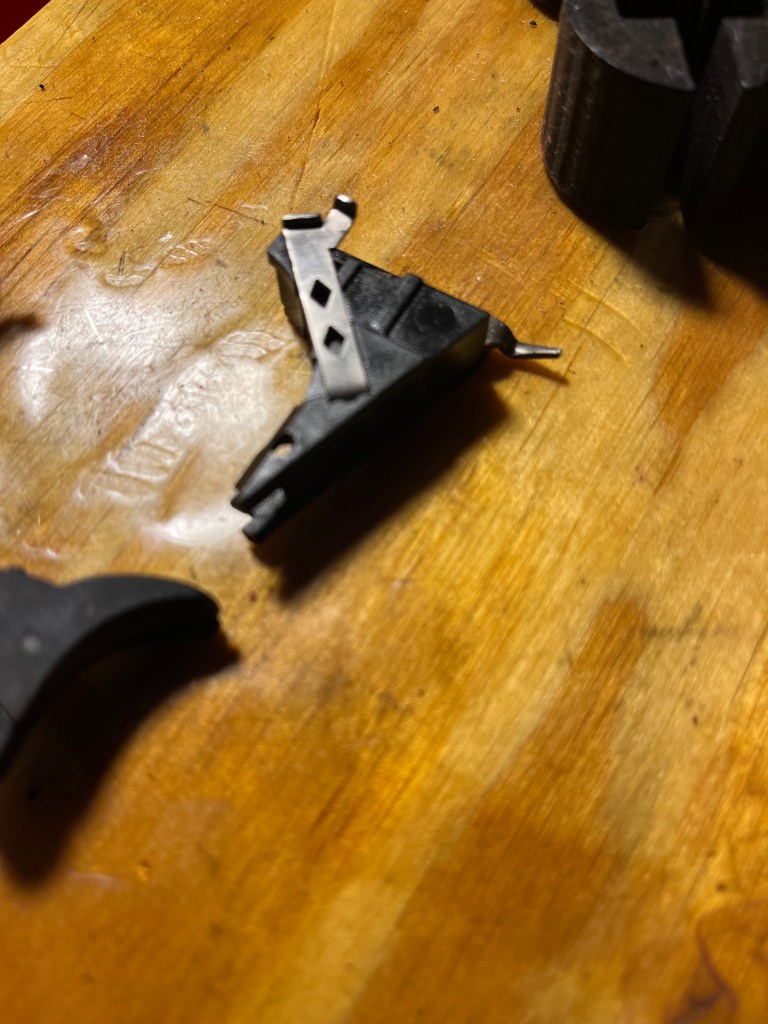
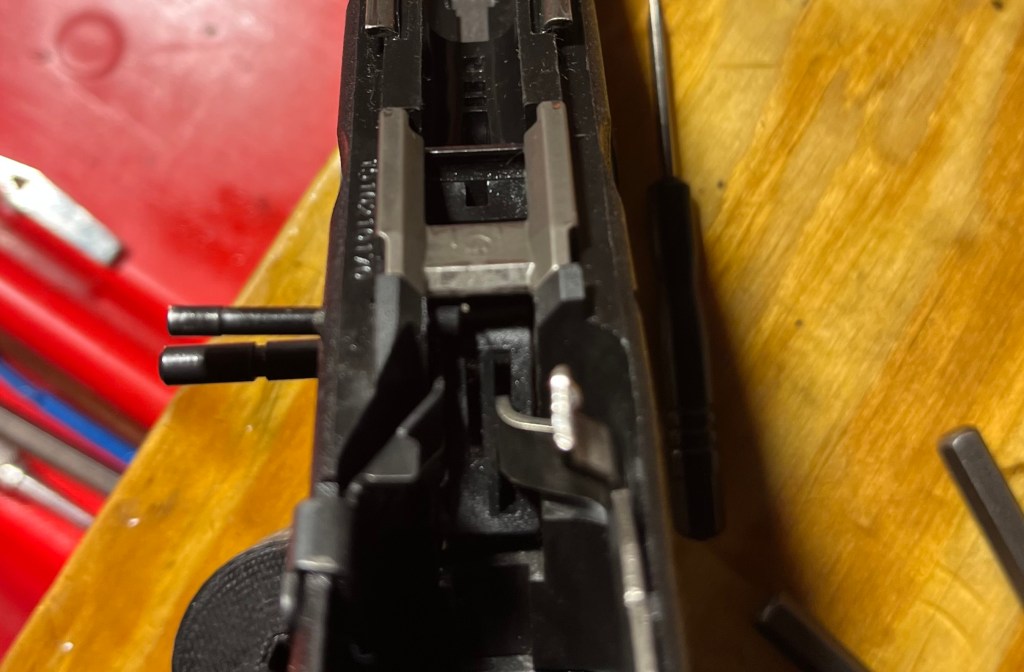
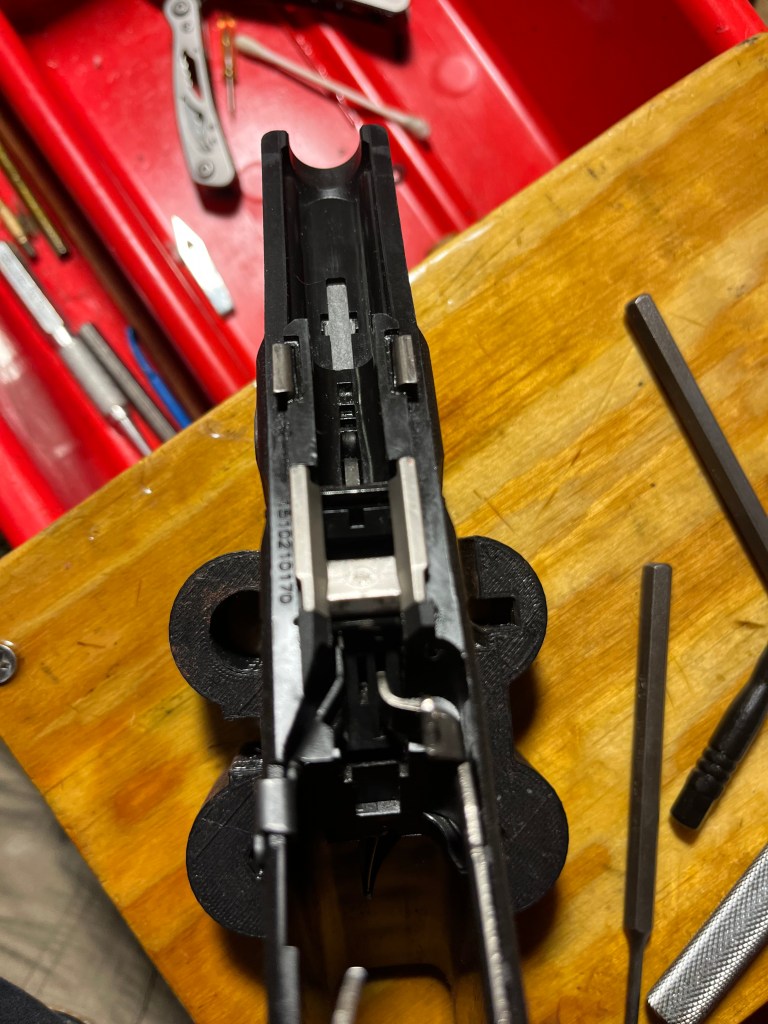
Putting new sights on DILIT’s G44 got me focused on Glocks for a bit. There just may be a little order coming in from Midway. In the meantime, I thought I’d strip the 21 down and do a little cleaning and trigger work. So pop out the three pins and here is what you get:
These are the parts we will be polishing to remove friction in the trigger assembly.
Post-polishing:
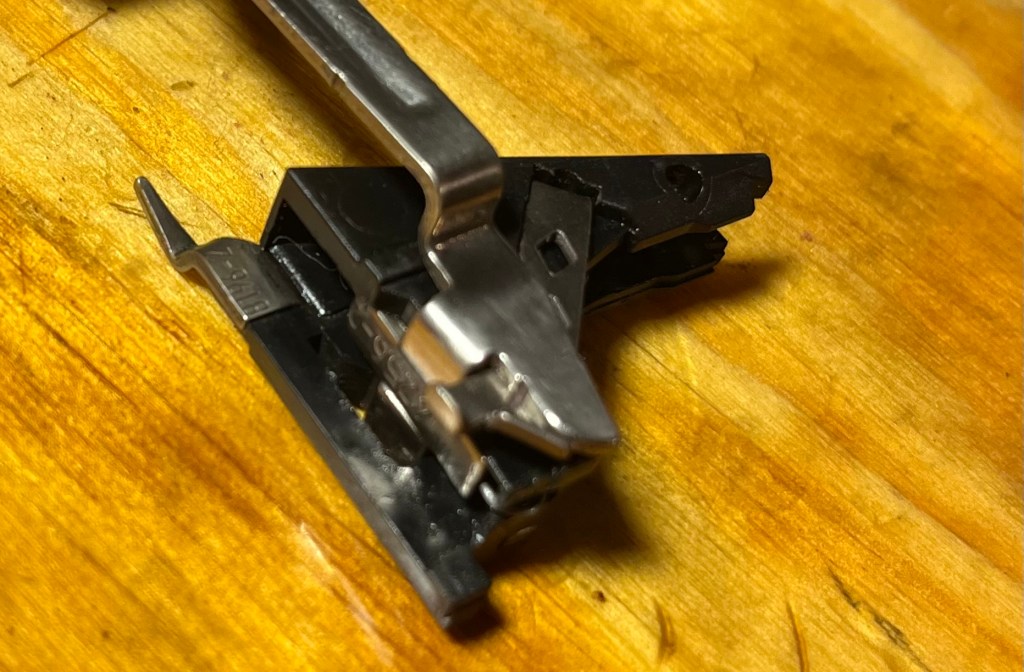
Reassembly:
Where metal meets metal.
Reassembly into frame:
And, finally, testing trigger pull weight:
4 to 4.25 pounds. If it was just for targets, I’d put a 3.5 pound trigger bar in. Having it go into the carry rotation, I’ll keep it firm. Yup, winter is for projects. I’ll be looking for that Midway package.
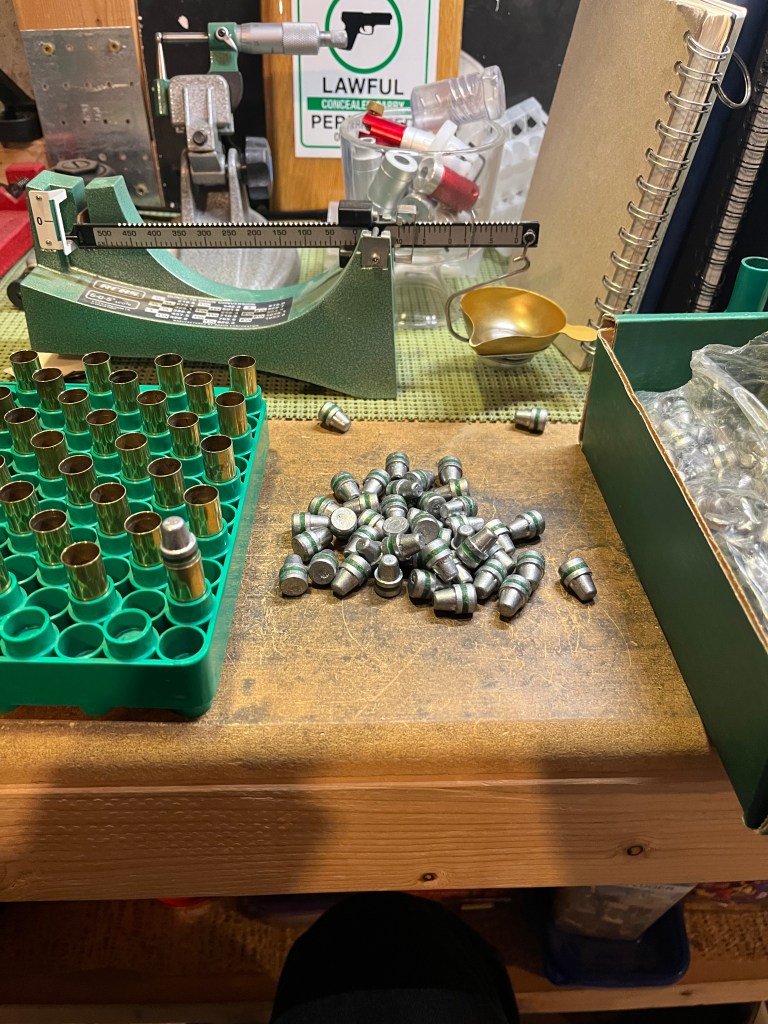
Caliber .45 Automatic Colt Pistol! I hauled out an ammo box of ten 100-rounds plastic boxes and it felt a little light. After full inventory, I discovered a shortage of 200 grain Semi-Wad-Cutters.
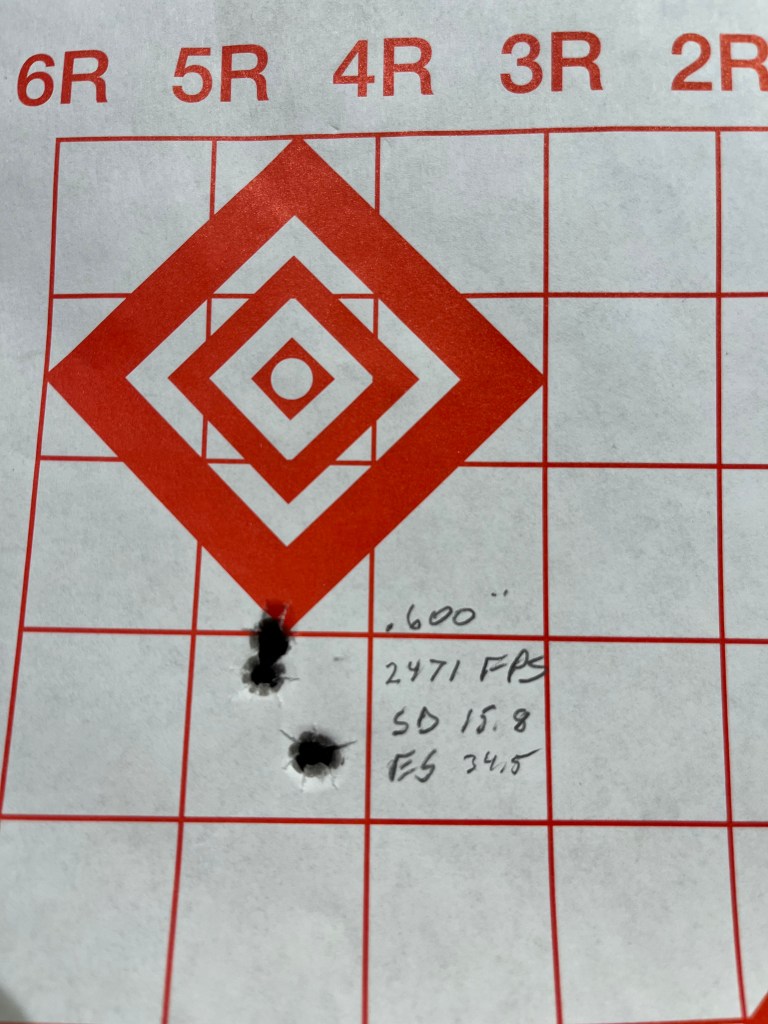
That’s 4 rounds of the 39 g. load. The 40 g. load opened up a bit, but looking at SD and ES, there was at least one bad reload.
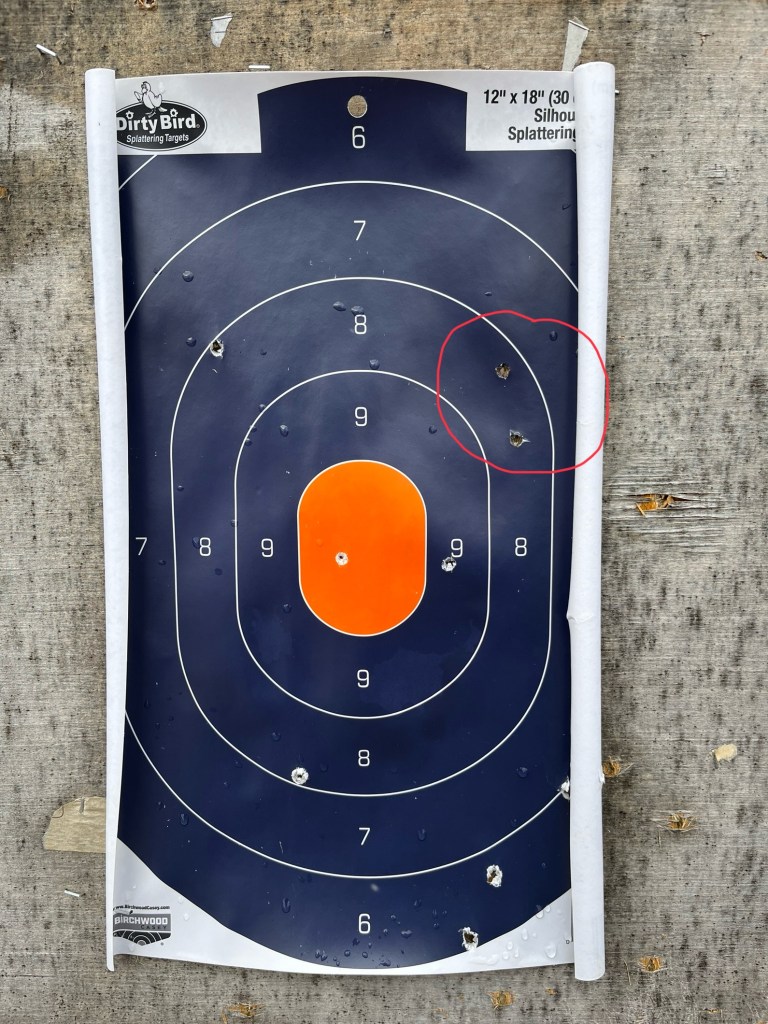
To make the point, I shot my last two rounds of it at a 300 yard silhouette:
Just over an inch. I’ll take that all day long. And when I shot the Dueling tree paddles, the impact was impressive. Nothing like upping the M in the F=MA.
But the best surprise of the day was shooting some Hornady 120 ELD M I had put together a while back:




























 KatNap Fever!