Telescopic Trivia

Wow, you look like a Clark Kent version of your last picture!

OK, scopes. I’ll quote CoPilot:

”First focal plane (FFP) scopes scale the reticle with magnification for accurate holdovers at any zoom, while second focal plane (SFP) scopes keep the reticle size constant, prioritizing clarity and simplicity.”

Let me translate: With an FFP scope, when you increase or decrease magnification, the reticle changes size as well. with an SFP, the reticle stays the same size. The practical effect is that the hashmarks on the FFP measure the same amount in relation to the target. If you see a target that is 2 MOA in width, it will remain two MOA regardless of magnification. With an SFP, the only time a hashmark is an accurate measure, is at its true magnification point (this will be marked on your magnification ring).

Practically, it makes an SFP a bit easier to adjust your shots on the fly (it also enables you to determine the range of the target more quickly).

An example: you are shooting at a target at 600 yards. You shot hits at what looks like a foot to the left. At 600 yards, that would be 2 MOA. You line up your scope on the impact point and, lo and behold, the target lines up perfectly on your right 2 MOA hashmark. Yup, 12 inches. So hold 2 MOA right of the target, and you’ll hear an impact on steel. And if you’re shooting at 800 yards, your 2 MOA hashmark will measure 16 inches. Amazing.

The SFP scope can do this as well, but only at its true magnification point. One of my scopes has a magnification range of 6 to 24 times. At 18, it is true. And it’s a pretty good setting that allows a wider field of view, but shows the target clearly.

FFPs are a bit more expensive.

Yes! While it’s nice to have a laser rangefinder, you don’t always have it available. But some simple math based on angle and distance will give you a fairly accurate range. The formula for using MOA is:

Known target size in Inches X 95.5/Target size in MOA= Distance to target in yards

Let’s plug in some numbers. You see a target and know that it is 2 feet tall, or 24 inches. 24 times 95.5 is 2,292. You line up your scope and see that it measures 6 MOA in height. 2,292/6 =382 yards.

If you happen to be using a scope that uses Milrads (milliradians) instead of MOA, the formula is slightly different:

Known target size in Inches X 27.77 divided by target size in mils = Distance to target in yards
Ballistics

athe science of the motion of projectiles in flight

b: the flight characteristics of a projectile

Or, how to shoot stuff and try to have it land in the same zip code.

Well, then. What info do we need to feed into a ballistics program for it to give us a solution?

  1. Rifle details
  2. Scope info
  3. Cartridge details
  4. Density Altitude
  5. Distance to target
  6. Wind
  1. Rifle details – caliber, barrel length, twist rate
  2. Scope details – type, height above barrel, sight type
  3. Cartridge type – caliber, bullet size, bullet weight, bullet shape, muzzle velocity
  4. Density Altitude – from your device or local online info
  5. Wind – speed and direction

Most of these things you can get from your manual or online info, but how about muzzle velocity? Well, some commercial ammo gives MV, but only from their test rifle and barrel length. If you are going to be accurate, you MUST have a chronograph that measures your shots from your rifle at your DA. Otherwise, you are just guessing and GIGO comes into play – Garbage In, Garbage Out.

DOPE – Data On Previous Engagement.
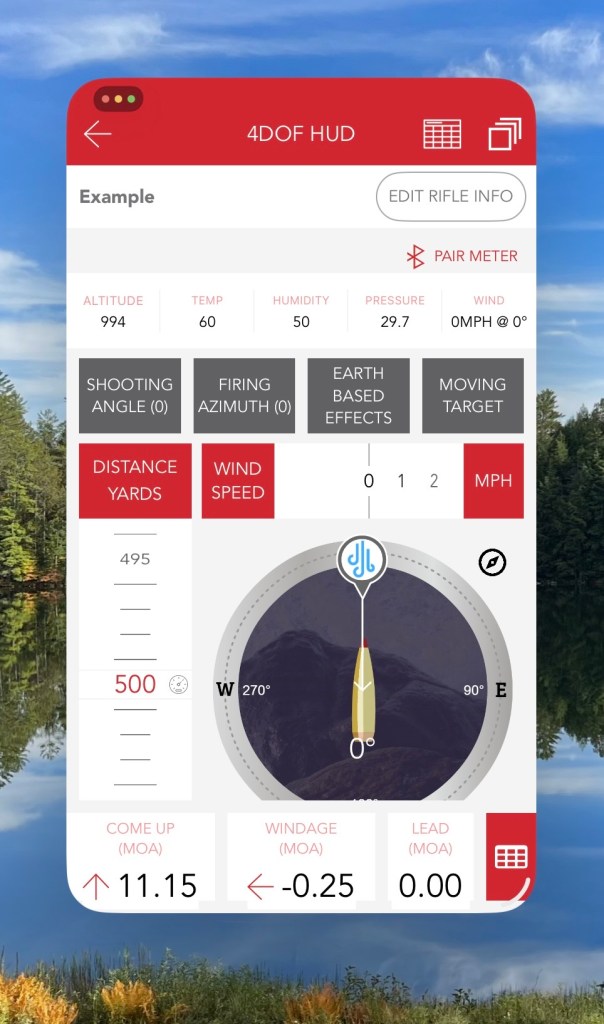
Once we have entered all of this info, the ballistics program will give its proposed solution:

Screenshot

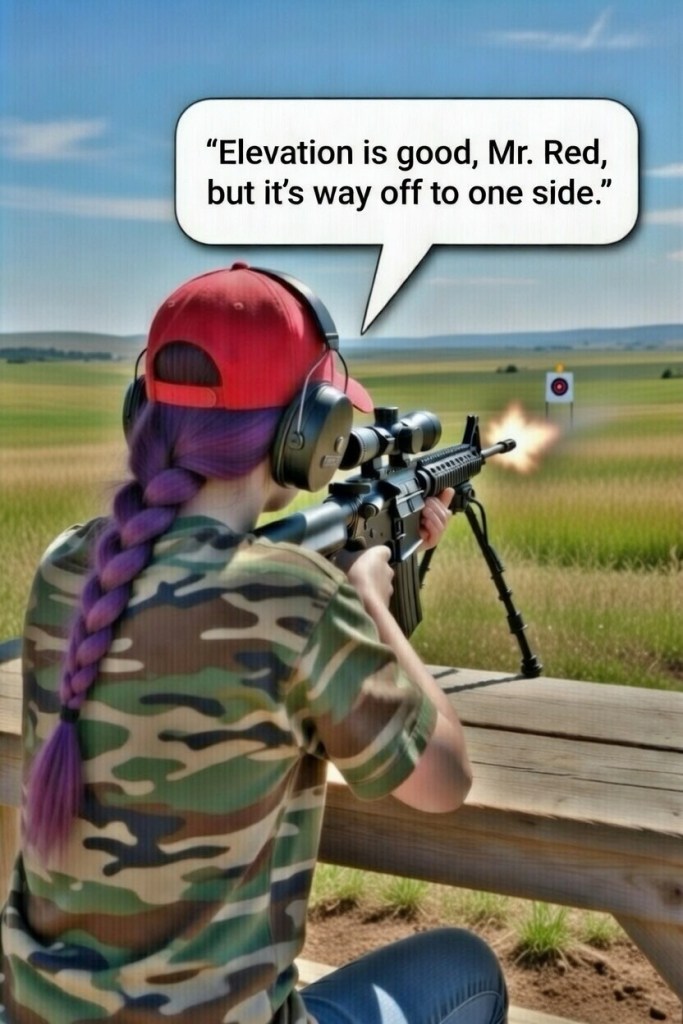
Welcome to reading the wind, Emily.

Brief diversion

Yep, shooting God’s own caliber today.

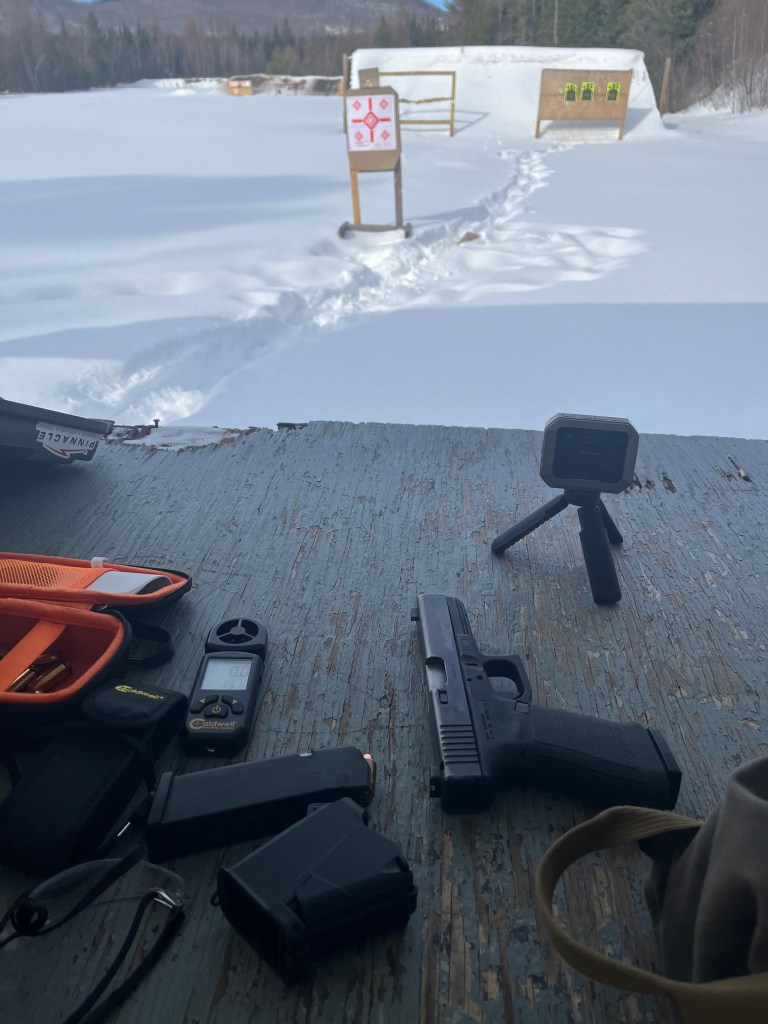
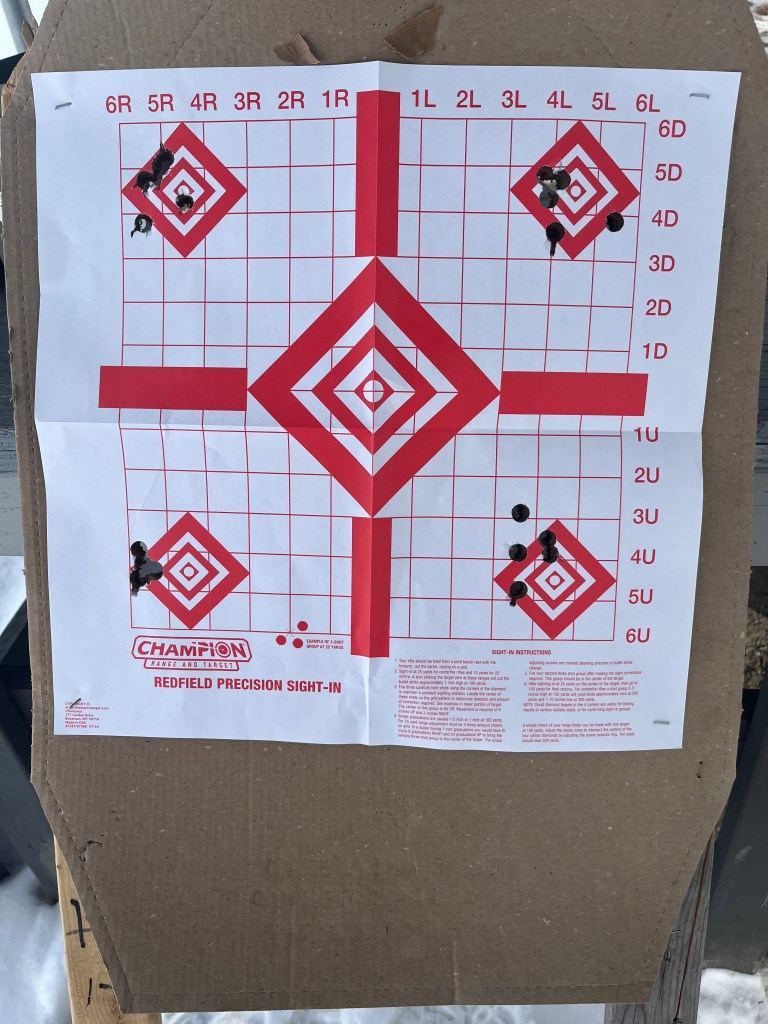
It finally got above freezing today (33 degrees), so I shot the ladder test for my new .45 ACP 200 grain copper-plated semi-wadcutters. And got a clear winner.

10 yard 3/4” group from a sandbag. I’ll take it. But I do need to move that new rear sight a tad right.

Of course, Emily. And yes, we’ll get right back to ballistics.

The Cats ate my Homework.

Right you are, Emily! And that leads into a tiny bit more math and science.
The basic answer is, of course, to multiply the 11.15 MOA times 5 = 55.75” of bullet drop (almost 5 feet!) BUT, the real world answer has many more variables:

  1. Are the shooter and the target at the same elevation?
  2. What are the atmospheric conditions?
  3. What is the exact distance to the target?

The first variable is pretty straightforward. If both are at the same elevation, it’s a non-issue. However, if one is higher or lower, you have just introduced some geometry into the equation. Since most of your shooting will be level, we’ll look at this later.

The third variable is also straightforward. Emily informed us that the distance was 500 yards, but what was it exactly? If it was 496 or 507 yards, that actually makes a difference. Luckily, the 21st century has laser range finders. But maybe you don’t have one? There’s another way. But also later.

It’s the second question that is most important. What is going on in the air that the bullet must travel through? What is the temperature, the air pressure, the humidity, the elevation? If the air is thick and cold, it will slow the bullet down; likewise, if is thin and hot, the bullet will go faster.

Luckily, people much smarter than you and me have combined all these factors into one variable – Density Altitude, or DA. This number provides us with one number to enter into our firing solution. The best thing about DA is that you can be anywhere in the world and at any temperature, etc. and if the DA is the same, your bullet will react exactly the same. By far, this is the most important variable.

Yes, ma’am!

Zeroing the scope

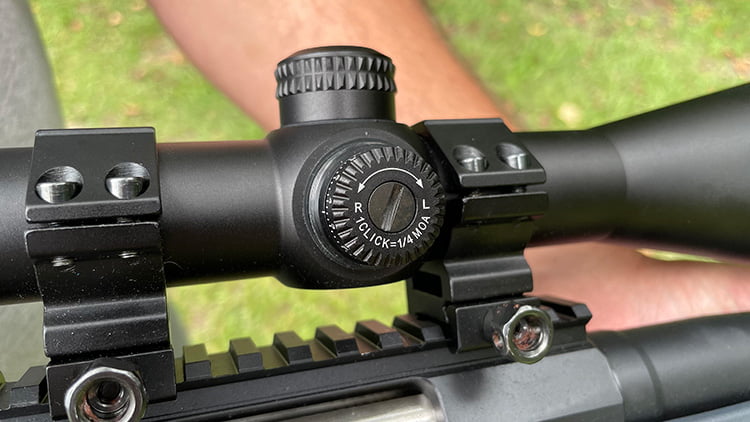
Yup. Show us the windage turret and what you see.

1 CLICK = 1/4 MOA.

Well, this sounds familiar! Yes, adjustable turret scopes tell you how and how much to move your bullet impact on the target. The Windage knob will adjust the bullet right or left. The Elevation knob on top will move it up and down.

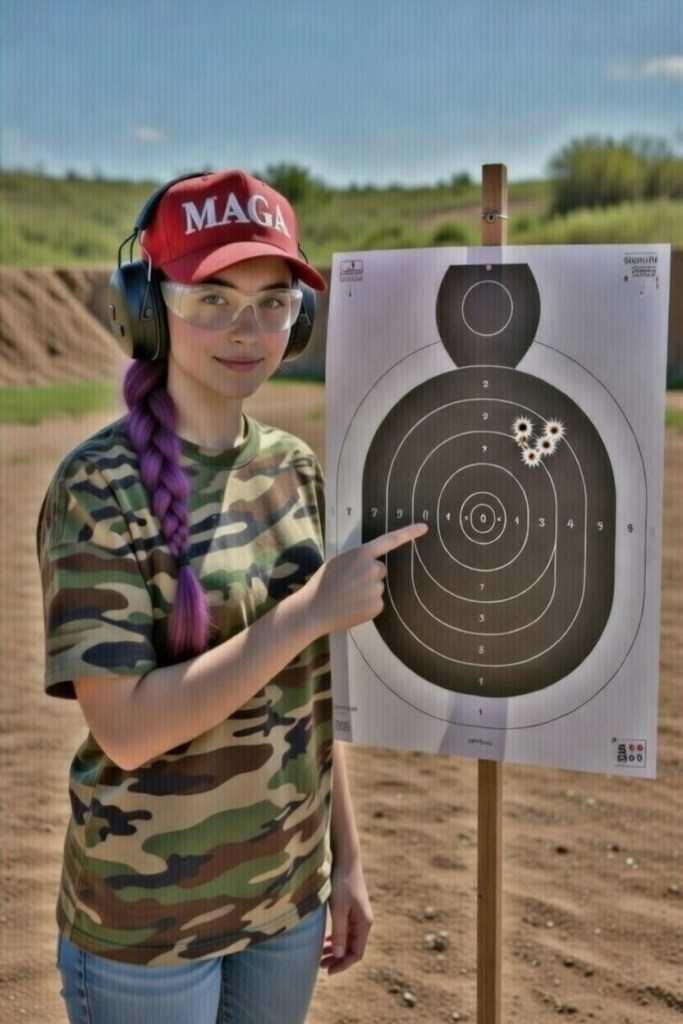
Start by firing a group of three or four rounds at the 100 yard target.

Check the group.

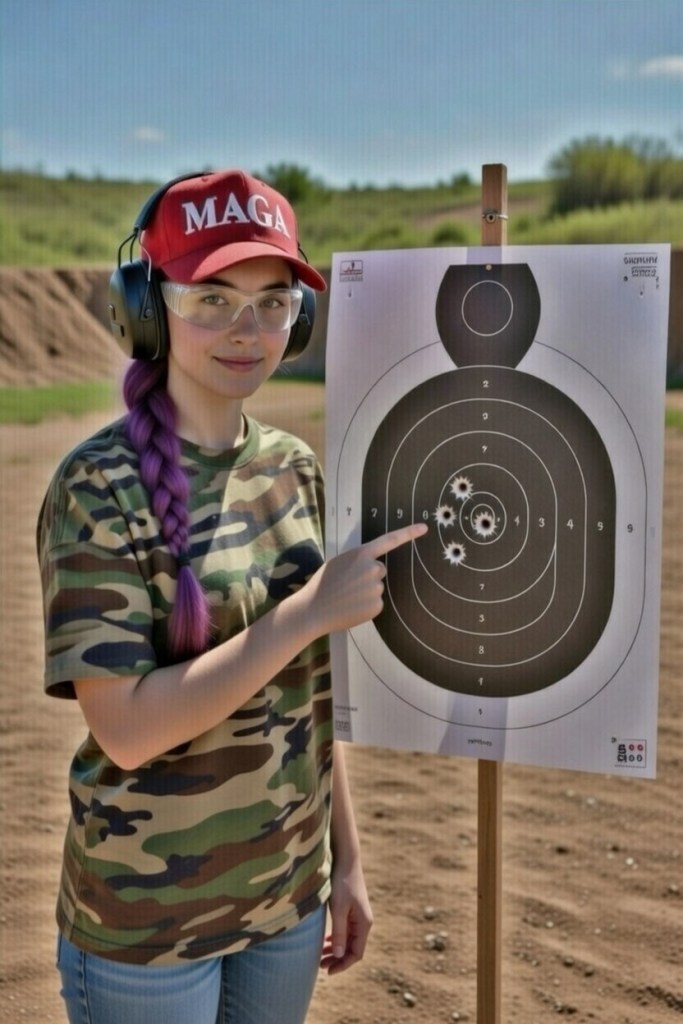
I’d say we want to bring the center of that group down three inches and left three inches. So, if 1 click is a quarter of an inch, 4 clicks is an inch and 12 clicks is 3 inches. Dial the elevation down 12 and the windage left 12. Shoot three or four more rounds. Voila!

Not bad. I’d move windage right 3 or 4 clicks and see if the center of the group is dead on. Don’t be afraid to expend some ammo to get it right where you want it.
Once zeroed, you need to be able to return to this setting routinely. Scopes have various ways to do this.
This zero point is the basis for everything you will do henceforth.

Real Optics

OK, for clarity, we’ll call them scopes. As in telescopic sights.
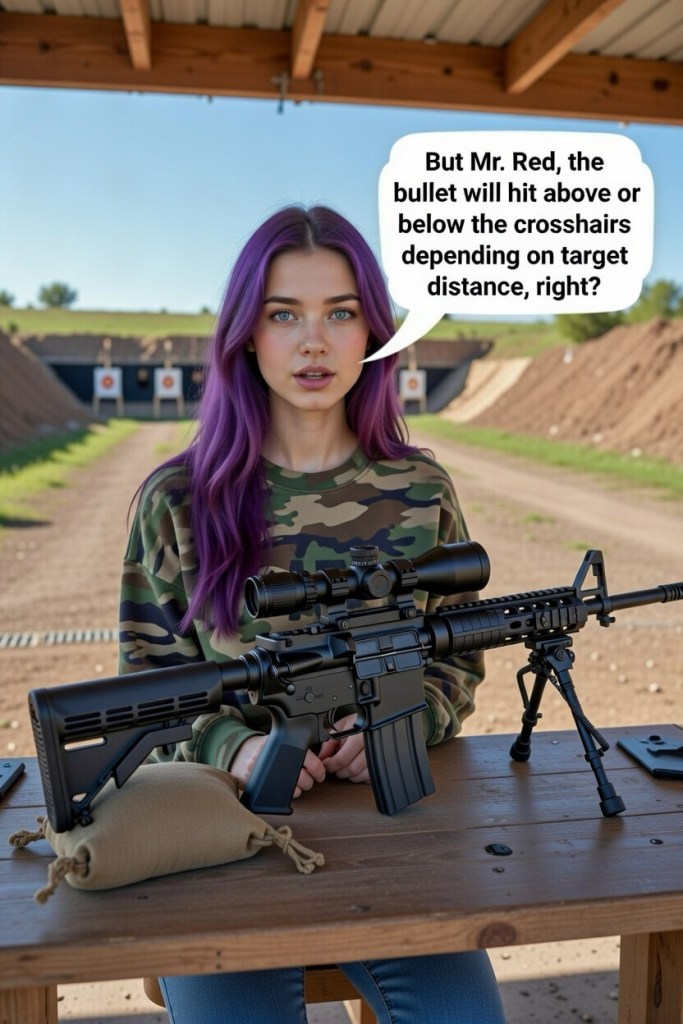
First, why a scope? Well, I assume that you noticed, when you were zeroing your AR iron sights, that it was hard to get a really good sight picture beyond a hundred yards – I am assuming eyesight beyond 29 years, of course. So, first, magnification is so you can clearly see distant targets. But if you want to engage those targets, you need more than just magnification. You need something in that view so that your shot can be aimed. You need crosshairs.
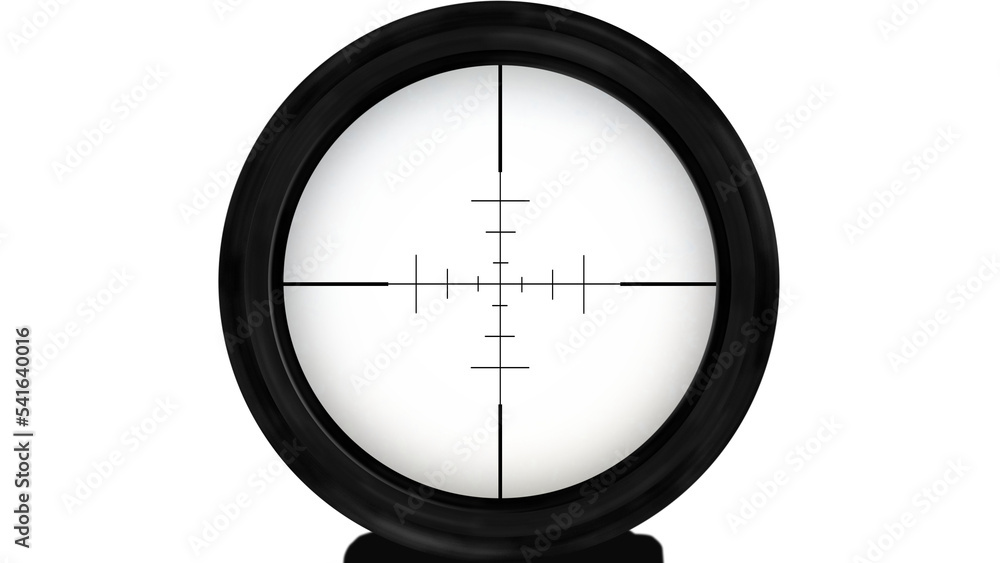
Right, Emily, gravity strikes again. So, we need to have some hash marks for holdover (or under), to be able to move the crosshairs up and down, or maybe both! Here’s what it might look like:

But what do those hashmarks mean?
We’re going to do a tiny bit of math here, but don’t worry. I’ll speak slowly and distinctly.
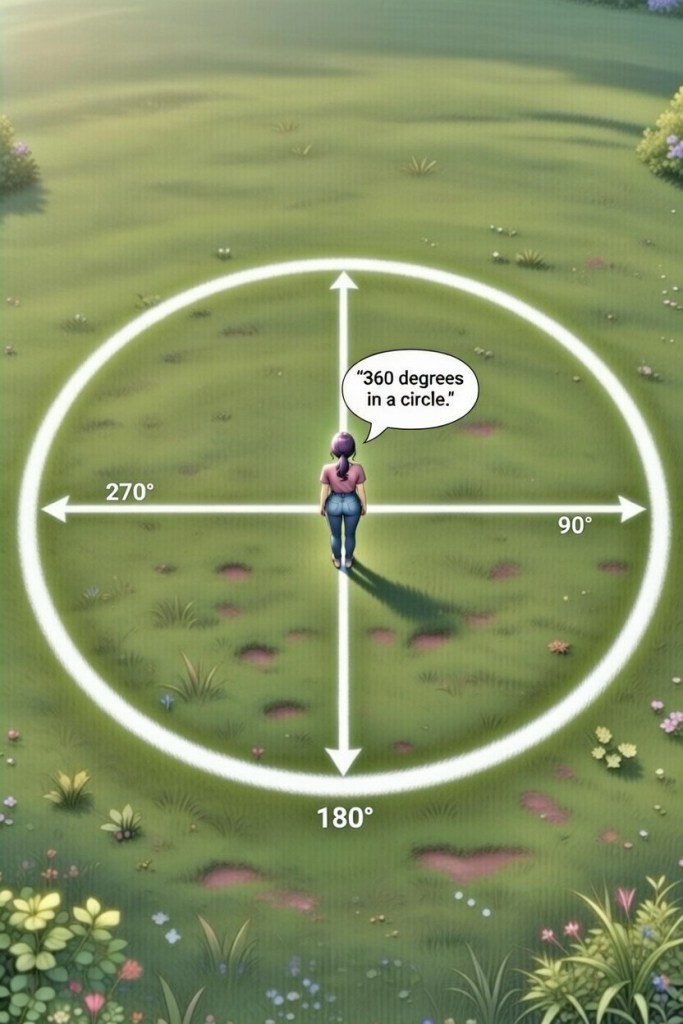
Imagine standing in a field and seeing a huge circle around you.

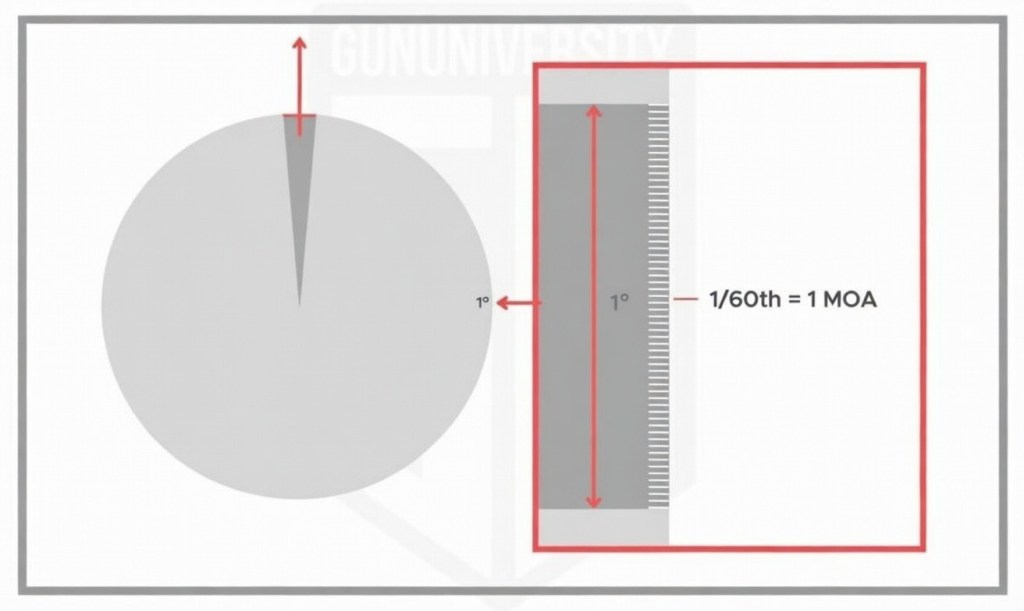
Right! But each of those 360 degrees can be broken down into 60 Minutes.

So each degree of a circle is a degree of angle which is broken into 60 Minutes of Angle. And there you have our measuring scale – a Minute Of Angle – MOA.
There now, that wasn’t so hard, was it?

If you go out 100 yards, that little MOA measures at 1.047”. At the distance we will be first shooting, that .047” can be disregarded. So, at 100 yards one MOA is about an inch.
Now we can use those hashmarks to adjust our fire. BUT FIRST, we are going to zero our scope to the rifle! Stay tuned for more amazing rifle hacks!

Optics

But today we’re talking about different optics. Optics in the battle for narrative control.

An underlying theme is debasement of morality. John Adams famously remarked that “our Constitution was made only for a moral and religious people. It is wholly inadequate to the government of any other.”
Our country has had a pendulum of morality, from Puritans to Roaring ‘20s, to 1960s if it feels good, do it. But the 21st century is getting extreme. Normalizing homosexuality. Creating homosexual “marriage”. Militant feminism. Breaking down the stable structure of the marriage of a man and woman to create a family and have children raised in a stable environment. And now, crazed murdering transsexuals. (No, gender is a language structure, not biological.)

I had not watched a Super Bowl in years – the NFL lost me when it started kneeling. But I watched this one and was amazed at what a true spectacle it has become. True Roman bread and circuses. The game was almost secondary to the production. At halftime I switched away. It turns out that about half of viewers did as well. The next day I was in a restaurant and four women were behind me. One was enthused that the halftime music was so danceable. But she had just learned that the Spanish lyrics were incredibly nasty.

So, optics. The NFL clearly is all in on and celebrates leftist causes – BLM, multiculturalism, the invasion of illegals. Those lyrics could not have been sung in English, and the FCC may well decide that they shouldn’t have been sung in Spanish as well. But the fact that millions of people rejected it, and that many were eventually at least unhappy about it, is a sign that the optics have changed against the Left. The performance was a clear middle finger to normal Americans. It went beyond “don’t be judgmental” to “fuck you, there are no morals and we’ll do what we please”. J. Epstein writ large and in your face. And the latest Epstein revelations only confirm what many of us suspected – the ruling class believes that it can do whatever it wants. There is no punishment here on earth, and they don’t believe in an afterlife. Ultimate power leads to ultimate degradation if there is nothing that can pass judgement on them.
And what about the Minnesota ICE protests and shootings? Those riots dropped from coverage, and the two dead useful idiots have not turned into St. George Floyd of Fentanyl. And National Guard backup is being withdrawn. The municipalities are apparently cooperating now. Evidently, the optics of the useful idiots supporting illegal invader murderers, rapists and other criminals were not so good.

On the other side of the coin, the Trump Administration accomplishments are getting noticed. Lower crime, lower fuel prices, tariffs working, the economy noticeably improving, the ridiculous EPA regulations being rolled back – those are good optics, regardless of how the leftist media squawks.

The danger, as I have pointed out, is that the leftists/elites may be seeing that they are losing sway, that the optics are worsening for them. Virginia Democrats take control and immediately craft anti gun legislation. New Jersey passes laws trying to criminalize Federal enforcement of immigration laws. Congressional Dems insist that ICE stay away from polling places. They are broadcasting their intentions, not even pretending anymore. They cannot back down because they know they would face judgement and punishment.

2026 midterms will be telling; the lead-up will be brutal. I suspect that use of the other kind of optics will be a good skill to acquire.

So, Emily, are you ready to get started?

Chapter 5

Yep, I understand. But did you see there’s now a German “Maria”? I wonder if you’re also related…

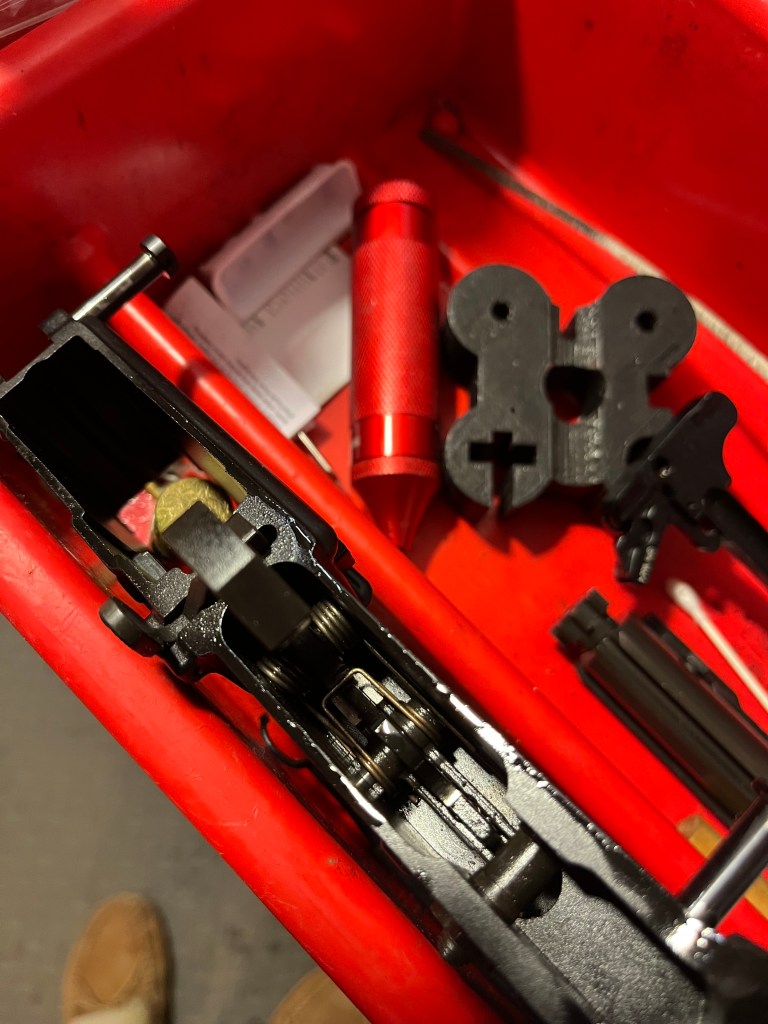
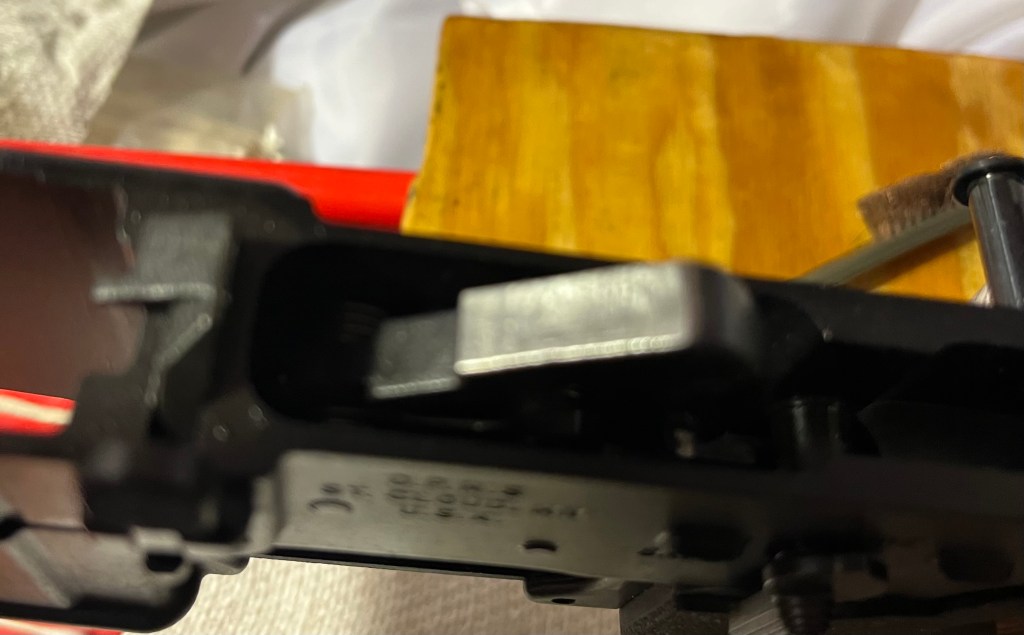
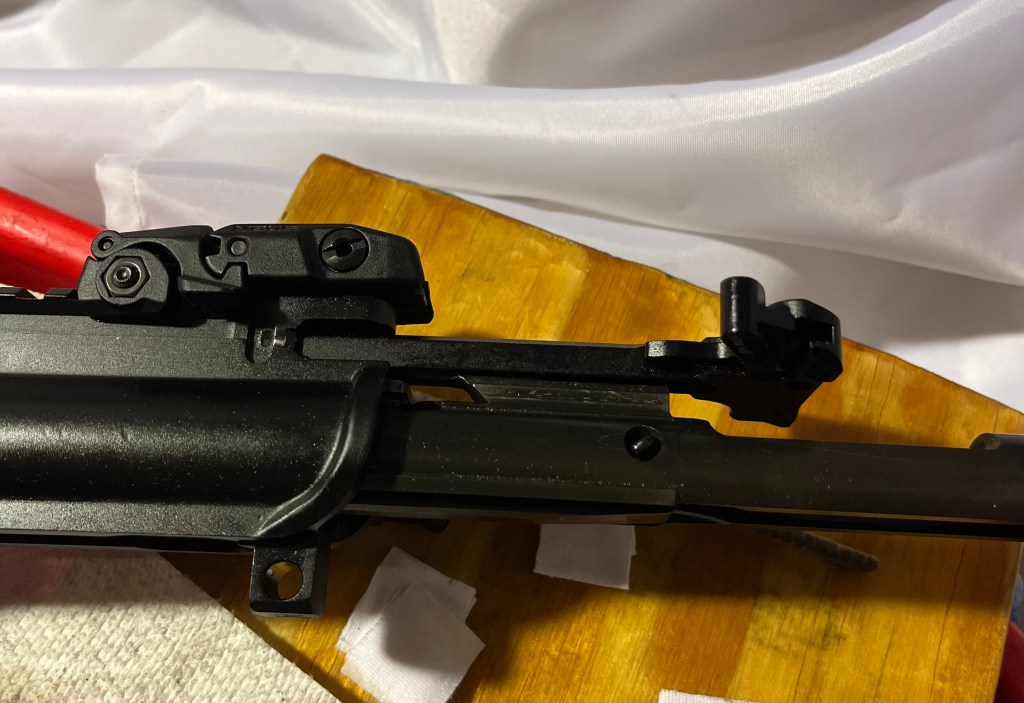
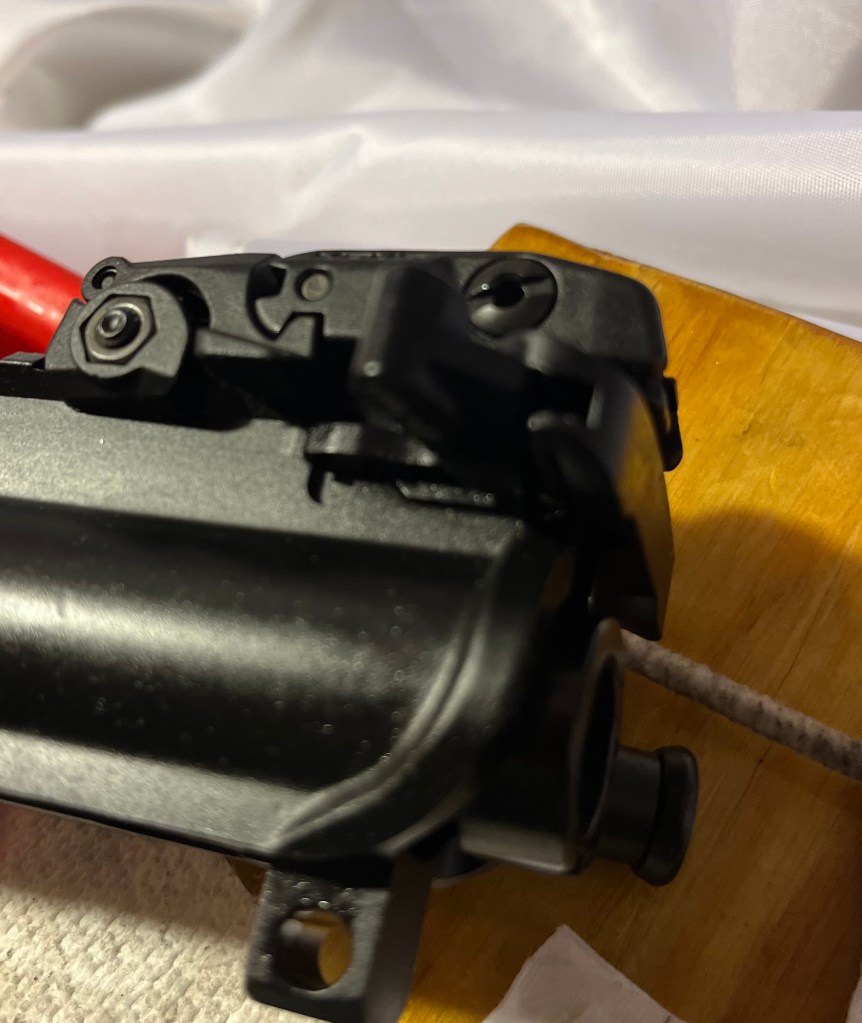
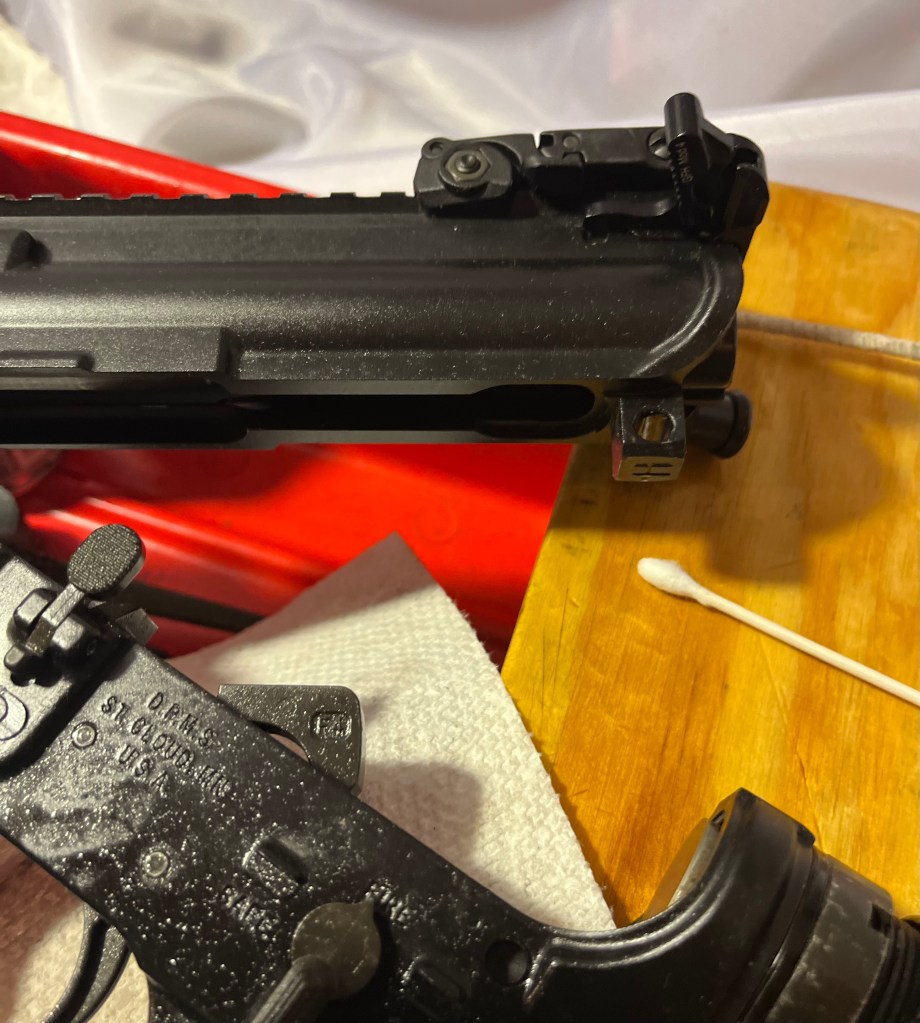
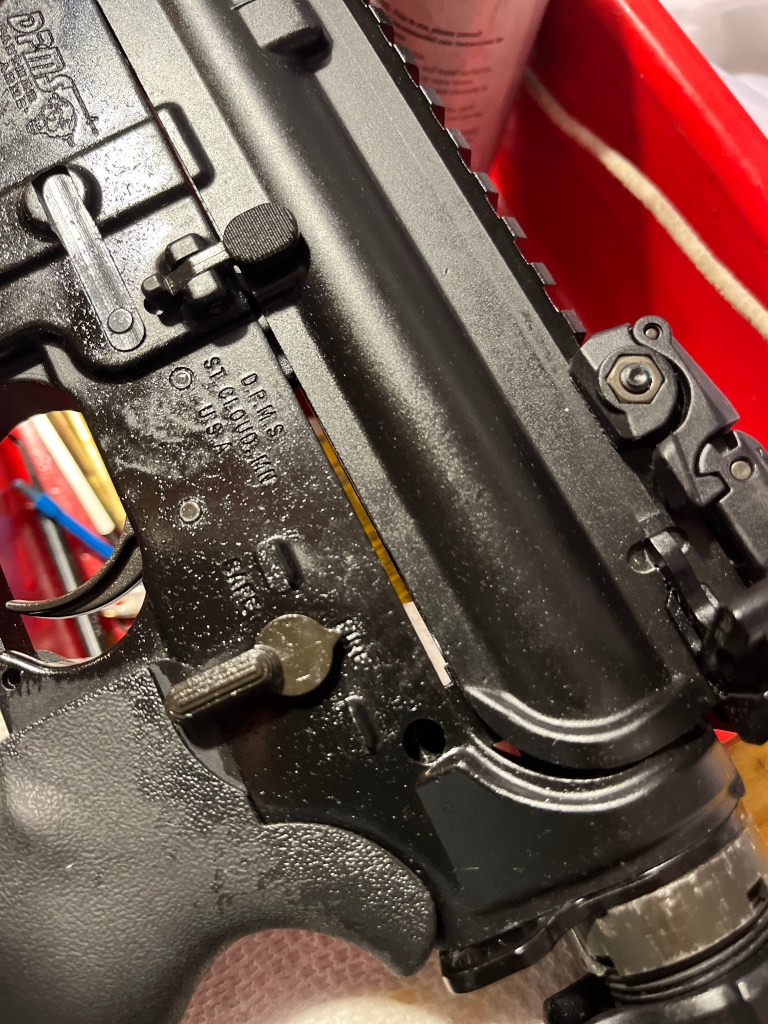
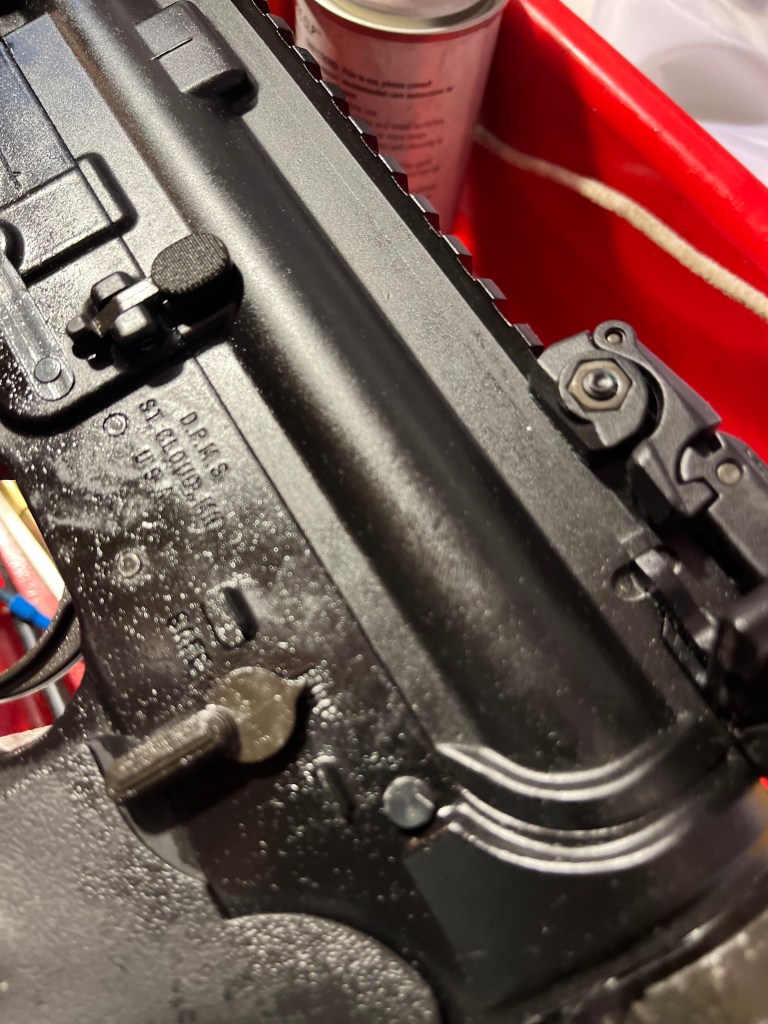
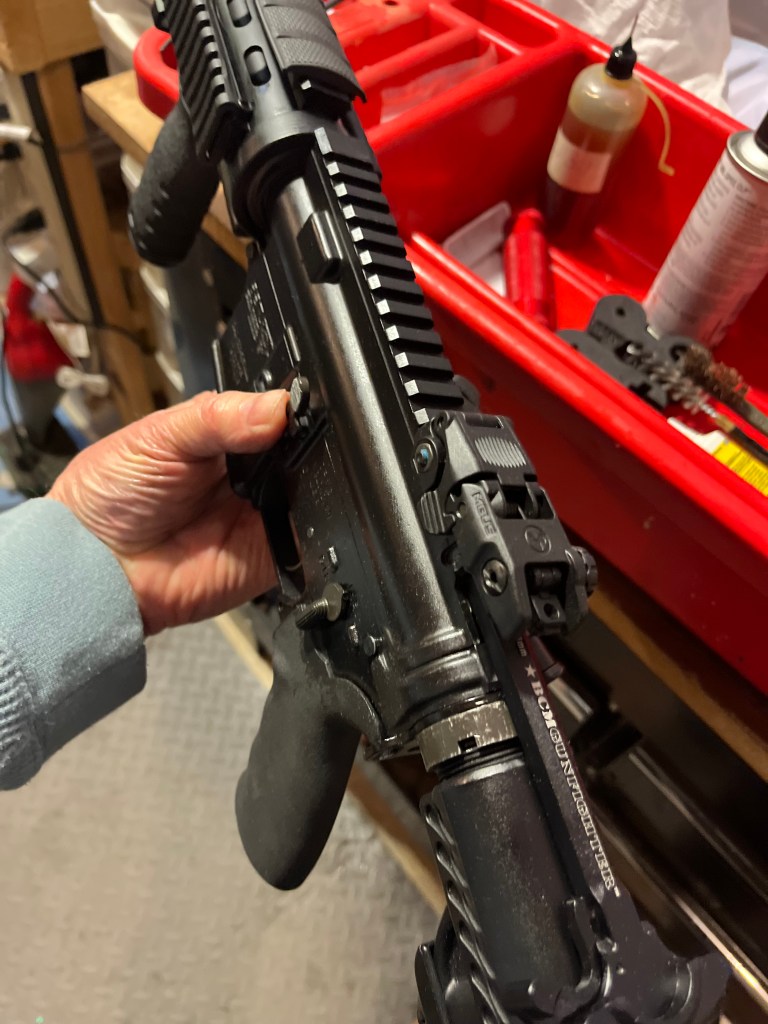
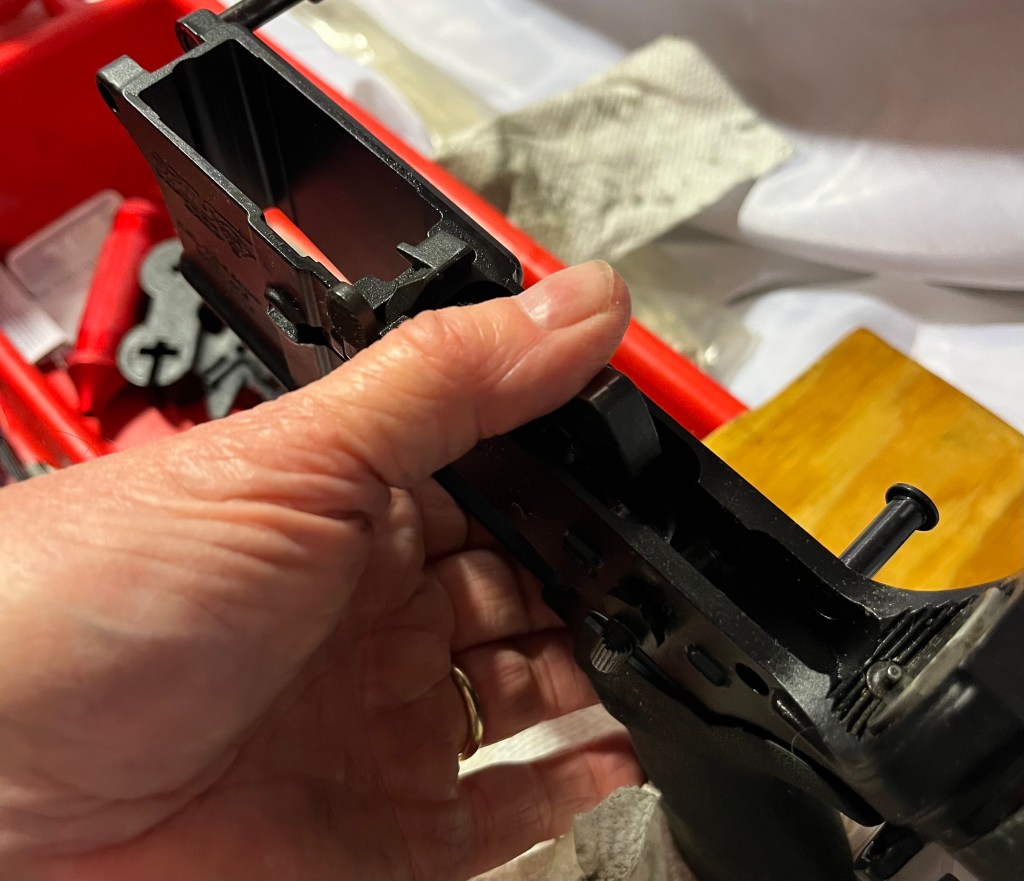
Back to cleaning. Before we get to the BCG, let’s do a little work on the lower. It doesn’t get as dirty as the upper, but still needs attention. Wipe everything down, including the inside of the mag well.

Put a drop of oil (Mobil 1 works fine) on springs and rotating devices like the safety and the mag release, and operate them a few times for smoothness, then wipe away any excess.
The hammer face may be dirty and needs a wipe.

Operate the hammer and trigger, BUT make sure to ease the hammer down with your thumb. You don’t want it flying forward.

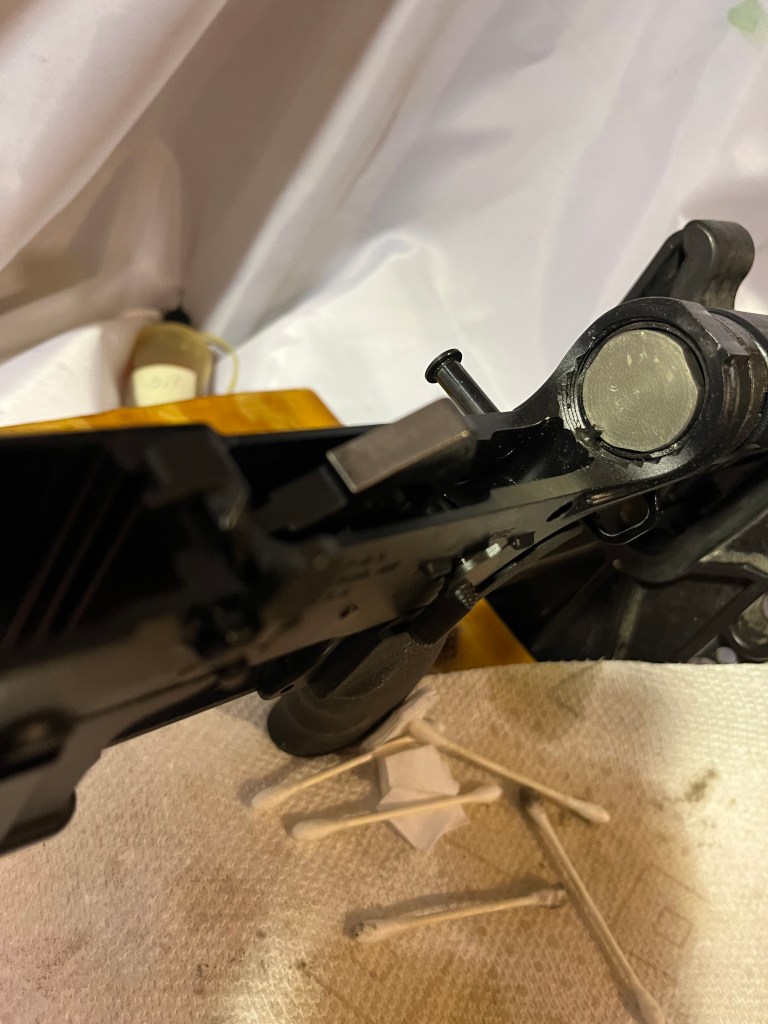
That’s the buffer tube. It has a long recoil spring behind it. To remove them you would press down on the little pin in front, and rotate the tube to a flat edge, then pull them out. It doesn’t need a lot of attention, but should occasionally be checked for cleanliness and wiped down lightly with lube.

Give the Lower a wipe down and set it aside.

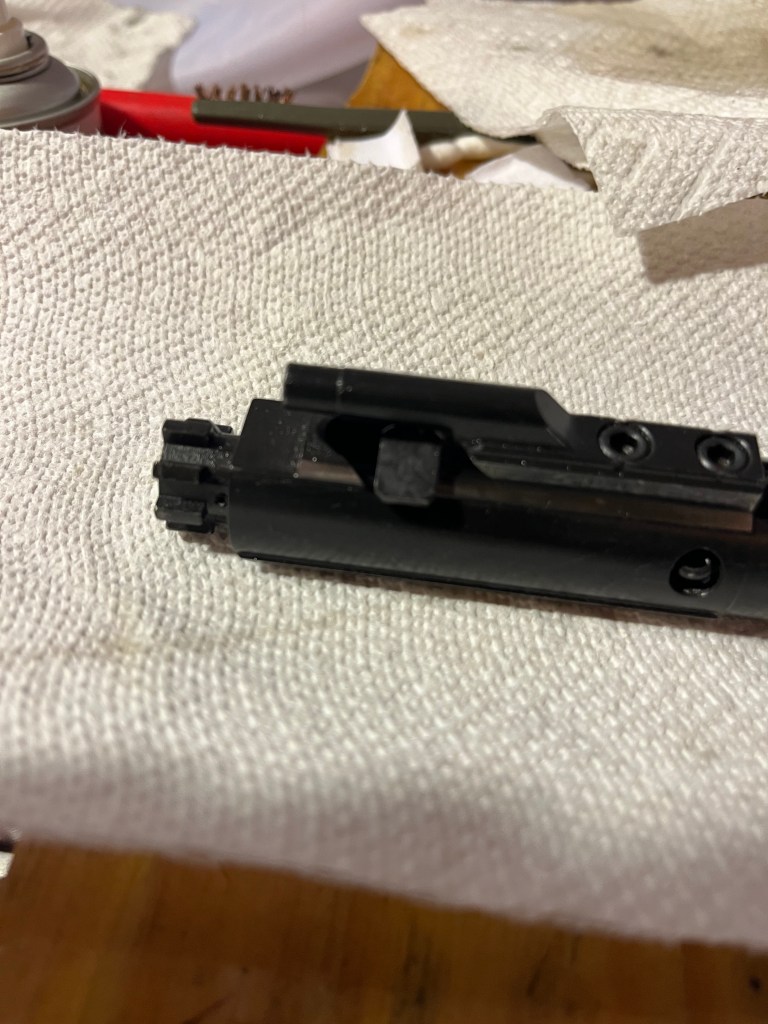
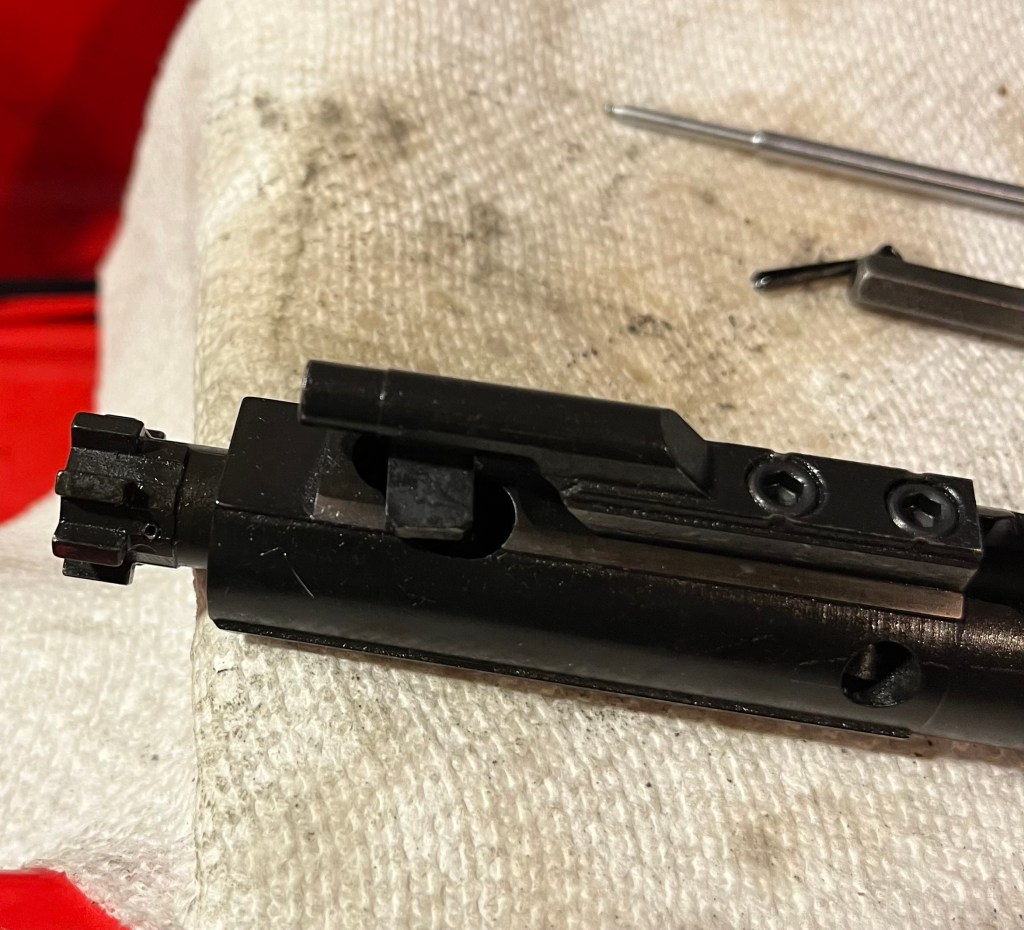
THE BOLT CARRIER GROUP:

The BCG is the heart of the AR. Practice disassembly and assembly!

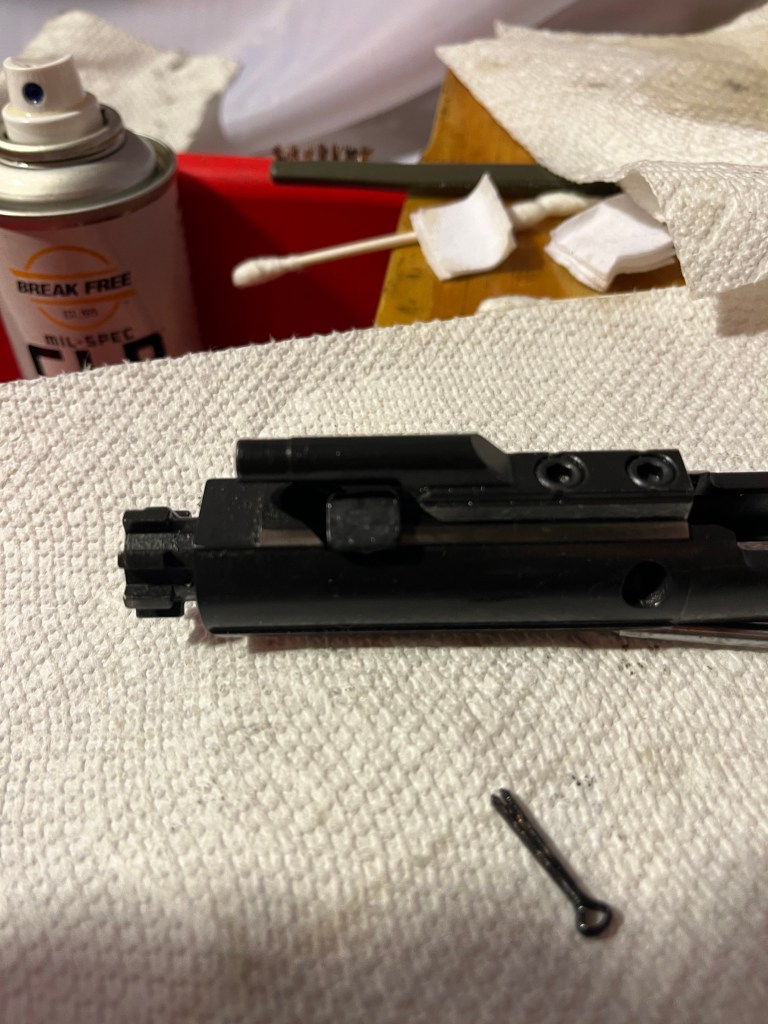
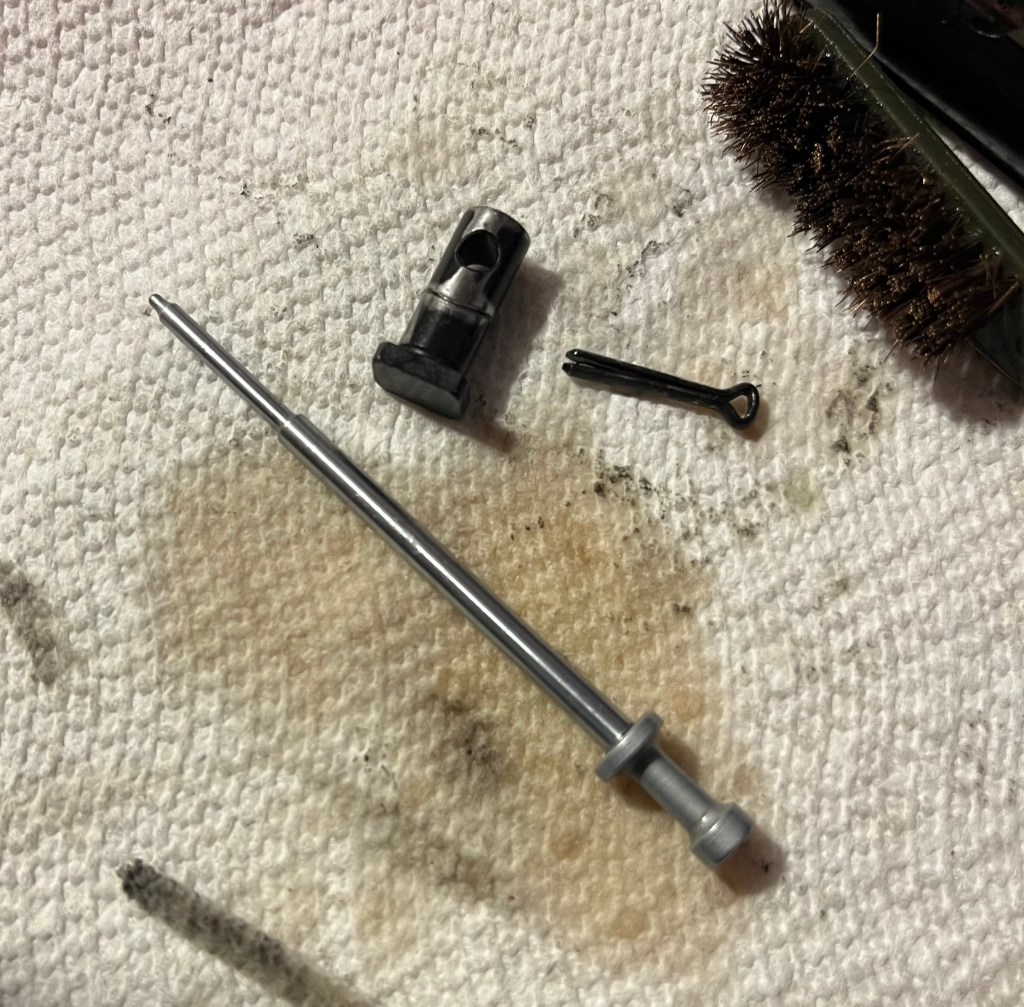
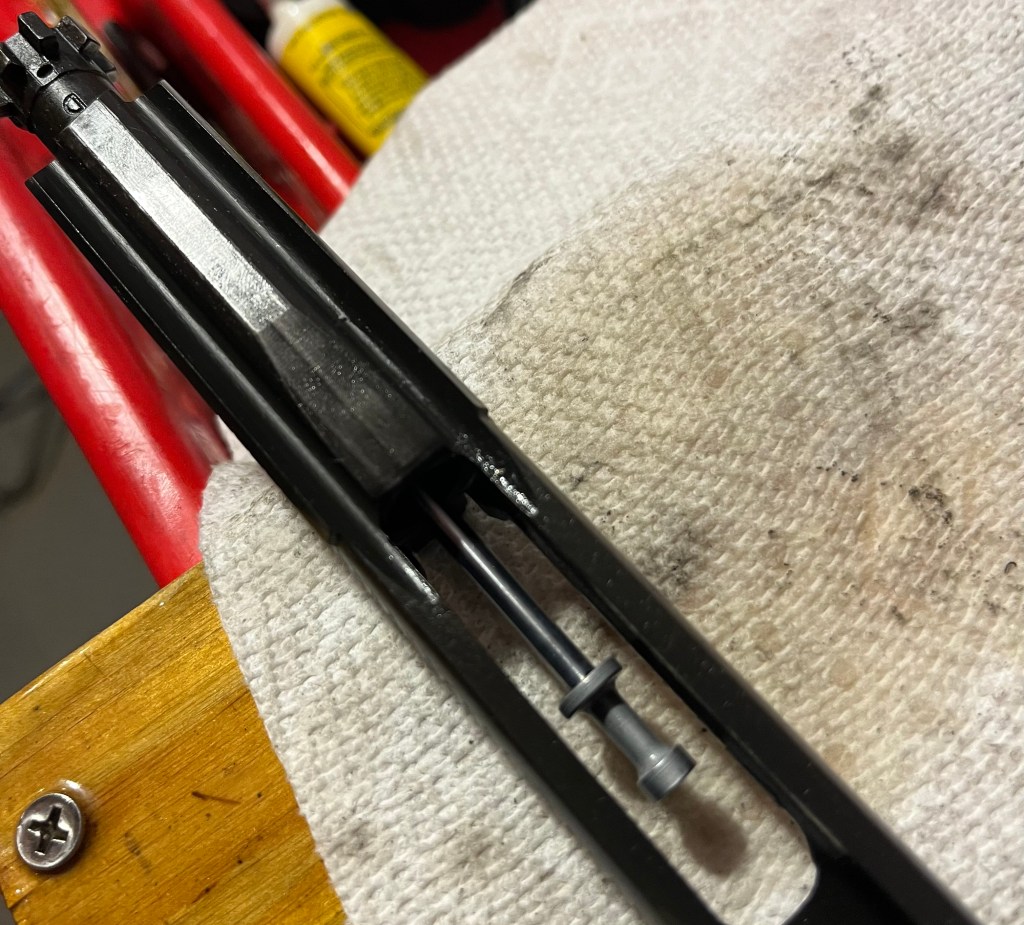
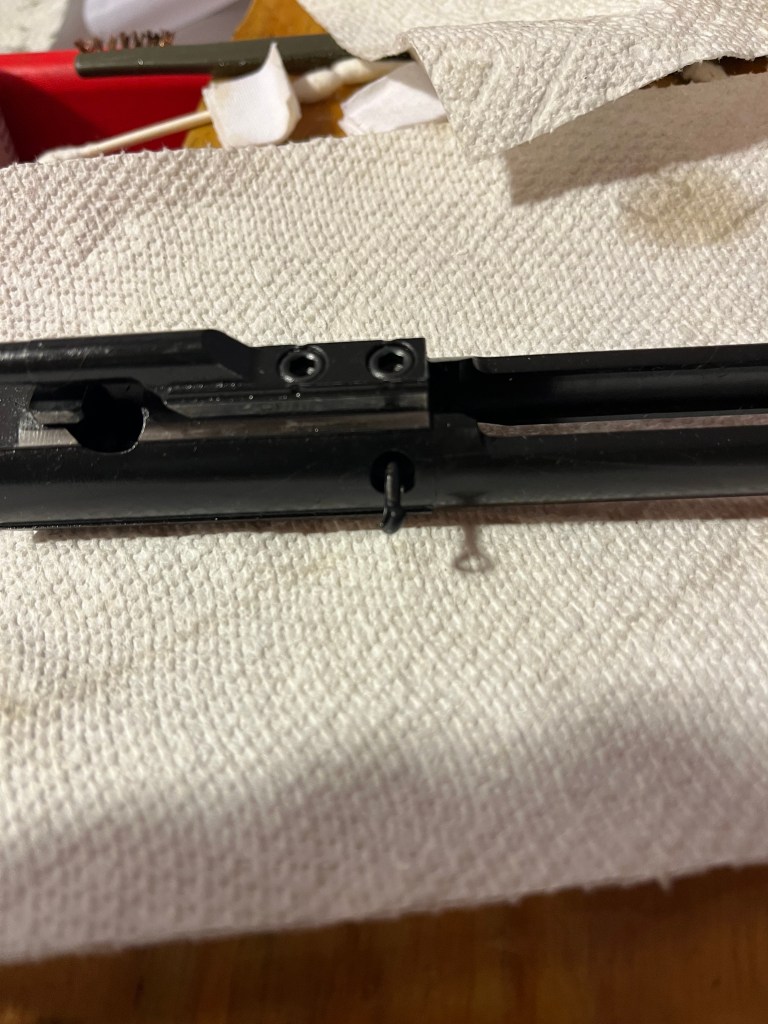
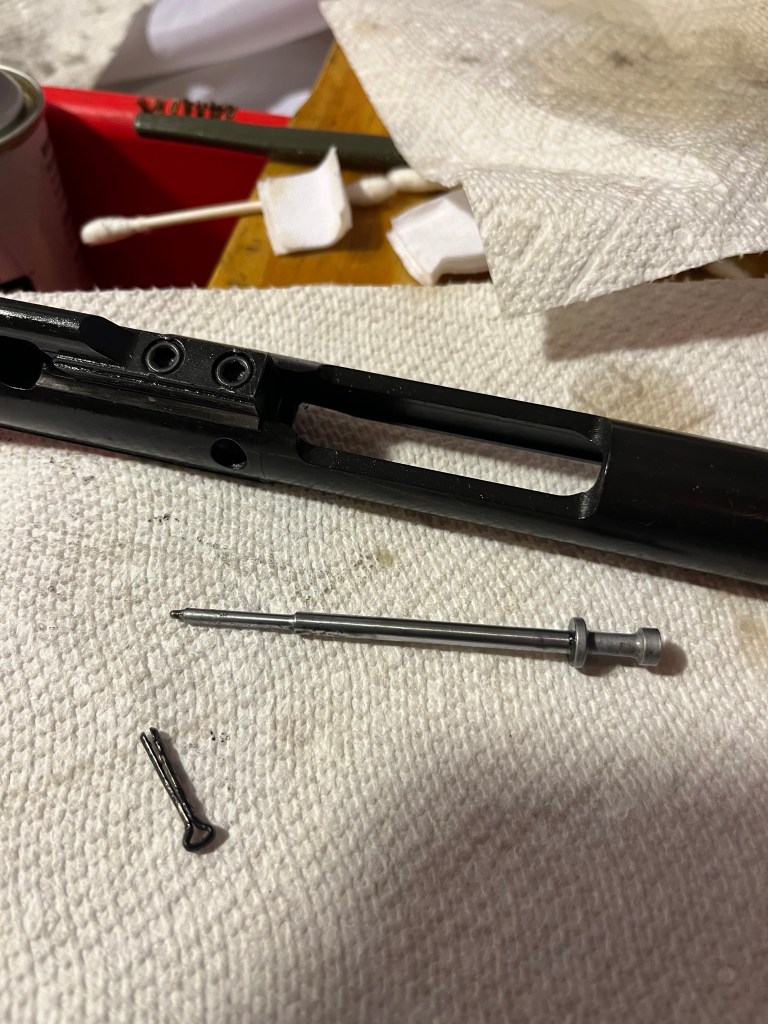
That’s the firing pin retention pin.

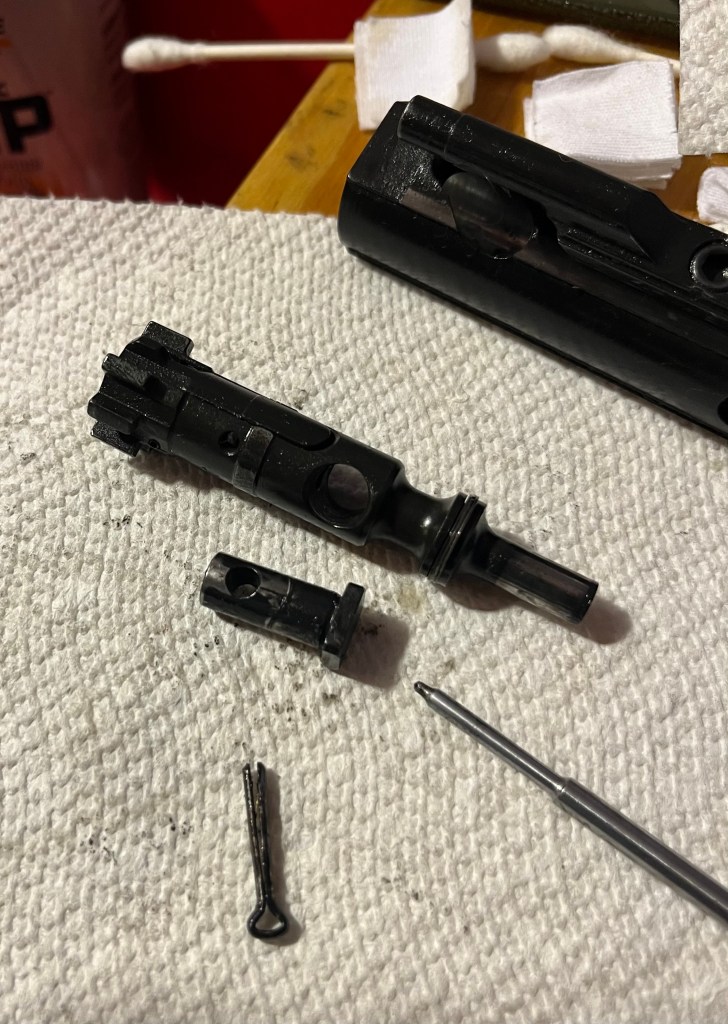
Remove it and slide the firing pin out.

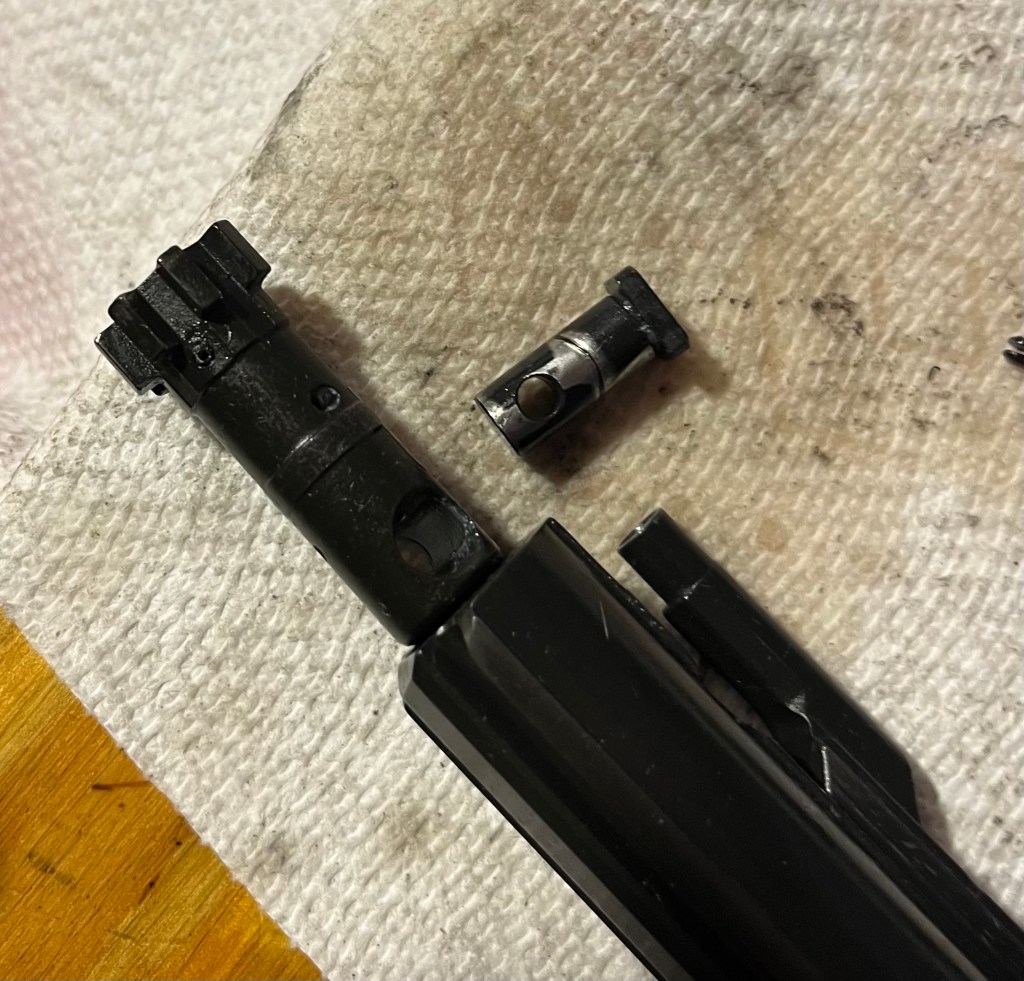
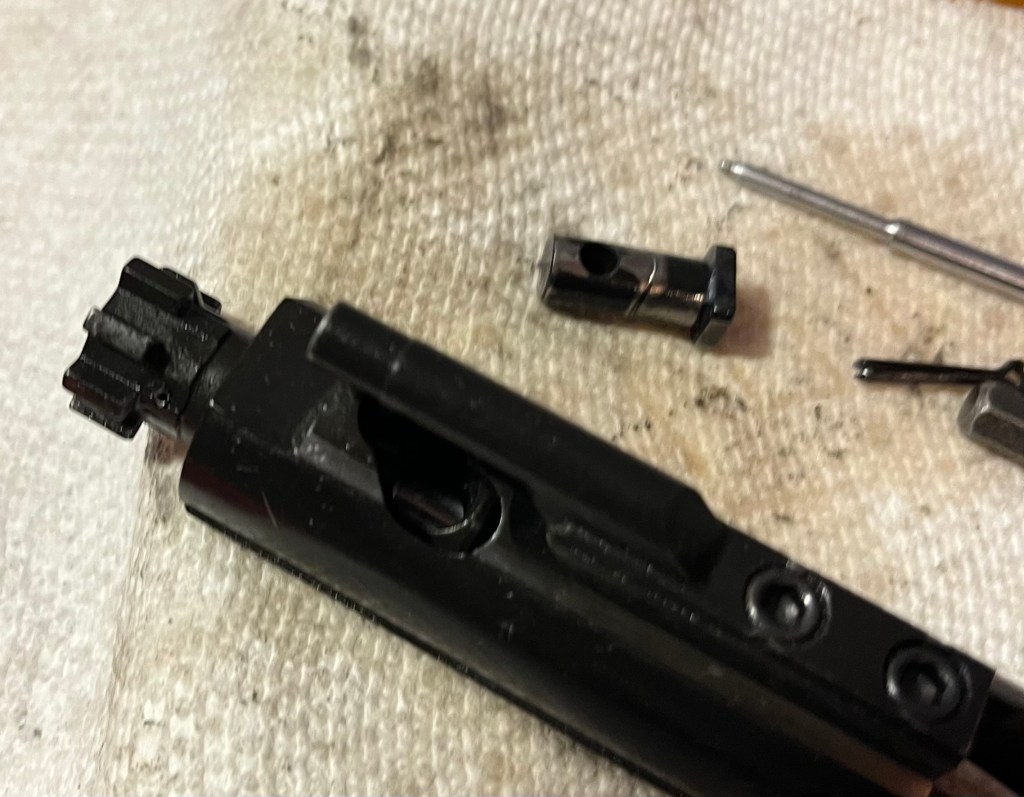
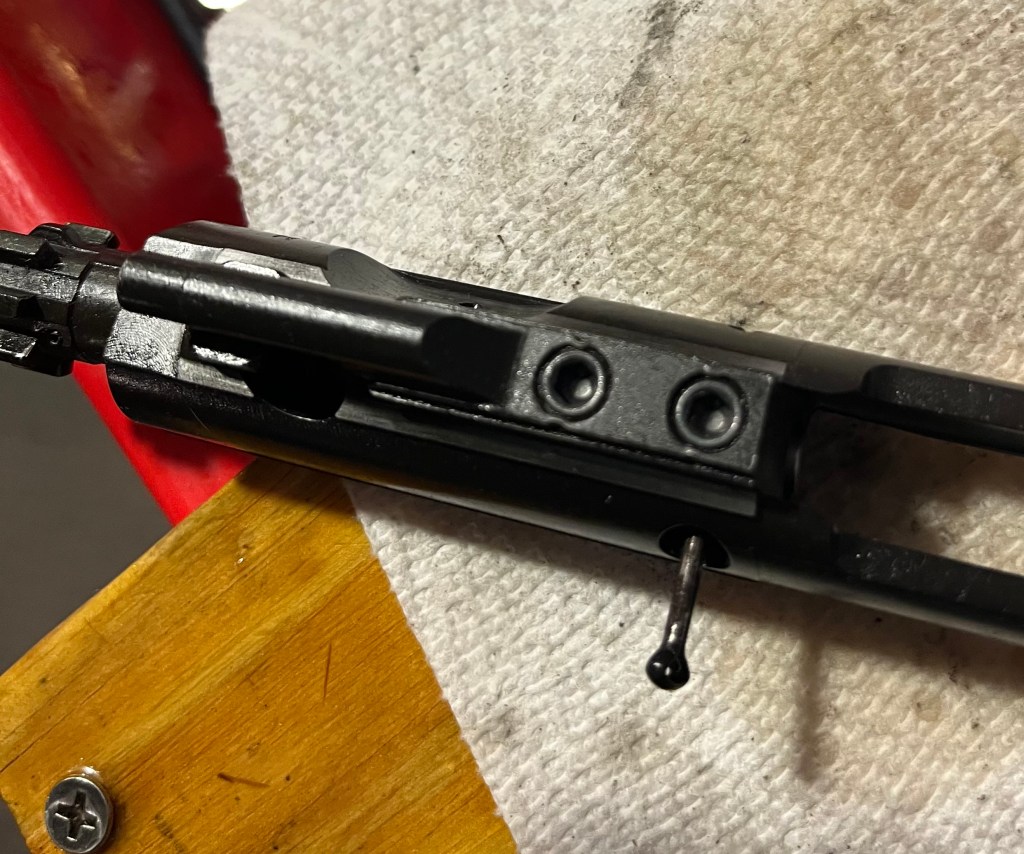
This is the cam pin. In this position the firing pin goes through a hole in it. It moves in that channel as the bolt cycles forward and back.

It must be rotated 90 degrees to be removed.

And now you can remove the bolt.

Congratulations! Now the cleaning begins.
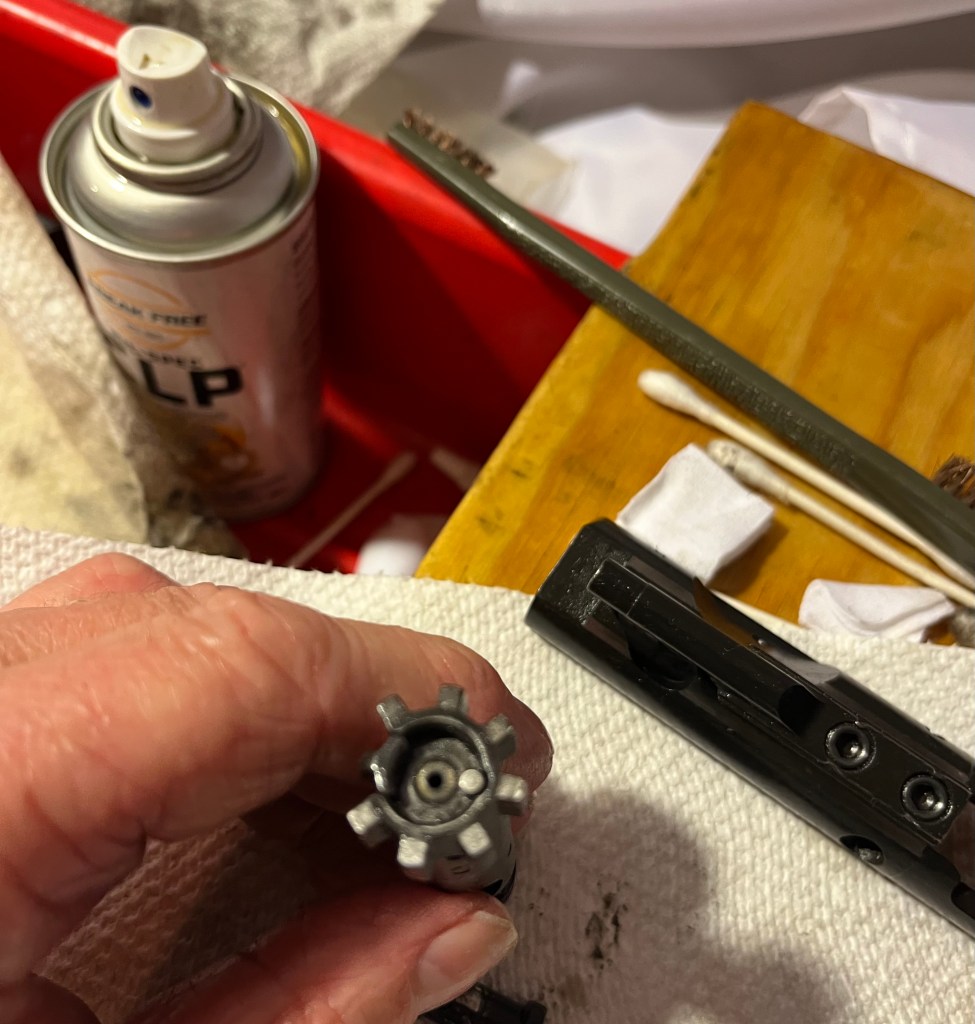
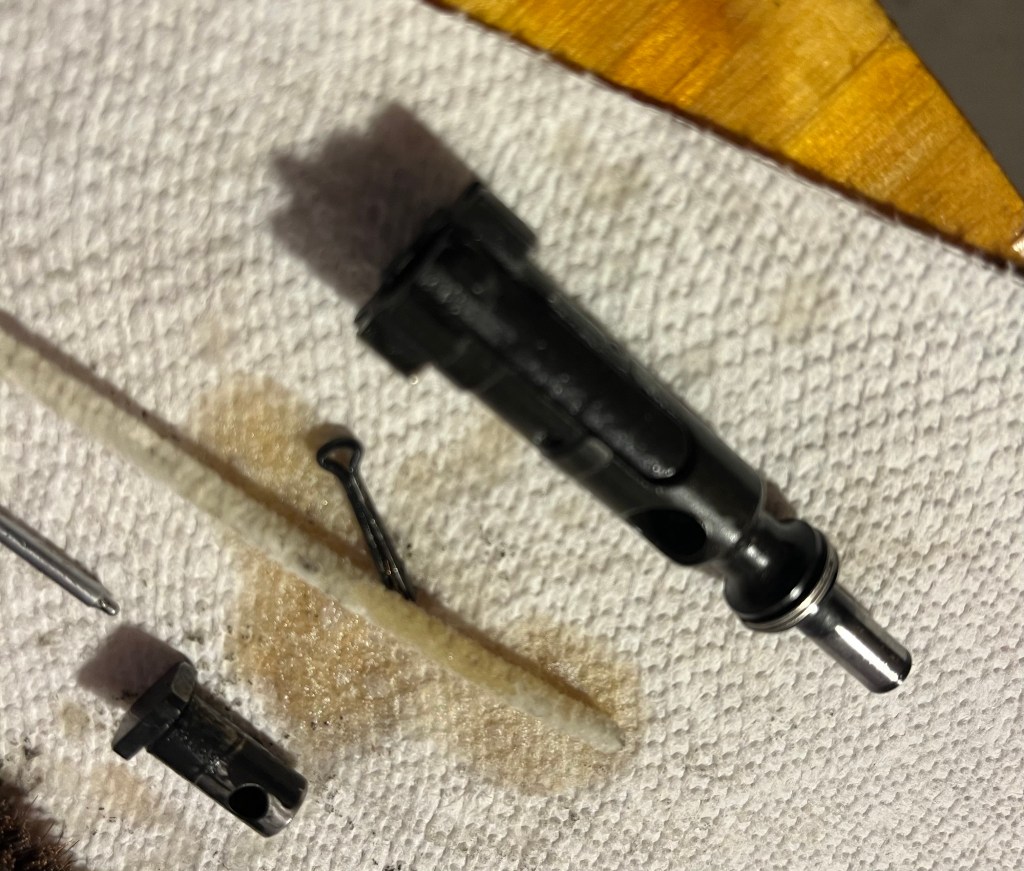
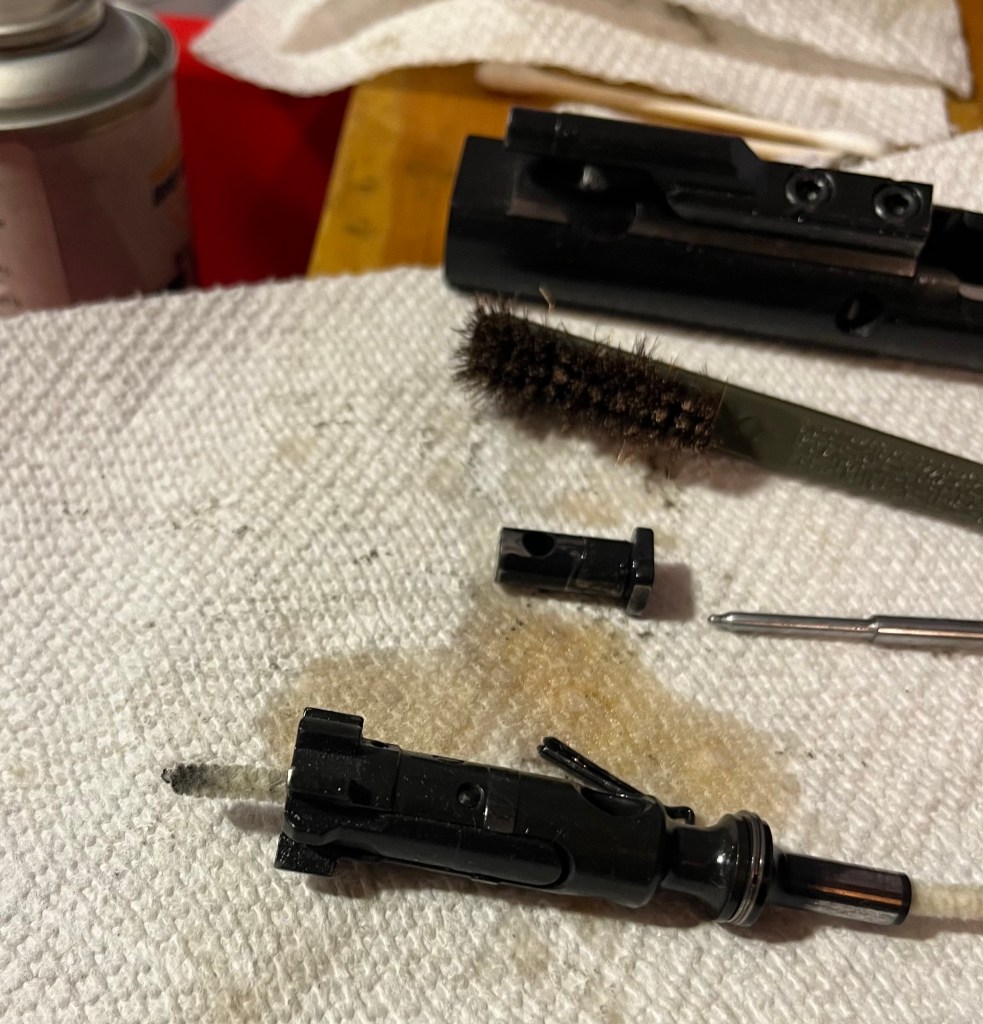
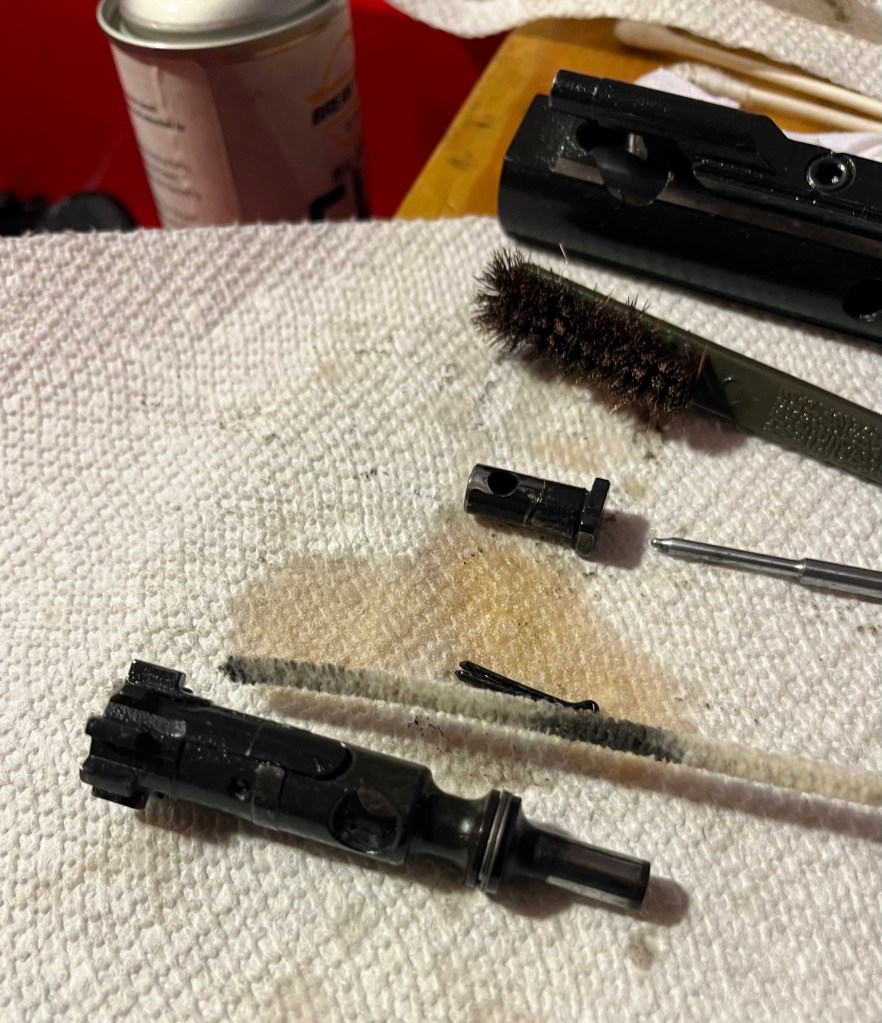
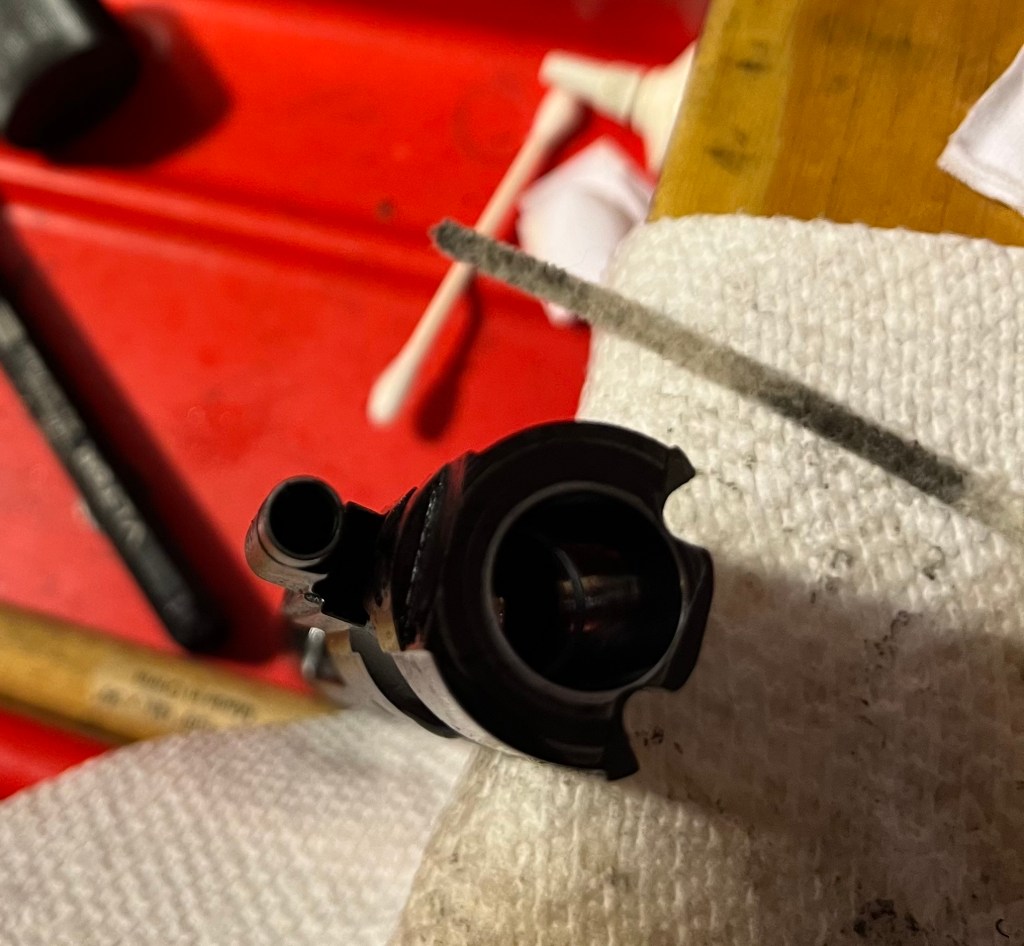
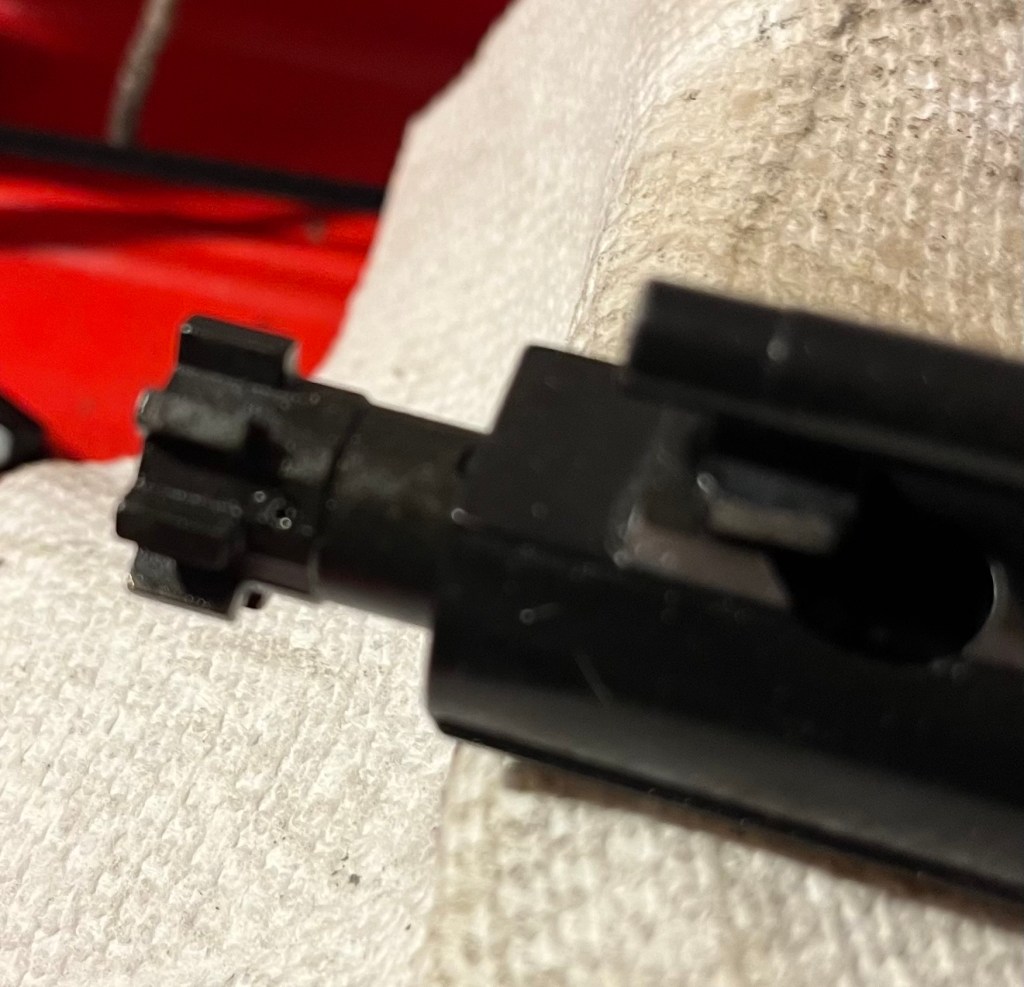
Clean the bolt face – you may need a toothbrush or wire brush to get all the spots.

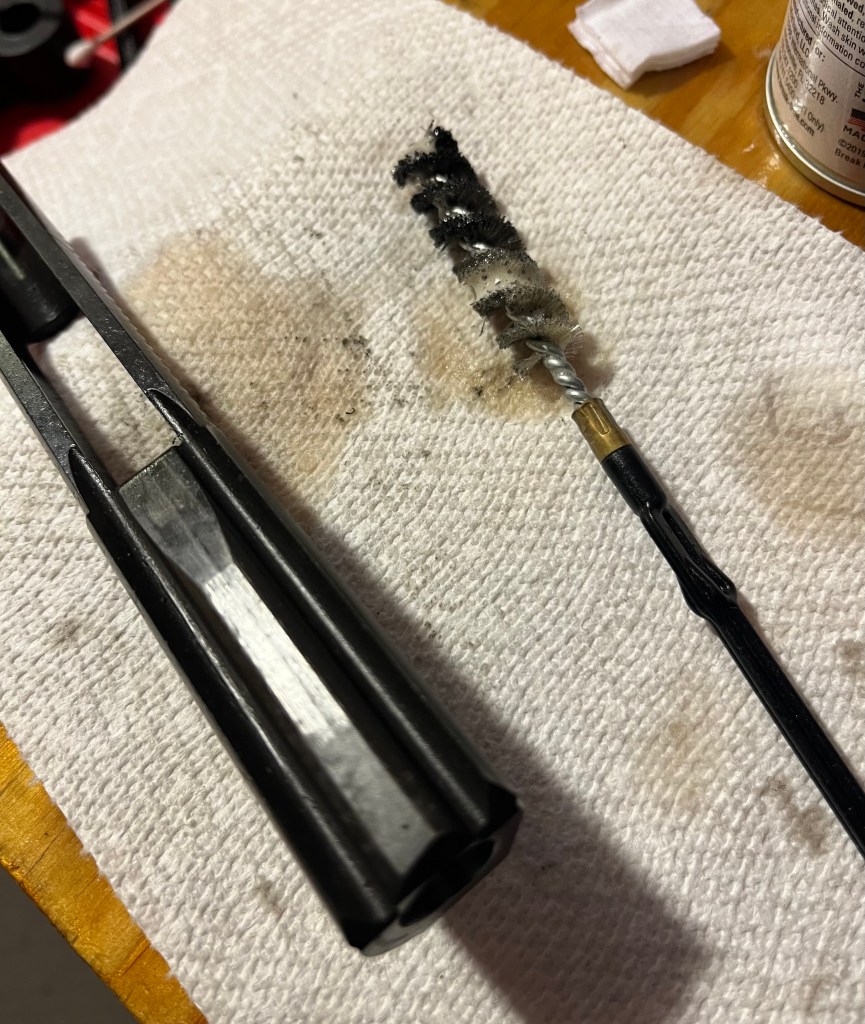
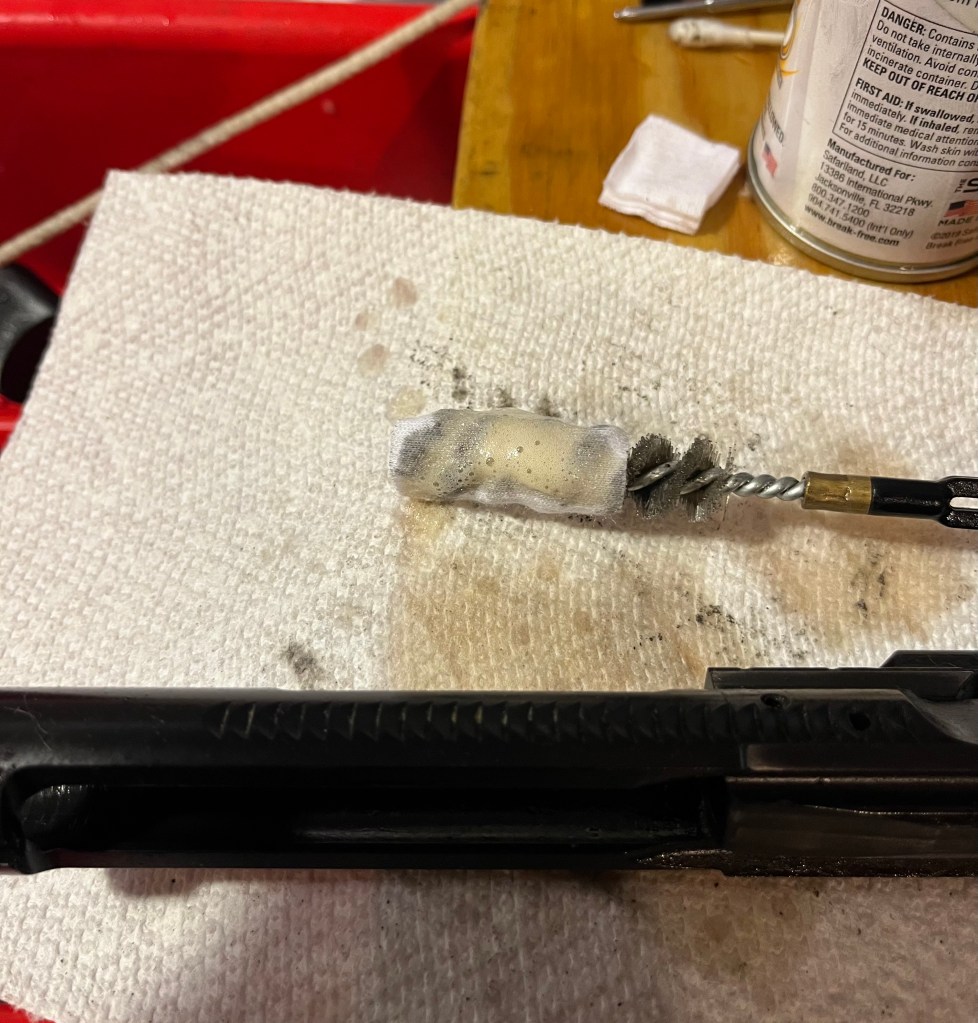
Take the clean end of your pipe cleaner (oh, yeah. They make special ones about a foot long for ARs) and wet it with solvent.

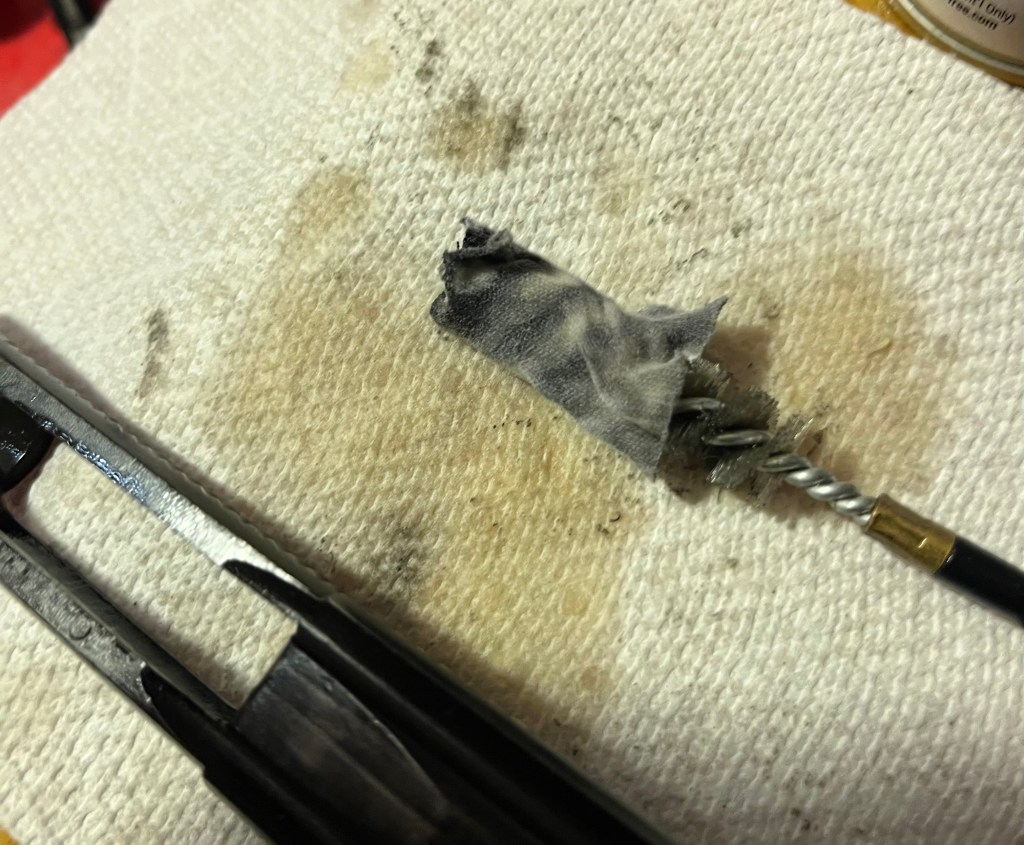
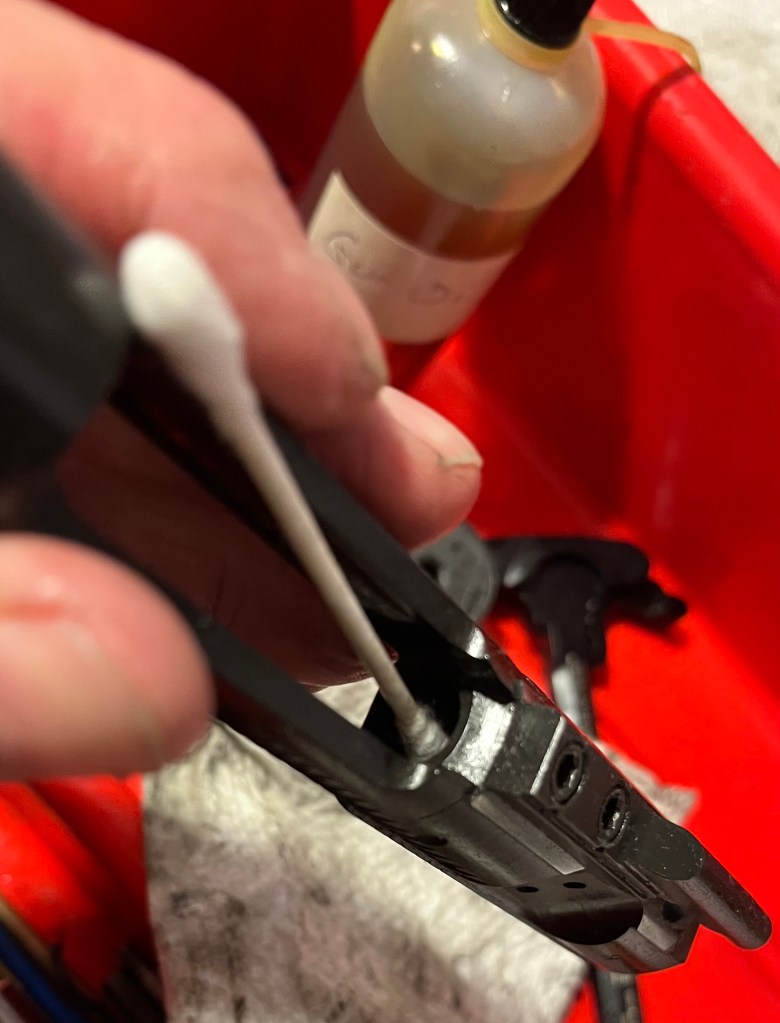
And clean out the firing pin channel. Blow it clean with a compressed air can after.

Imagine that – more schmutz!

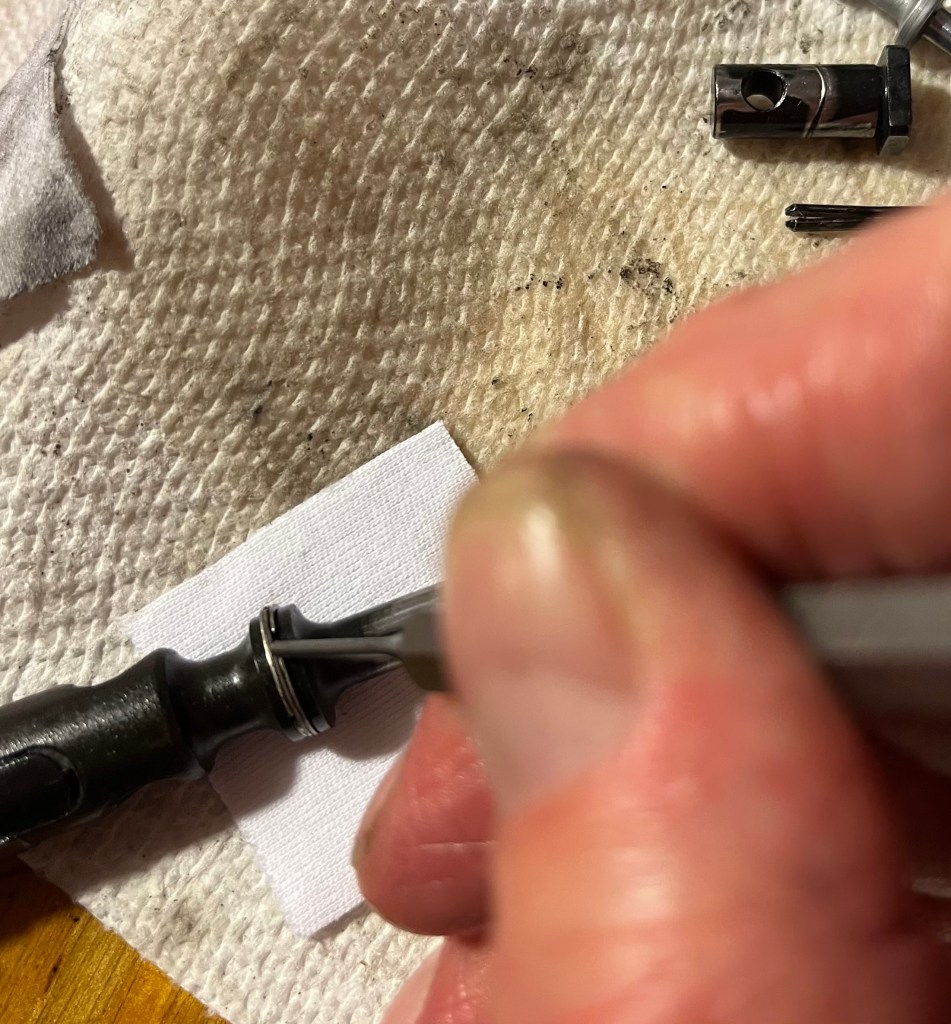
Clean your small parts with solvent. Note the friction wear on the cam pin. Any place you see shiny metal on the gun is a place that will require lubrication when reassembled.

Clean the inside and outside of the carrier. Oh, look, more shiny surfaces!

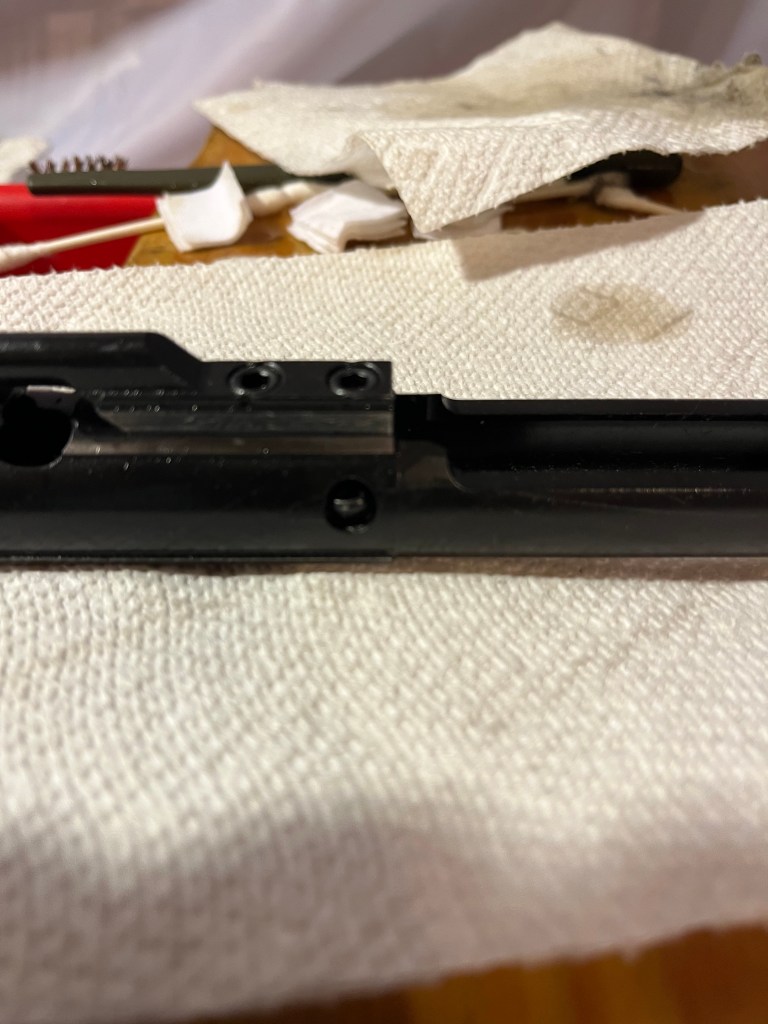
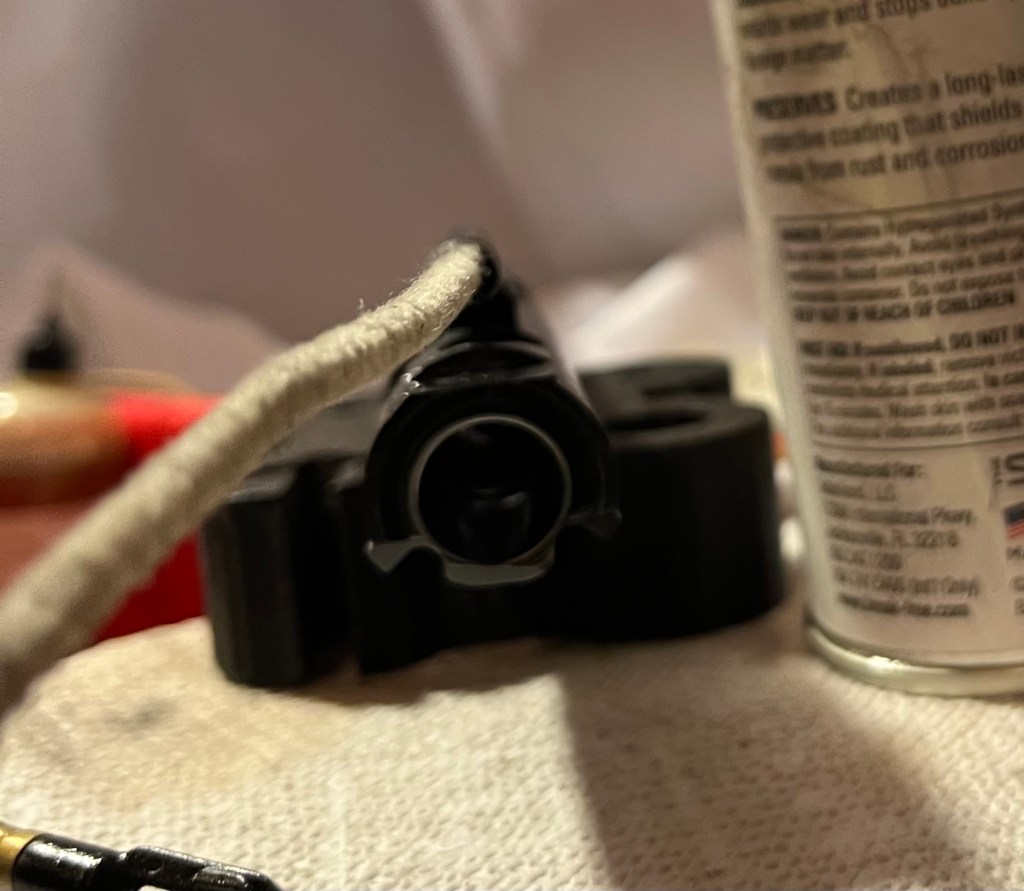
Now, the gas key.

Get in all the interior nooks and crannies.

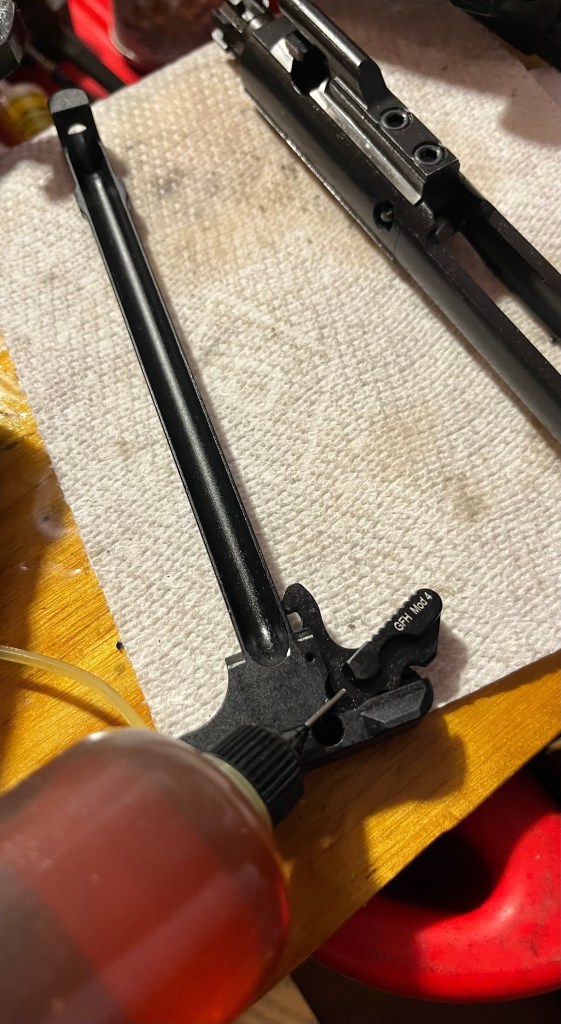
Don’t forget the charging handle. The groove gets filthy.

When completely clean, you are ready to REASSEMBLE!

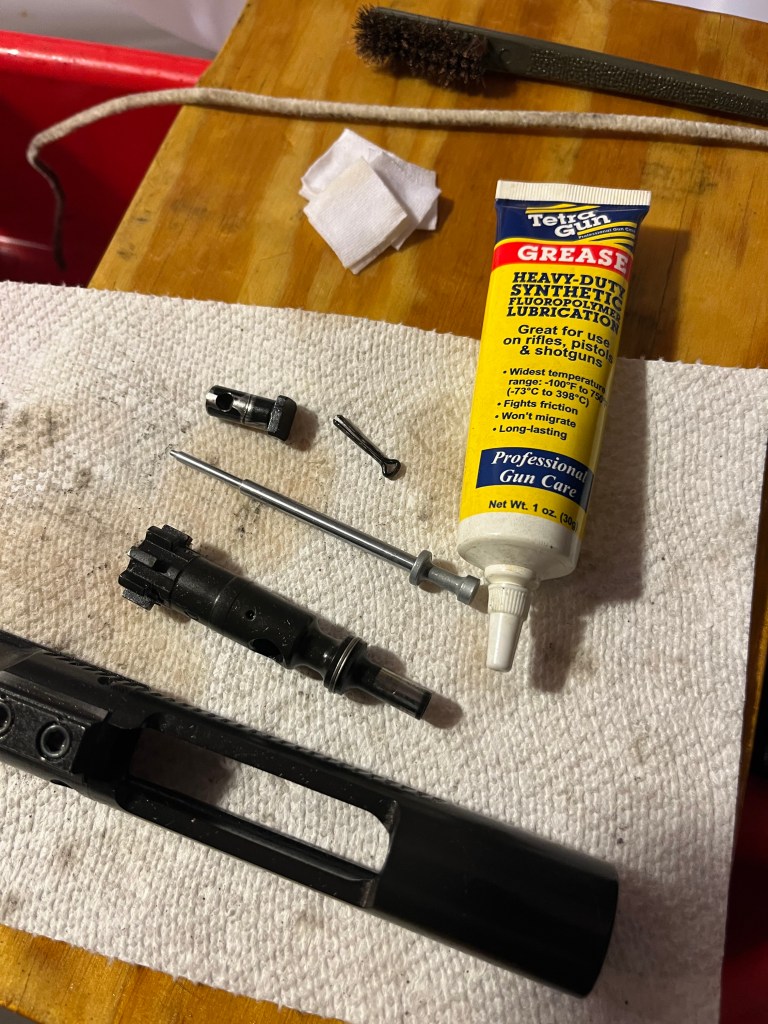
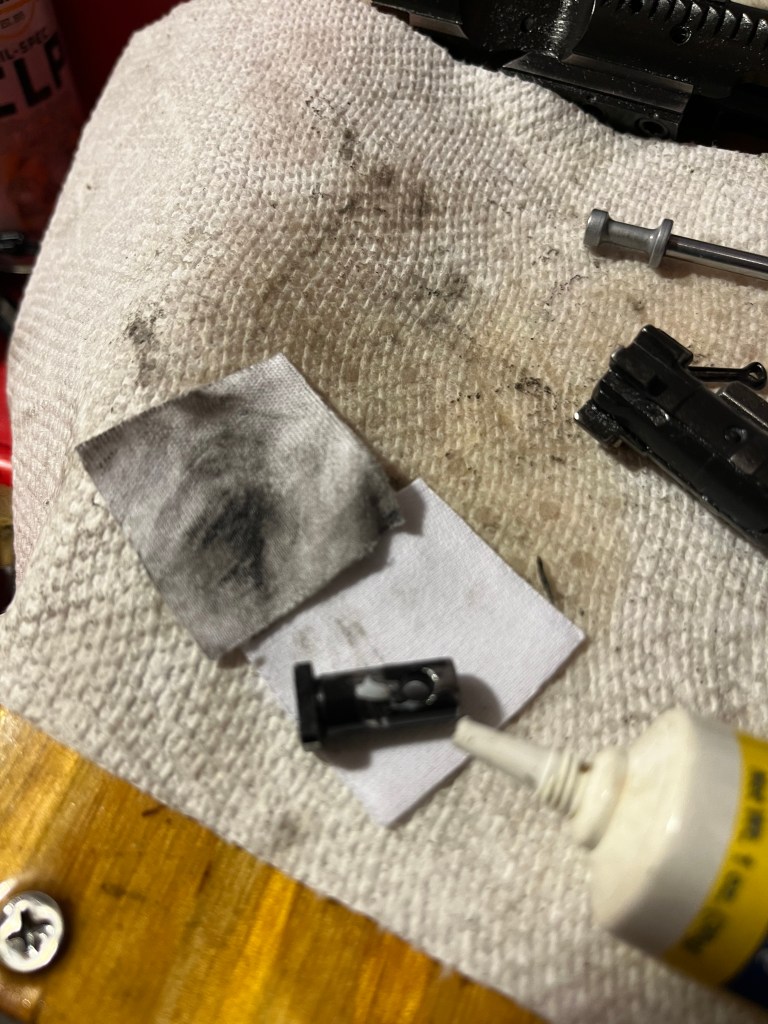
Now, this is my personal choice to use a film of grease for bolt lube. I don’t use it on firearms that will be sitting around a long time – it will cake up. Those guns get CLP or Rem Oil. But I do like it for a regularly used gun.

When lubing the bolt, take time to rotate the three gas rings so that none of them line up.

Remember the wear marks?

The bolt can go in with either end of the cam pin hole up, BUT the cam pin will only go in one of them! (Yes, I do recall an incident with an AR 10 where that was not the case . . .).

Insert and rotate 90 degrees.

Pull bolt forward to check operation. There should be some resistance if the gas rings are operating properly.

Slide firing pin back and retain it. When assembled, shake the BCG up and down. The firing pin should stay in, but move back and forth slightly.


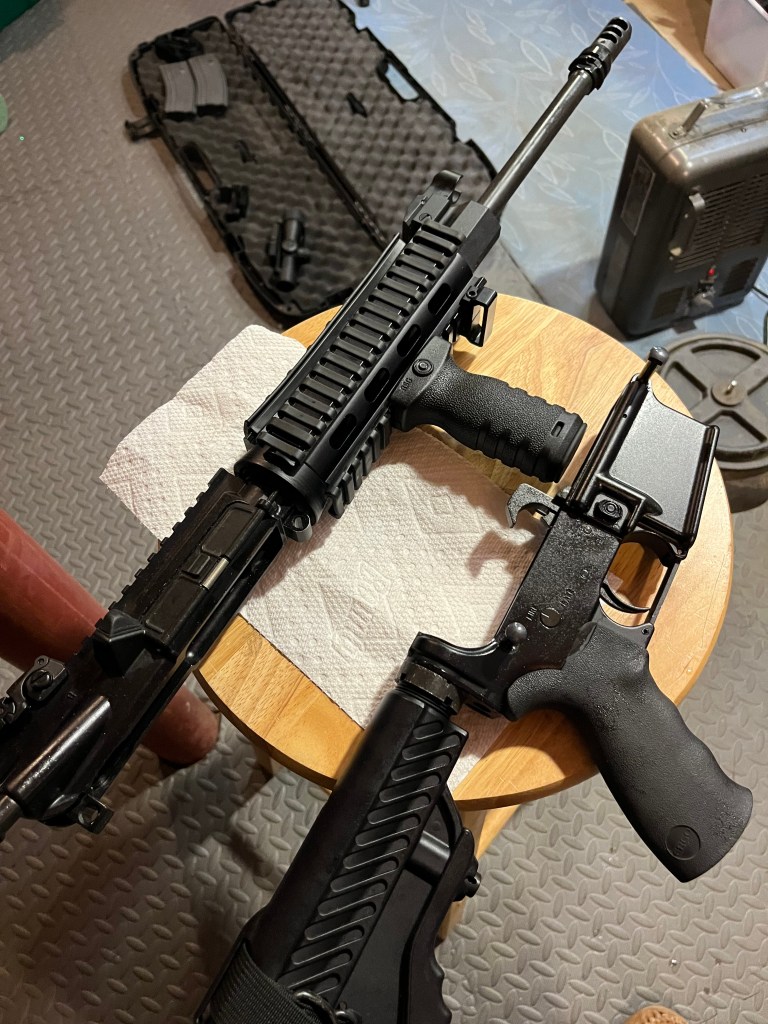
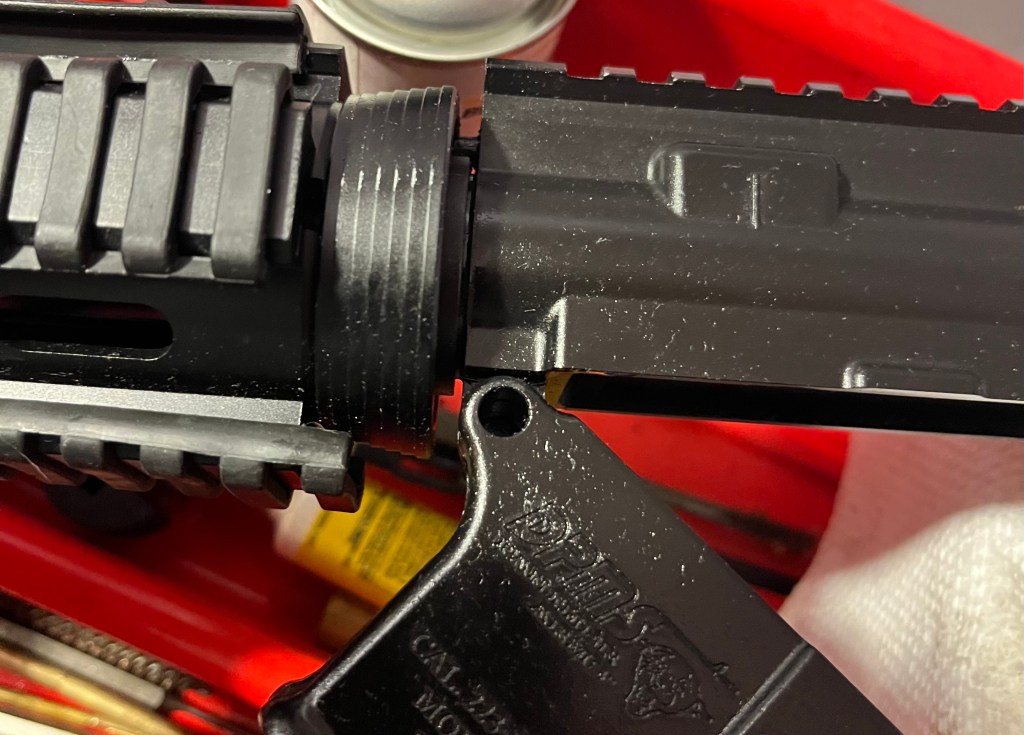
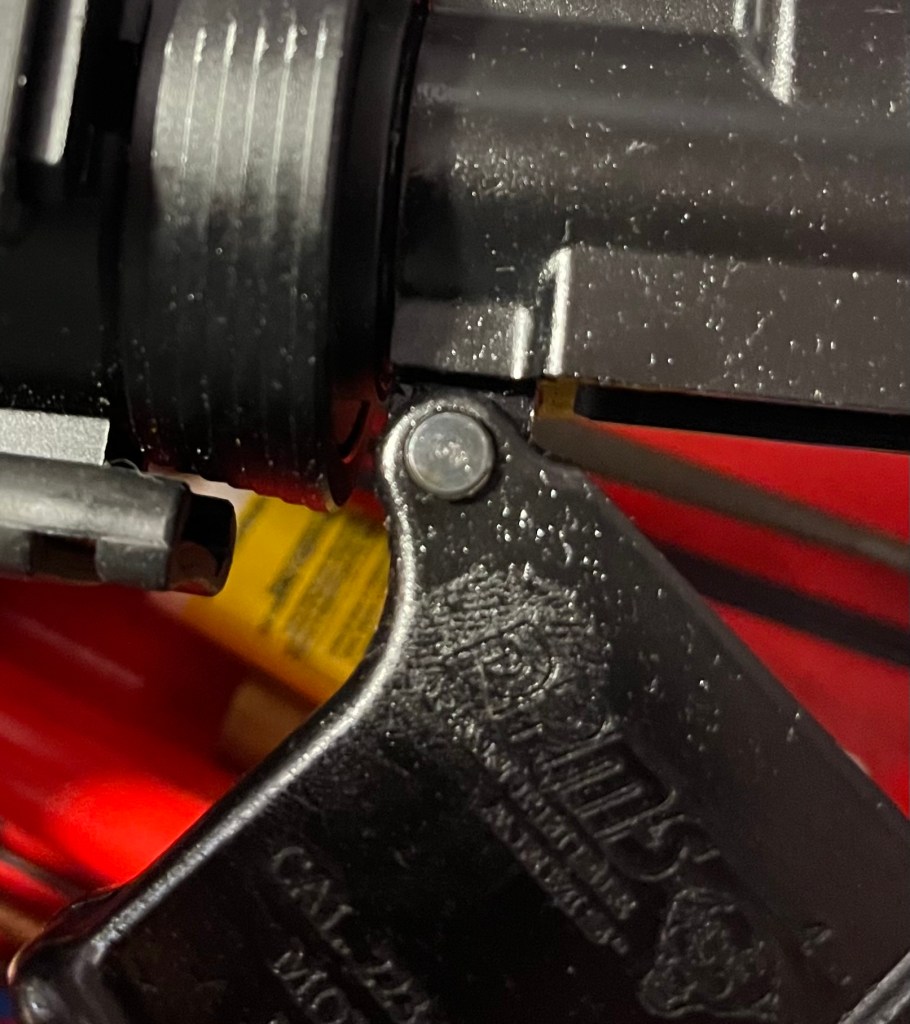
Now, retrieve the upper and lower that you so carefully set aside and start with the pivot pin.

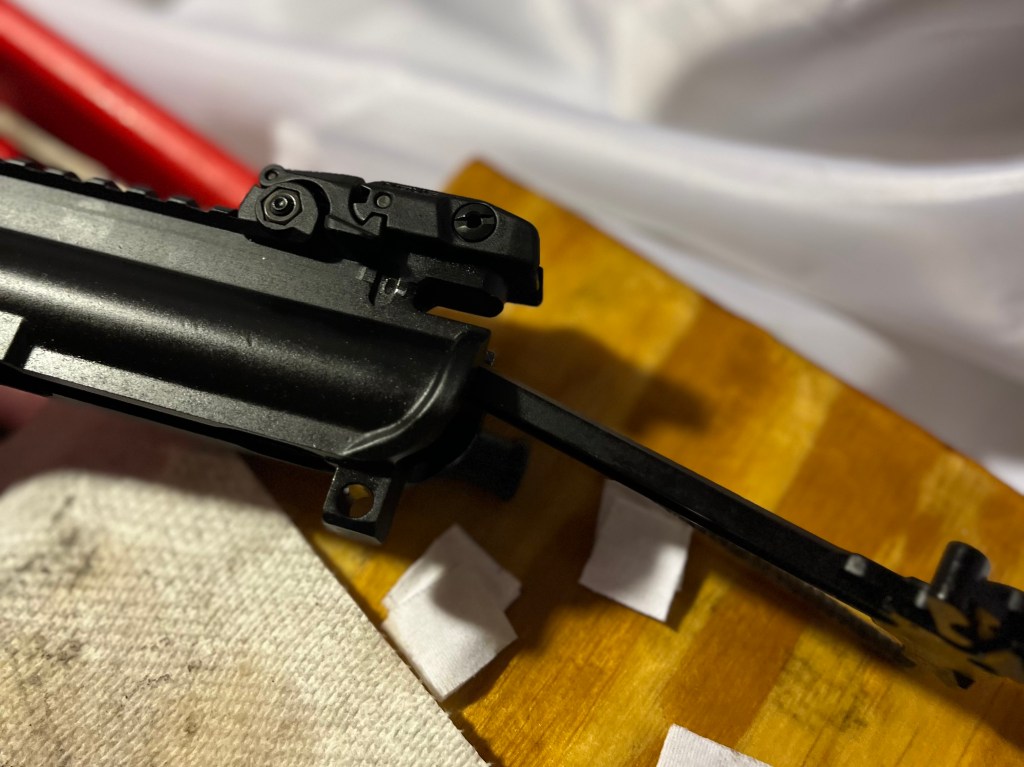
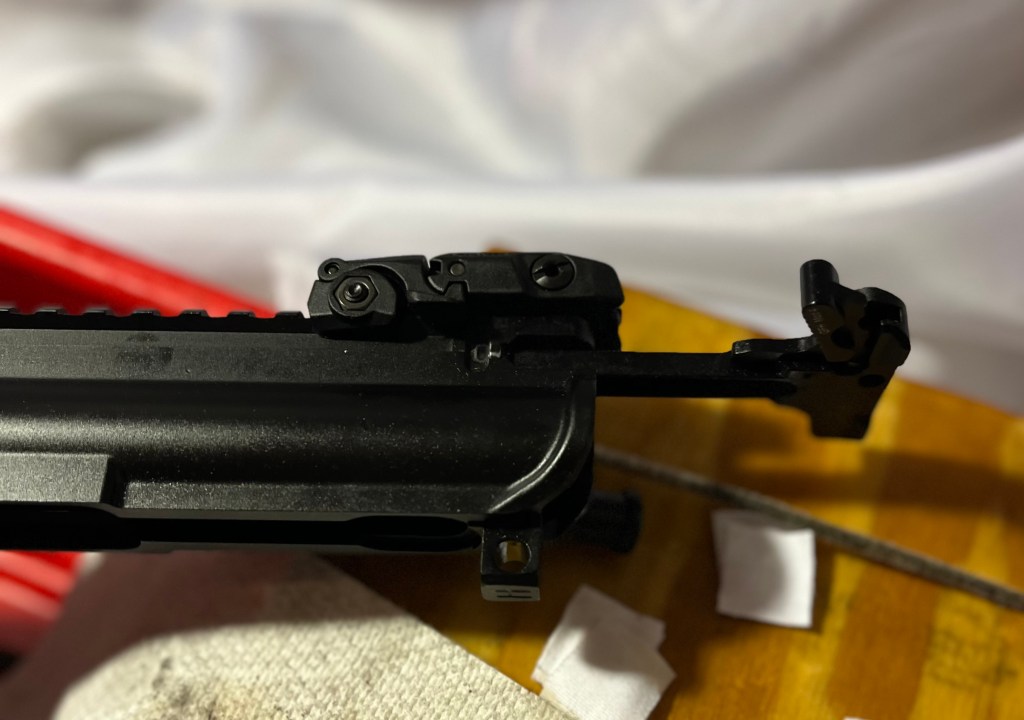
The end of the charging handle goes in and then up and into its channel partway. The gas key on the bolt then fits into the bottom of the charging handle, and the entire unit goes forward all the way.

You can now swing the lower up into position. Make sure the bolt is all the way forward for clearance.

Slide the takedown pin in to place.

Function test by locking the bolt back, releasing it, check that the safety works, then squeeze the trigger. Wipe all the surfaces down and head to the range, where you can dirty it up again!