Not so fast there, bucko.

Yesterday I mentioned jumping on to semi-auto .22 rifles in our Bangsticks for Beginners discussion. Then I realized we had skipped some important things on .22 hanguns – actually shooting them! As I was remediating that condition today, I also rembered some stuff I glossed over. Spent cartridge ejection. Let’s cover that now since it has some range safety implications.
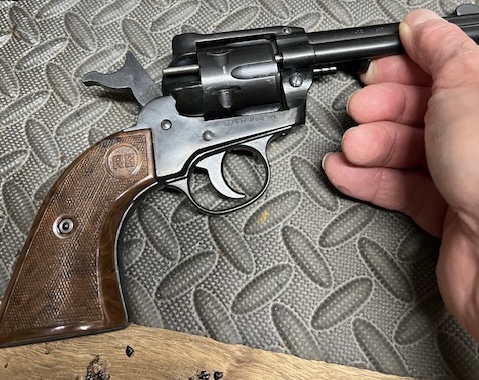
You can see the shiny ejection rod poking through the empty chamber. Once the rounds are fired, you go to half-cocked, as if loading, then push down on the spring loaded ejection rod at the front of the barrel. You need to pop out each spent round as you rotate the cylinder. Again, limited ammo and manual ejection slows down the process so beginners can grasp everything fully.

As far as the Ruger SR 22 (and all other semi-auto handguns), when the slide recoils to the rear, it first extracts the spent shell from the chamber, continues toward the rear where it is mechanically extracted and flung to the side, then cocks the trigger/hammer, moves back forward and strips a new round from the top of the magazine and seats it in the chamber. It all sounds very complex and happens fast, but is a simple complex.

Now the Range Safety Tip. Extracted Brass Is Hot! ‘mkay? As much as I appreciate women wearing low cut blouses, that’s a no-no on the range. Same same for open shoes. And an absolute necessity is eye protection (safety glasses for the slow to catch on). Finally, a brimmed hat to help deflect hot brass.

Safety nag over. Let’s shoot!
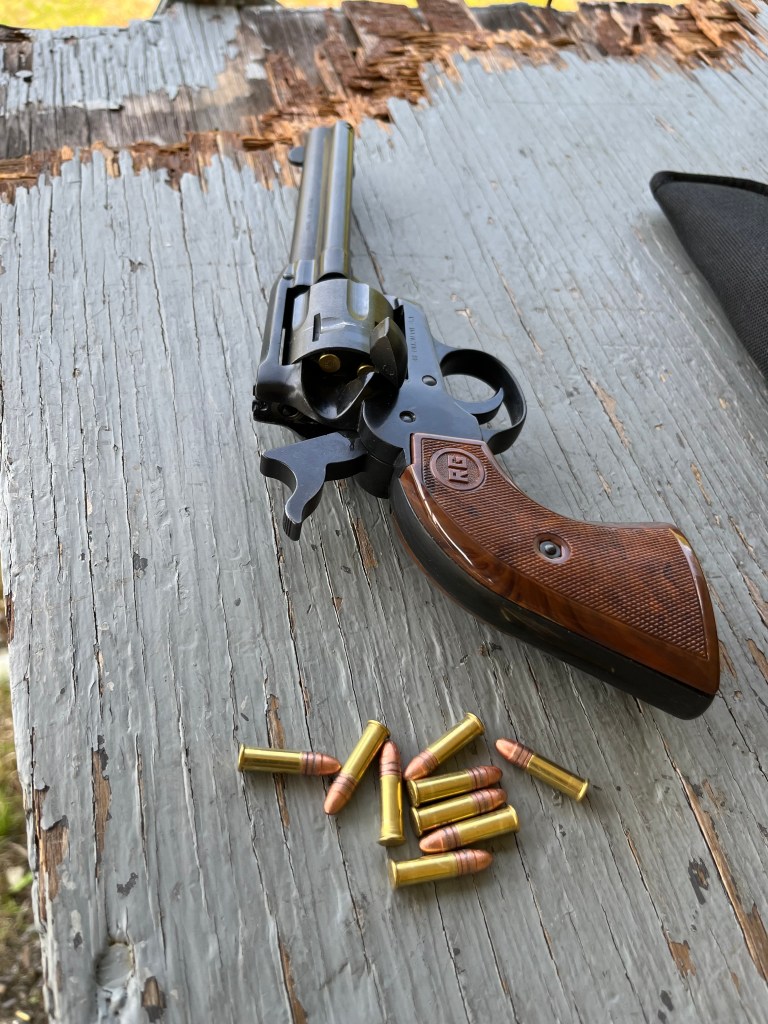
You can see a round in the cylinder, and the extractor rod tube ahead and aligned with it.

Results? OK, on paper but not very good.

Top is 5 yards, bottom is 7, two-handed grip, Weaver stance (file for future reference). I clearly was not keeping the front iron site down all the way in the rear notch, hence, shooting high. My trigger pull was poor, pushing the rounds left. Back to fundamentals, as certain people always preach. The Ruger? Also inconsistent:

Oh, we can do better than that. Sure, it’s 85 degrees, I’ve been mowing for four hours, and my socks are too tight. 7 yards, RG on the center, Ruger on the end of the right bar:

Practice, practice, practice. Maybe .22 rifles tomorrow. But, a teaser for later. See anything different?
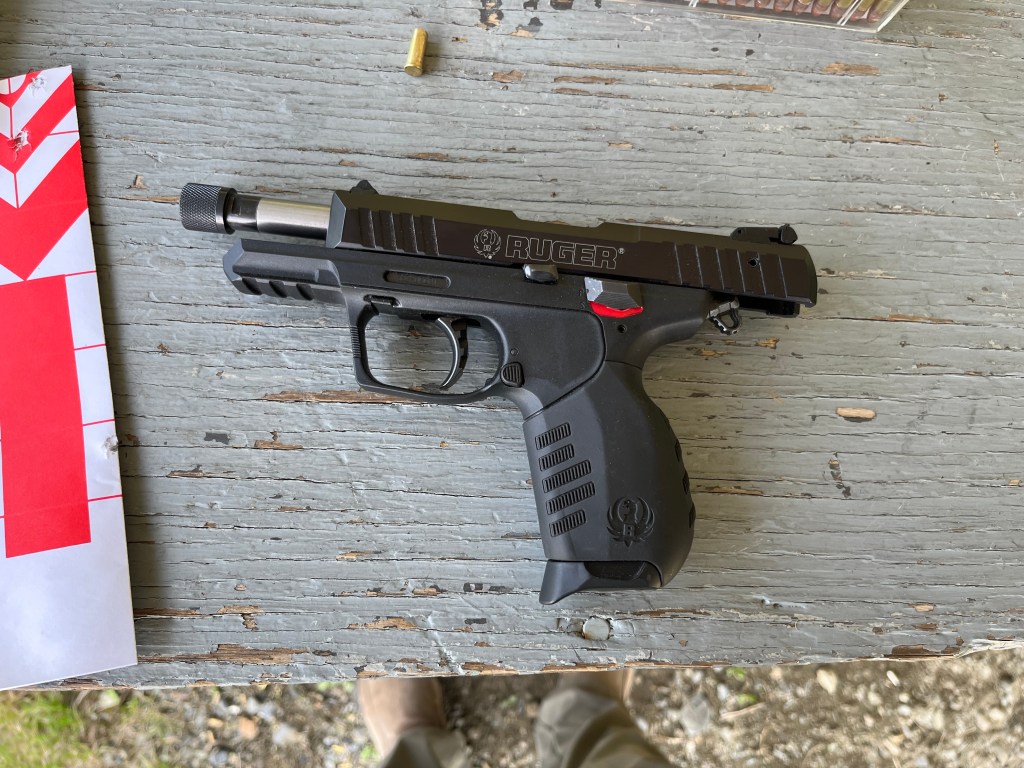
Think hearing protection.

Let’s jump to semi-autos as our next Bangstick for Beginners.

Semi-automatic. What does that mean? A lot of politicians and leftists don’t know or pretend to not know. Simply, the firearm fires semi-automatically – one trigger pull fires one round. The slide recoils backward to recock the trigger, then forward to strip a new bullet from the magazine. That’s it. It does not continually fire as long as the trigger is pulled back. That would be “automatic “ – as in machine gun. No, AR-15s are not automatic. They are semiautomatic, requiring the trigger to be pulled for each shot. Another term for automatic is “select fire”, meaning that you have three settings you can select: Safe, Semi and Automatic. An M-16 is a select fire weapon, thus, a “machine gun”. Not generally available to the public without a lot of money, and BATFE approval/$200.00 tax stamp. And more money for ammo. The rate of fire is about 800 rounds per minute. Given that the Normal Capacity Magazine contains 30 rounds, you can empty it in less than 3 seconds. At $0.40 to $1.00 per round, you will need deep pockets. Oh, yeah. It’s a magazine, not a clip. See M-1 Garand for clips.
So, rant over. But introducing a new shooter to semi automatic firearms is a great opportunity to clear up misunderstandings (or fake news) about firearms.
Here is one of my favorite handguns:

Ruger SR22. A .22 caliber semi automatic handgun, with a 10 round magazine:

It is a Single Action/Double Action pistol, meaning you can choose to pull the trigger with a long stroke to cock the hammer and release it, thereby firing a round. At that point, it will recock and load a new round so that further shooting only requires a short pull. Or you can manually cock the hammer and go right to the single action of pulling the trigger. Easy peasy.

it also has a manual safety on both sides. But remember, the only true safety on a gun is between the ears.
Small, lightweight, easily packed, and has virtually the same manual of arms of most semi automatic pistols. Fun to shoot, and trains you with a light recoil, on most aspects of shooting. And .22 range ammo is inexpensive. Many .22s are picky about what they will feed; I have never had an FTF (failure to fire) with this gun.

Interestingly, Ruger makes a bigger 9 mm version of this – The SR 9 and a compact SR 9 C. Yes, I’m a bit of a Ruger fanboi, but they know what they are doing. Train on the SR 22 and then move up.

Tomorrow we’ll take a look at .22 caliber semi automatic rifles!

How small is “compact”?

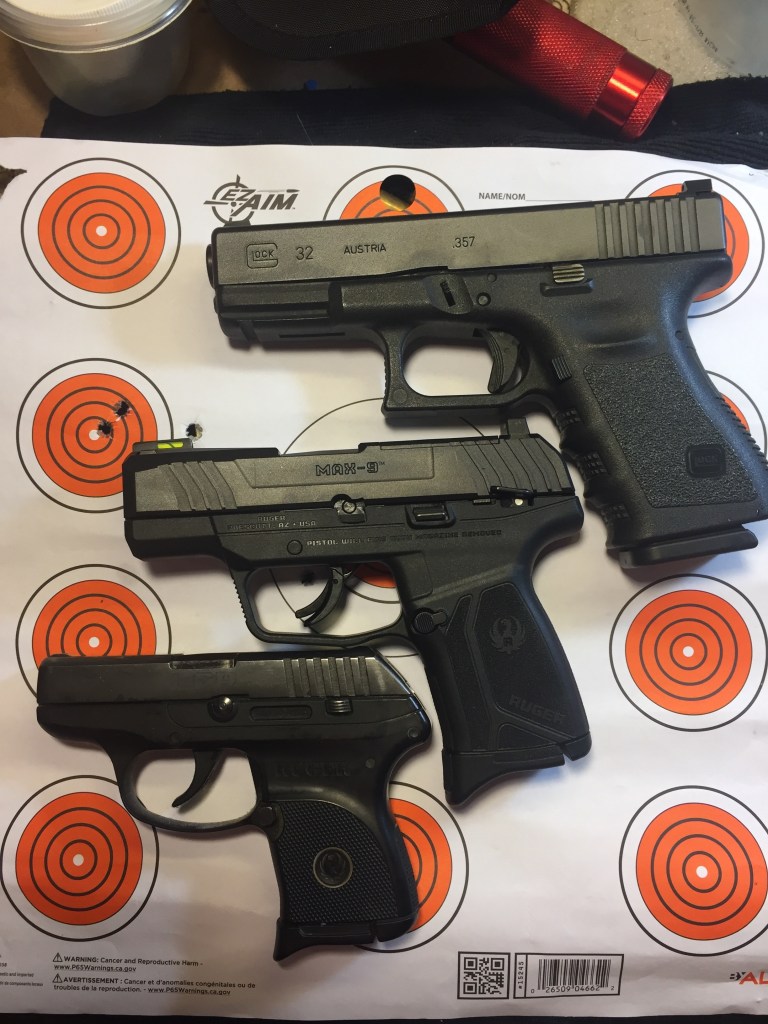
Well, from yesterday’s bullets, anything shooting them should be compact, right? Mmmm, no. From left to right, .380 ACP, 9 mm Luger, and .357 Sig. They do all share the same actual diameter – .355 inches. Yep, don’t rely on bullet names to accurately represent dimensions; there’s usually a bunch of marketing in the name. .357 Sig was meant to match the stopping power and name recognition of the .357 Magnum, but shoot out of an autoloader instead of a revolver. And the European name of the .380 is the 9mm Kurz, Kurz being Short in German.

So what size compacts will shoot these rounds?

,

Top is the Glock 32 (but it’s really the G19, which is the compact version of the original plastic fantastic Glock 17). The 19, 23 and 32 are the exact same frame, but calibered in 9 MM, 40 S&W, and Sig .357 respectively. Swap out the barrels and they are virtually interchangeable. Minor quibble, the 40 and 357 use identical magazines, while the 9 uses its own.

So, the G32 above, marketed as a compact, can shoot the barn-burning .357 Sig, as well as the 40 “Short & Weak” and the 9 mm “EuroPellet”.

Next pistol down is a Ruger Max 9. It is chambered in, you guessed it, 9 mm. But it is significantly smaller than the Glock. Maybe we can call it a Sub Compact.

And finally, the Ruger LCP. Little Compact Pistol? Perhaps we are talking Micro Compact. And it is significantly smaller than the Max 9. I’m betting it will fit in a pants pocket easily.

Tomorrow, let’s compare dimensions, performance, accuracy and some other factors. But all shooting the same diameter bullet should make it easy. Right?

Predator Precision Presently

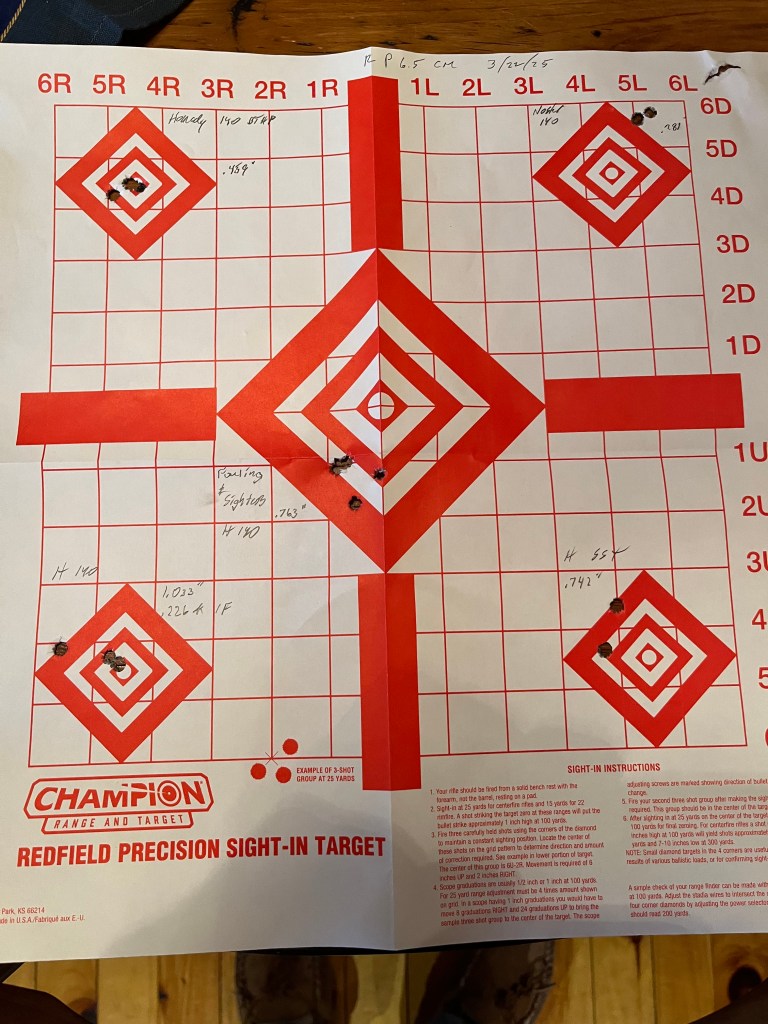
Yesterday at the range, shooting to compare from five years ago:

Center – fouling and sighters, plus one round with damaged meplat Still, .763”.

Upper left – Hornady 140 ELD Match. Cases sorted and bullets weighed. .459”.

Upper right – Nosler Competition 140 HPBT. .281”. Yes, that is three shots.

Lower left – Hornadys, again, but unsorted brass and loaded ages ago. The flyer puts it at 1.033”, but .226” without.

Lower right – My last two Hornady 140 SSTs from the bullet shortage during the Plandemic; they were all I could find at the time. .742”.

I think I’m going to write to Ruger to tell them that this 5 year old rifle, with over 3,000 rounds through it, still shoots well.

Predator Precision

As I was falling asleep last night, I was trying to remember all of the upgrades I did to the rifle. Of course, I bedded it. Then, I

  1. Changed out the magazine from four to AICS and ten rounds.
  2. Adjusted the stock trigger down.
  3. Added a muzzle brake.
  4. Ordered a suppressor.
  5. Received the suppressor 14 months later.
  6. Swapped out the trigger.
  7. I forget.

Let’s see about photos during this process:

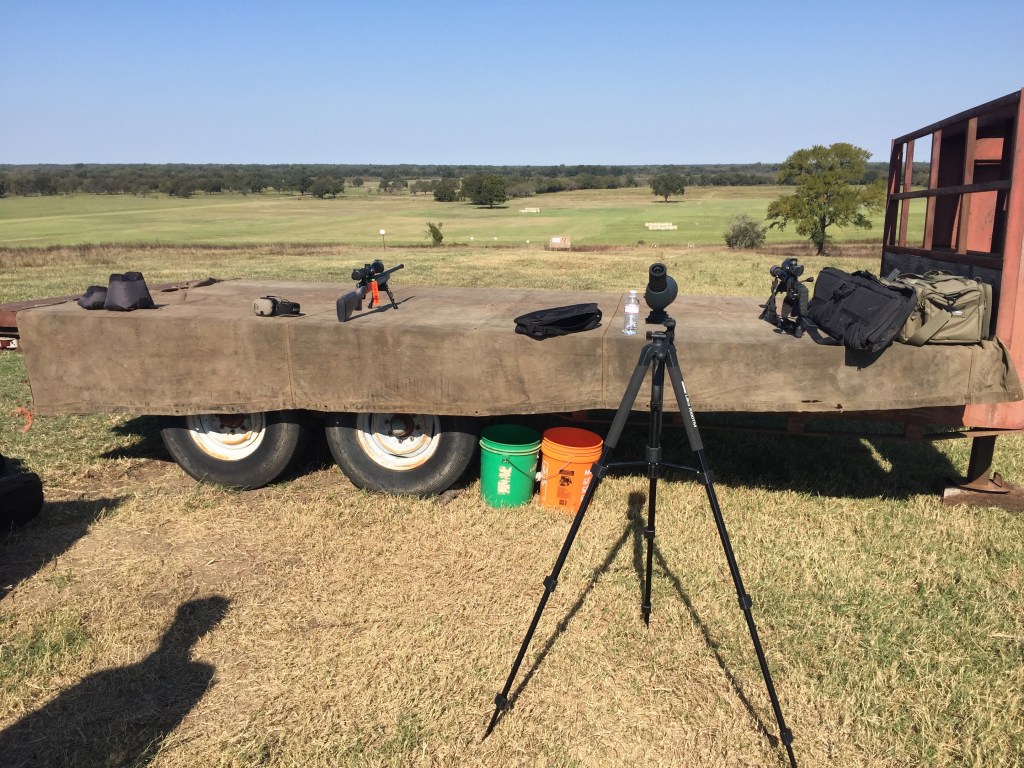
Then I went to Texas with some shooting buddies/budettes.

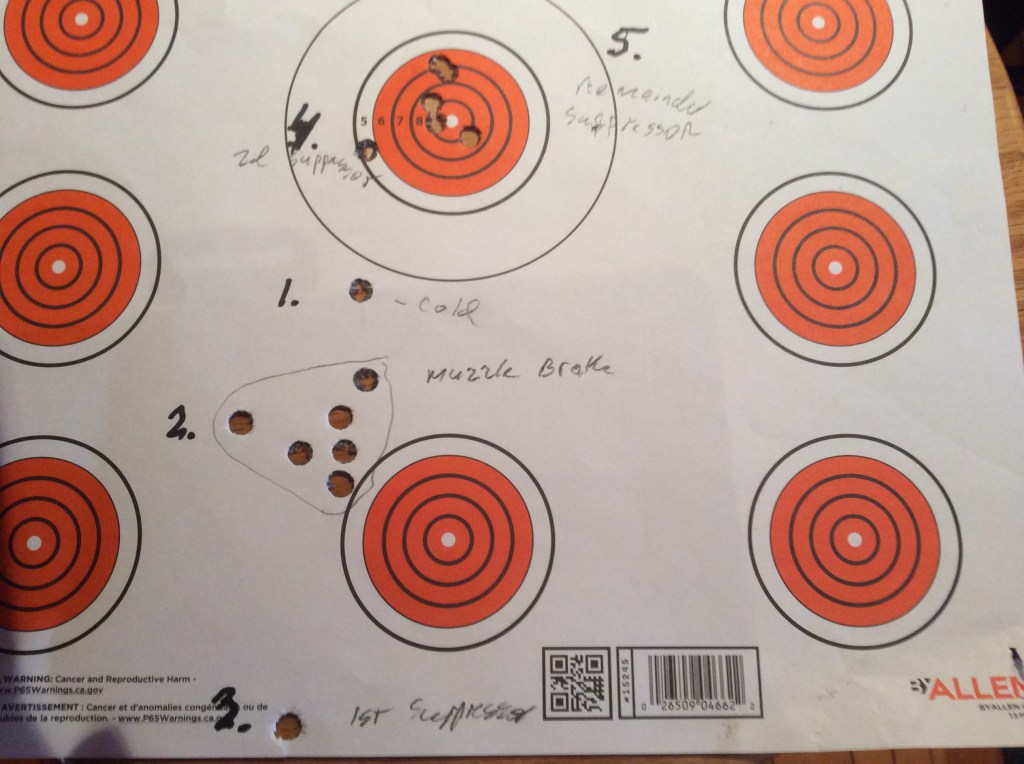
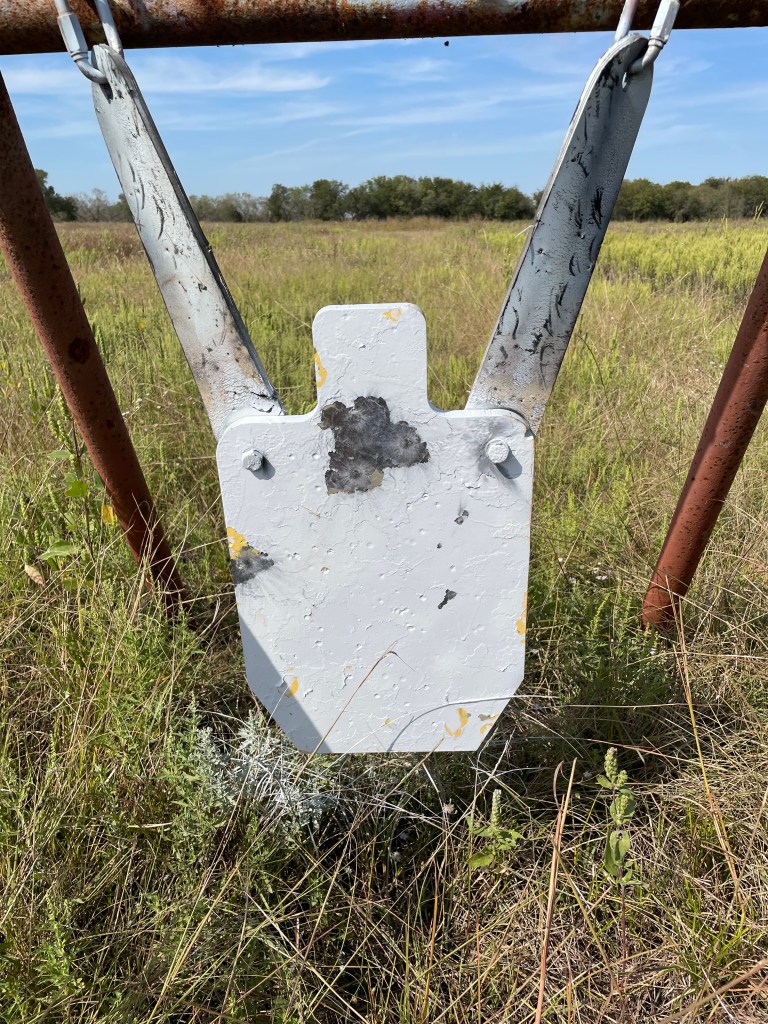
I was the only one to engage the 750 target out next to the big tree. First shot left edge. Adjust. 3 good ones. A buddy knew I could shoot ok, but didn’t know how much. He brought back this pic:

I went out today to see if my 5 year old rifle with over 3000 rounds through it was still functioning. I’ll show you tomorrow.

Predator Teaser

As part of my 2020 New Year’s resolution, I resolved to hit steel at 1,000 yards.
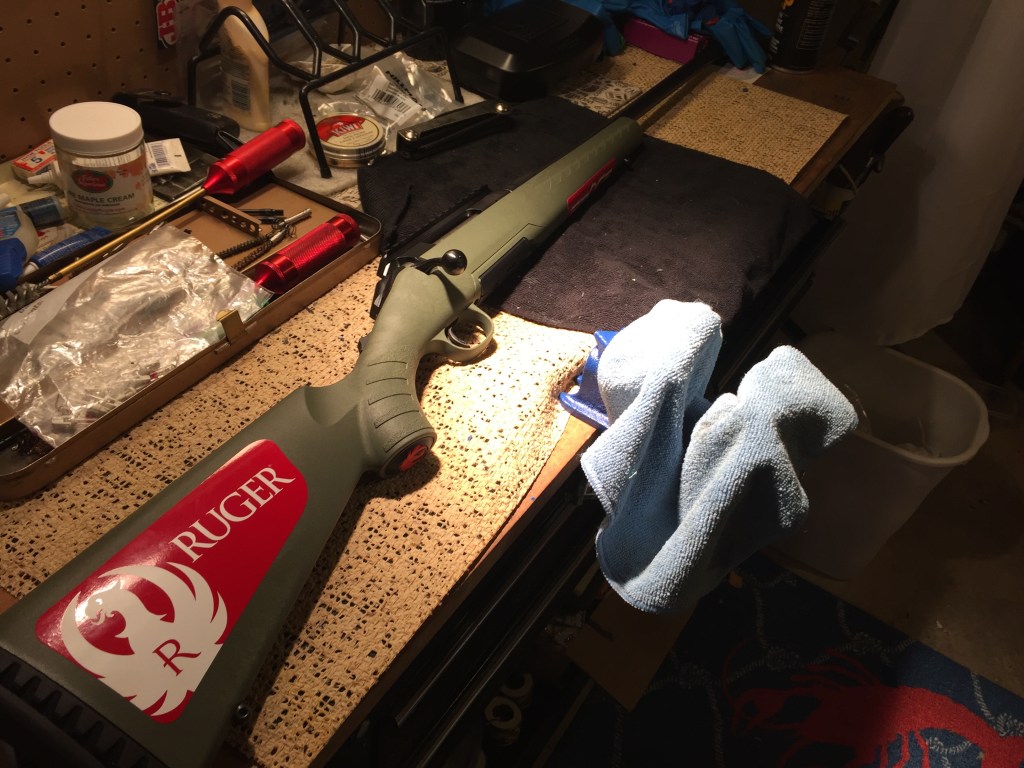
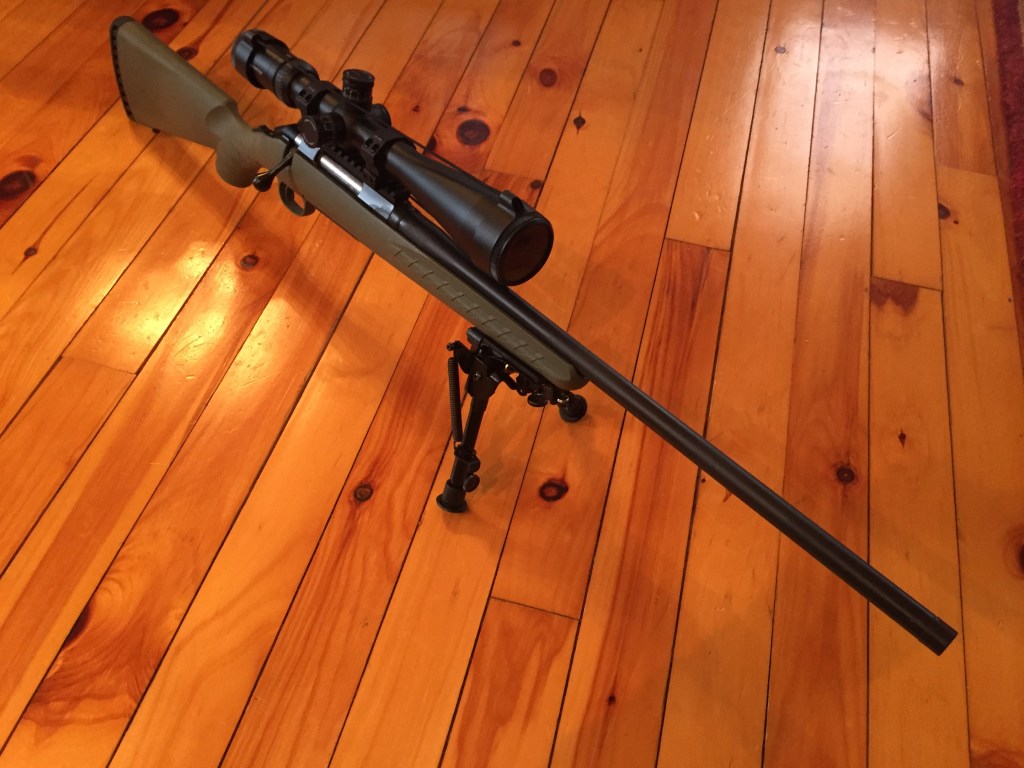
At Christmas 2019, Santa brought me a Vortex Viper 6×24 second focal plane scope. That was go time to order a Ruger American Predator in 6.5 Creedmoor from my LGS. It showed up in February.

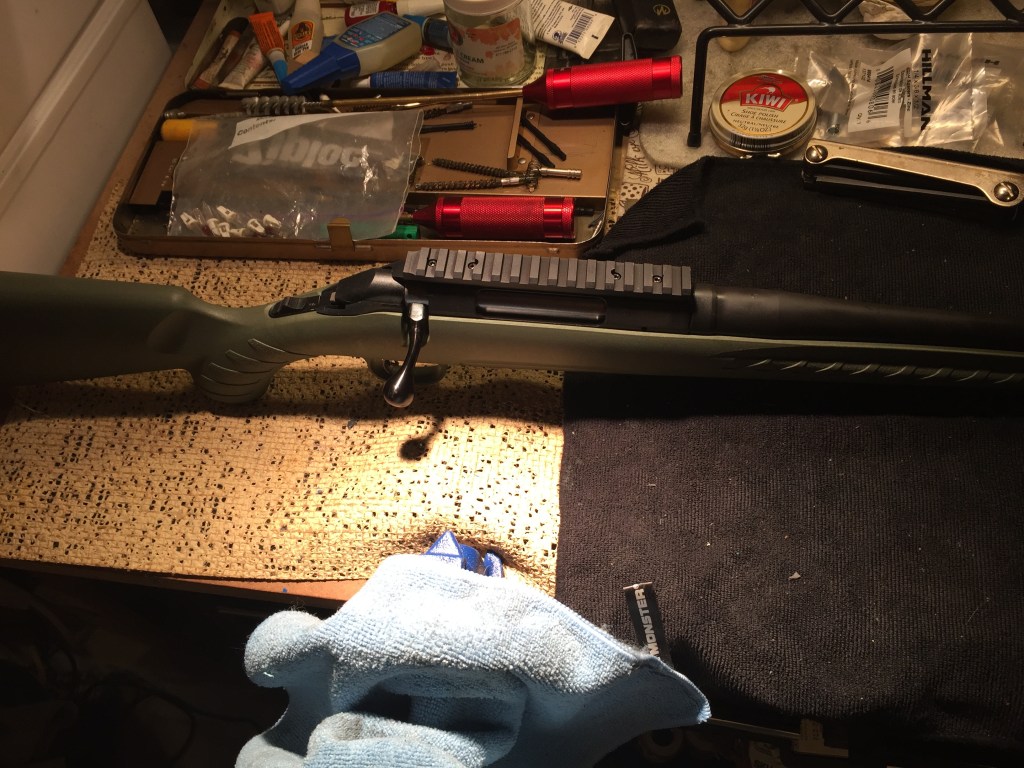
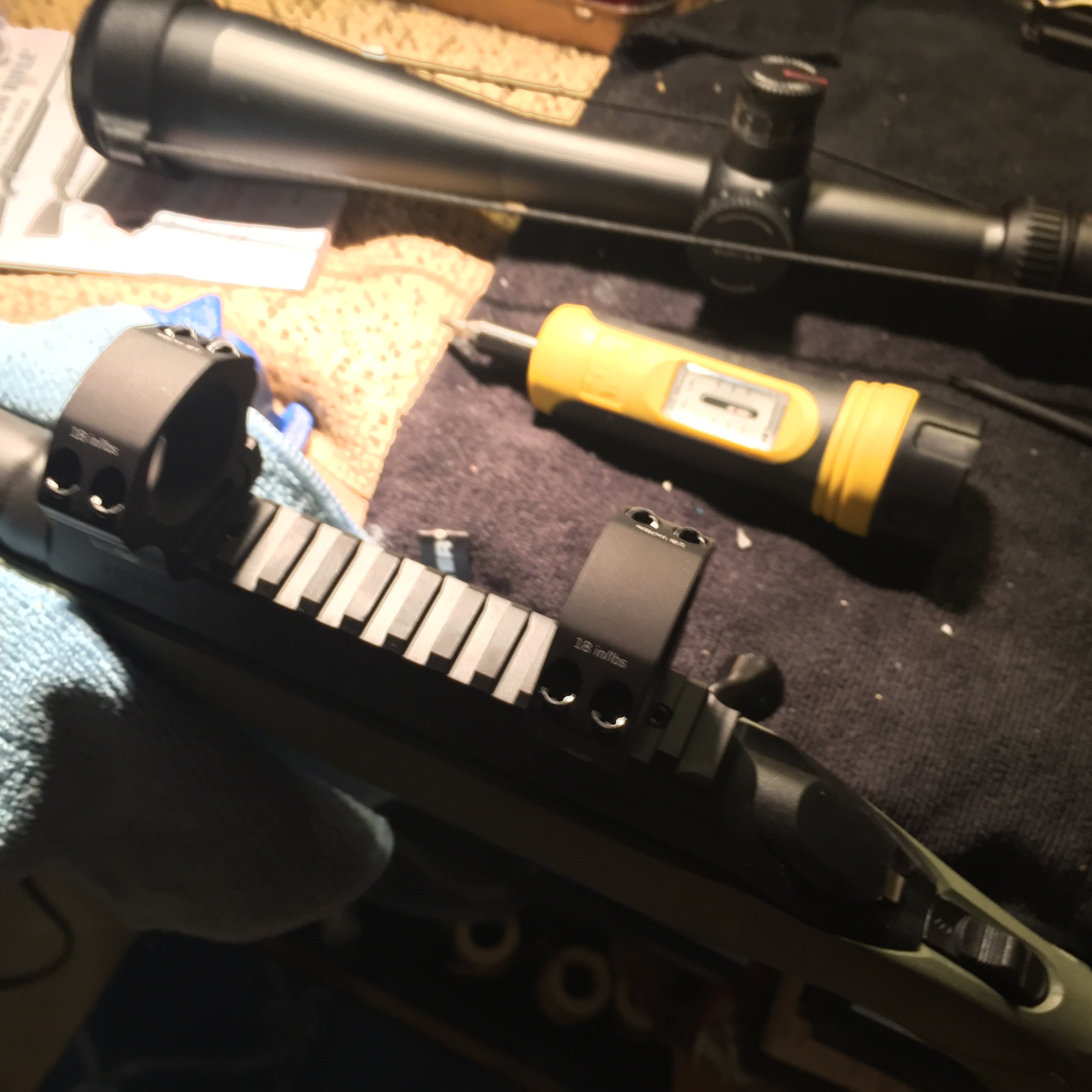
And that is where the glass is going to go.

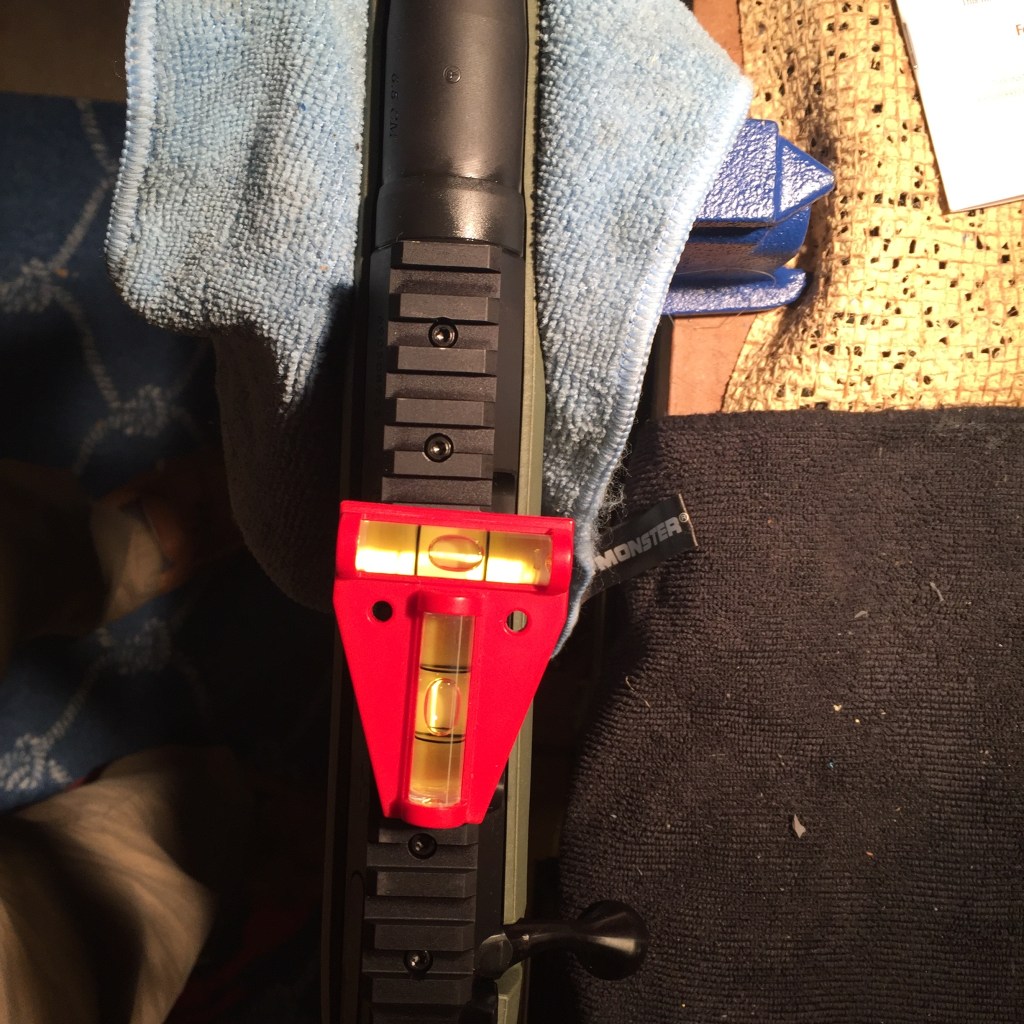
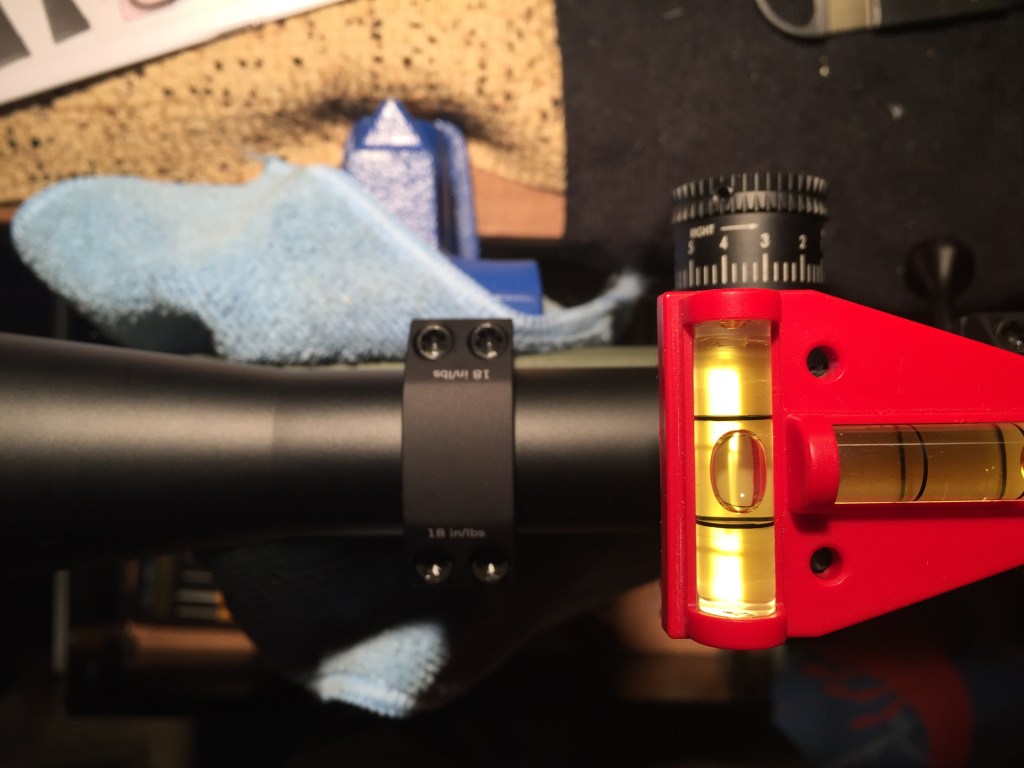
Getting level (I now have a Wheeler tool that does this a lot better).

Yup. Still level.

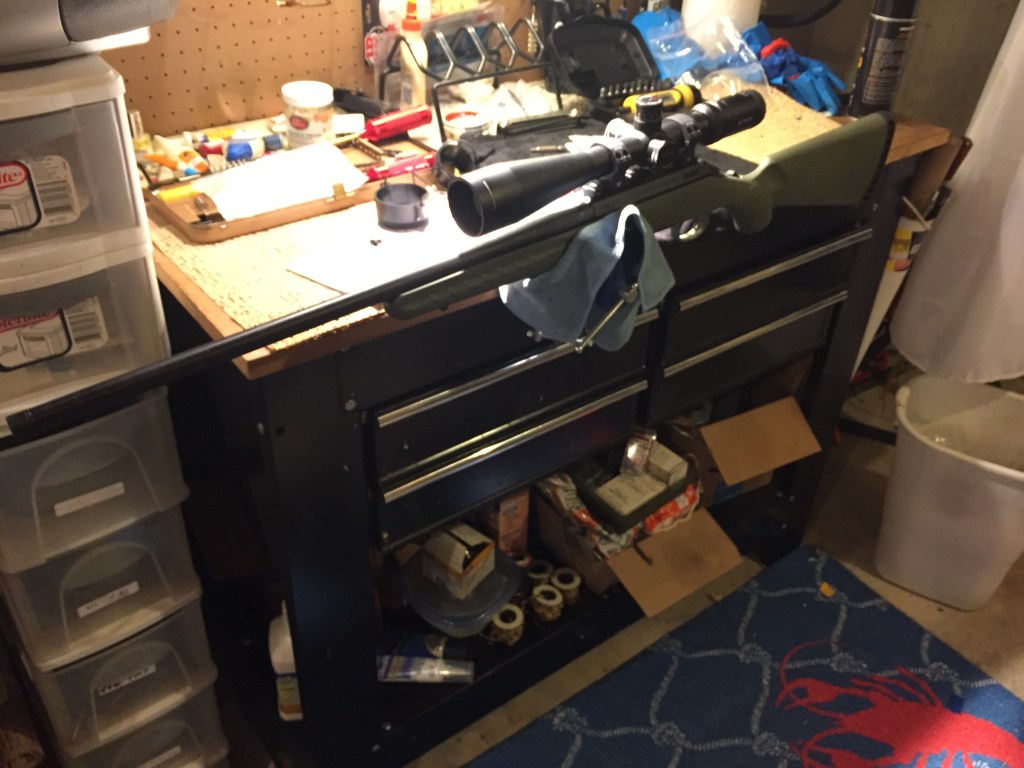
Getting there.

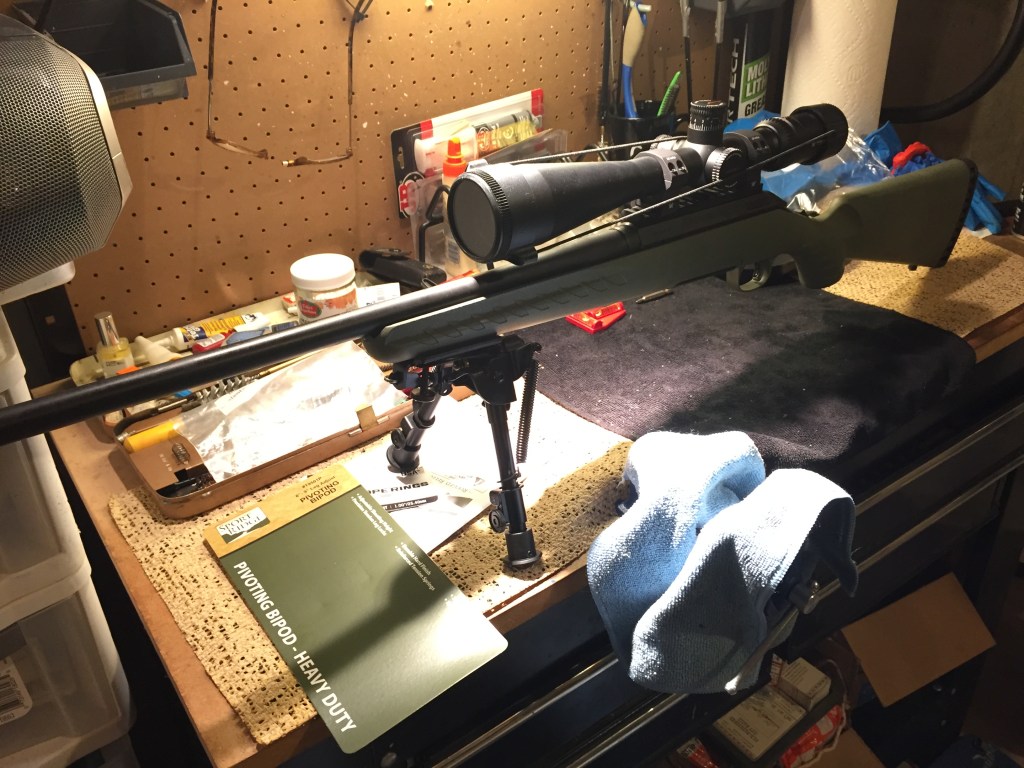
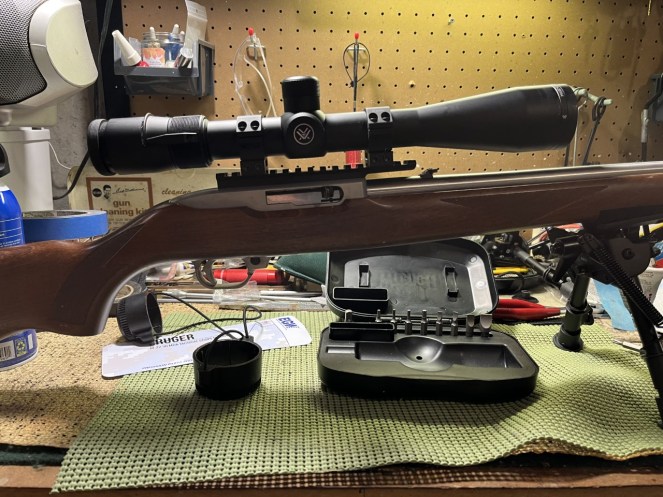
Let’s add a bipod.

Looks pretty. I wonder how she’ll shoot?

Find out tomorrow in Part 2: The Hunt for Predator Precision!

Accurizing the Ruger 10-22. Part 3.

Yes, she’s shooting pretty well, but unintended consequences rears its ugly head: the pillar raises the barrel a bit more up off of the fore-end, so the scope zero has now gone much higher. I’ll need at least a 30 MOA ramp to bring it down.

Well, 30 MOA didn’t cut it. Turns out I needed much more. So I grabbed the old 20 MOA ramp and commenced to filing. Comes in at about 45-50 MOA.

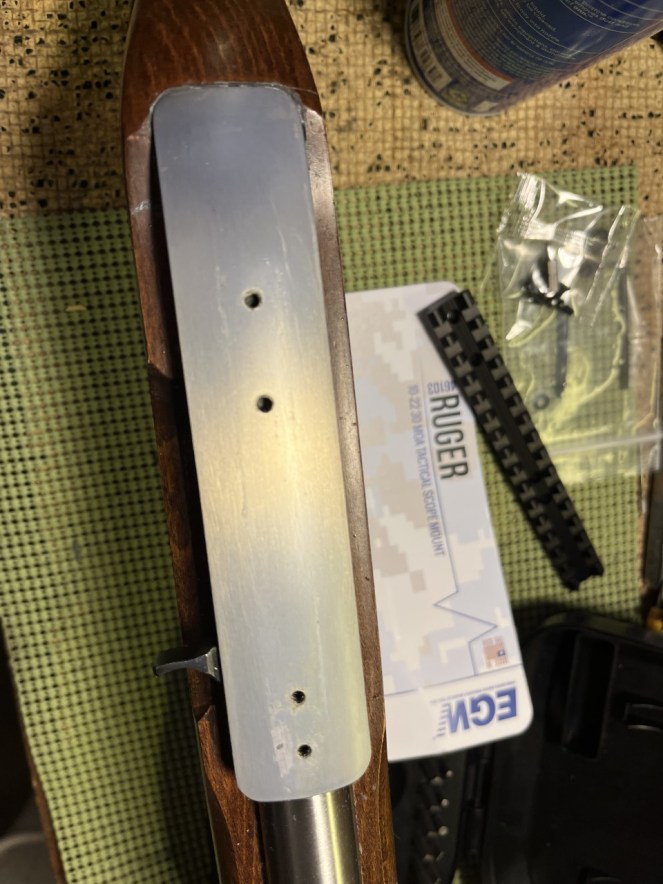
Now that’s a ramp! However . . . The forward mounting screw now sticks down into the receiver and binds the bolt enough to keep it from going into battery. Hmmmm. That’s what dremels are made for.
But now I have the MOAs to shoot at 300 yards with no hold-over.

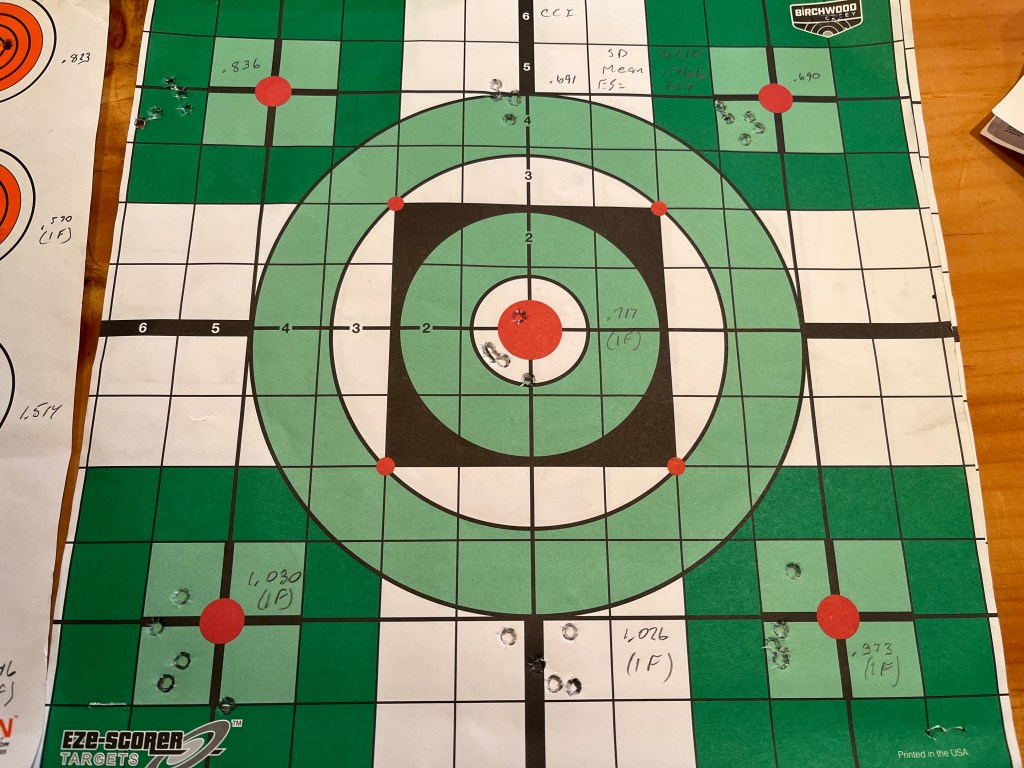
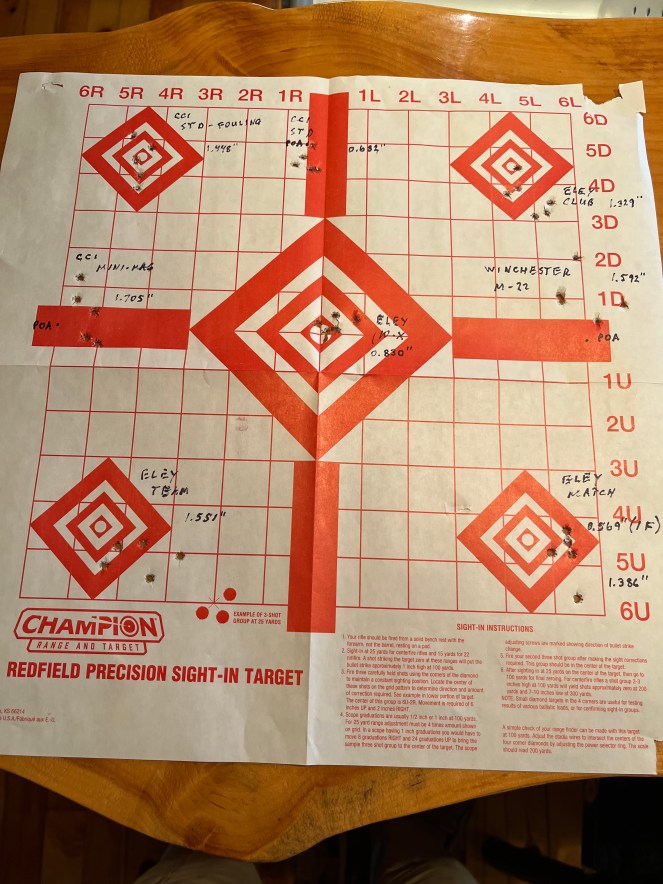
Looks like this rifle likes CCI Standards for regular chow (although I know she like some brands of match-grade ammo for dessert). More on that later.

She sprays most other kinds. Looking at past data, CCI Standard groups have gone from an average of 1.71” at 50 yards to 0.682”. That’s down 0.489”, almost a full half inch and 1 MOA! Accurizing successful, so far.

But from a low of 0.373” and a high of 1.03”, both with a flyer, I’m still not completely happy. Almost time for a Part 4.

Have you ever wondered about how to make your Ruger 10-22 more accurate? Part 1.

I did.

A while back I was disappointed that my trusty old Ruger 10-22’s groups were spreading out. I think I bought it around 2005, so it’s had a lot of rounds through it. But my Christensen Ranger and Ruger Precision Rimfire shoot 1 MOA or less, so I’m spoiled. But they are bolt-action and the 10-22 is semi-automatic, inherently less accurate. Still, 3-4 MOA (1.5”-2”) at 50 yards just won’t do.

So, 1. free-float the barrel; 2. Bed the receiver at the action screw and the rear of the receiver; 3. Bed in a support pillar and replace the flat head action screw with a hex head (easier to measure torque); and 4. Swap out the old factory trigger group.

One accuracy issue with the 10-22 comes from the fact that the receiver is only mounted in place with one action screw. The receiver sits on bare wood and the escutcheon at the base of the action screw hole is mounted in the wood of the under stock. According, there will always be some compression of the wood every time the action screw is tightened (like every time the rifle is disassembled for cleaning). By installing a pillar, the receiver and the escutcheon will be a metal to metal connection with much less compressibility.
So, let’s get started:

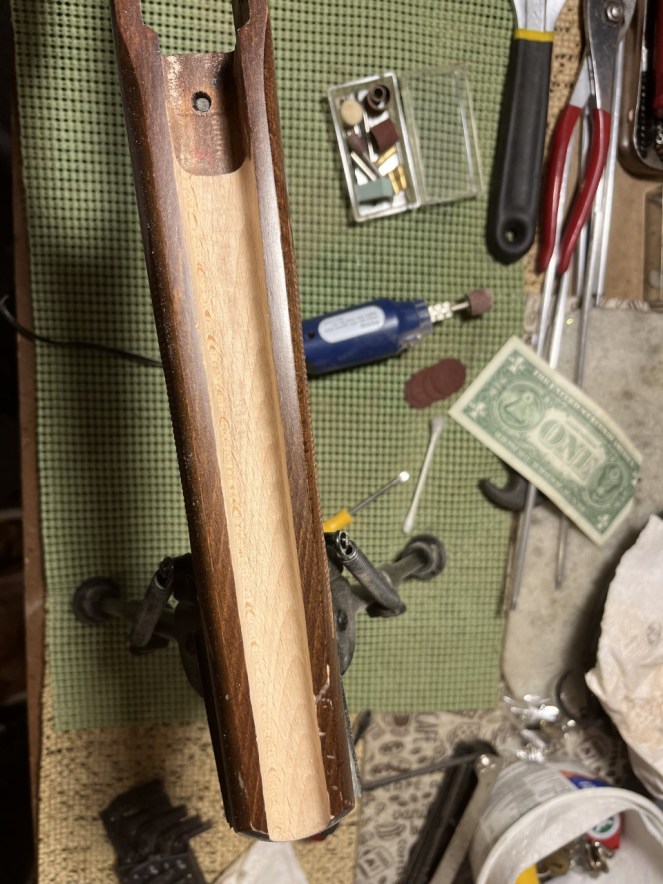
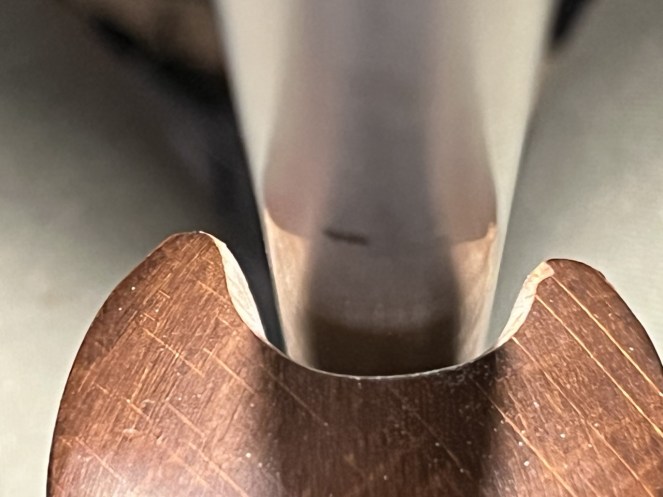
Sanding out the forearm to free-float the barrel.

Checking free-float with President George Washington.

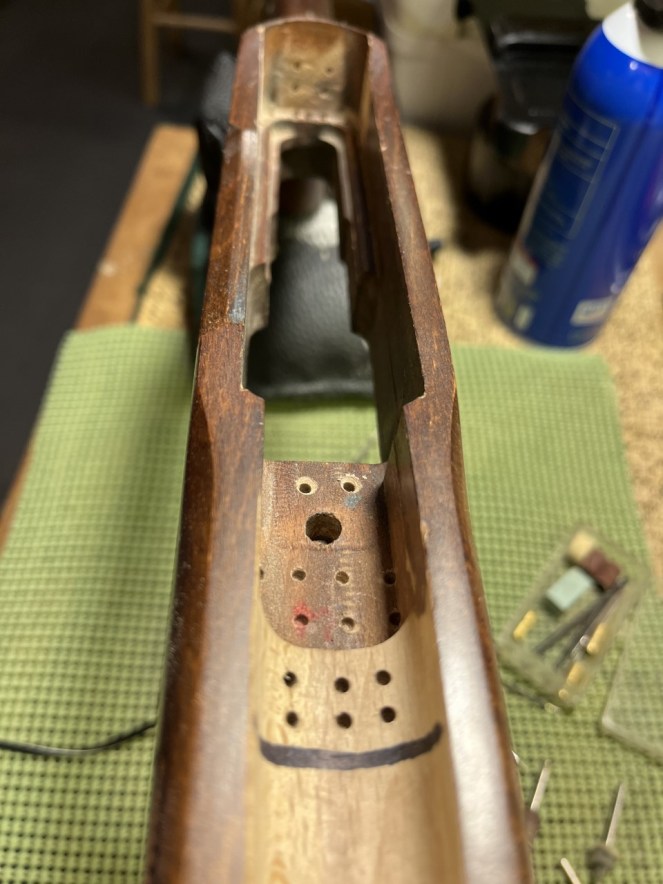
Drilling holes to insure adhesion.

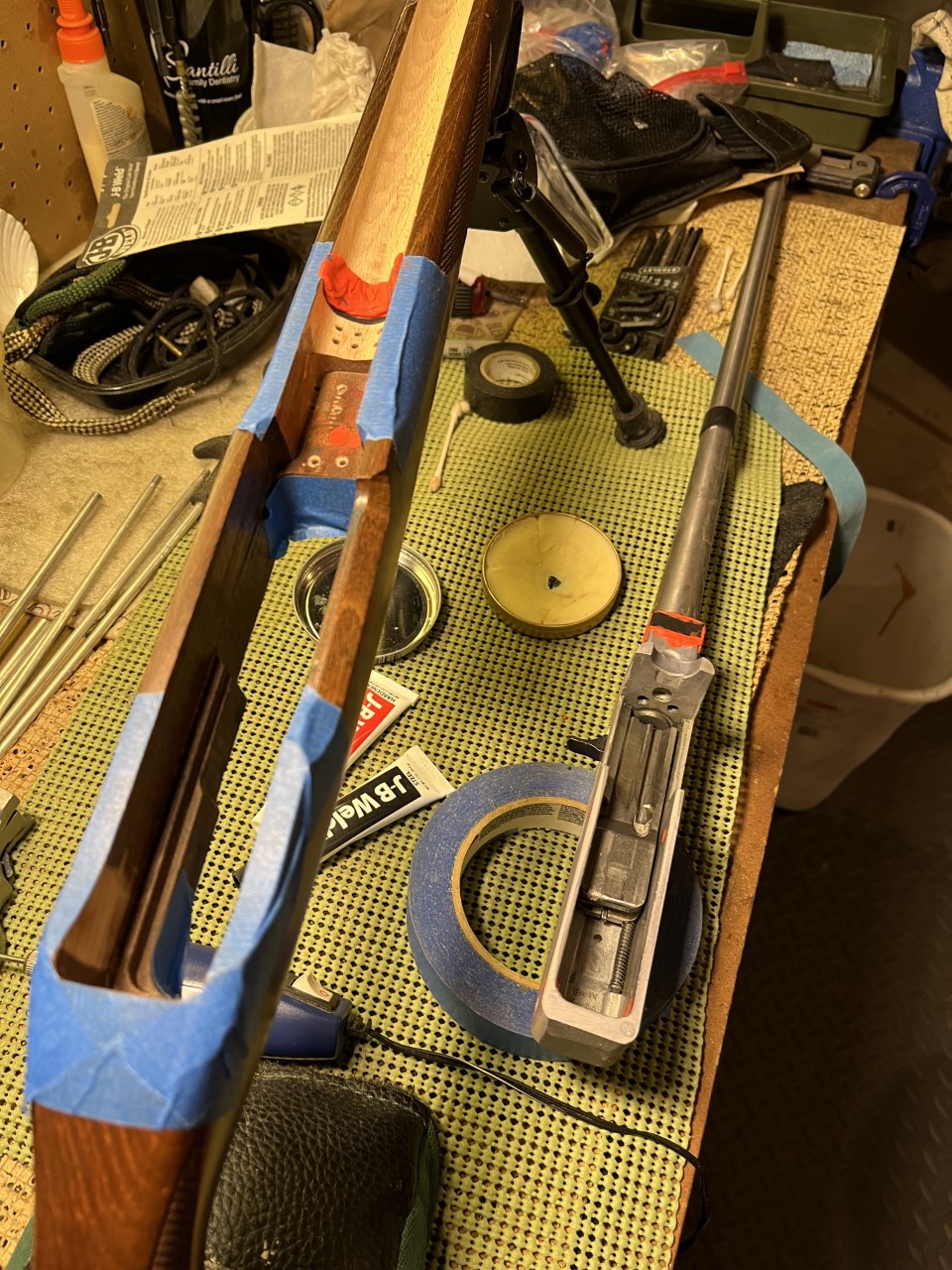
Taping the stock and blocking no-resin areas. A liberal coating of shoe polish on exposed metal works as a good release agent. Note also the black electrical tape winding to keep the barrel centered and off the fore-end when everything is clamped.


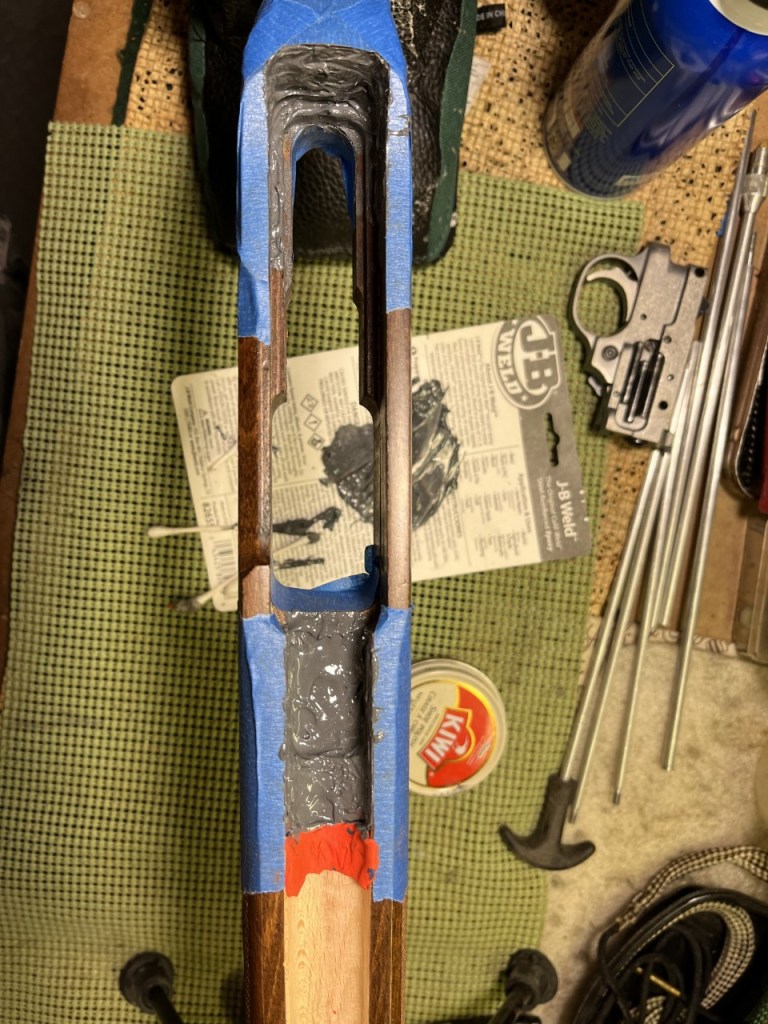
Glopping in the JB Weld.

Pressure applied overnight.

Initial results. Dremel clean-up to follow.


Free-floated barrel.

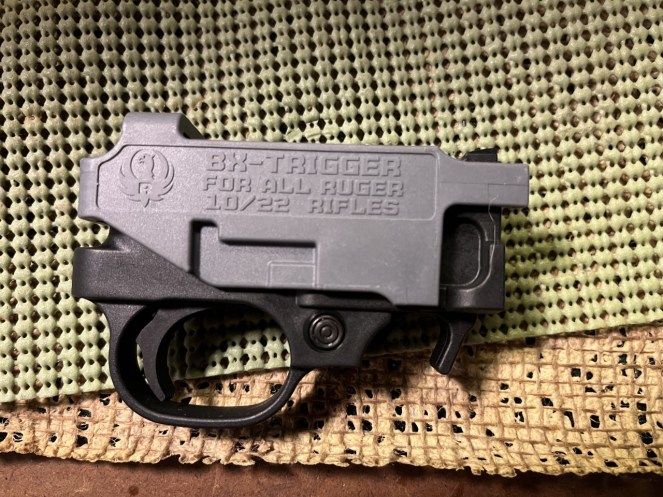
New trigger group.


But will she shoot?

Stay tuned for Part 2.