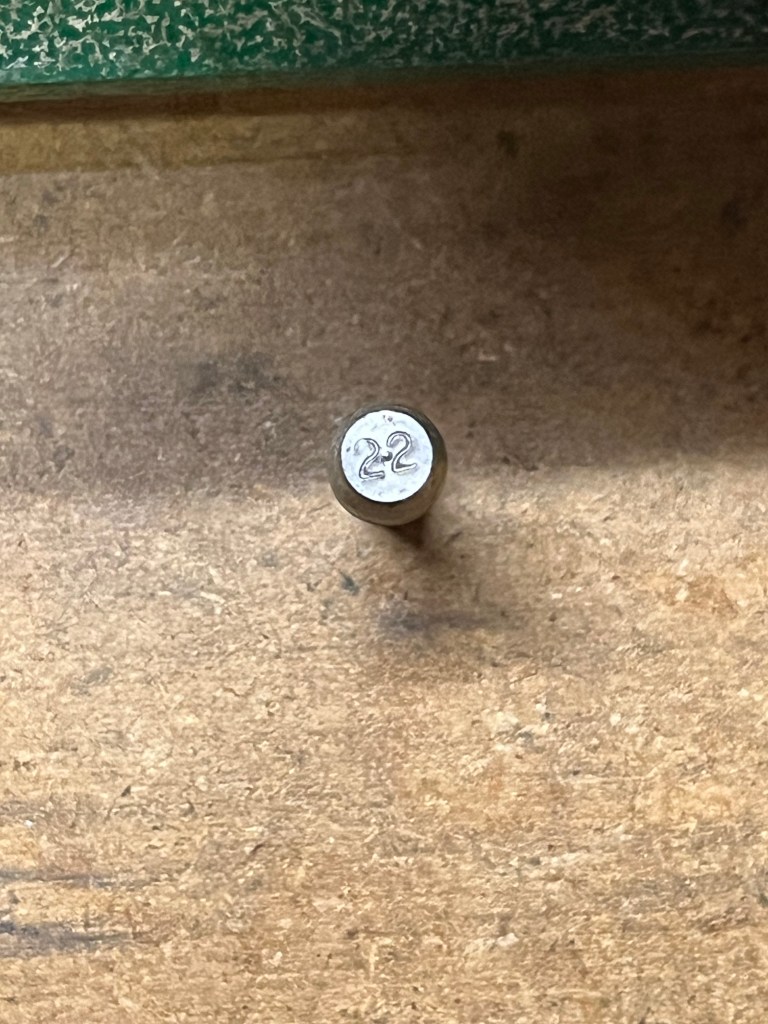
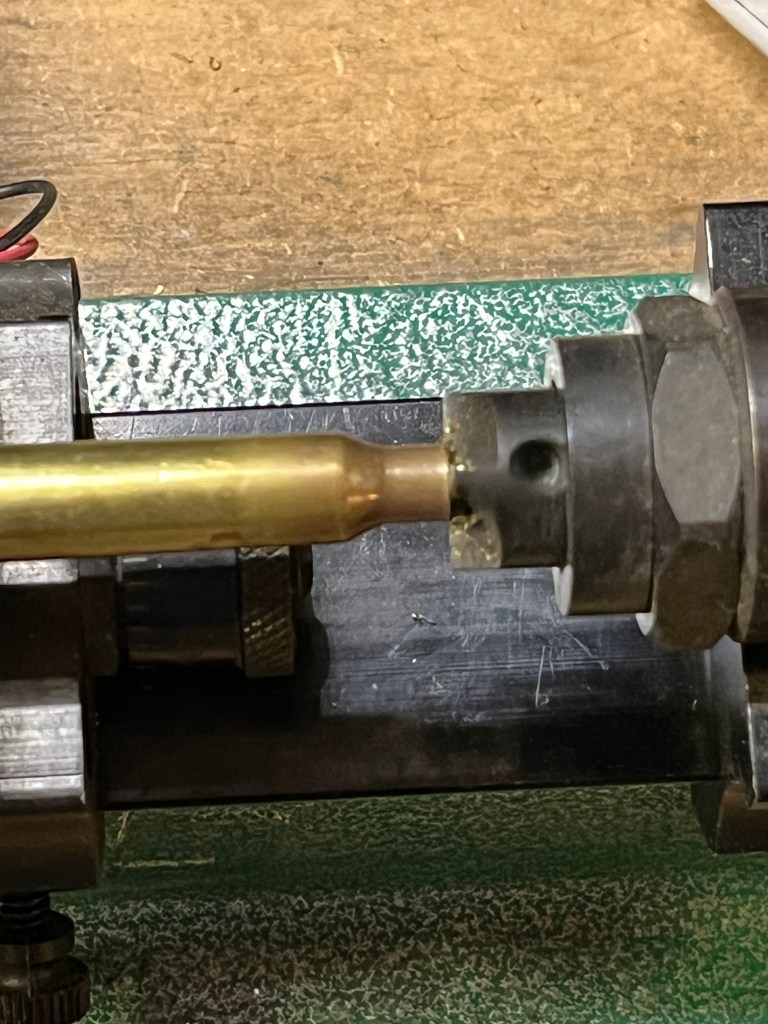
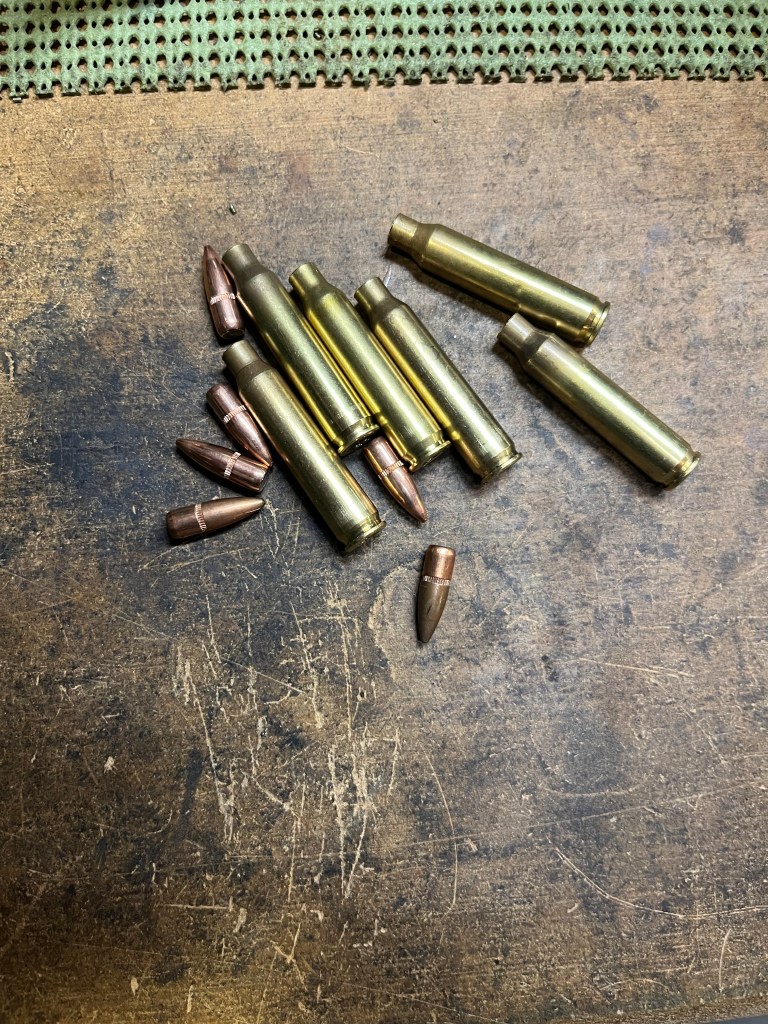
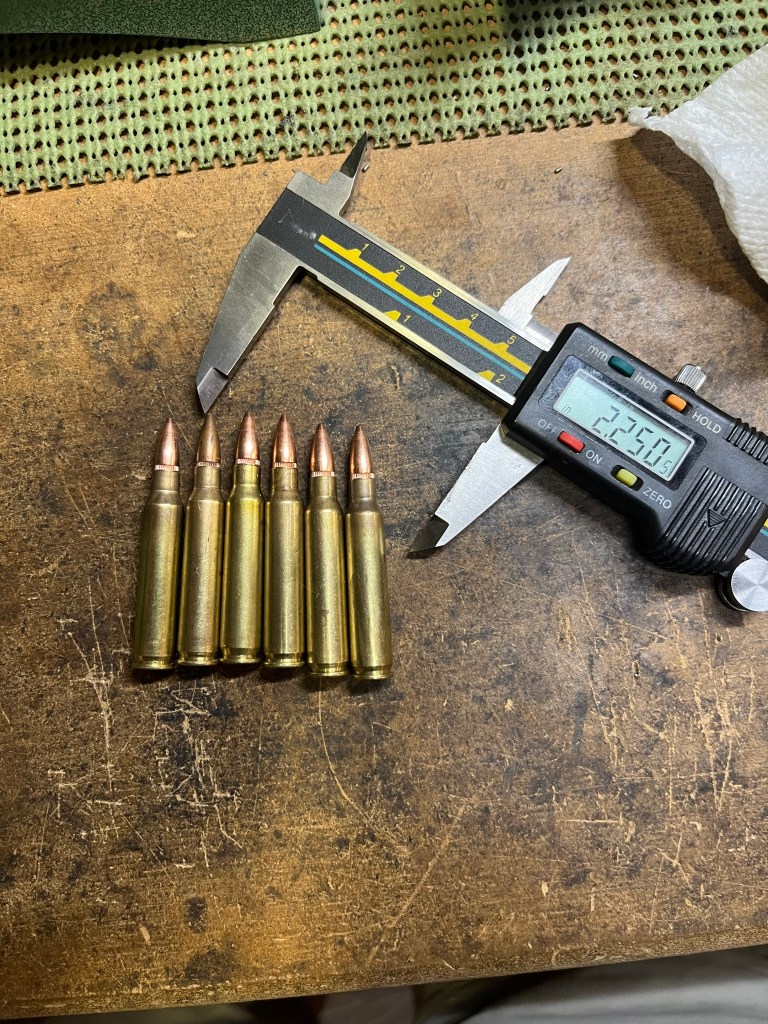
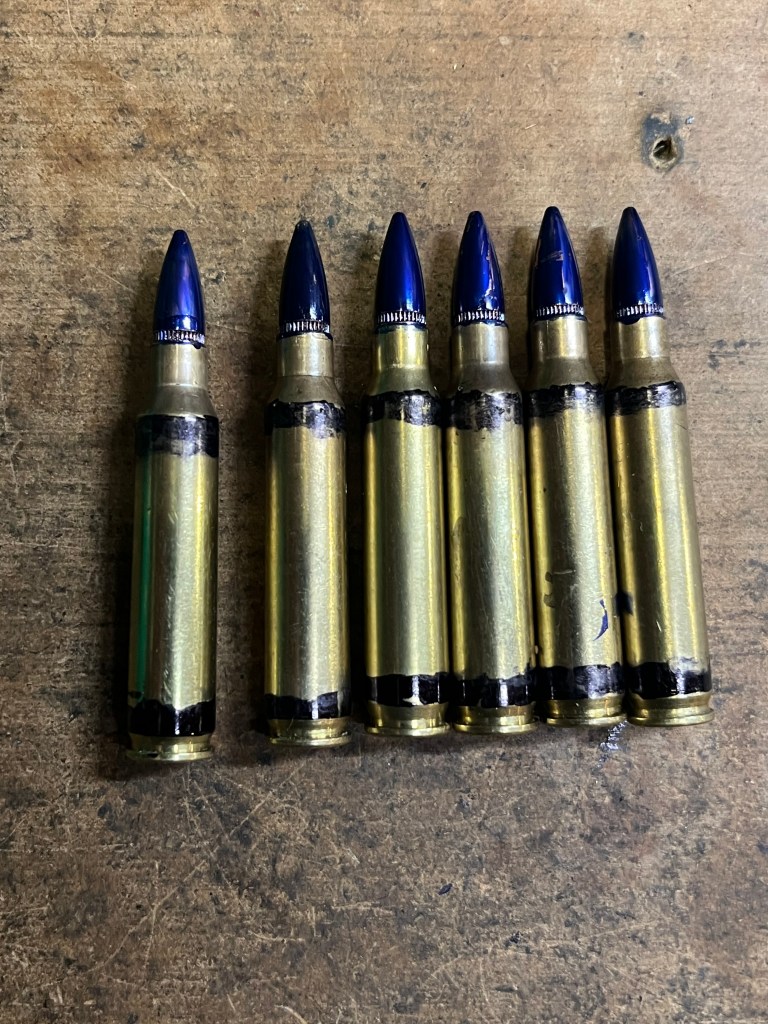
Wow. Hard to believe how the clock speeds up once summer weather arrives. I was reviewing the lesson plans for AR Familiarization and remembered that we need dummy rounds for the morning session. Had to do brass work, change out the mandrel. 2.23/5.56 is a tiny mouth.
Gotta make them identical in all dimensions.
Seat some 55 grain cannelured FMJ.
No powder, no primers, and clearly marked as dummies. Good to go.
Dear Mr. Red: Do you really get mail from people about the blog? Doubting Debbie.
Dear Debbie Downer: Of course! Don’t you get daily mail inscribed with perfect cursive penmanship, properly addressed, stamped, and sent though the stellar US mail service? You don’t? Oh, you must be a loser. Or have no friends. But don’t worry! Just keep reading here and we’ll fix all that!
Dear Mr. Red: Is Emily a real person? If not, where did she come from? Sleepless in Seacaucus.
Dear Sleepless: It depends on your definition of “real”. Not so real that Mrs. Red would take offense. Let’s just say that Emily sprang from my head fully-formed, much like Zeus and Athena.
Dear Mr. Red: With all your vast wealth of knowledge, which do you prefer, 9 mm or .45 ACP? Wondering William
Oh, you dear sweet child! American Apple Pie or Euro-Pellet? Go reread the blog.
Dear Mr. Red: Ginger or Maryanne? Another dear child! Much like The Paolo, Mr. Red is not required to choose.
Dear Emily: Is Mr. Red as awesome and good looking as I think? Covetous Cougar
Dear CC: You have no idea! Of course, beauty is in the eye of the beer holder.
After our successful .22 zeroing and ballistics table confirmation, there is more to talk about. Remember that all that work is good specifically for one rifle with one ammo type at one particular Density Altitude. Nevertheless, that is extremely useful information. With that rifle and ammo you can shoot anywhere in the world with that Density Altitude.
But it is also useful to compare against other ammo you have tested. Looking back at my Aspirin Shoot matches last year, some ammo acts very similarly. Yesterday’s CCI Standard was 7 MOA at 100 yards. At a range of DAs, Wolf and SK were also 7, while Eley Match was always 5.5 to 6. At 200 our CCI was 28, with Wolf and SK at 26 and Eley 23.5 to to 25. Although we didn’t shoot 150 with the CCI, all the other ammo came in at 15 to 16. Useful information to know if your ballistic app crashes or you are shooting without it.
There’s another fascinating thing about many ballistic calculators. Yesterday our real life shots were very close to what was predicted. What happens if that is not the case? You can plug in your results and the calculator can adjust its trajectory formula to match. That will also predict other distances for which you have no actual information. You now have a custom ballistics table!
Other ballistics trivia: your program is going to ask you some very important questions – distance between center of the barrel and center of the scope. This is scope height and is fed in as an offset, and can be thought of as shooting a piece of paper that is covering the end of the muzzle. Your 1.5” scope height will make the bullet hole 1.5” lower than what the crosshairs see.
You’ll also be asked about bullet shape models. G1 uses a standard bullet shape like a .45 ACP bullet. That’s great for pistols or rifles shooting pistol calibers, but is nowhere near accurate for modern spitzer type bullets. G7 is the shape you want to use. Or, if you’re lucky, the ballistics program has your bullet in its library with an exact shape.
You will also need to know the rifling of your barrel. For virtually all .22s, it is 1:16 – the bullet does one complete revolution in every 16” of barrel length.
Finally, and I can’t stress this enough – you must invest in a chronograph. The prices have come way down on these. Without knowing the exact muzzle velocity of your round, you are putting garbage into the formula – GIGO – Garbage In, Garbage Out. I have seen many shooters look at the manufacturer’s advertised MV on the side of the ammo box. I can guarantee that is not the speed of the round in your rifle. You are just wasting time and ammo if you don’t use accurate info.
So, now, get a ballistics program! Most ammo manufacturers have free ones on line that will work very well. Take the time to program it before going to the range. Now, paper and pencil go in the range bag. You should have wind device that also gives you DA, although some ballistics programs will grab local weather info over the internet for you. Take your time, document everything, and see what happens. GOOD LUCK!
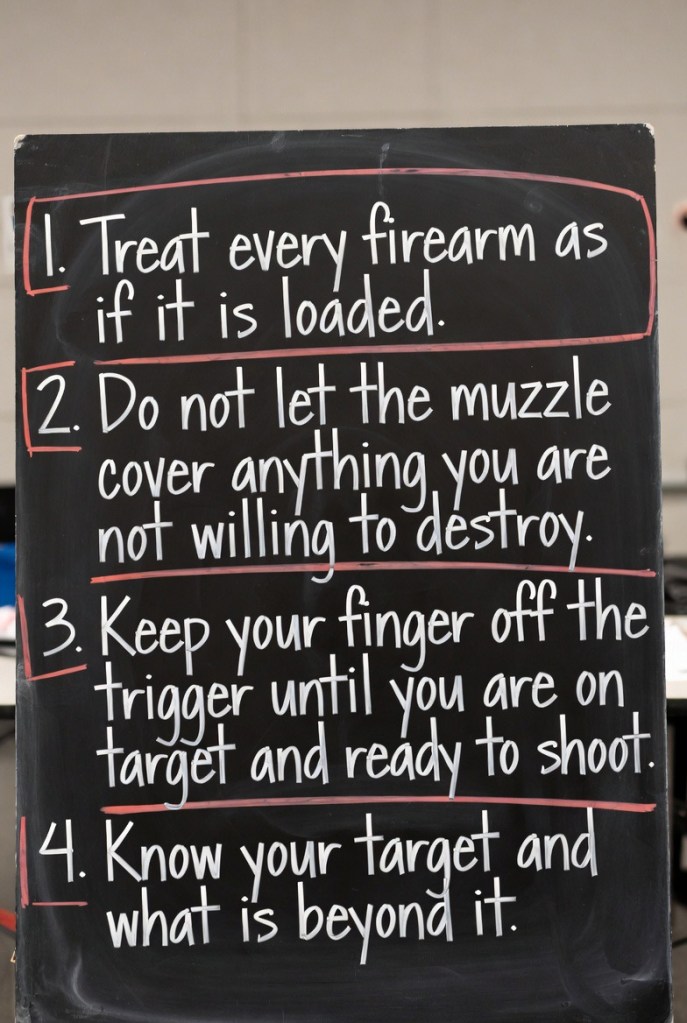
No one may touch a firearm until they know the Four Rules by heart, and can recite them back to you.
Next, what is a AR? It is Not an “Assault Rifle”! The AR comes from Armalite, the first maker of Eugene Stoner’s iconic design. It is a semiautomatic rifle, NOT a select fire (machine gun). It requires one trigger pull for each round fired. Select fire (such as on the military M 16 or M 4) will continue to fire so long as the trigger is held back and ammunition remains.
There are so many designs of the original that they are now known as “AR pattern” rifles. They function similarly and are quite modular and can be tricked out in many ways. There are somewhere between 20 and 30 million AR 15s in the USA; hence, it is sometimes known as America’s Modern Sporting Rifle.
It fires a quite small bullet, but very fast. There are many variations of rounds, but the original military round was 5.56 millimeters in diameter, weighing 55 grains and had a muzzle velocity around 3,000 feet per second. The civilian version is the .223 Remington – there are some differences we will get to later.
It is a magazine-fed rifle with a standard capacity of 30 rounds.
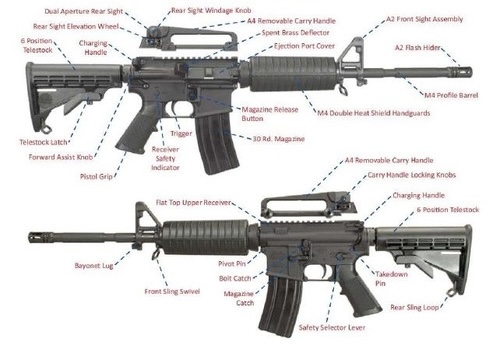
Today, we are going to cover loading by looking at the Charging Handle, the Bolt Release and the Magazine Release Button. Below, locate the Charging Handle at the rear of the receiver, the Bolt Release on the left side near the magazine well, and the Magazine Release Button on the right side magazine well.
Found them? Now (observing the Four Rules!), pick up your AR, right hand on the pistol grip, finger outside the trigger guard and left hand on the barrel handguards. Pull the stock butt against your hip. Does the rifle have a magazine in it? Remove it by taking your trigger finger and pressing the Magazine Release Button. Catch the magazine with your left hand and set aside. Left hand back into position.
Now, with the first two fingers of your right hand, pull all the way back on the Charging Handle. If there was a round in the chamber, it will have ejected off to the right. Keeping the Charging Handle all the way to the rear, depress the bottom of the Bolt Release and slowly let the Charging Handle forward until the bolt is caught, then push the handle all the way forward. Rotate the rifle 90 degrees to the left and look in the chamber. It should be empty. You can now turn the safety lever to Safe from Fire.
Take a loaded magazine and energetically push it into the mag well; you should hear and feel a click. If not, rap the bottom of the mag with your left hand. Check that mag is secure by trying to pull down on it.
To load a round into the chamber, smack the Bolt Release with the heel of your left hand. The bolt should go energetically forward, stripping a round off the top of the magazine and ramming it into the chamber. You are now ready to start the shooting process.
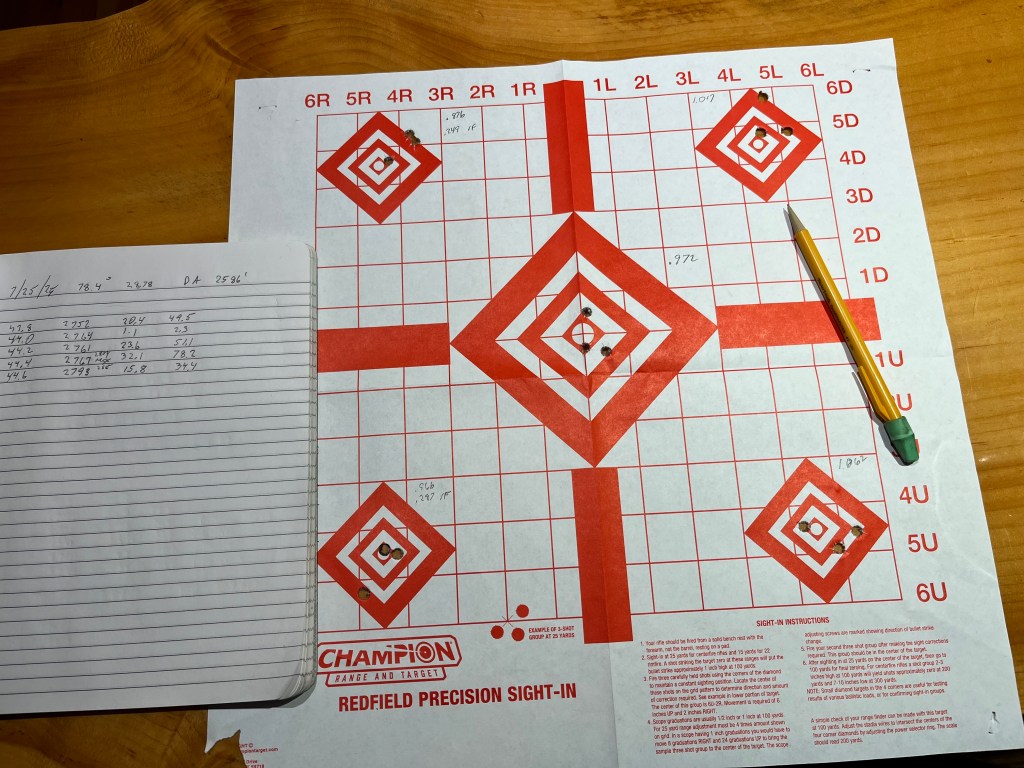
I think I can say I’ve maxed out the Accurate 4350 powder – I’m not going to get more than 2800 fps with the 120 g. bullet and the 22” barrel. I also think that great load from the other day is the node:
Upper left – first two rounds were touching at a quarter inch, and hitting in the same spot as before, about a half inch right and half inch high. Then, what I think is a clear flyer. Everything else is around an inch. And I think I’m at the point where the slower burning powder has no more time to combust. But it’s been a nice test. I’ll load up a bunch of the first and take it out to distance. See if the wind affects it significantly more than the 140s.
And I still think DJT is the laser pointer president.
Got a lot to see here. For comparison, on the left, a simple 9 mm RN FMJ (remember, Round Nose Full Metal Jacket). Next, a .357 Sig FN FMJ – Flat Nose FMJ. Then, a .357 Sig JSP – Jacketed Soft Point. A .357 JHP – Jacketed Hollow Point. A .40 S&W FN FMJ – Flat Nose Full Metal Jacket. And finally, a .40 S&W JHP – Jacketed Hollow Point.
Do you begin to see the notation now?
Apropos of nothing, when I took this pic yesterday, it prompted me to change my G 32 from 9 mm back to .357 Sig. Quick barrel and mag swap, and I aired it out at the range today. It’s a shame that .357 Sig did not catch on. For a while, the US Secret Service, and a number of State Highway Patrols used it (great vehicle penetration, I’m told). But the ammo is about twice the price of 9 mm, with the necked down case, it’s more difficult to reload, and it definitely has a blast factor. But when you shoot it, you know that it is a brass balls manly round.
Just thinking, we’ve talked a lot about bullet propellers, but vary little about bullet projectiles. Let’s take a look:
This is where the magic fairy dust is located. On .22s, it’s in the rim. On center-fires, it’s in … the center. When something strikes (a firing pin or a “striker”) the primer in which the magic fairy dust is located, it makes intense fairy dust fire. In fact, this is the only part of the boolet that is “explosive “.
This is the Freedom Powder holder. It is made of brass (because manly things, such as “brass balls”, are made of brass). And even better, they can be recycled into more Freedom Powder holders!
Freedom Powder, when ignited by the Fairy Dust fire, seeks to be free. Because everything in life does. It very quickly seeks freedom. In fact, it expands so quickly that things in its way will also seek freedom.
The Boolet. Also known as the Freedom Seed. The Freedom Powder sends it on its merry way.
But Mr. KatNap Fever guy, I see boolets with all different shapes, sizes and headgear. What gives?
Well, dear reader and Beginning Bangstick Boolet connoisseur, this is where, truly, Diversity Is Our Strength. I shall start explaining soon. As soon as the wonderous, glorious Big, Beautiful, Fourth of July weekend is over.
Of course it will be the omnipresent Nine Millimeter! AKA 9 mm Parabellum and 9 mm NATO.
Designed by Georg Luger in 1901, it’s been around a long time and has steadily improved as powder and bullet design modernized.
It would be virtually impossible to list the names of all the 9 mm handguns currently in production. Most every manufacturer builds the 9. The interwebs tell me that about 60% of US police forces use the 9 as their standard issue handgun. All branches of the US military carry it. It comes in many sizes and flavors.
So how does the advanced beginner choose one? Try them out. Figure what size fits your hand and allows you to manipulate all of the controls without changing your grip. When you find a few that fit, go shoot them. Many ranges and gun stores will rent guns. If you belong to a range, ask around and see if any members give instruction or will just let you shoot with them – you’ll be surprised at the number of offers you get.
So, Mr. KatNapFever blogger, any suggestions? Why, yes! Start off with another Germanic designer, Herr Gaston Glock. Glocks in 9 mm are some of the simplest, most reliable designs around. The full sized Glock 17 started it all off:
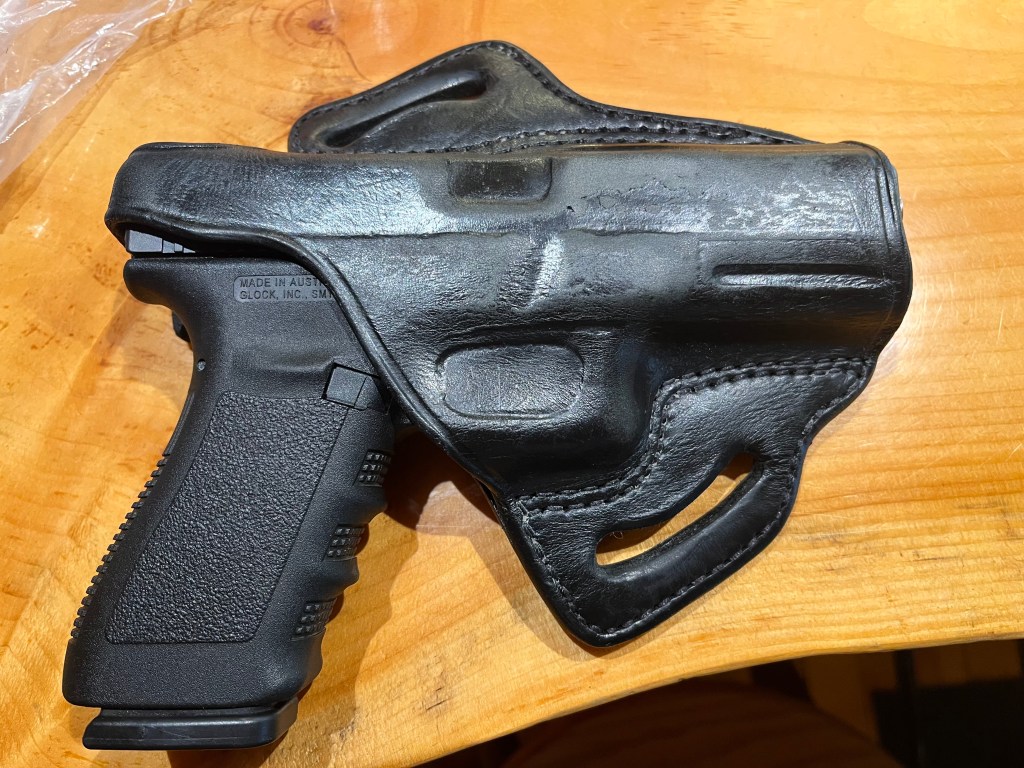
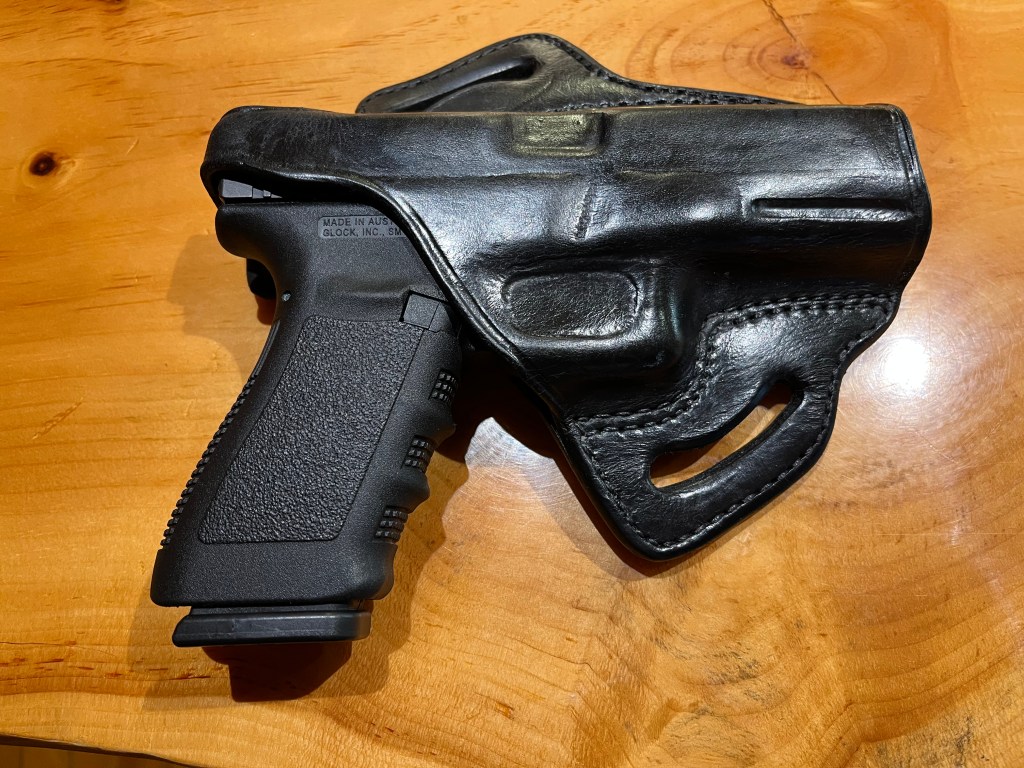
I find, however, that the compact version, the Glock 19, fits my hands better and can be carried concealed more easily:
Some people love Glocks, some don’t. For the latter, there are lots of alternatives – Smith & Wesson, Colt, Beretta, Taurus, CZ, etc. I guarantee you will find one or more you like.
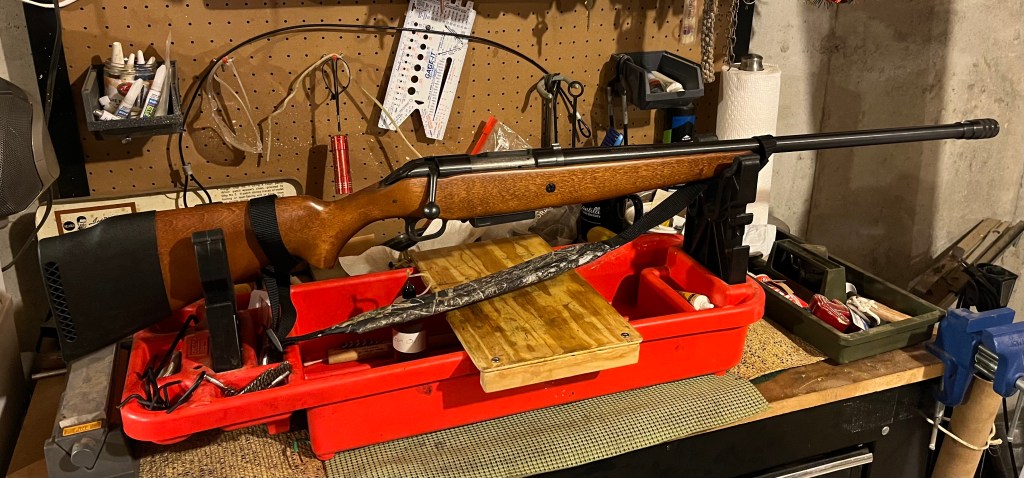
This is a bit of a misleading title. A shotgun is more like a Bangtree than a Bangstick. And in the recommended order of Beginning, I’d put this one after rifles larger than a .22. But, since I brought it up before, away we go.
Now, I DON’T recommend the way I did it. After starting out at age 12 with a .22, I decided at 16 that I needed a Man’s Firearm. What better than the vaunted 12 gauge? Oops, best back up. We’ve indirectly covered “caliber”, .22 caliber being (approximately) .22 inches in bullet diameter. What is this “gauge” measurement? Well, by my recollection and by the inner tubes, it means how many balls of lead the size of the barrel diameter would total one pound. So, 12 balls is a 12 gauge, 28 balls a 28 gauge and so on. (However, see the exception, .410 gauge, comparable to .45 caliber Long Colt. Well, never mind, we’ll get to that later).
And what are we firing through this kind of firearm? Well, “shot”. Meaning round pellets as small as .08” up to .22”, then buckshot from .24” to .39”, and then slugs, which are more like fat rifle bullets the diameter of the barrel.
But one major difference – we are not sending shot through a rifled barrel (which imparts stabilizing spin to the bullet). We are sending it through a smooth bore, so it just comes out of the muzzle with no spin and spreads out the further it goes. Which is the raison d’etre for a shot gun – lots of pellets hitting a larger area. For fast moving things like birds. Or squirrels. Or fast, fearsome felons.
So, how’s this for a manly firearm?
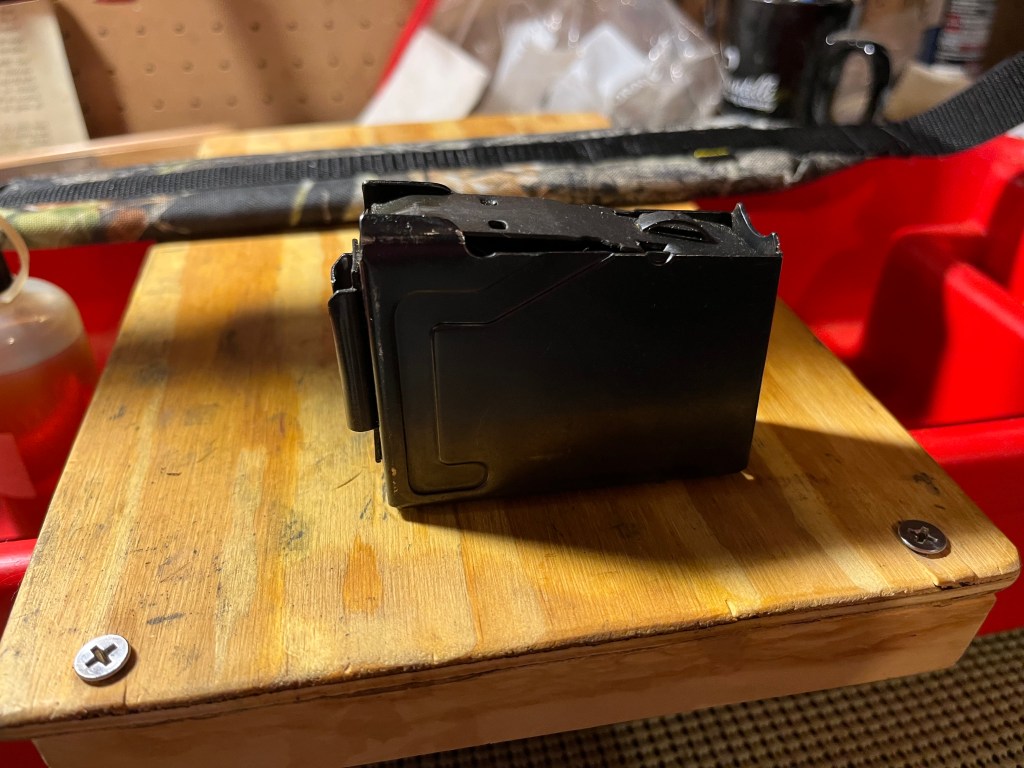
12 gauge, bolt action shotgun. With a 2 round magazine!
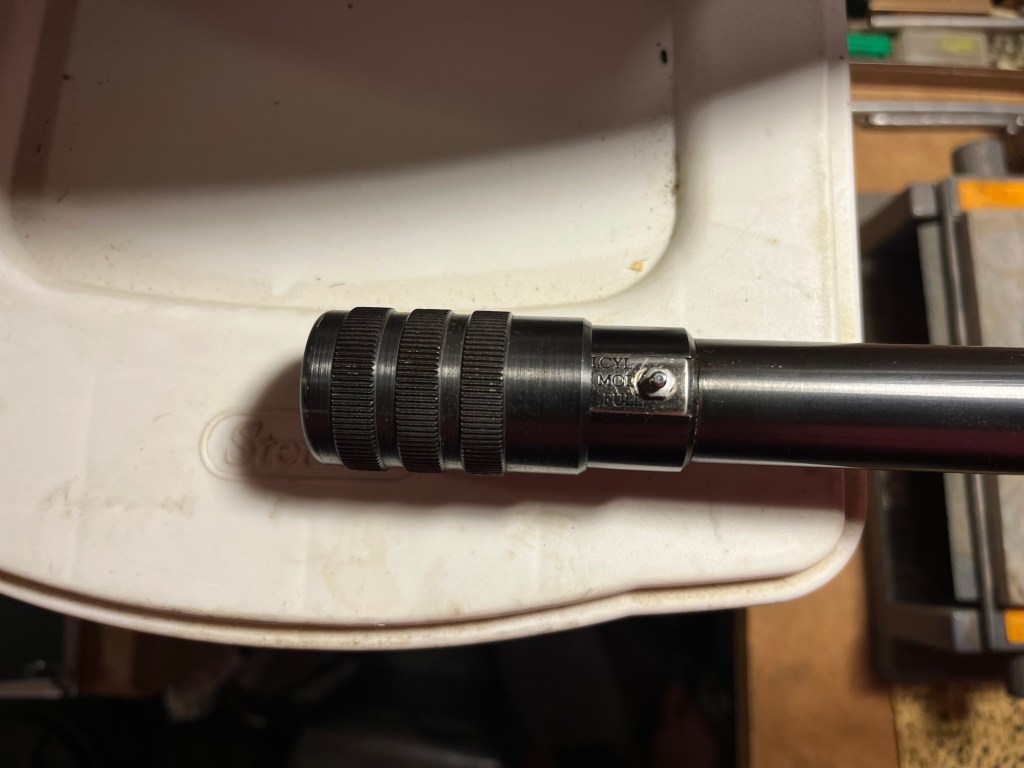
And an adjustable choke on the muzzle!
Improved Cylinder, Modified, and Full choke. Oh. Yeah, choke. It chokes the muzzle diameter to allow a smaller or larger spread of the shot. The “Pattern”. So, with a basic, entry level shotgun, we’ve been able to cover a lot of shotgun topics. One more thing:
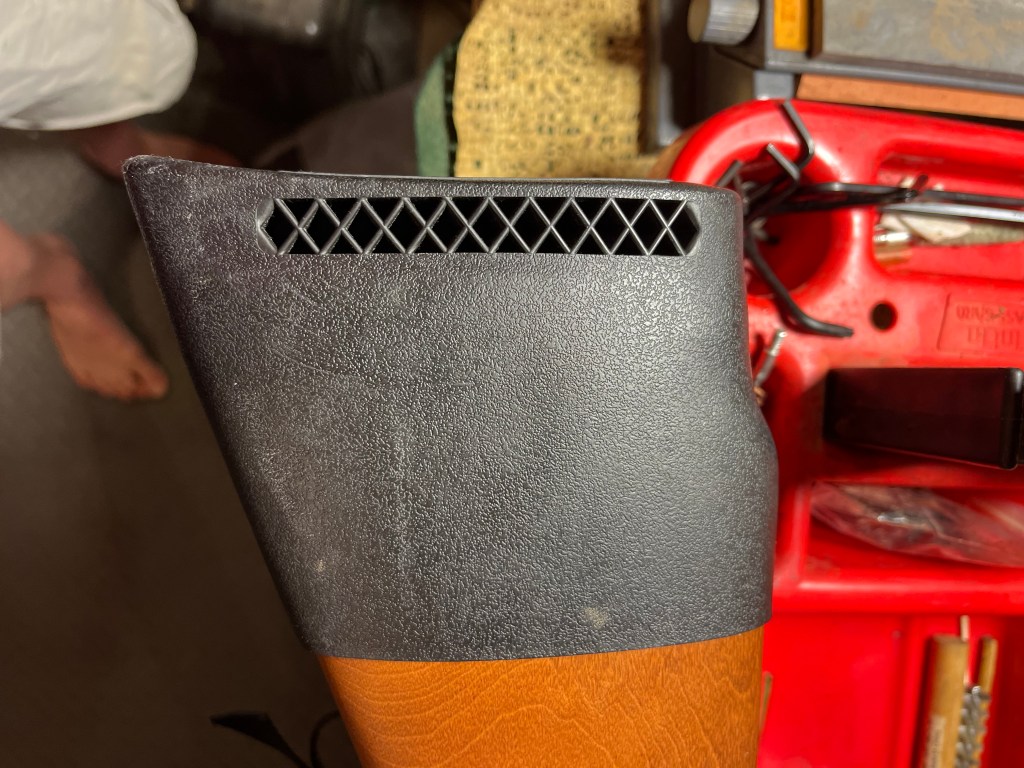
Even with a heavy duty rubber recoil pad, it kicks like a mule. One reason I would start beginners with something else. More to come.









 KatNap Fever!