Before.
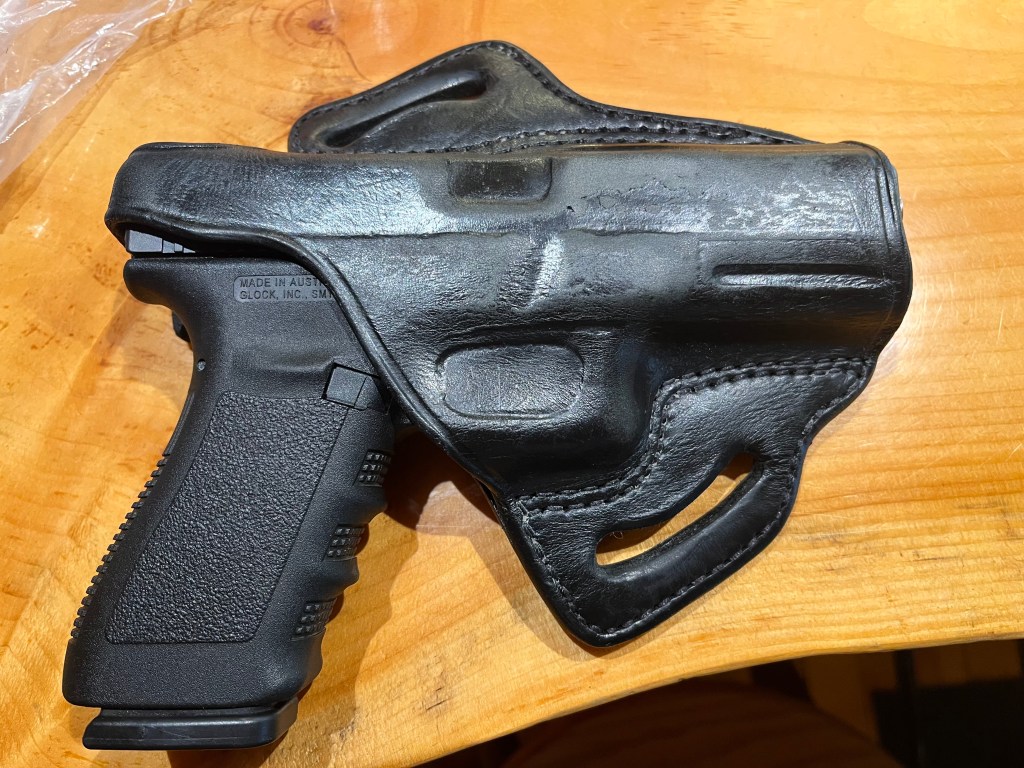
After.
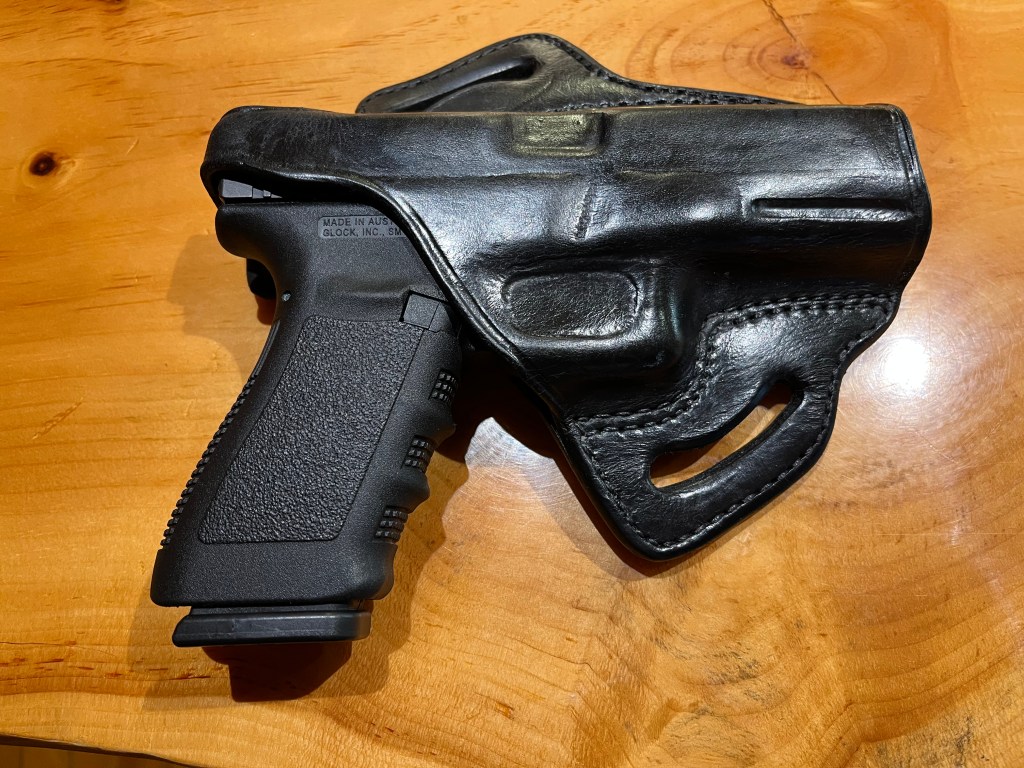
That is all.
Cats, Guns, and more. What’s not to love?

Before.
After.
That is all.



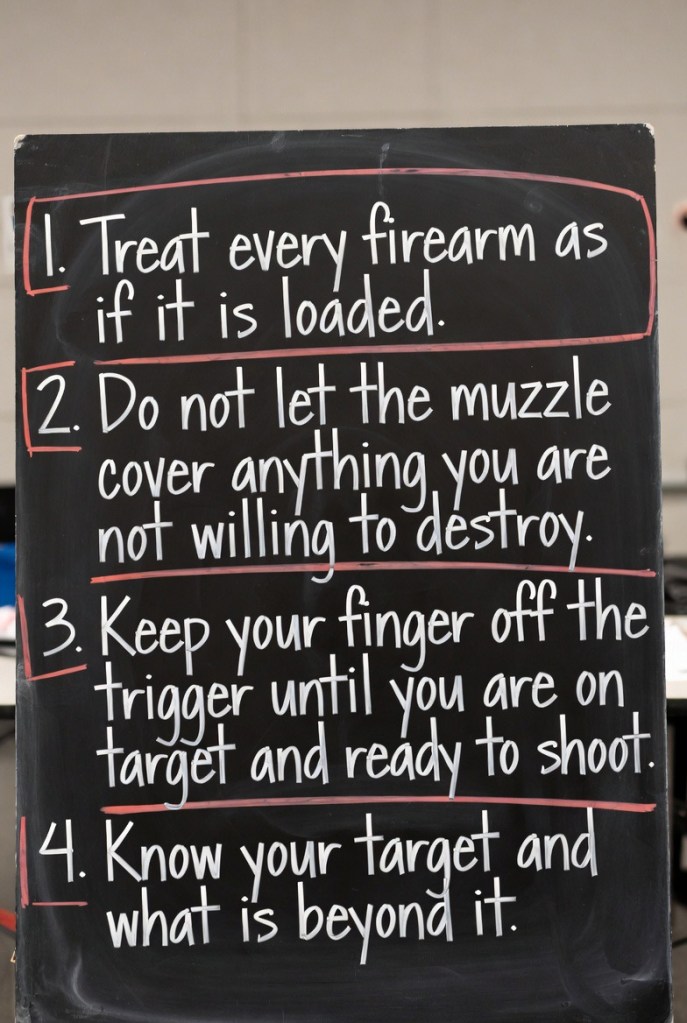
No one may touch a firearm until they know the Four Rules by heart, and can recite them back to you.
Next, what is a AR? It is Not an “Assault Rifle”! The AR comes from Armalite, the first maker of Eugene Stoner’s iconic design. It is a semiautomatic rifle, NOT a select fire (machine gun). It requires one trigger pull for each round fired. Select fire (such as on the military M 16 or M 4) will continue to fire so long as the trigger is held back and ammunition remains.
There are so many designs of the original that they are now known as “AR pattern” rifles. They function similarly and are quite modular and can be tricked out in many ways. There are somewhere between 20 and 30 million AR 15s in the USA; hence, it is sometimes known as America’s Modern Sporting Rifle.
It fires a quite small bullet, but very fast. There are many variations of rounds, but the original military round was 5.56 millimeters in diameter, weighing 55 grains and had a muzzle velocity around 3,000 feet per second. The civilian version is the .223 Remington – there are some differences we will get to later.
It is a magazine-fed rifle with a standard capacity of 30 rounds.
Today, we are going to cover loading by looking at the Charging Handle, the Bolt Release and the Magazine Release Button. Below, locate the Charging Handle at the rear of the receiver, the Bolt Release on the left side near the magazine well, and the Magazine Release Button on the right side magazine well.
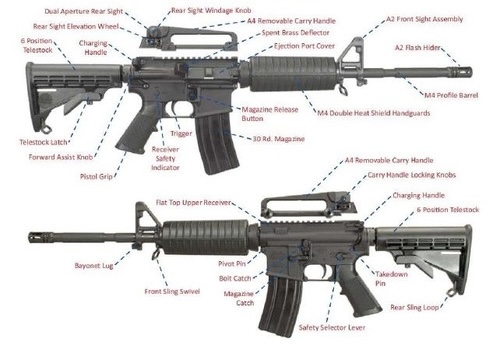
Found them? Now (observing the Four Rules!), pick up your AR, right hand on the pistol grip, finger outside the trigger guard and left hand on the barrel handguards. Pull the stock butt against your hip. Does the rifle have a magazine in it? Remove it by taking your trigger finger and pressing the Magazine Release Button. Catch the magazine with your left hand and set aside. Left hand back into position.
Now, with the first two fingers of your right hand, pull all the way back on the Charging Handle. If there was a round in the chamber, it will have ejected off to the right.
Keeping the Charging Handle all the way to the rear, depress the bottom of the Bolt Release and slowly let the Charging Handle forward until the bolt is caught, then push the handle all the way forward. Rotate the rifle 90 degrees to the left and look in the chamber. It should be empty. You can now turn the safety lever to Safe from Fire.
Take a loaded magazine and energetically push it into the mag well; you should hear and feel a click. If not, rap the bottom of the mag with your left hand. Check that mag is secure by trying to pull down on it.
To load a round into the chamber, smack the Bolt Release with the heel of your left hand. The bolt should go energetically forward, stripping a round off the top of the magazine and ramming it into the chamber. You are now ready to start the shooting process.

I think I can say I’ve maxed out the Accurate 4350 powder – I’m not going to get more than 2800 fps with the 120 g. bullet and the 22” barrel. I also think that great load from the other day is the node:
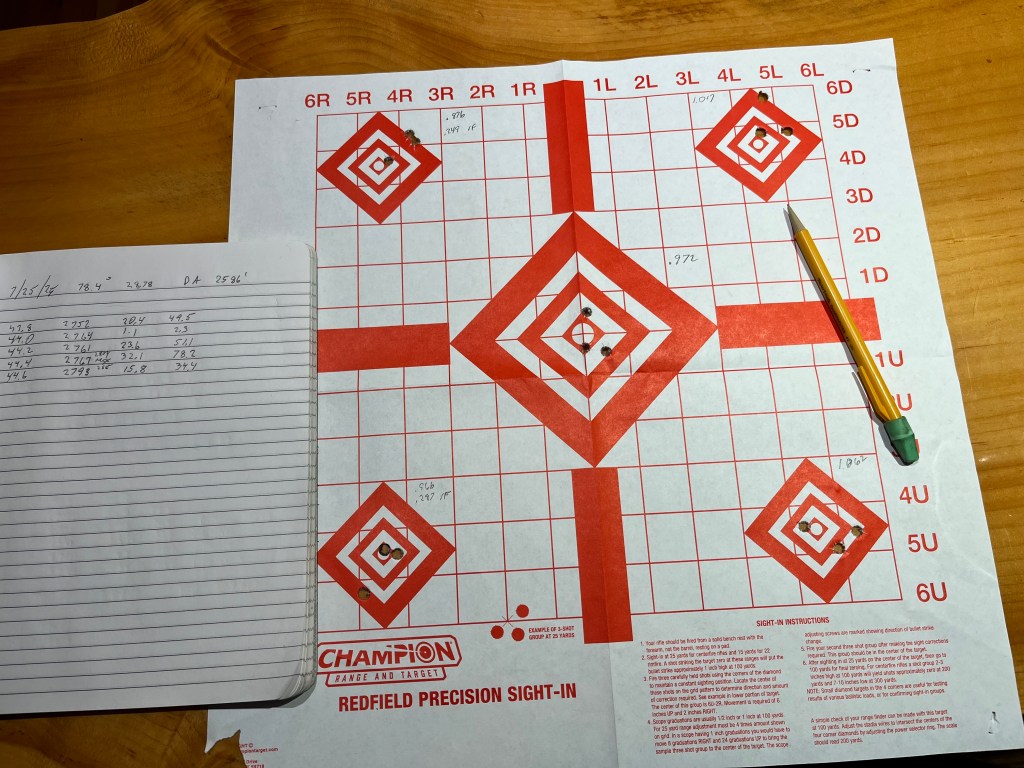
Upper left – first two rounds were touching at a quarter inch, and hitting in the same spot as before, about a half inch right and half inch high. Then, what I think is a clear flyer. Everything else is around an inch. And I think I’m at the point where the slower burning powder has no more time to combust.
But it’s been a nice test. I’ll load up a bunch of the first and take it out to distance. See if the wind affects it significantly more than the 140s.
And I still think DJT is the laser pointer president.
How about this?

Got a lot to see here. For comparison, on the left, a simple 9 mm RN FMJ (remember, Round Nose Full Metal Jacket). Next, a .357 Sig FN FMJ – Flat Nose FMJ. Then, a .357 Sig JSP – Jacketed Soft Point. A .357 JHP – Jacketed Hollow Point. A .40 S&W FN FMJ – Flat Nose Full Metal Jacket. And finally, a .40 S&W JHP – Jacketed Hollow Point.
Do you begin to see the notation now?
Apropos of nothing, when I took this pic yesterday, it prompted me to change my G 32 from 9 mm back to .357 Sig. Quick barrel and mag swap, and I aired it out at the range today. It’s a shame that .357 Sig did not catch on. For a while, the US Secret Service, and a number of State Highway Patrols used it (great vehicle penetration, I’m told). But the ammo is about twice the price of 9 mm, with the necked down case, it’s more difficult to reload, and it definitely has a blast factor. But when you shoot it, you know that it is a brass balls manly round.
Just thinking, we’ve talked a lot about bullet propellers, but vary little about bullet projectiles. Let’s take a look:

But Mr. KatNap Fever guy, I see boolets with all different shapes, sizes and headgear. What gives?
Well, dear reader and Beginning Bangstick Boolet connoisseur, this is where, truly, Diversity Is Our Strength. I shall start explaining soon. As soon as the wonderous, glorious Big, Beautiful, Fourth of July weekend is over.
Of course it will be the omnipresent Nine Millimeter! AKA 9 mm Parabellum and 9 mm NATO.

Designed by Georg Luger in 1901, it’s been around a long time and has steadily improved as powder and bullet design modernized.
It would be virtually impossible to list the names of all the 9 mm handguns currently in production. Most every manufacturer builds the 9. The interwebs tell me that about 60% of US police forces use the 9 as their standard issue handgun. All branches of the US military carry it. It comes in many sizes and flavors.
So how does the advanced beginner choose one? Try them out. Figure what size fits your hand and allows you to manipulate all of the controls without changing your grip. When you find a few that fit, go shoot them. Many ranges and gun stores will rent guns. If you belong to a range, ask around and see if any members give instruction or will just let you shoot with them – you’ll be surprised at the number of offers you get.
So, Mr. KatNapFever blogger, any suggestions? Why, yes!
Start off with another Germanic designer, Herr Gaston Glock. Glocks in 9 mm are some of the simplest, most reliable designs around. The full sized Glock 17 started it all off:

I find, however, that the compact version, the Glock 19, fits my hands better and can be carried concealed more easily:

Some people love Glocks, some don’t. For the latter, there are lots of alternatives – Smith & Wesson, Colt, Beretta, Taurus, CZ, etc. I guarantee you will find one or more you like.
This is a bit of a misleading title. A shotgun is more like a Bangtree than a Bangstick. And in the recommended order of Beginning, I’d put this one after rifles larger than a .22. But, since I brought it up before, away we go.
Now, I DON’T recommend the way I did it. After starting out at age 12 with a .22, I decided at 16 that I needed a Man’s Firearm. What better than the vaunted 12 gauge? Oops, best back up. We’ve indirectly covered “caliber”, .22 caliber being (approximately) .22 inches in bullet diameter. What is this “gauge” measurement? Well, by my recollection and by the inner tubes, it means how many balls of lead the size of the barrel diameter would total one pound. So, 12 balls is a 12 gauge, 28 balls a 28 gauge and so on. (However, see the exception, .410 gauge, comparable to .45 caliber Long Colt. Well, never mind, we’ll get to that later).
And what are we firing through this kind of firearm? Well, “shot”. Meaning round pellets as small as .08” up to .22”, then buckshot from .24” to .39”, and then slugs, which are more like fat rifle bullets the diameter of the barrel.
But one major difference – we are not sending shot through a rifled barrel (which imparts stabilizing spin to the bullet). We are sending it through a smooth bore, so it just comes out of the muzzle with no spin and spreads out the further it goes. Which is the raison d’etre for a shot gun – lots of pellets hitting a larger area. For fast moving things like birds. Or squirrels. Or fast, fearsome felons.
So, how’s this for a manly firearm?
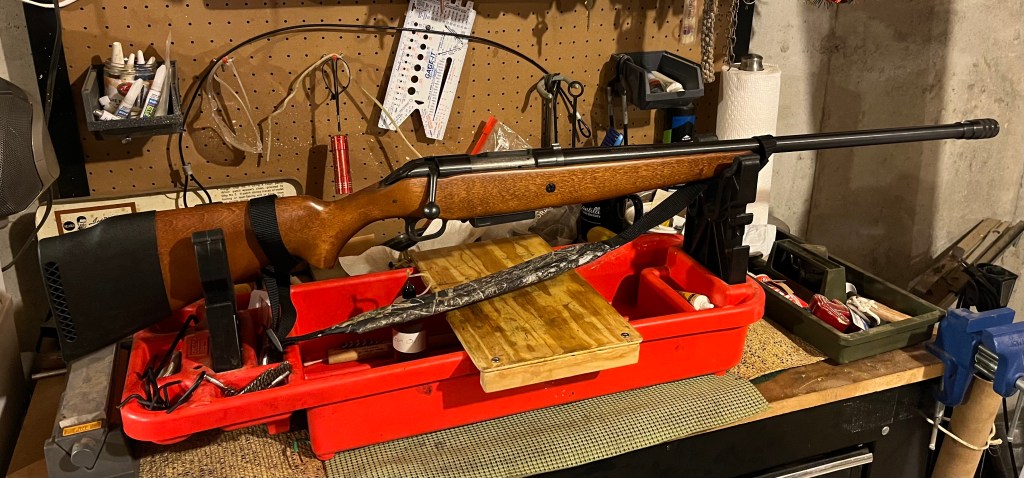
12 gauge, bolt action shotgun. With a 2 round magazine!
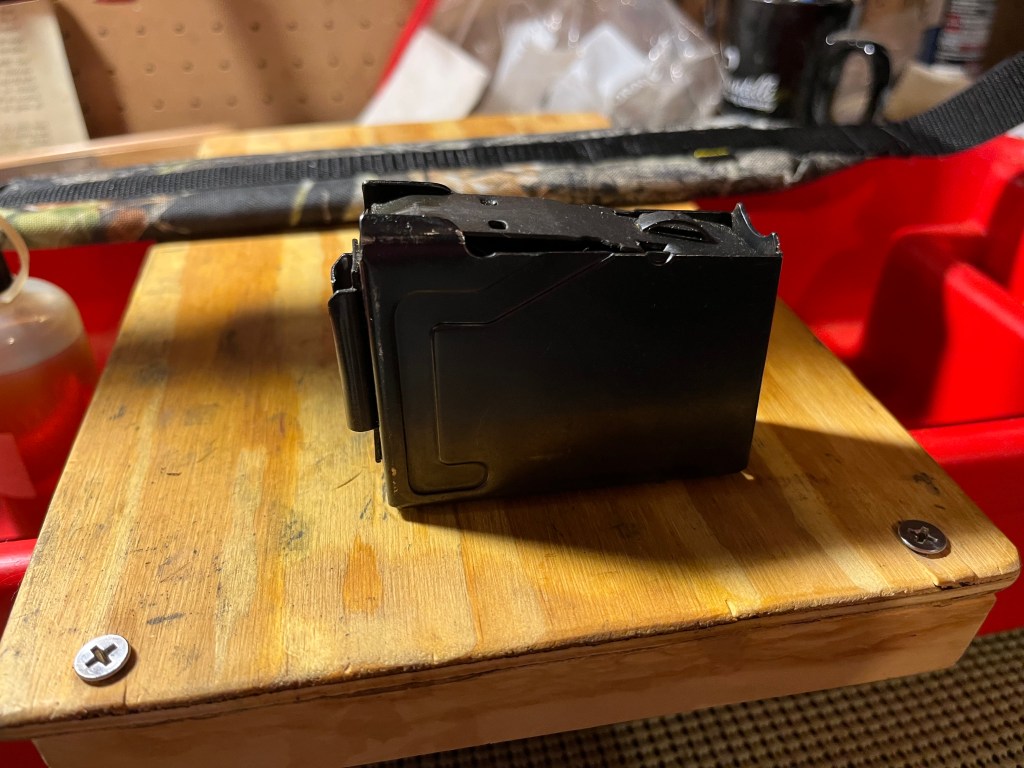
And an adjustable choke on the muzzle!
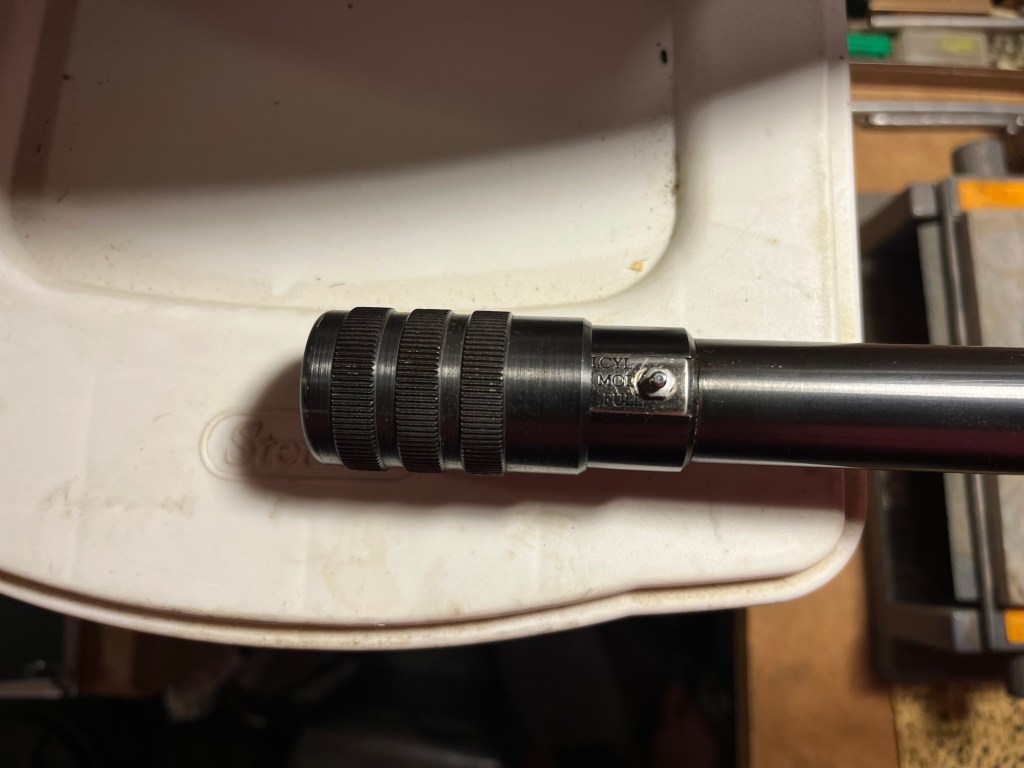
Improved Cylinder, Modified, and Full choke. Oh. Yeah, choke. It chokes the muzzle diameter to allow a smaller or larger spread of the shot. The “Pattern”.
So, with a basic, entry level shotgun, we’ve been able to cover a lot of shotgun topics. One more thing:
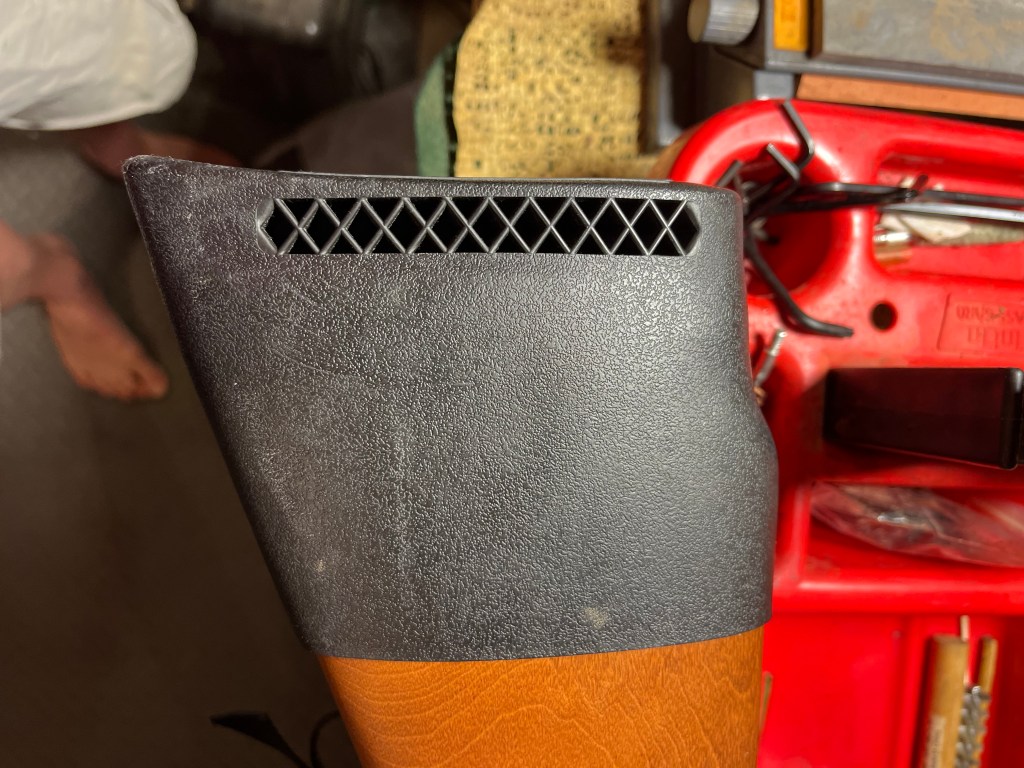
Even with a heavy duty rubber recoil pad, it kicks like a mule. One reason I would start beginners with something else. More to come.
I’ve got some shooting buddies up here for an annual long distance shoot. Experience level varies greatly. But they come up from NY, NJ and MA to the Free State of NH to exercise their rights to keep and bear arms. And to shoot them at long distances. So, in the meantime:

Semi-automatic. What does that mean? A lot of politicians and leftists don’t know or pretend to not know. Simply, the firearm fires semi-automatically – one trigger pull fires one round. The slide recoils backward to recock the trigger, then forward to strip a new bullet from the magazine. That’s it. It does not continually fire as long as the trigger is pulled back. That would be “automatic “ – as in machine gun. No, AR-15s are not automatic. They are semiautomatic, requiring the trigger to be pulled for each shot. Another term for automatic is “select fire”, meaning that you have three settings you can select: Safe, Semi and Automatic. An M-16 is a select fire weapon, thus, a “machine gun”. Not generally available to the public without a lot of money, and BATFE approval/$200.00 tax stamp. And more money for ammo. The rate of fire is about 800 rounds per minute. Given that the Normal Capacity Magazine contains 30 rounds, you can empty it in less than 3 seconds. At $0.40 to $1.00 per round, you will need deep pockets. Oh, yeah. It’s a magazine, not a clip. See M-1 Garand for clips.
So, rant over. But introducing a new shooter to semi automatic firearms is a great opportunity to clear up misunderstandings (or fake news) about firearms.
Here is one of my favorite handguns:

Ruger SR22. A .22 caliber semi automatic handgun, with a 10 round magazine:

It is a Single Action/Double Action pistol, meaning you can choose to pull the trigger with a long stroke to cock the hammer and release it, thereby firing a round. At that point, it will recock and load a new round so that further shooting only requires a short pull. Or you can manually cock the hammer and go right to the single action of pulling the trigger. Easy peasy.
it also has a manual safety on both sides. But remember, the only true safety on a gun is between the ears.
Small, lightweight, easily packed, and has virtually the same manual of arms of most semi automatic pistols. Fun to shoot, and trains you with a light recoil, on most aspects of shooting. And .22 range ammo is inexpensive. Many .22s are picky about what they will feed; I have never had an FTF (failure to fire) with this gun.

Interestingly, Ruger makes a bigger 9 mm version of this – The SR 9 and a compact SR 9 C. Yes, I’m a bit of a Ruger fanboi, but they know what they are doing. Train on the SR 22 and then move up.
Tomorrow we’ll take a look at .22 caliber semi automatic rifles!
Fully intending to shoot some .22 handguns. Of course, I left them on the inside garage steps, being distracted by putting all my range stuff back in the car following vacation – sorry, secret mission.
I’ll probably remember them tomorrow, but let’s take a look at the next step for beginners – the .22 revolver. Why, an obsolete firearm design that can only hold six rounds? Because it teaches Single Action, Double Action, Double Action Only, all concepts carried over to semi auto hand guns. It also forces slow fire, gun fundamentals, and sight alignment. It also teaches about changing grip – the gas escaping around the forcing cone will definitely hurt, so be aware.
Let’s take a look:
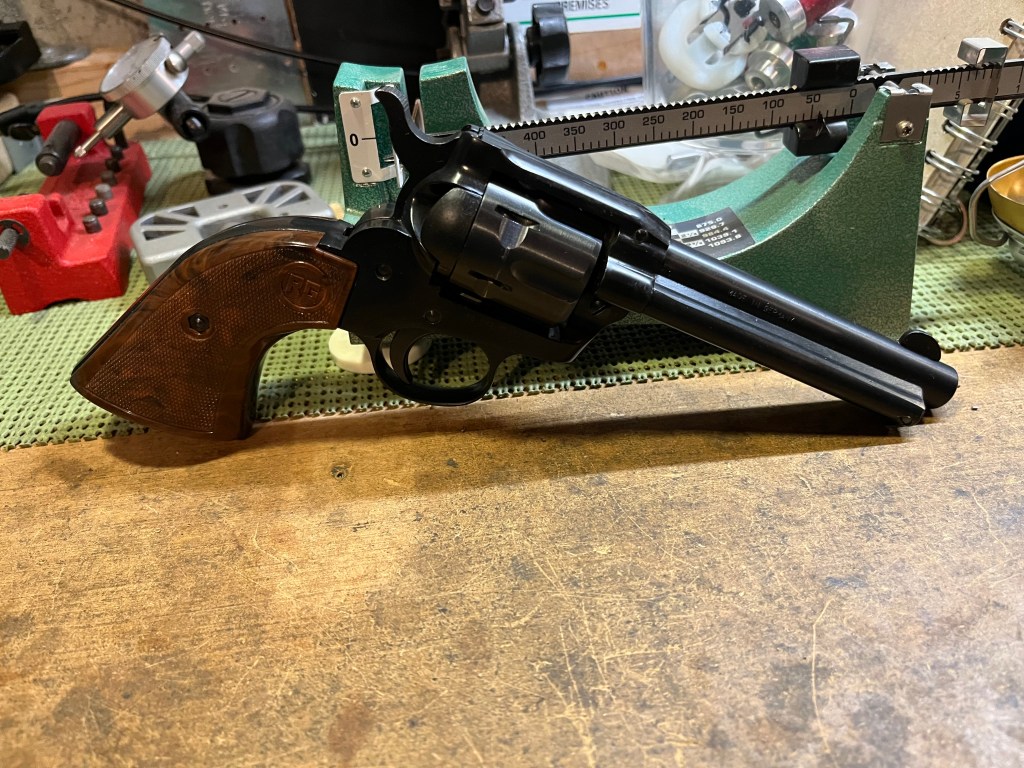
I bought this just south of Fort Campbell on 41 A at a local hardware/convenience store in 1975 for less than 20 bucks. It’s a German-made “RG”. RG had an abysmal reputation – some parts made of pot metal, etc. It was said that there were only two types of RGs – complete junk, or OK. I evidently got the latter. It is still reliable a half century later.
There are three hammer positions – quarter cock, safe like a 1911 cocked and locked; half cocked, for spinning the cylinder and loading; and full cock, for shooting (and where does the phrase, “Going off half-cocked” come from?).
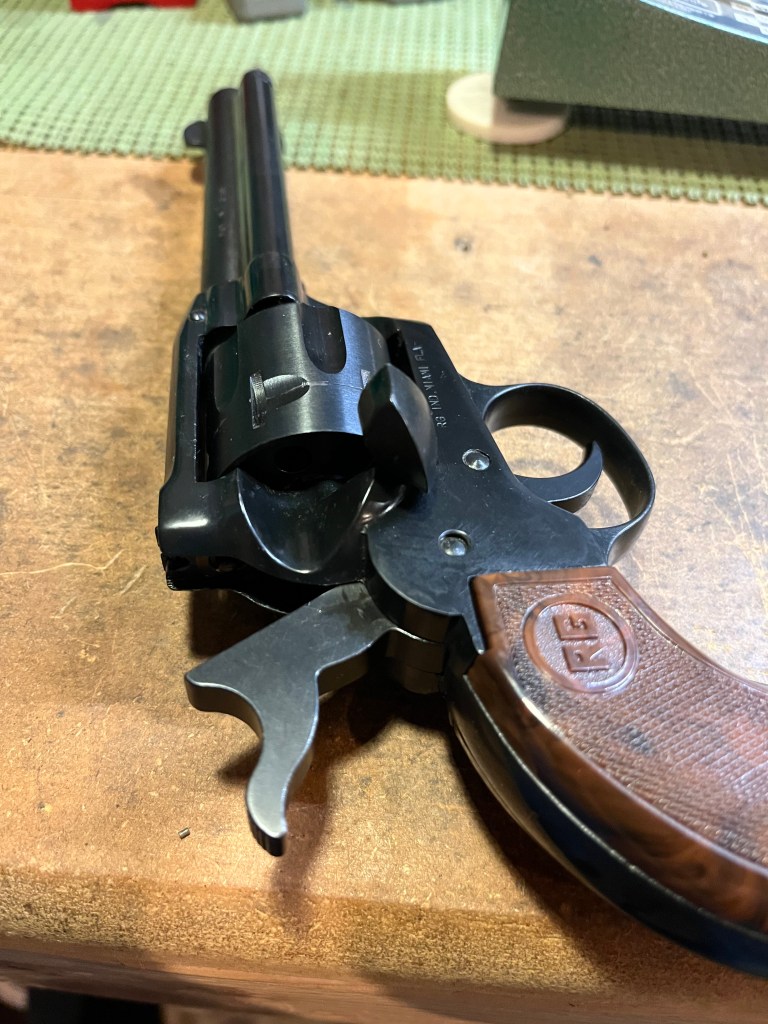
Half-cocked, and loading gate open. I find that having new shooters have a limited amount of ammo makes them concentrate more on fundamentals. There is a time and place for semi autos, but not for a beginner.
“Safe”, so you can carry six rounds, without worrying about having the hammer riding on an empty cylinder.

Ready to go. And understanding that Single Action means manual cocking, and that the only action of the trigger is to release the hammer to fire the round.
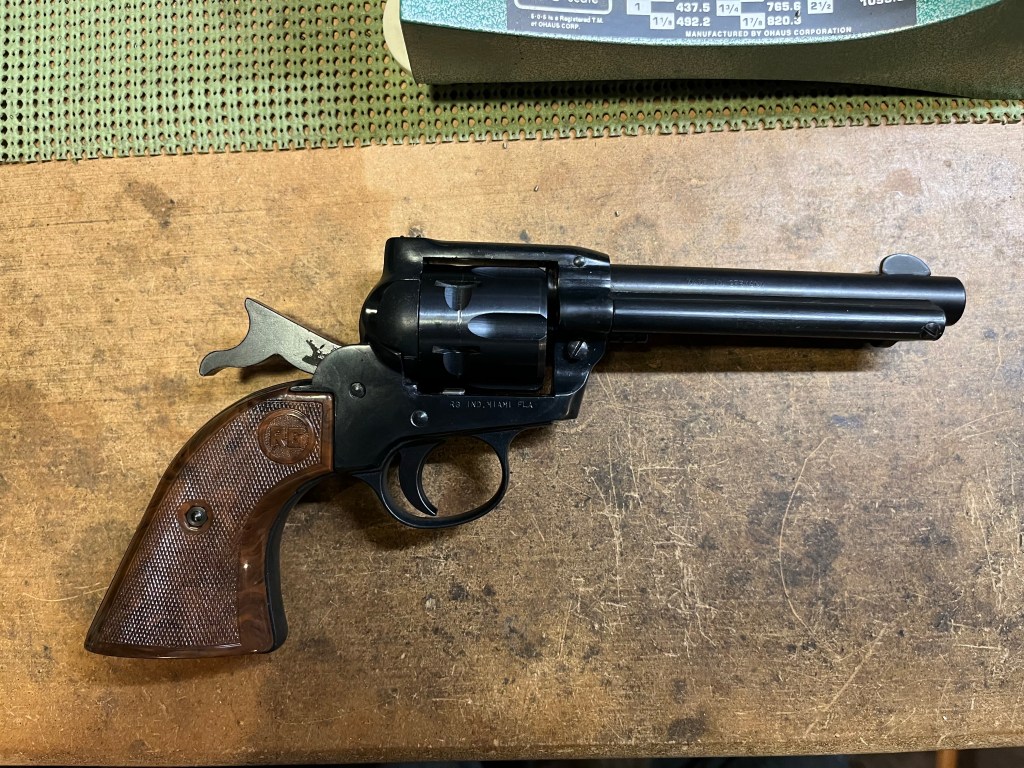
Later, instruction on modern revolvers where Double Action means that the trigger first cocks the hammer, then releases it to fire. And then later instruction about SA/DA where you have the choice of either. Finally, Double Action Only, where the trigger pull is required to cock the hammer and release it in order to fire.
So what kind of trigger action is a 1911? Or a Glock?
 KatNap Fever!