Now, where was I?

Oh, yeah, shotguns and beginning shooters. Clearly, you don’t expose them to shot guns until they have shot a lot of Bangsticks, and are used to noise, blast and recoil. Then, when they have some shooting time under their belt, you don’t start off with 12 gauge.

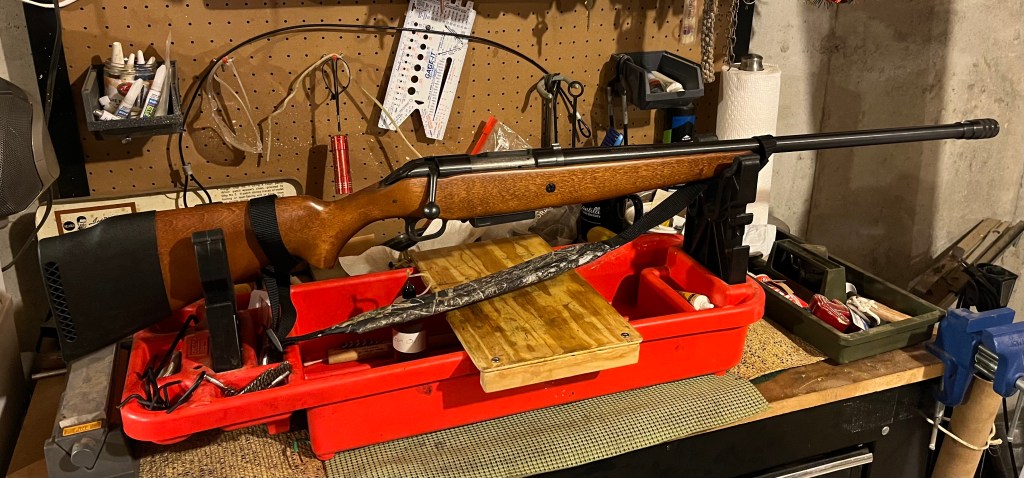
Remember my boltie shotgun? It came from Montgomery Ward (“Monkey Ward” – remember?”, and was made by Western Field.

A Model 172A C-Lect-Choke, and chambered both 2 3/4” and 3” shells. It was a right all-purpose shotgun. Except:

See that brass pin through the neck of the stock? That was a later design change. The gun recoiled so much that the neck would crack. After several years of shooting, mine cracked and got sent off to Monkey Ward; the above is the replacement.

Point being that 12 gauge is not for beginners. Remember that as the gauge number goes up, the barrel diameter gets smaller. It goes 10 gauge (a true Punt Gun – I don’t think they’re made anymore), 12, 16 (also getting rare), 20, 28 and .410. A beginner could start out at .410 (some are made to shoot .45 Colt as well – a multi-use gun), but I think probably a 20 gauge would be a good place to start. Not a bolt gun cuz they are rarely made nowadays, but a pump. The pump is a different style of repeater that we have not mentioned before. I may have brought it up with .22 rifles. There are several very popular ones like Marlin (now recently resurrected by Ruger – yay).

My personal favorite would be the Remington 870. It’s been around forever, functions well, has a great reputation, you can swap out longer and shorter barrels.
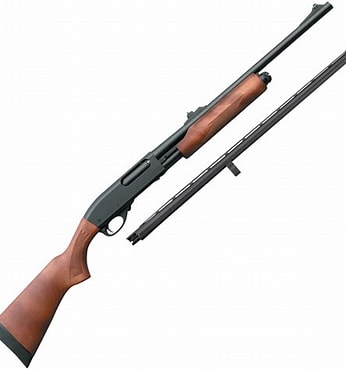
Yeah, that’s a stock photo. Mine has been kidnapped by Jr., and I’m too lazy right now to go break into his safe. But in a manageable gauge like 20, this is a good one to start them shooting trap, skeet, etc. Yup, it’s a Bangstick for an Advanced Beginner.
Next up in Bangsticks for Beginners

This is a bit of a misleading title. A shotgun is more like a Bangtree than a Bangstick. And in the recommended order of Beginning, I’d put this one after rifles larger than a .22. But, since I brought it up before, away we go.

Now, I DON’T recommend the way I did it. After starting out at age 12 with a .22, I decided at 16 that I needed a Man’s Firearm. What better than the vaunted 12 gauge? Oops, best back up. We’ve indirectly covered “caliber”, .22 caliber being (approximately) .22 inches in bullet diameter. What is this “gauge” measurement? Well, by my recollection and by the inner tubes, it means how many balls of lead the size of the barrel diameter would total one pound. So, 12 balls is a 12 gauge, 28 balls a 28 gauge and so on. (However, see the exception, .410 gauge, comparable to .45 caliber Long Colt. Well, never mind, we’ll get to that later).

And what are we firing through this kind of firearm? Well, “shot”. Meaning round pellets as small as .08” up to .22”, then buckshot from .24” to .39”, and then slugs, which are more like fat rifle bullets the diameter of the barrel.

But one major difference – we are not sending shot through a rifled barrel (which imparts stabilizing spin to the bullet). We are sending it through a smooth bore, so it just comes out of the muzzle with no spin and spreads out the further it goes. Which is the raison d’etre for a shot gun – lots of pellets hitting a larger area. For fast moving things like birds. Or squirrels. Or fast, fearsome felons.

So, how’s this for a manly firearm?

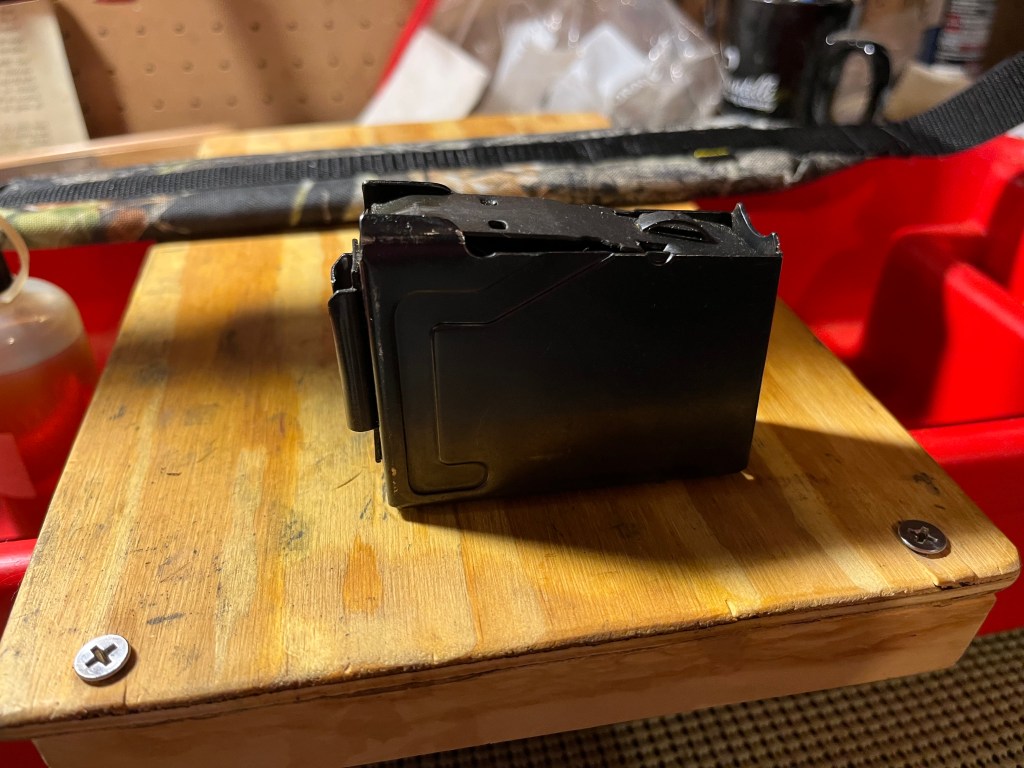
12 gauge, bolt action shotgun. With a 2 round magazine!

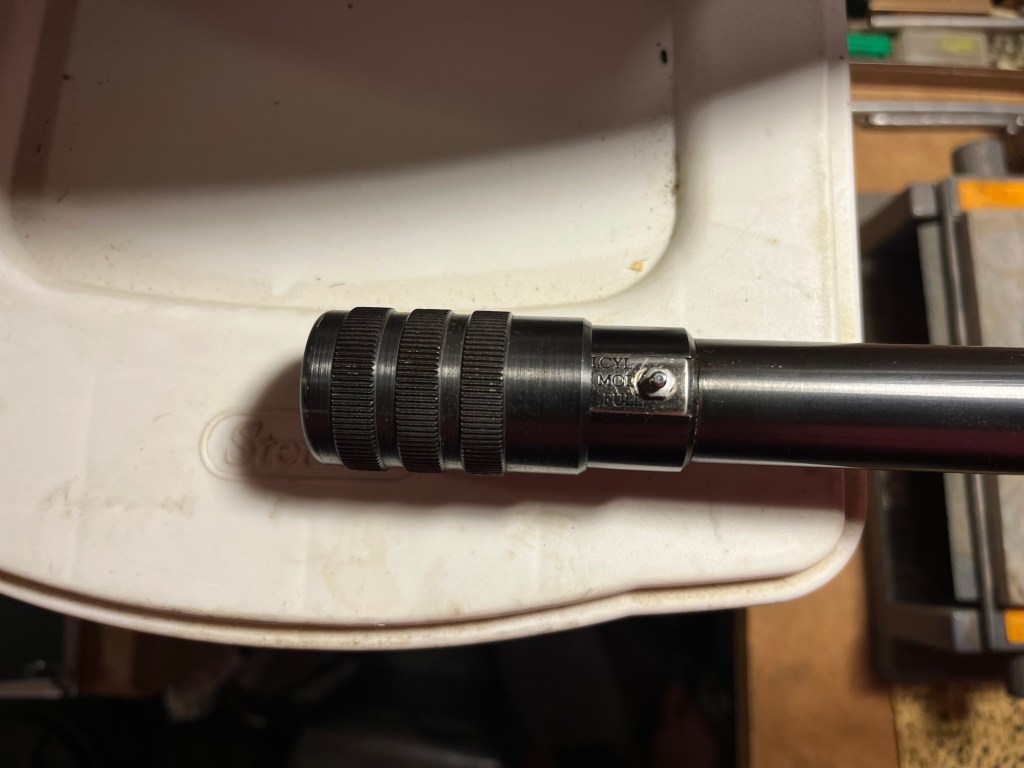
And an adjustable choke on the muzzle!

Improved Cylinder, Modified, and Full choke. Oh. Yeah, choke. It chokes the muzzle diameter to allow a smaller or larger spread of the shot. The “Pattern”.
So, with a basic, entry level shotgun, we’ve been able to cover a lot of shotgun topics. One more thing:

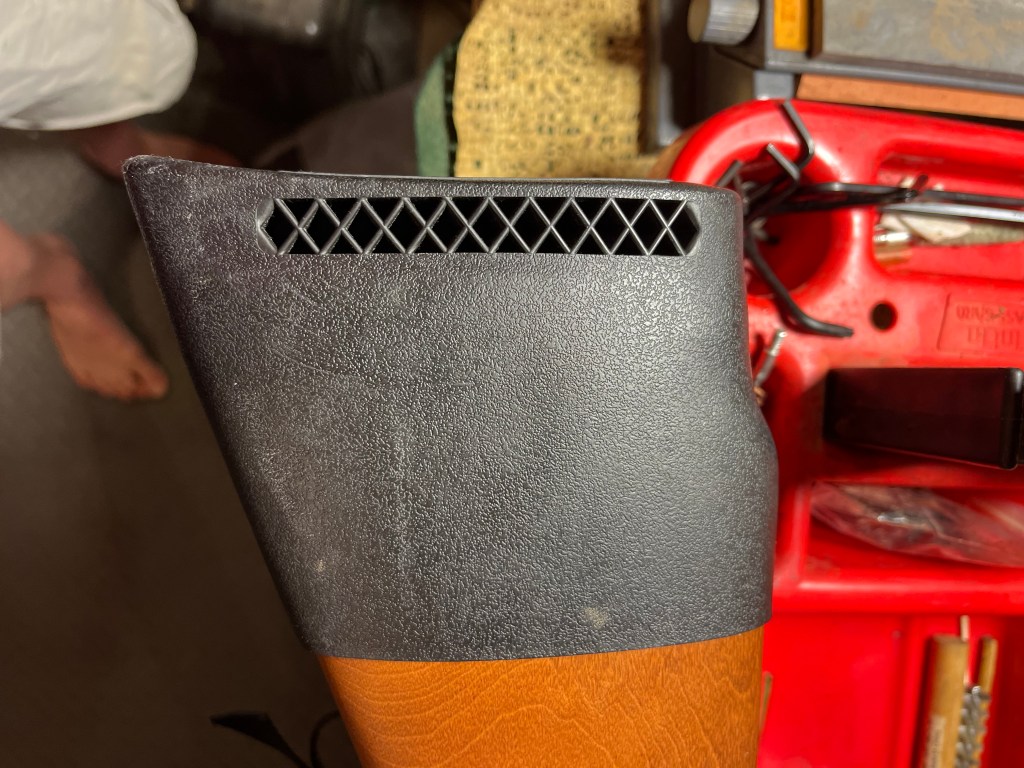
Even with a heavy duty rubber recoil pad, it kicks like a mule. One reason I would start beginners with something else. More to come.

Not so fast there, bucko.

Yesterday I mentioned jumping on to semi-auto .22 rifles in our Bangsticks for Beginners discussion. Then I realized we had skipped some important things on .22 hanguns – actually shooting them! As I was remediating that condition today, I also rembered some stuff I glossed over. Spent cartridge ejection. Let’s cover that now since it has some range safety implications.

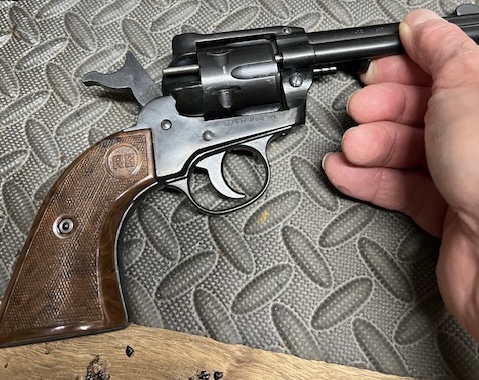
You can see the shiny ejection rod poking through the empty chamber. Once the rounds are fired, you go to half-cocked, as if loading, then push down on the spring loaded ejection rod at the front of the barrel. You need to pop out each spent round as you rotate the cylinder. Again, limited ammo and manual ejection slows down the process so beginners can grasp everything fully.

As far as the Ruger SR 22 (and all other semi-auto handguns), when the slide recoils to the rear, it first extracts the spent shell from the chamber, continues toward the rear where it is mechanically extracted and flung to the side, then cocks the trigger/hammer, moves back forward and strips a new round from the top of the magazine and seats it in the chamber. It all sounds very complex and happens fast, but is a simple complex.

Now the Range Safety Tip. Extracted Brass Is Hot! ‘mkay? As much as I appreciate women wearing low cut blouses, that’s a no-no on the range. Same same for open shoes. And an absolute necessity is eye protection (safety glasses for the slow to catch on). Finally, a brimmed hat to help deflect hot brass.

Safety nag over. Let’s shoot!

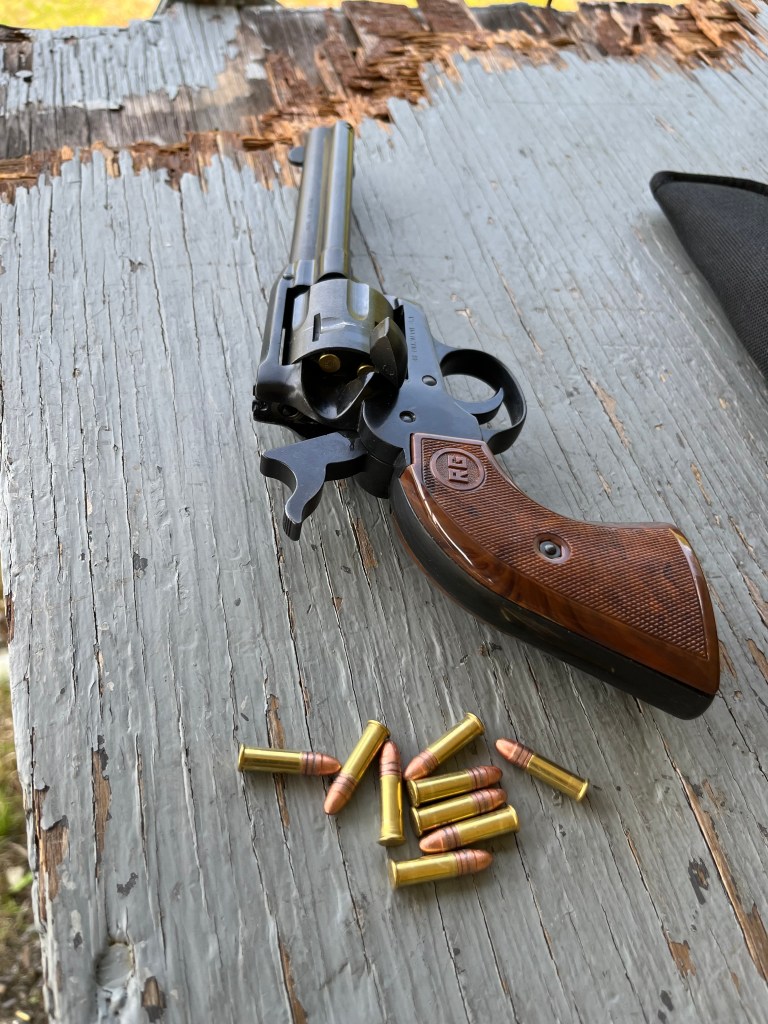
You can see a round in the cylinder, and the extractor rod tube ahead and aligned with it.

Results? OK, on paper but not very good.

Top is 5 yards, bottom is 7, two-handed grip, Weaver stance (file for future reference). I clearly was not keeping the front iron site down all the way in the rear notch, hence, shooting high. My trigger pull was poor, pushing the rounds left. Back to fundamentals, as certain people always preach. The Ruger? Also inconsistent:

Oh, we can do better than that. Sure, it’s 85 degrees, I’ve been mowing for four hours, and my socks are too tight. 7 yards, RG on the center, Ruger on the end of the right bar:

Practice, practice, practice. Maybe .22 rifles tomorrow. But, a teaser for later. See anything different?

Think hearing protection.

Let’s jump to semi-autos as our next Bangstick for Beginners.

Semi-automatic. What does that mean? A lot of politicians and leftists don’t know or pretend to not know. Simply, the firearm fires semi-automatically – one trigger pull fires one round. The slide recoils backward to recock the trigger, then forward to strip a new bullet from the magazine. That’s it. It does not continually fire as long as the trigger is pulled back. That would be “automatic “ – as in machine gun. No, AR-15s are not automatic. They are semiautomatic, requiring the trigger to be pulled for each shot. Another term for automatic is “select fire”, meaning that you have three settings you can select: Safe, Semi and Automatic. An M-16 is a select fire weapon, thus, a “machine gun”. Not generally available to the public without a lot of money, and BATFE approval/$200.00 tax stamp. And more money for ammo. The rate of fire is about 800 rounds per minute. Given that the Normal Capacity Magazine contains 30 rounds, you can empty it in less than 3 seconds. At $0.40 to $1.00 per round, you will need deep pockets. Oh, yeah. It’s a magazine, not a clip. See M-1 Garand for clips.
So, rant over. But introducing a new shooter to semi automatic firearms is a great opportunity to clear up misunderstandings (or fake news) about firearms.
Here is one of my favorite handguns:

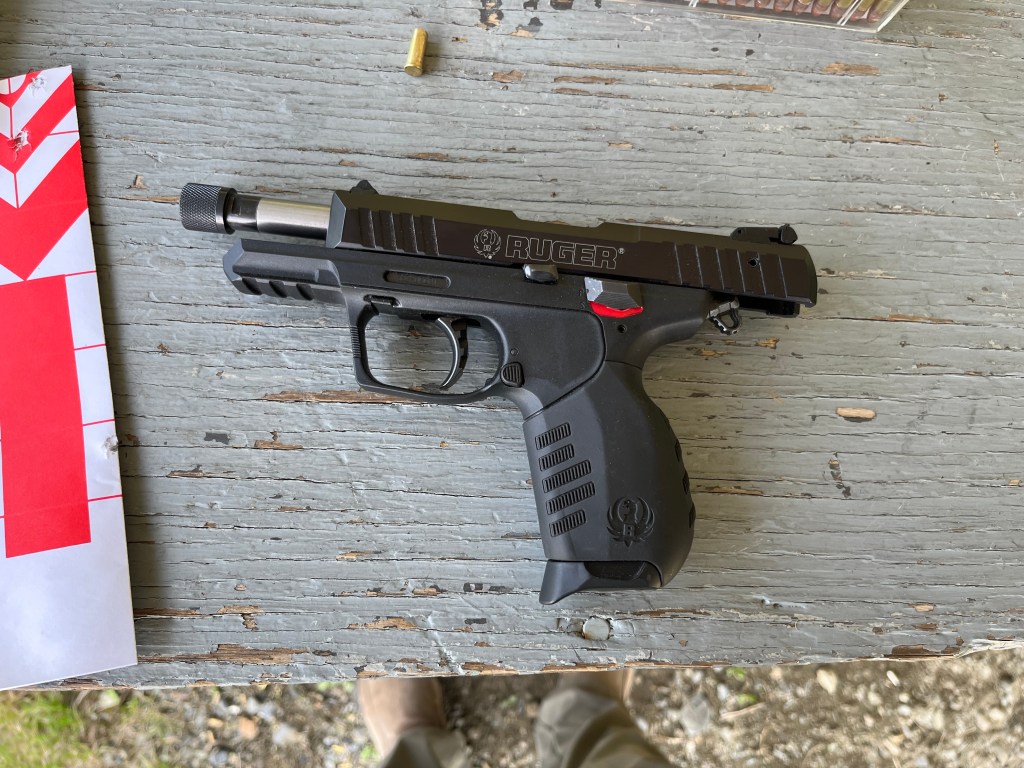
Ruger SR22. A .22 caliber semi automatic handgun, with a 10 round magazine:

It is a Single Action/Double Action pistol, meaning you can choose to pull the trigger with a long stroke to cock the hammer and release it, thereby firing a round. At that point, it will recock and load a new round so that further shooting only requires a short pull. Or you can manually cock the hammer and go right to the single action of pulling the trigger. Easy peasy.

it also has a manual safety on both sides. But remember, the only true safety on a gun is between the ears.
Small, lightweight, easily packed, and has virtually the same manual of arms of most semi automatic pistols. Fun to shoot, and trains you with a light recoil, on most aspects of shooting. And .22 range ammo is inexpensive. Many .22s are picky about what they will feed; I have never had an FTF (failure to fire) with this gun.

Interestingly, Ruger makes a bigger 9 mm version of this – The SR 9 and a compact SR 9 C. Yes, I’m a bit of a Ruger fanboi, but they know what they are doing. Train on the SR 22 and then move up.

Tomorrow we’ll take a look at .22 caliber semi automatic rifles!

Guns are dangerous, ‘mkay?

I’m going to do a piece or two on beginner guns, but even before that, gun dangerousness. Yes, guns are dangerous. They are intended to be so. That is their original design principle. So, “gun safety” is a bit misleading.

A gun is a force projector. It is the evolutionary result of throwing stones, throwing spears, shooting arrows. It is designed to inflict potentially lethal force against other beings, human and otherwise. All the other uses of guns, plinking, target shooting, trap/skeet, all are secondary to the basic purpose of a firearm. With that in mind, let’s examine how we can control that force.

First, “The Four Rules”. When followed religiously, they ensure that the projection of that force does not result in unintended results.

  1. Every gun is loaded. Treat every gun that way.
  2. Do not let the barrel of the gun “cover” (point at) anything you are not willing to destroy.
  3. Do not put your finger on the trigger until you are on target and ready to shoot.
  4. Know what your target is. And what’s beyond it.

Discussion:

  1. When handling any firearm, if you treat it as if loaded, you won’t do stupid unloaded gun stuff – looking down the barrel, waving it around, doing quick draws. How many times have you heard, “But I didn’t know it was loaded!”
  2. This means always pointing your firearm in a safe direction. Good example – if you are on the firing line and your gun is pointed toward the ground, is it a safe direction? Maybe. But next time, take a look at where your feet are. Is your gun covering your toes? Another example – some shotgunners have special shoes made with a leather piece on their toe so that they can rest the barrel there between shots. AYFKM? Even shooting bird shot, a negligent discharge will go right through that resting point.
  3. As every veteran heard in basic training, “Keep your booger hook off the bang switch!” Literally, do not let your finger come in contact with the trigger until you are pointing at the target and you are beginning the trigger press. This is sometimes hard to do in practice. Think, most every gun is designed to be comfortably held in the hand and the trigger finger naturally wants to go inside the trigger guard. This is why you really do not want to try to catch a gun if you drop it. Yep, you caught it and it didn’t get dinged or dirty. Nope, you caught it perfectly and contacted the trigger just enough to set it off.
  4. Sure, you know you pinned a target to the tree. Have you considered what happens if you miss? Or if the bullet is not stopped by it? Where will that bullet end up. OK, is that a deer or Farmer John’s red heifer? Do you know that a little itty bitty .22 round can travel 1500 – 2000 yards? That would be over a mile if you haven’t done the math. So make sure that so,etching will backstop your round.

Thinking about it, if you follow these rules, you will likely never have a negligent discharge. Nope, there are no “accidental” discharges.

When I shoot with someone I have never shot with before, I always go over The Four Rules. If they know anything about shooting, they never complain.

Next up, Guns for Beginners. BTW, beginners never set hands on a gun with me until they repeat and explain The Four Rules to me.

What the heck is an “Aspirin Shoot”?

Well, d’oh. You get up early in the morning and scout those little rascals and blast the heck out of them . .

Really, though, you have to get up pretty early in the morning to claim your favorite shooting table at the club. The rock solid one that gives you the best angle on those little devils.
Here is the course of fire: Aspirin at 50 yards. Tums at 100. Know Your Limits steel at 150. Same at 200. .22 caliber only, but any rifle you want. Bipod and rear bag only.

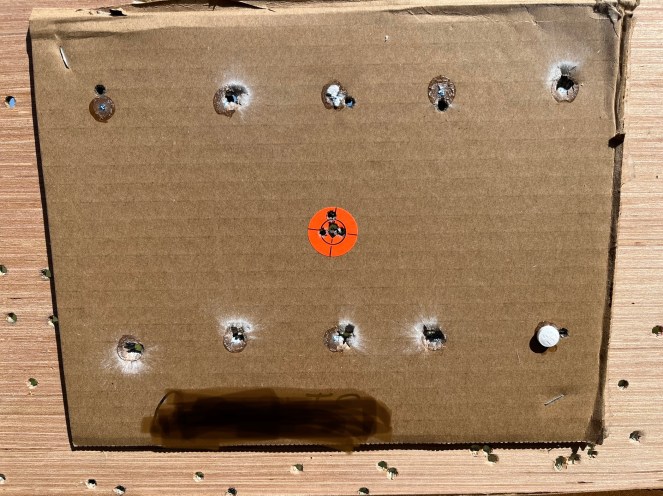
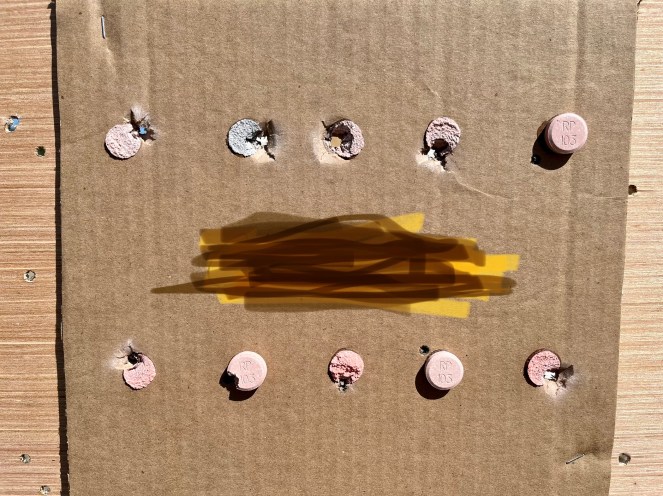
10 aspirin on your individual cardboard target. One fluorescent sighter target. You may take up to 10 sighter shots, but once on the aspirin, you cannot go back. One shot per aspirin. If the round touches any part of the aspirin it is a hit. Yes, black wax streak on the side is a hit. Max score of 10.

Same thing at 100 yards with Tums. Word to the wise – this is the hardest stage.

At 150, the 5 hanging KYL targets start at 8” diameter and go down to 2.5”. You must hit each target before going on to the next. Once you hit the smallest one, you keep shooting at it.

200 yards is the same. So max score possible is 40 points. On a great day the winning score is 32-34 points. On a cold winter day in blowing snow, low 20s will win.
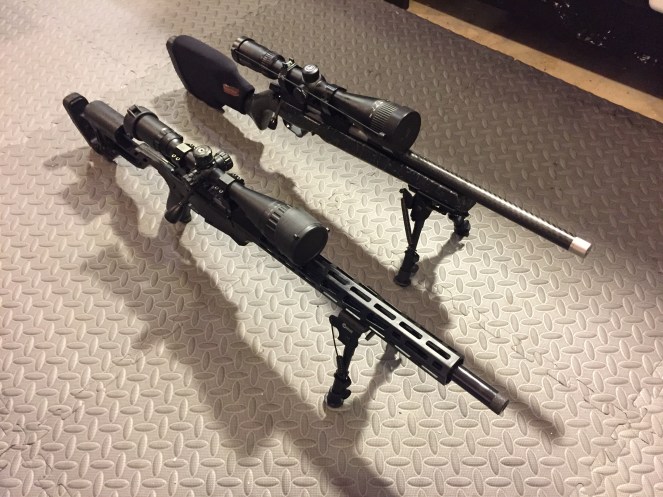
So what rifle do you use? At least at our club, everyone started out with Ruger 10-22s, and shot CCI Standard. But is wasn’t long before ammo changed to Eley, SK, Wolf, and rifles changed to CZ, Ruger

Precision Rimfire, and the like. My own upgrades were the Christiansen Ranger and the Ruger Precision Rimfire.

Let’s take a look:

This is the best I’ve shot. 9/10. Pretty sure won that day with a 34.

Tums are tuff. At 100, wind really kicks in.

An 8 will keep you in the running.

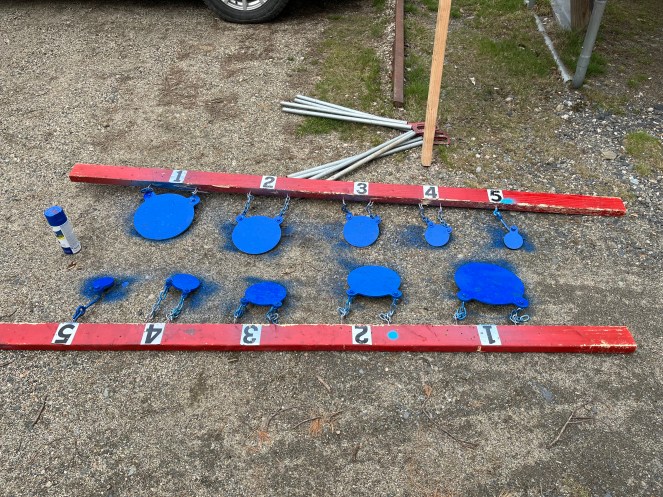
This is what you are shooting at.

And it looks like this:

Some people say that .22 at 200 yards is similar to large caliber at 1000. I tend to agree. The .22 LR is an anemic round; it gets pushed around by the wind a lot. But it’s been around for a hundred and fifty years and is arguably the most popular caliber. It is hard to shoot well at distance.

But would you stand there and offer to be a target? I don’t think so.