So, I went to the range today

Fully intending to shoot some .22 handguns. Of course, I left them on the inside garage steps, being distracted by putting all my range stuff back in the car following vacation – sorry, secret mission.

I’ll probably remember them tomorrow, but let’s take a look at the next step for beginners – the .22 revolver. Why, an obsolete firearm design that can only hold six rounds? Because it teaches Single Action, Double Action, Double Action Only, all concepts carried over to semi auto hand guns. It also forces slow fire, gun fundamentals, and sight alignment. It also teaches about changing grip – the gas escaping around the forcing cone will definitely hurt, so be aware.

Let’s take a look:
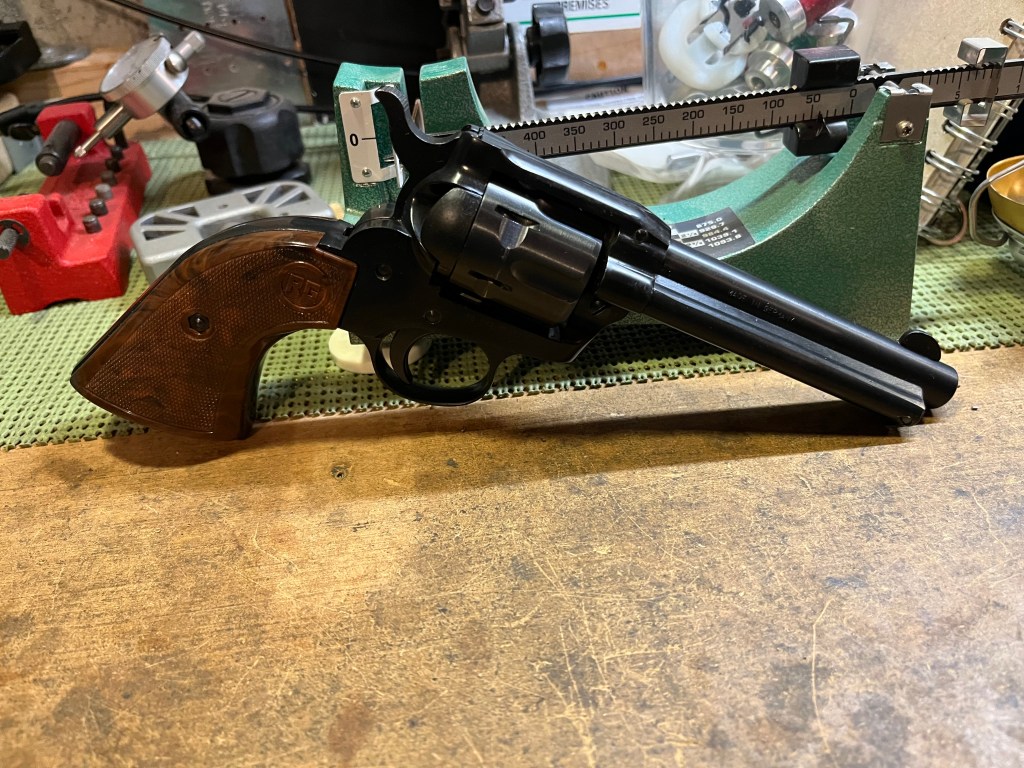
I bought this just south of Fort Campbell on 41 A at a local hardware/convenience store in 1975 for less than 20 bucks. It’s a German-made “RG”. RG had an abysmal reputation – some parts made of pot metal, etc. It was said that there were only two types of RGs – complete junk, or OK. I evidently got the latter. It is still reliable a half century later.

There are three hammer positions – quarter cock, safe like a 1911 cocked and locked; half cocked, for spinning the cylinder and loading; and full cock, for shooting (and where does the phrase, “Going off half-cocked” come from?).
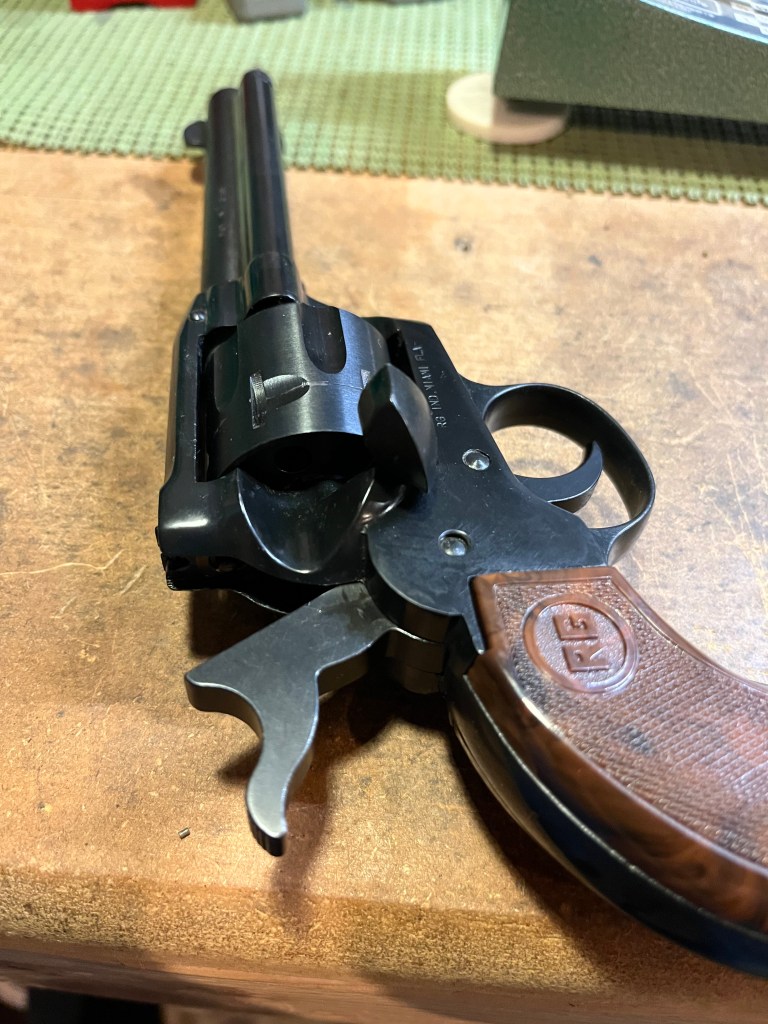
Half-cocked, and loading gate open. I find that having new shooters have a limited amount of ammo makes them concentrate more on fundamentals. There is a time and place for semi autos, but not for a beginner.

“Safe”, so you can carry six rounds, without worrying about having the hammer riding on an empty cylinder.

Ready to go. And understanding that Single Action means manual cocking, and that the only action of the trigger is to release the hammer to fire the round.
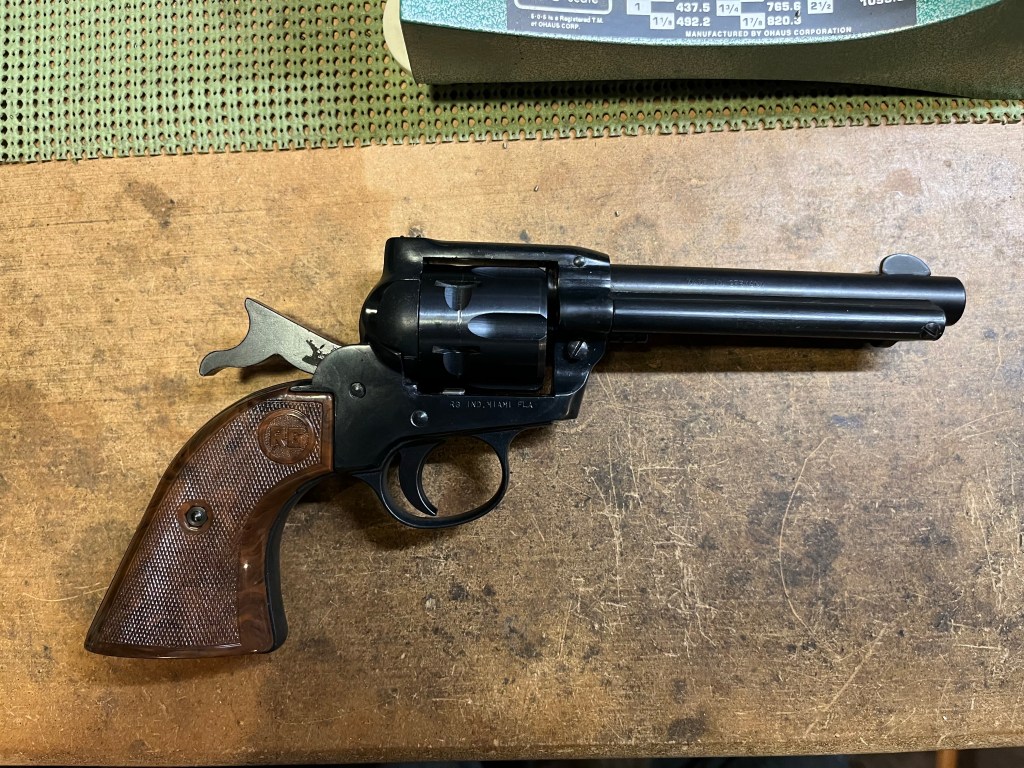
Later, instruction on modern revolvers where Double Action means that the trigger first cocks the hammer, then releases it to fire. And then later instruction about SA/DA where you have the choice of either. Finally, Double Action Only, where the trigger pull is required to cock the hammer and release it in order to fire.

So what kind of trigger action is a 1911? Or a Glock?
Garand Love

Going from one end of the spectrum to the other – .22 to .30-‘06.
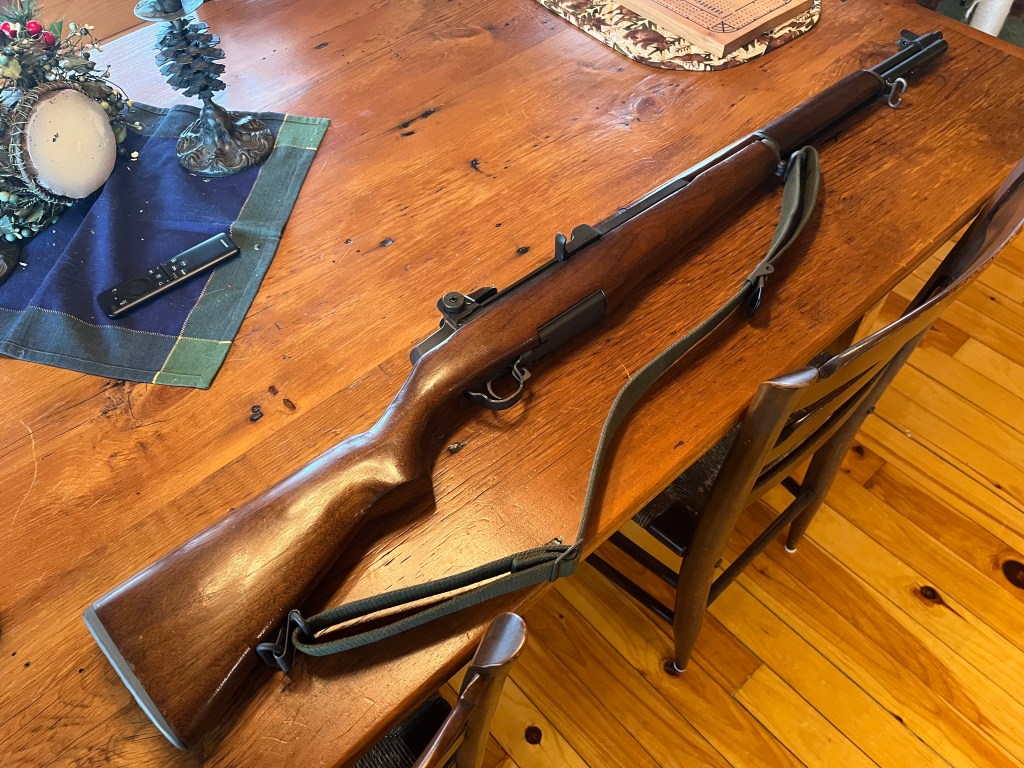
About a dozen and a half years ago I got serious about CMP – Civilian Marksmanship Program. The allure of “a Garand for a Grand” was overwhelming. After jumping through minor hoops (belong to a CMP-affiliated gun club, not be a prohibited person, send check),I received at my front door a cardboard box containing a green gun case and a beautiful M-1 Garand rifle.
Yes, you heard right, no FFL and right to my door. And I was a resident of a very gun-unfriendly state at the time.

The serial number indicated a manufactured date of March, 1945, probably intended for the invasion of Japan. Thank you, President Truman, no invasion needed. And my dad came home on two feet, so I am here. And so is my Garand. Let’s take a look:

The stock arrived new and unfinished. I applied the Birchwood Tru-Oil, 00 steel wool, Birchwood Gun Wax and elbow grease.

Yesterday I was reorganizing a cabinet and moved several ammo boxes of Greek .30-‘06 made in the mid-70s. I had ordered a thousand rounds from CMP (at less than $0.50 per round, as I recall). The forecast was bluebird and 50 degrees, so a range trip was in order. I wanted to shoot some of the 50 year-old ammo and compare it to some modern American Eagle 150 grain FMJ.
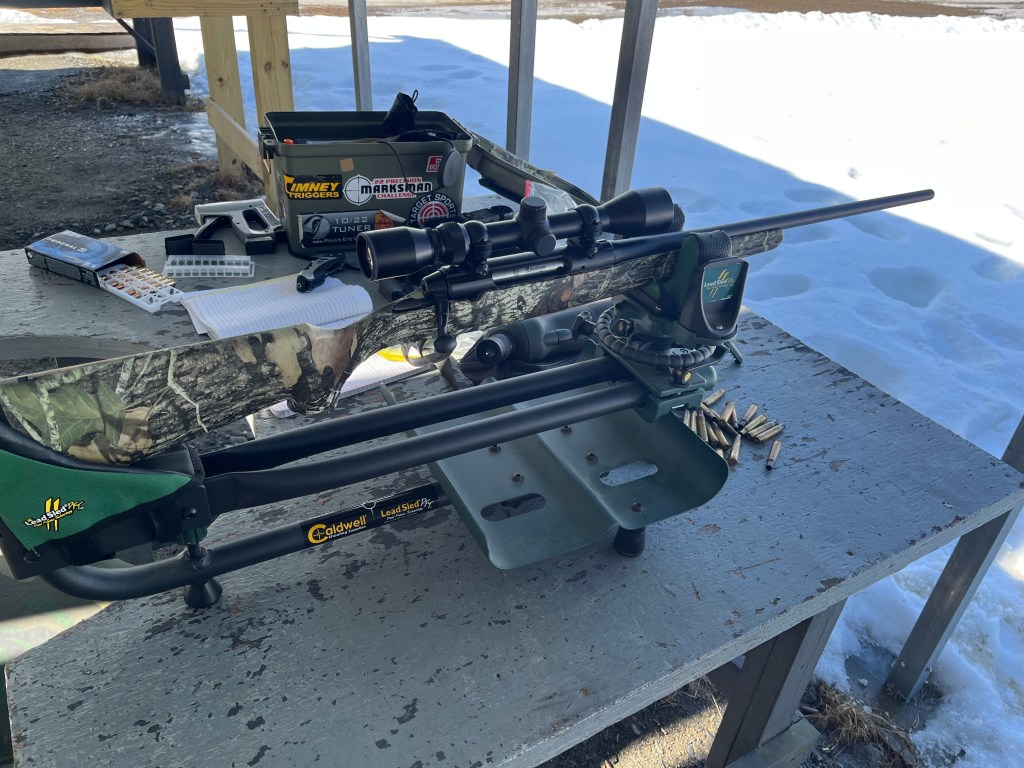
I also brought my Savage Axis boltie along as a control test.

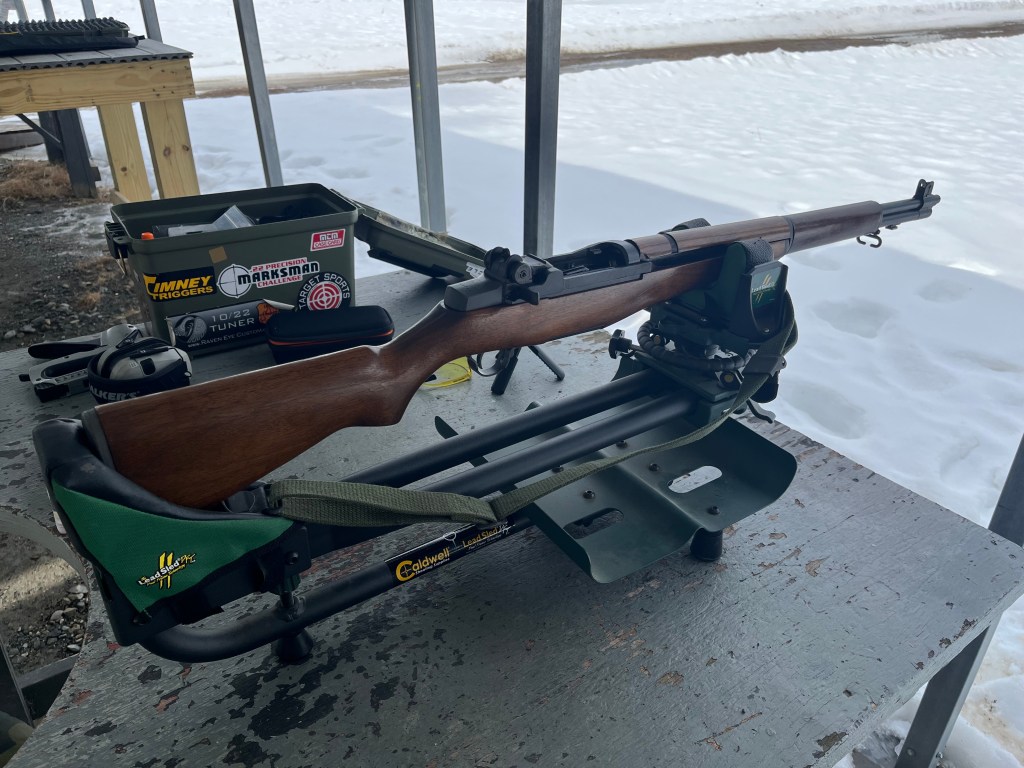
Beautiful day at the range with a beautiful tool:

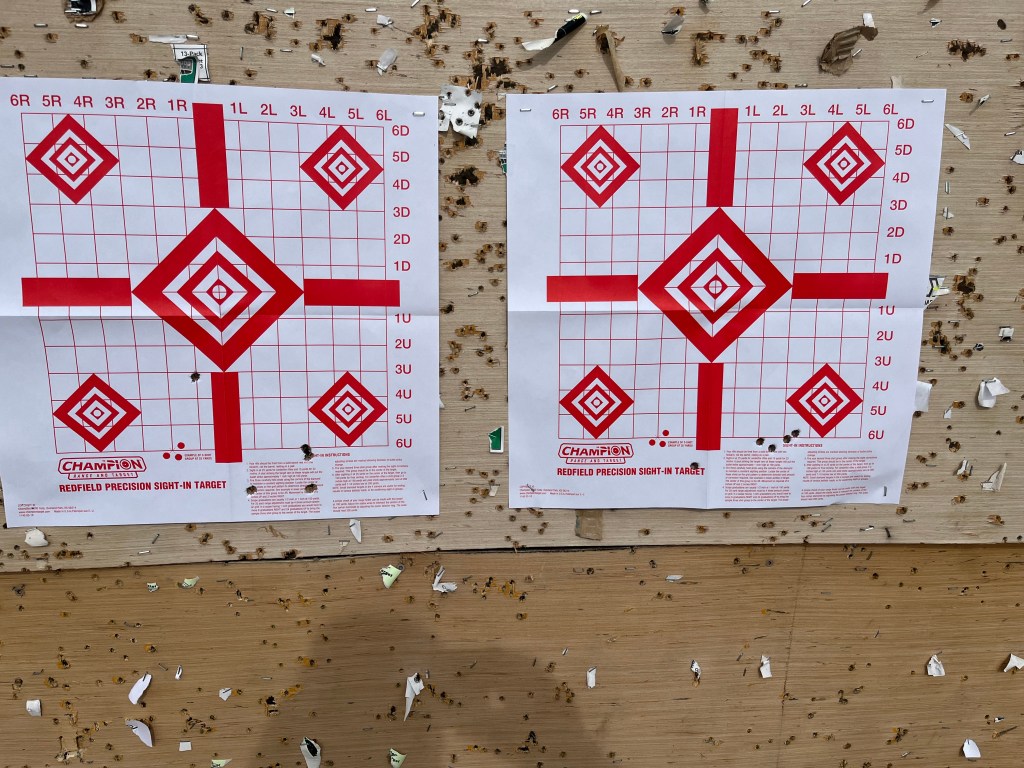
Yes, it’s in a lead sled. I once shot over a hundred rounds at one sitting and the shoulder bruising was remarkable. So, Greek on the left and American Eagle on the right. One hundred yards with aging eyes that could barely see the center of the target.

Clearly a fouling shot high left, then came together at about 2.5”. The American Eagle grouped nicely at about 1.4” with one flyer. The Greek averaged 2729 fps muzzle velocity, Standard Deviation of 37 and Extreme Spread of 94 fps; the American came in at 2637 fps mv, SD of 21 and ES of 54 fps. Seems as if sitting around for a half century did not faze the old ammo.

Thereafter, I spent a lot of time and all of the ammo I had brought trying to bring up the zero. The elevation knob screw would loosen, but the knob would not loosen enough to reset the zero. Drat. Down to the workshop in a bit.

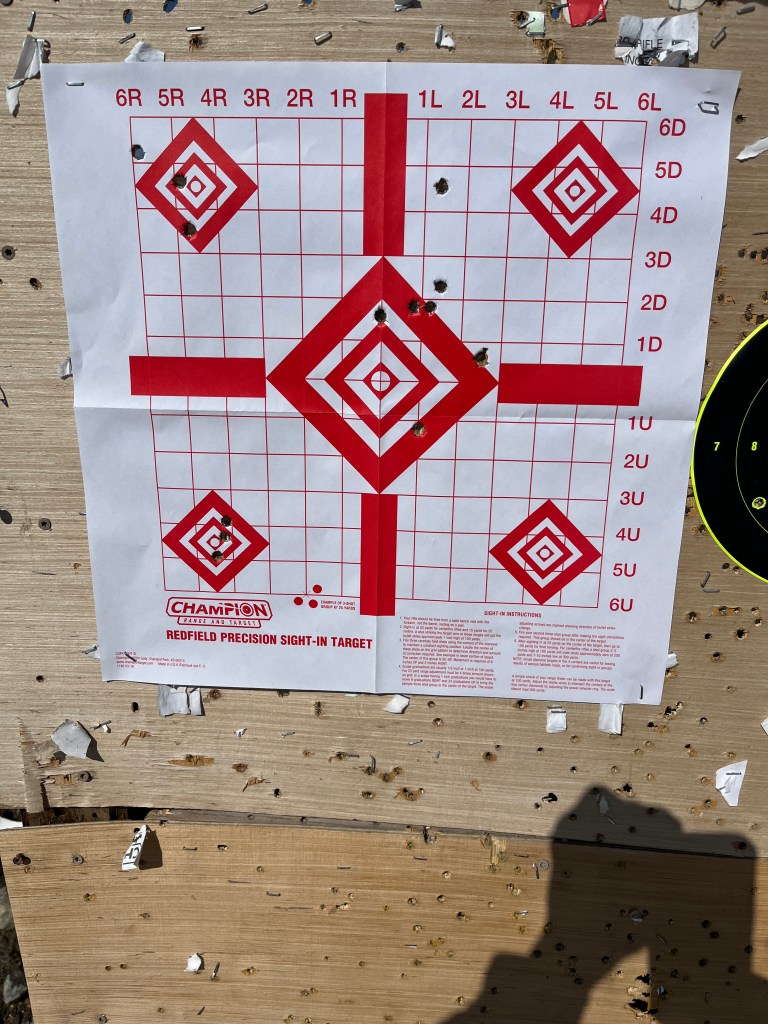
But I still had the Savage and a box of Federal 180 grain. Not really a fair comparison since the Savage has a 1×9 scope and the ammo is different. But it’s a beautiful day, I’m at the range and have ammo. So:

Upper and lower left. Better group was an inch.
So, old and new, same caliber, both effective. The Garand is heavier and much more pleasant to shoot. The Savage is accurate, but light and packs a punch. But there’s nothing like the ping of an en banc clip ejecting.