

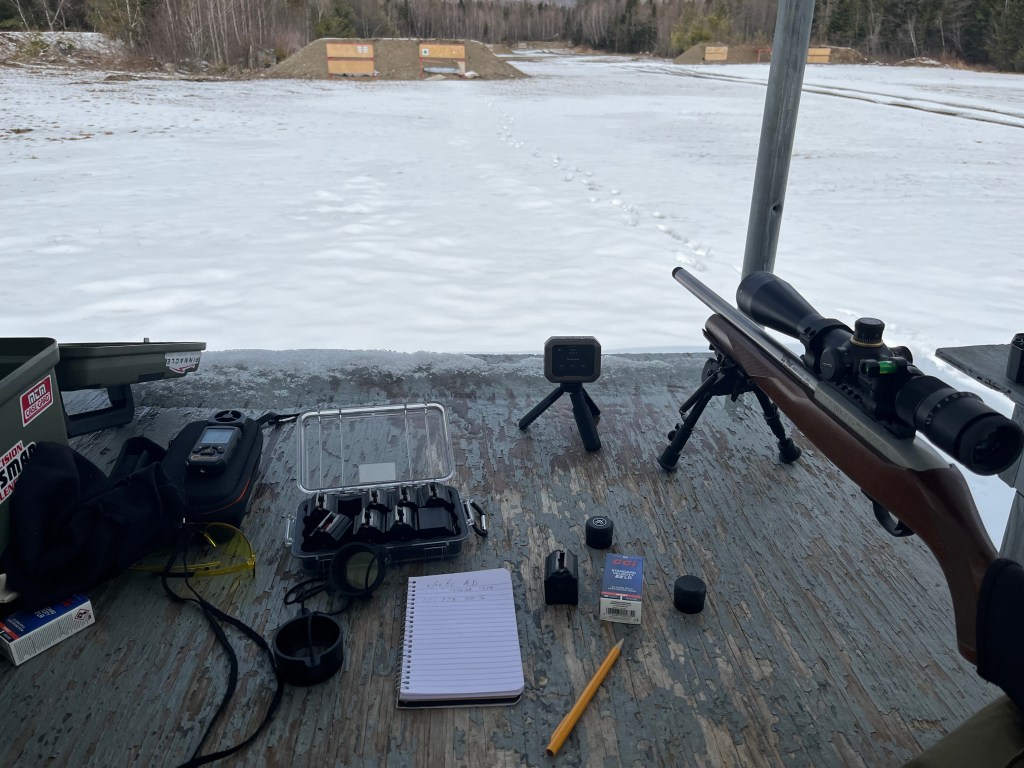
OK, OK! Let’s talk about how to set up and use a ballistics table. Today we are going to stretch out our .22 round. The platform will be a Ruger 10-22. Now, this is not a bog standard .22, but it started out that way: a Walmart stock 10-22 with a stainless steel barrel. It shot adequately and was a lot of fun. Until I took up precision shooting. So now it has a stainless threaded Green Mountain barrel, a new trigger group from Ruger, receiver pin and recoil pin upgrades, the back of the receiver has a drilled and tapped cleaning rod hole, the receiver is bedded and the barrel free-floated, and it sports a 4×20 Vortex scope.
/
Today we are going to use CCI Standard 40 grain lead nose ammo. This is not match ammo, but can be pretty good, and easy on the budget.
The ballistics work-up will be as follows:
Zero rifle at 50 yards. Get it really good, not just accurate.
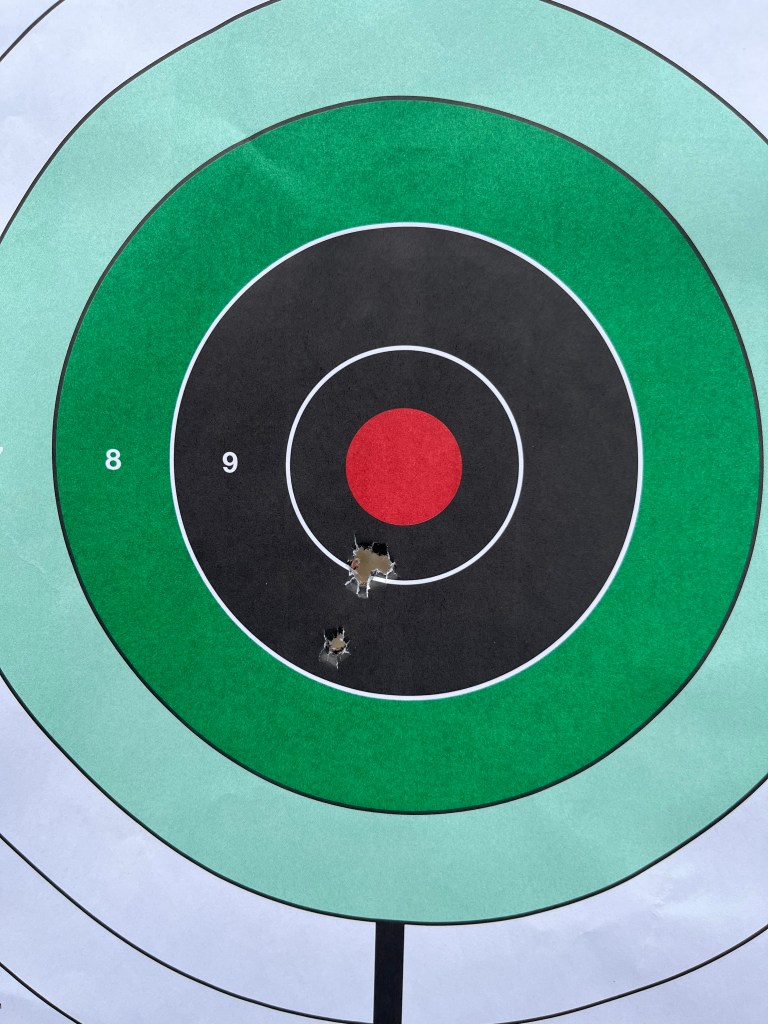
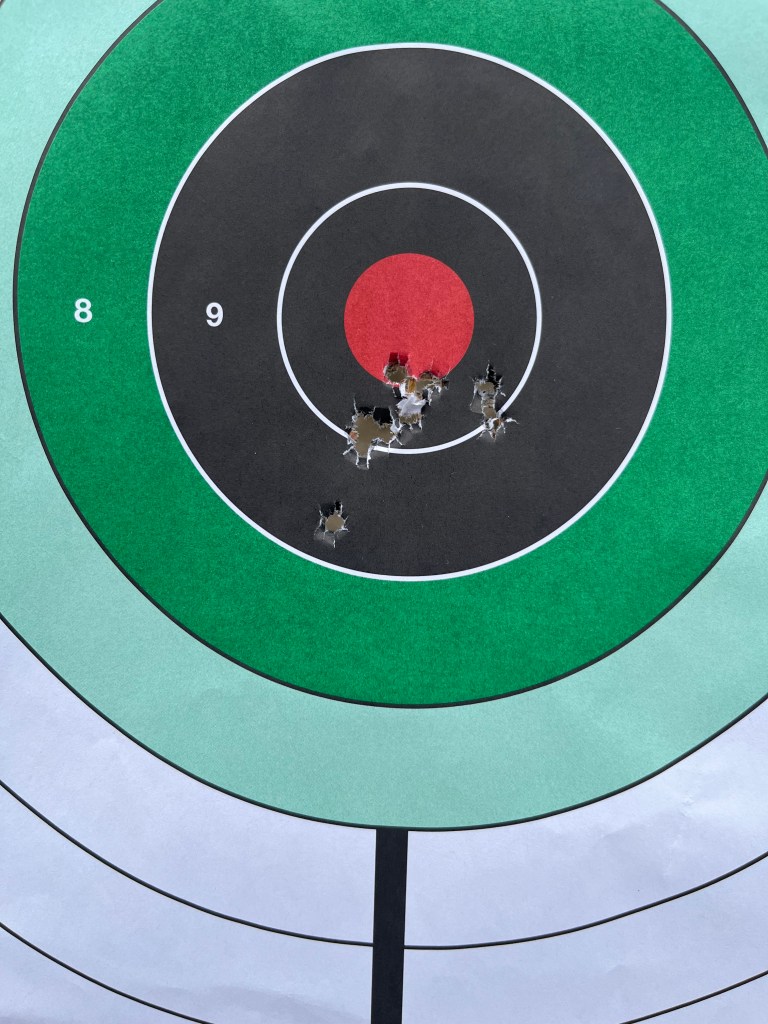
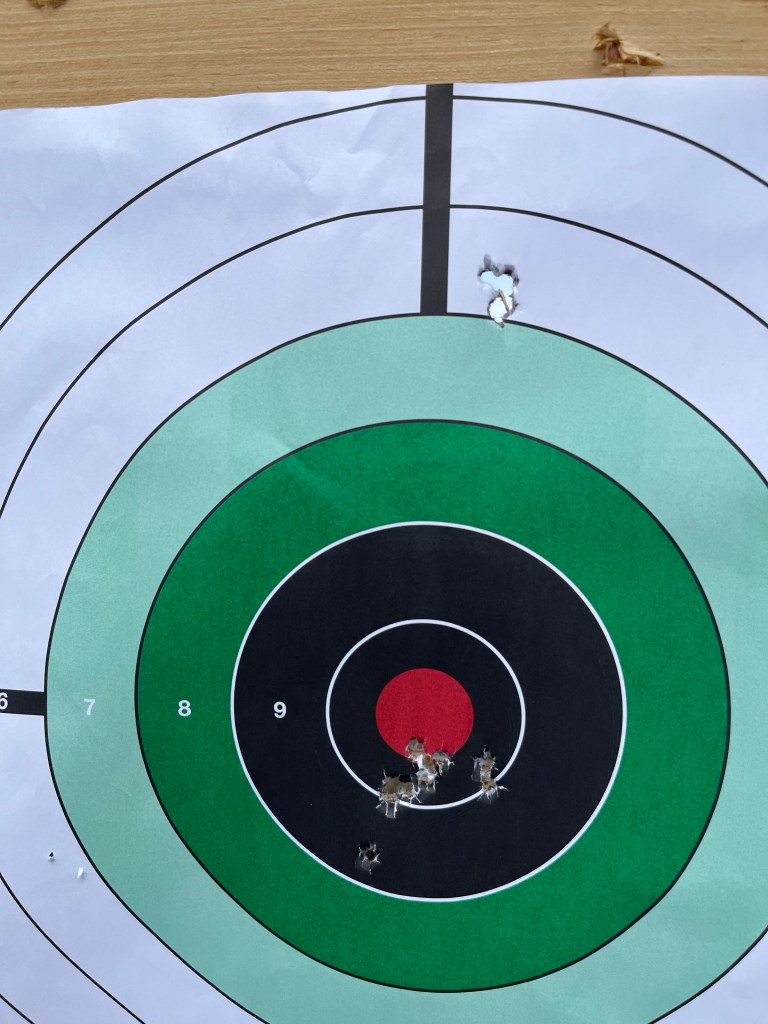
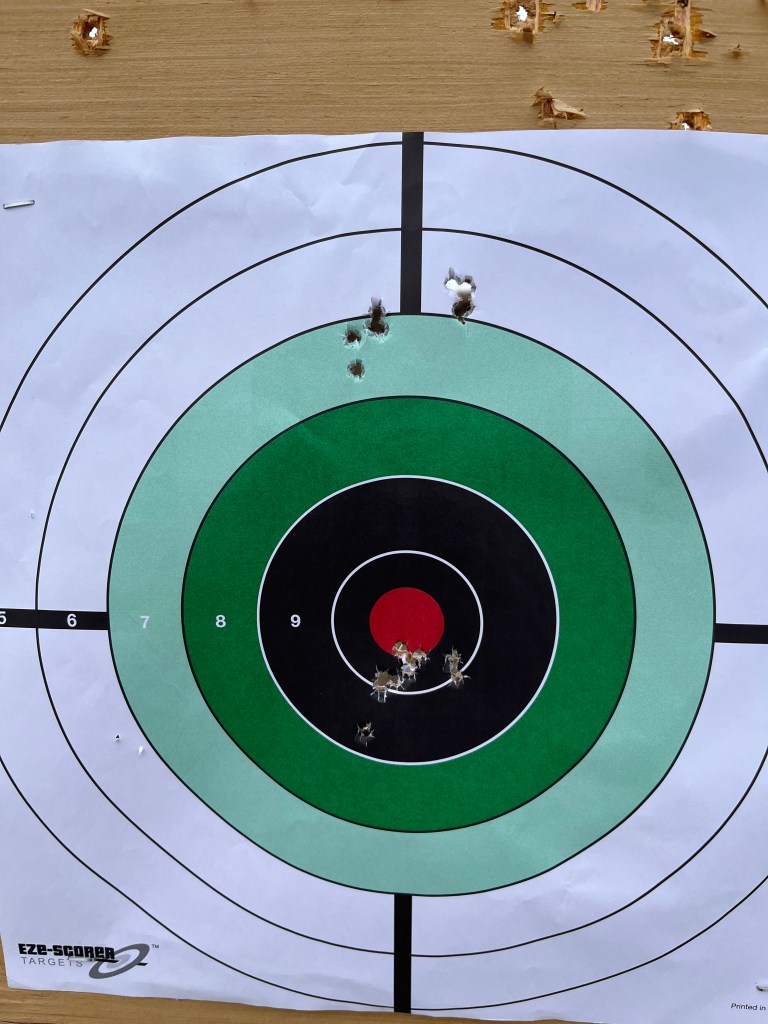
During all of this, we are taking down copious notes on muzzle velocity, standard deviation and extreme spread, as well as all turret adjustments. We already have noted the left to right wind and its additional effects on our windage adjustments. Of course, we already have written down the Density Altitude (you were paying attention back then, right?) and kept track of temperature and pressure.
Once are happy with the zero of the rifle, we are going to lock it in on the scope. The 1.75 MOA adjustment will be made zero, by lifting the turret (disengaging it) turning it to zero, and lowering the turret. Voila! You are now zeroed! BUT, for this ammo, rifle and density altitude ONLY.
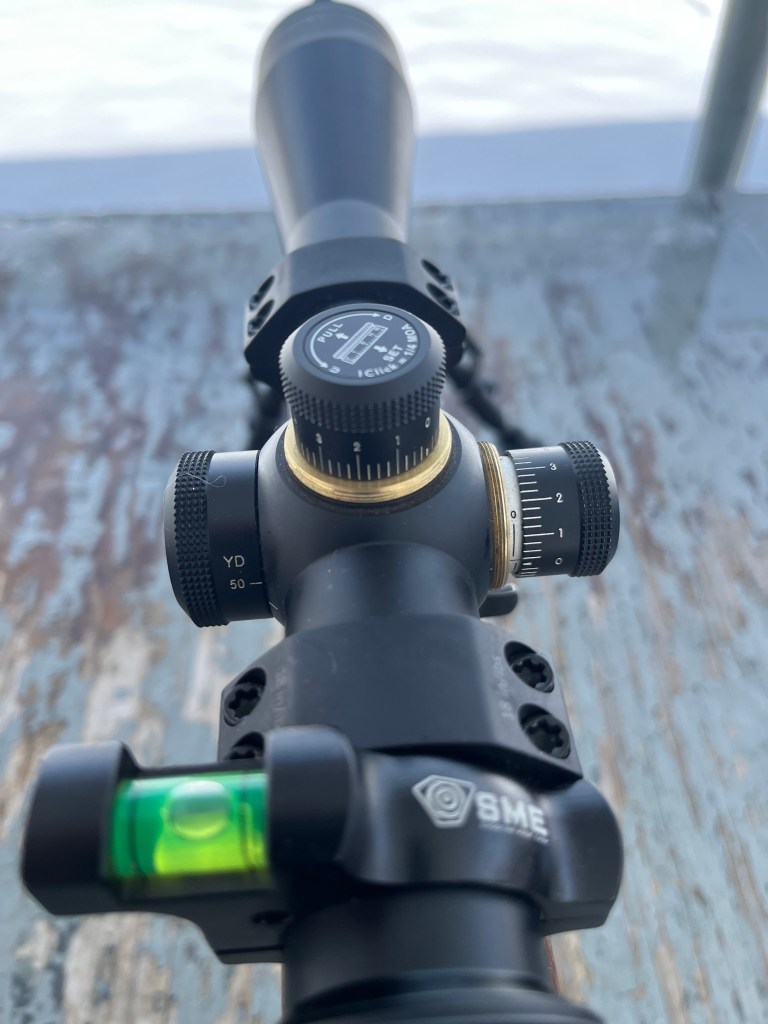
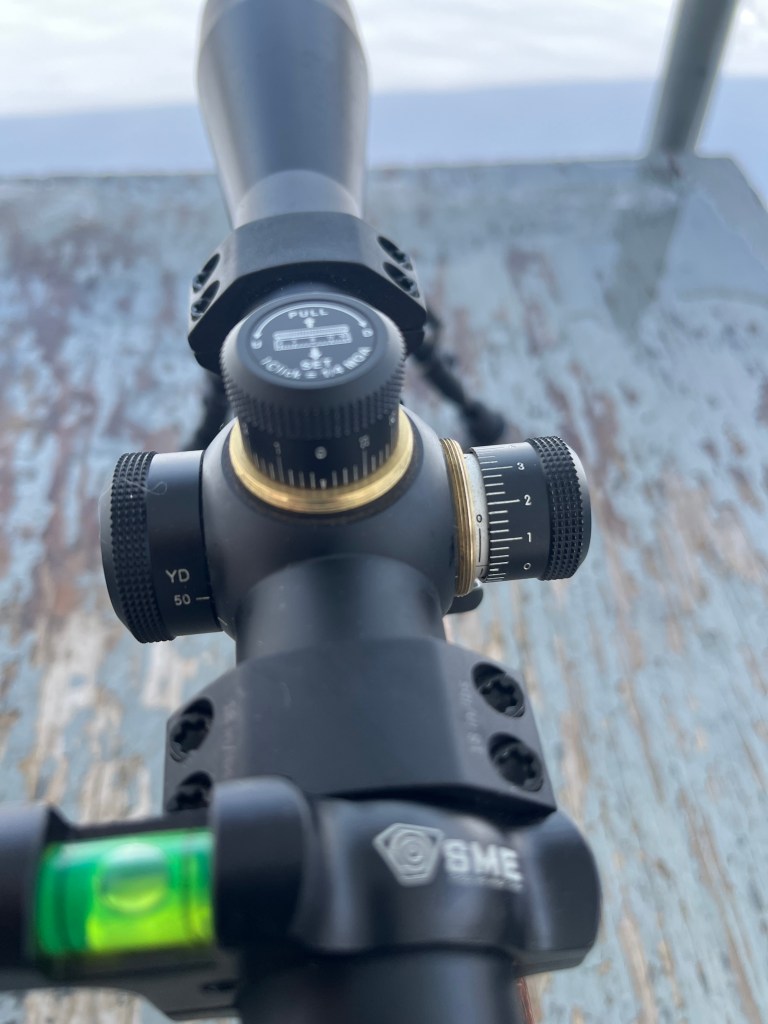
Now, we average out the four muzzle velocities and get 1059 FPS. This is what we will enter into our ballistics program. I use Advanced Ballistics (Brian Litz’s company) AB Quantum – it has CCI Standard in its library and I’ve entered the zero distance, scope height and type, etc. All I’m going to do is enter the MV, then enter 100 yards, because we are moving from the 50 to the 100 yard position.
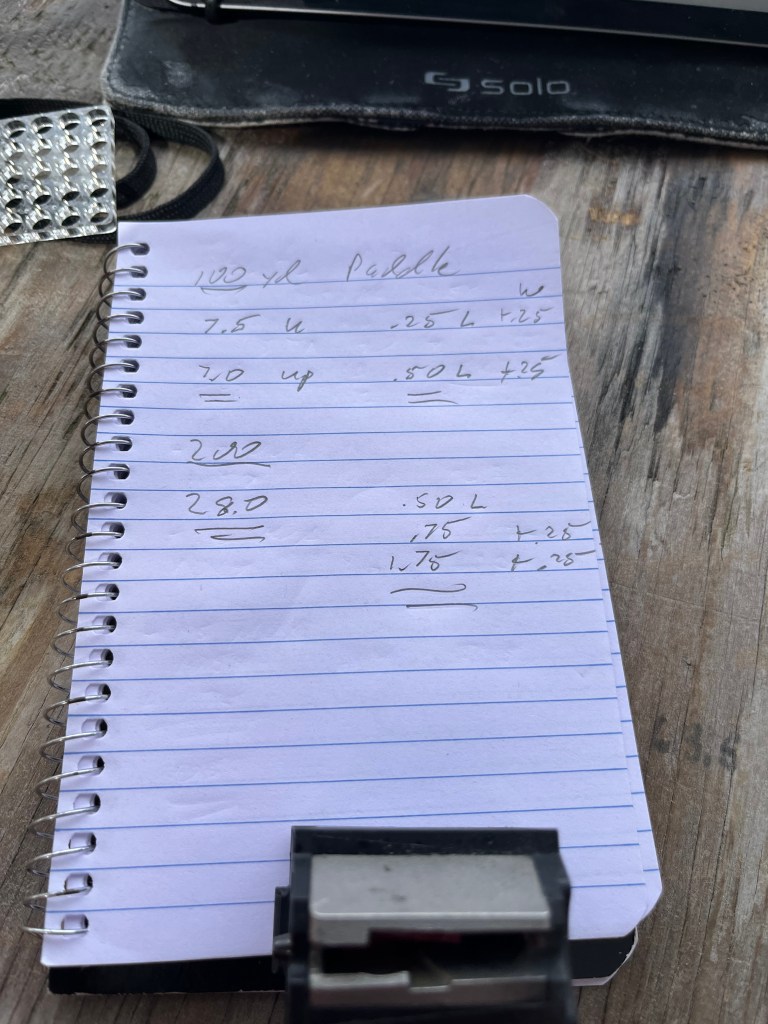
The program gives up 7.5 MOA and left .25 MOA. That gets dialed in to the elevation and windage targets respectively. Remember to adjust/focus your parallax knob on the side of the turret. Then, 5 shots at a dueling tree paddle at the 100.
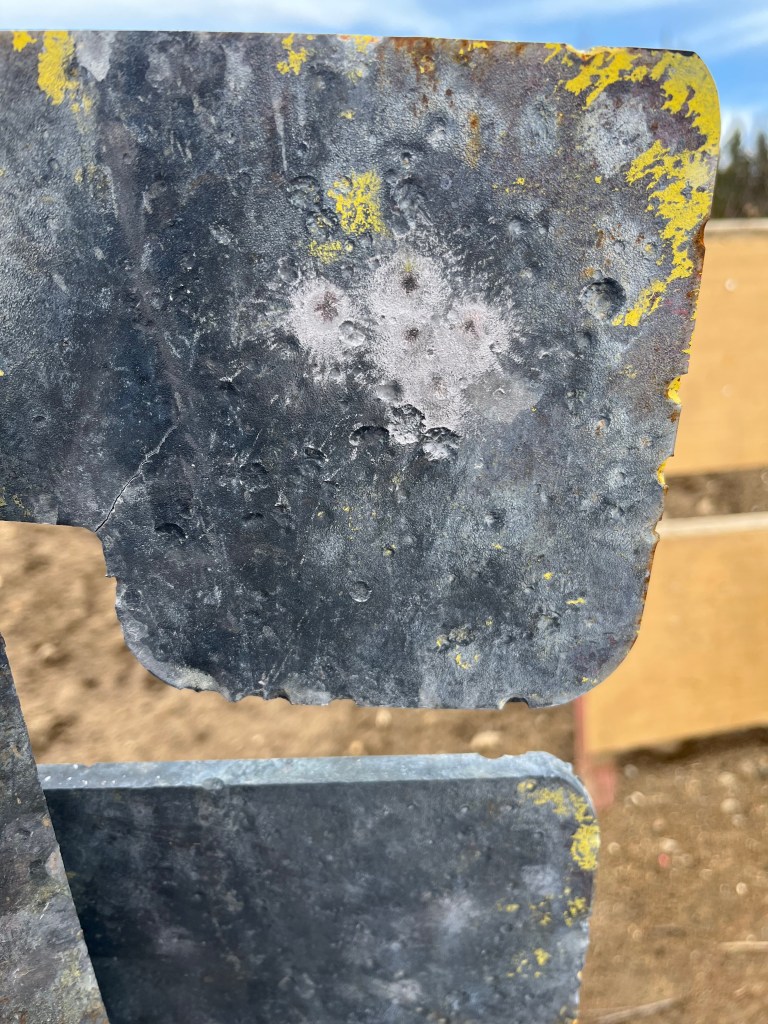
Not bad, but we want precision. We are going to drop elevation down .5 MOA and add another .25 left.
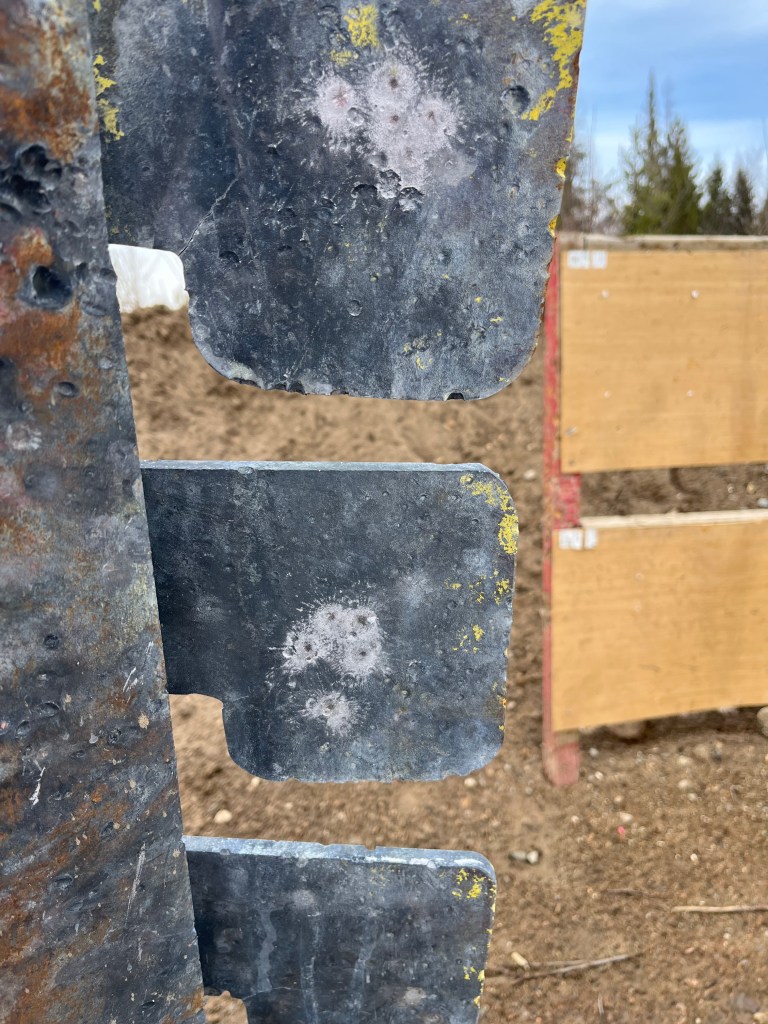
Much better. We note that real life elevation at 100 is 7.0 MOA. Now for 200. The calculator says up 28.0 and left .5 MOA. We dial it in being VERY careful of counting the clicks. We go past the 0/12 mark to the next 0/12 mark, for 24 MOA and go 4 more to 28 (different scopes have different amount of numbers per revolution). Sight on the 200 yard paddle, adjust your parallax, and 5 more shots.
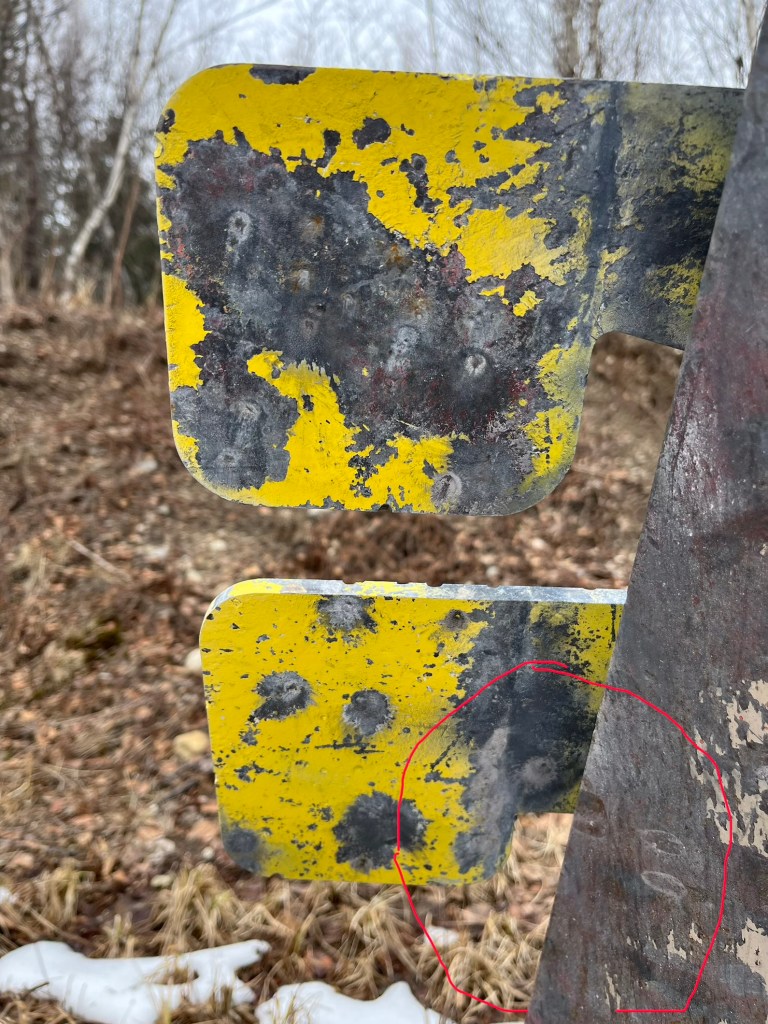
See the gray vertical stringing? Even more, see the gray ovals to the right on the support? Even more left windage needed – the rounds were impacting on the upright before sliding over to the target. But elevation is perfect. So, another 1 MOA left will move the impact 2” left (you remember why, correct?) So the second page of our notes looks like this.
On to 300 yards. Yes, you can hit targets at 300 with a .22.
The table gives us up 54 MOA, left 1 MOA. Dial it, parallax, and shoot.
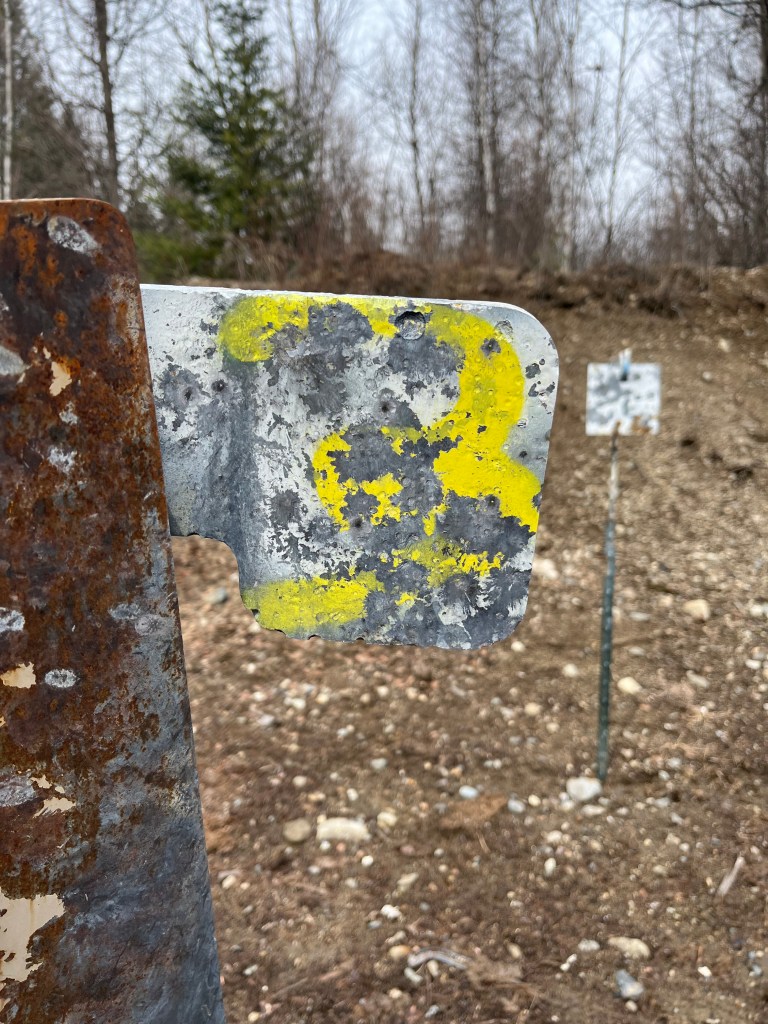
Hard to see, but they were hitting top fifth of the target. Several were splashing in the dirt above the target, so I dropped .5 MOA for elevation. The first shots were impacting right, so I needed to add even more left windage. And it was satisfying hearing the tiny little “tink” as lead hit steel.
A dueling tree paddle is roughly 5” square. Yes, you can hit it 300 yards with a .22. And you have accurate ballistics for this load.
 KatNap Fever!