Back to load ladder test

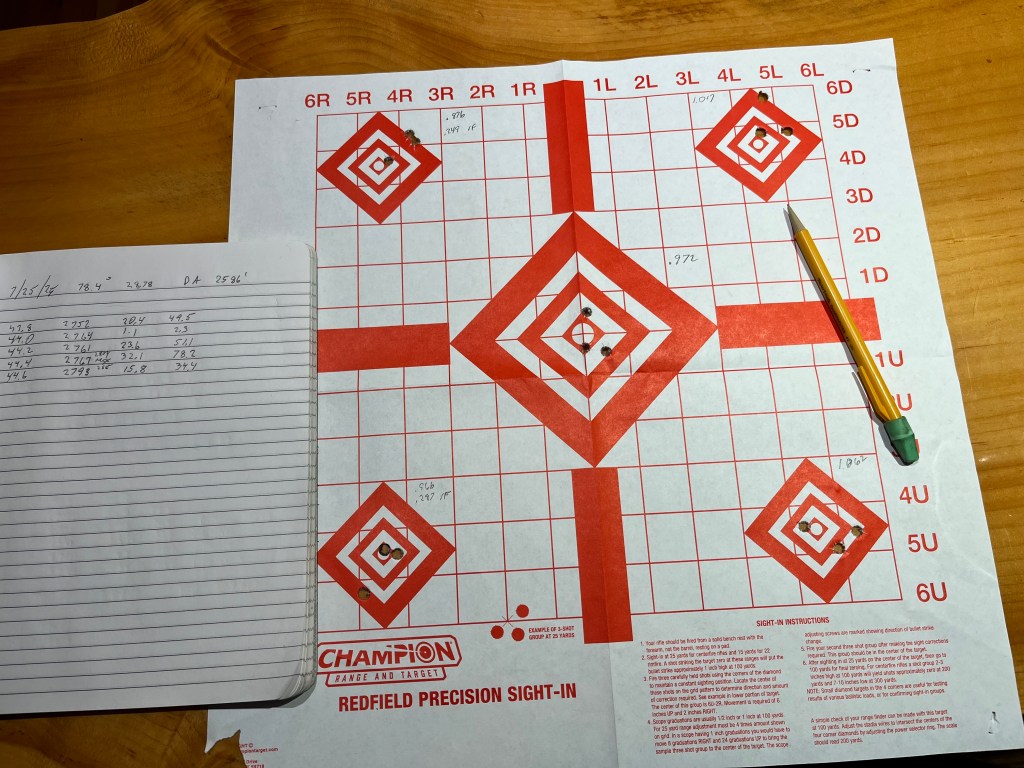
I think I can say I’ve maxed out the Accurate 4350 powder – I’m not going to get more than 2800 fps with the 120 g. bullet and the 22” barrel. I also think that great load from the other day is the node:

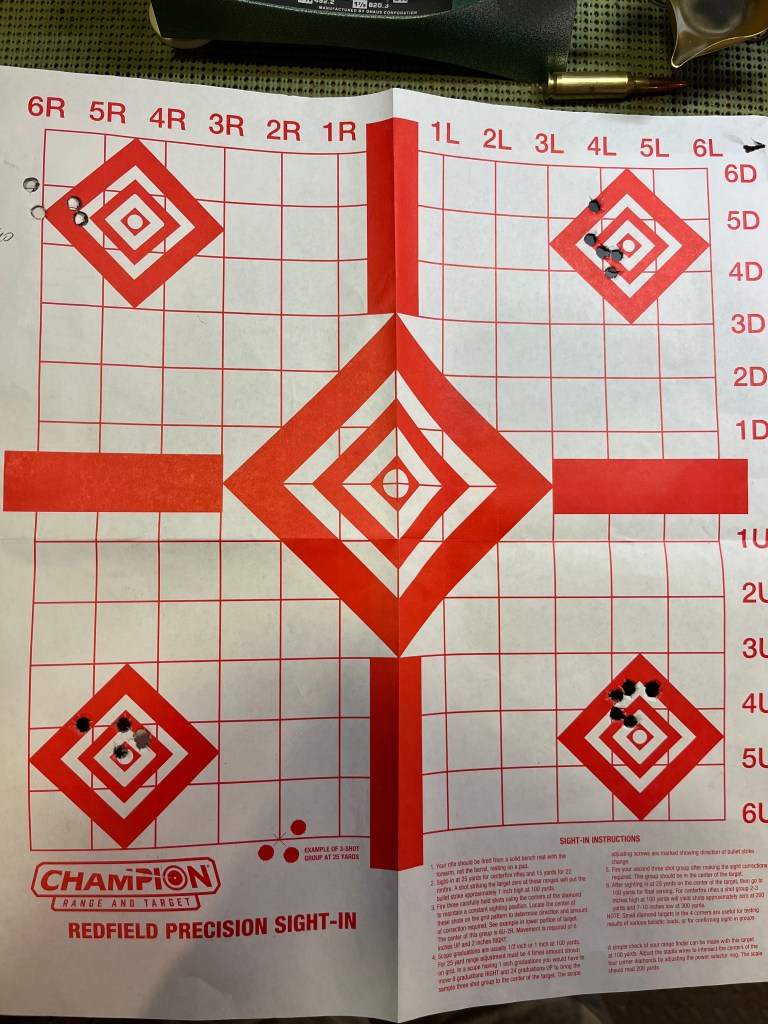
Upper left – first two rounds were touching at a quarter inch, and hitting in the same spot as before, about a half inch right and half inch high. Then, what I think is a clear flyer. Everything else is around an inch. And I think I’m at the point where the slower burning powder has no more time to combust.
But it’s been a nice test. I’ll load up a bunch of the first and take it out to distance. See if the wind affects it significantly more than the 140s.

And I still think DJT is the laser pointer president.

Rainge Day

And a minor mystery resolved.

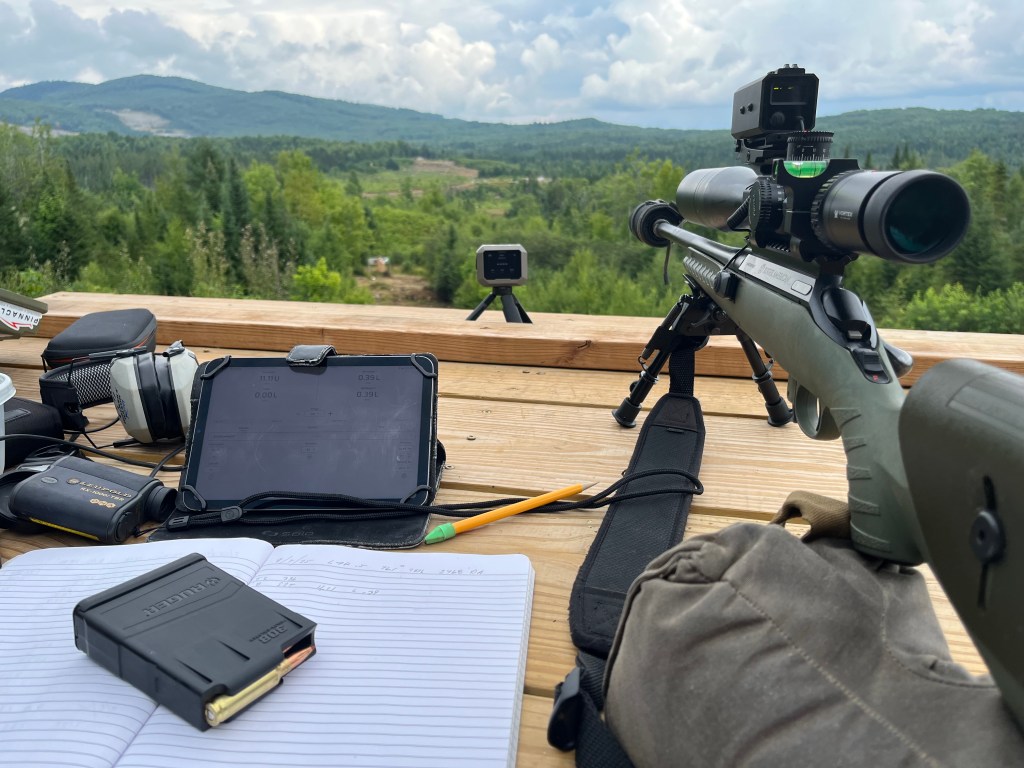
Finished cleanup from yesterday’s projects, loaded the car and, as soon as I backed out of the garage, it poured. Well, that rarely stops me. Got to the range and half a dozen peeps were there, merrily emptying AR mags into the rain. I started setting up and, as happens once in a while, my Range Box with suppressors and Garmin Chrono were back at the house. All good, shot the breeze with my buds.

I came back later in the day, properly equipped, and shot the latest ladder:

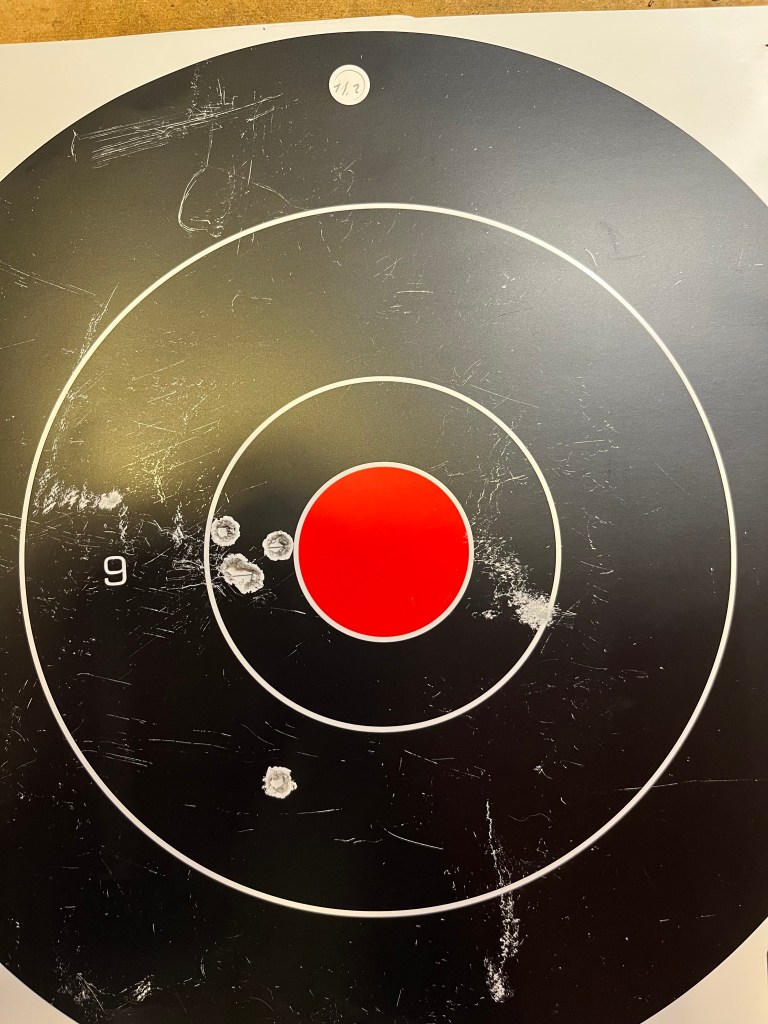
Got a winner on the second rung at .238”! Three shots, one ragged hole.

But what the heck after that? All over the place and velocity very inconsistent. I shot a known load at the center and it landed down 5.5” at 7 o’clock. Da Fuq? Started checking for loose stuff and, damn, the can was 2 clicks loose. Tightened it, fired another known load at center and it landed properly. I think the can loosened on the second shot, upper right. First shot good, then things started dropping down and spraying. Makes sense – if the can was at all loose, the end would drop and bullets would either strike a baffle or the end cap, and hit low and slow and all over the place.

Easy to figure out after the fact. I guess I’ll redo the ladder starting from the great second rung and see what happens. That’s the fun of this game, and I already found a great 120 g load!

Ladder Load Tests Are Fun

And lets you shoot a lot, to boot.
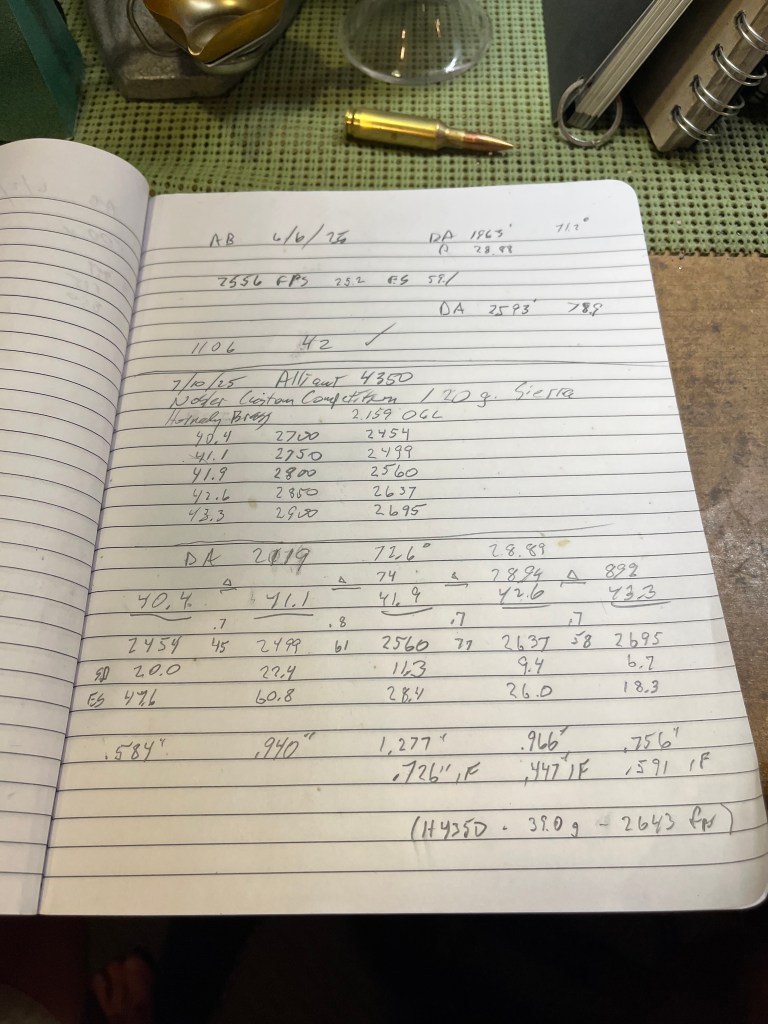
First one got us some info – our loads are a couple hundred FPS slower than the book. It also showed us the upper end appeared to be tightening up. With that info, I did a .2 grain ladder test, starting at the last top end. So,

Yep, group gets tighter as it gets faster. Next, another .2 grain test, starting at this upper end. Since we are getting close to a compressed load, I’ll only do 3 rounds of each. Just in case I see pressure signs, need to stop, and then unload some rounds.

Tomorrow looks like a good day. With last night’s thunderstorm, I think we’ve broken the back of the hazy, hot, humid summer days. I worked outside today rebuilding porch steps, and barely broke a sweat. And now I’m sitting in my yard, overlooking the pond, and it is cool enough to keep the bugs away. I love northern NH.

Working up a load.

Yeah, that sounds sort of sus.

I have 3-4 lbs of Accurate 4350 powder. Different from Hodgdon 4350. My experience in the past is that the Accurate is definitely slower than the Hodgdon.

I also have a bunch of 6.5 Creedmoor 120 grain bullets from the time I spent figuring out my Ruger shot 140s best.

(Umm, the 0 means right on the bullet weight; the + or – means .2 grains off spec. Yes, I’m a nerd.) What to do? Load test of course.

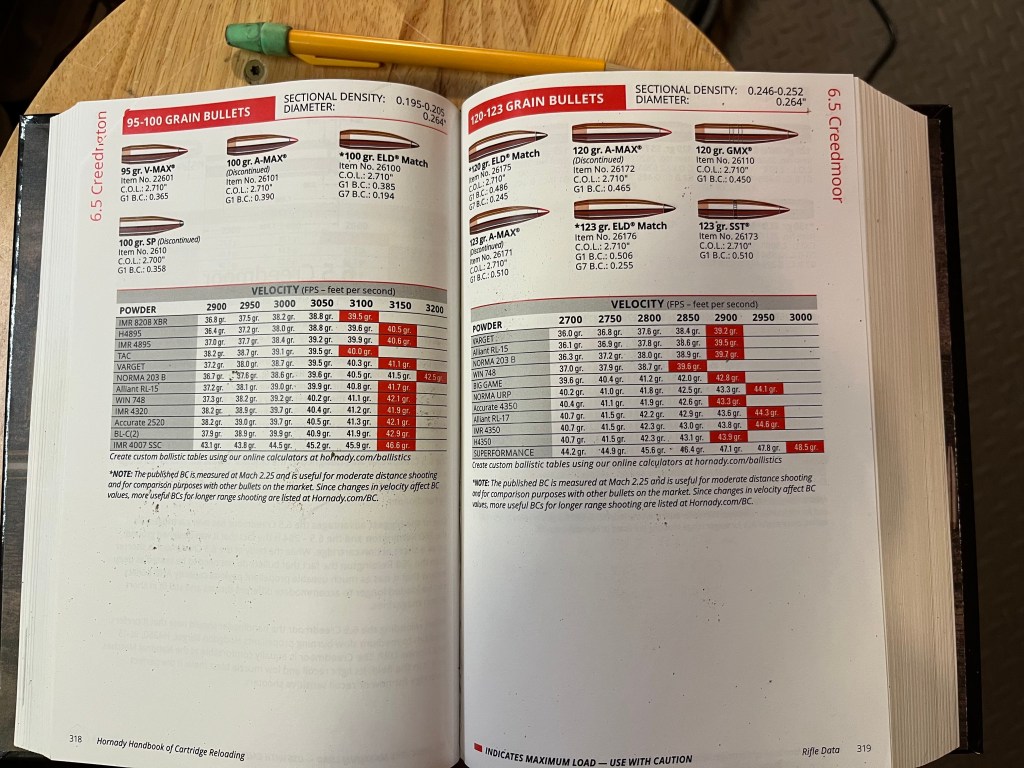
You always start with the book. No need to reinvent the wheel.

We’ll go right by the book – 40.4 g to 43.3 – and see what we get.

Well, then. There are some possibilities. But MV is much lower than the book. Top end should be 2900; I’m only getting 2695. Between shorter barrel than the book, and lots of rounds through the rifle, it looks like I can load hotter than the book.

Tomorrow, we’ll do a .2 grain ladder test and see what we get.

Biggest Boolets for Beginners

Anything beyond these you have to enlist to get.

Yesterday we looked at that deadly midget of a round, the .223/5.56. Today let’s do a comparison with some bigger league stuff, true “high-powered” rifles. We’ll see a few more boollet types as well.

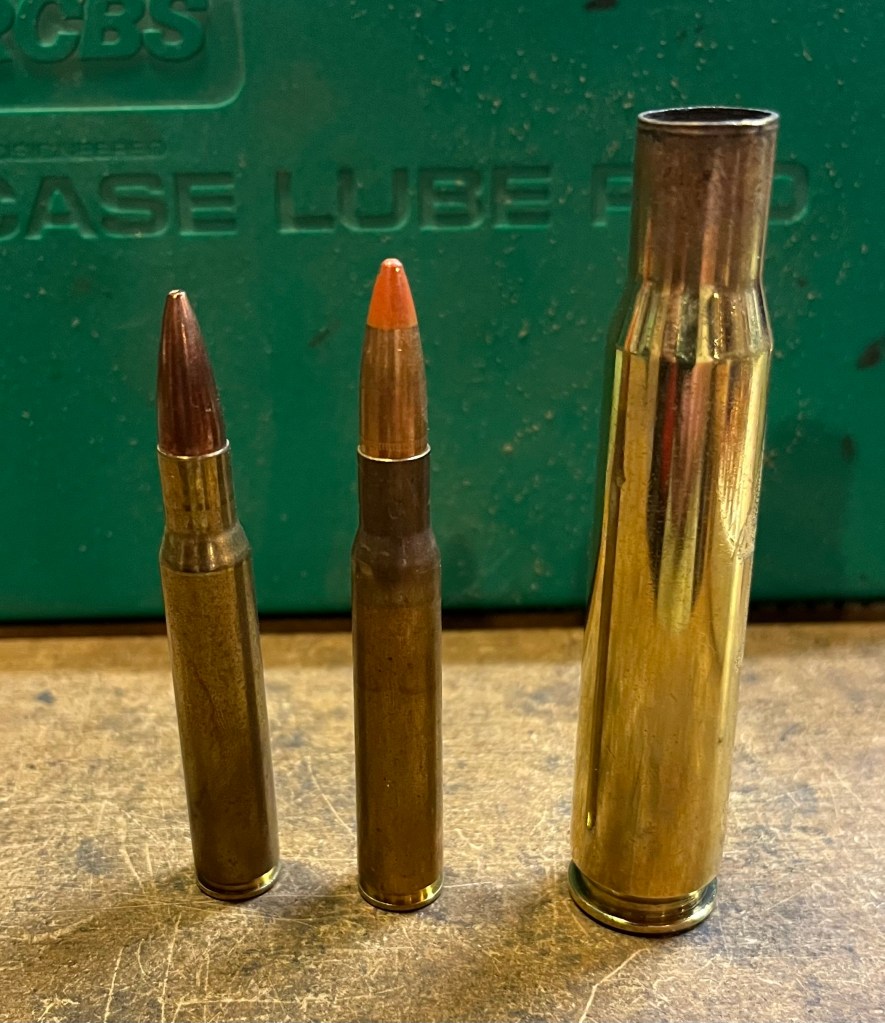
Left to right: .223/5.56 FMJ; .243 Winchester JHPBT (new – Jacketed Hollow Point Ballistic Tip); 6.5 Creedmoor JHPBT; .30 – ‘30 JSP (Jacketed Soft Point); .308 FMJ OT (Open Tip), and .30 – ‘06 FMJOT.

You can see that the itty bitty .223/5.56 is dwarfed by all the others. .30 – ‘06 was the standard American infantry round for WW I, WW II and Korea. In 1957, the 7.62 NATO/.308 was adopted by the US, first as a true assault rifle (select fire between semi and full auto) in the M-14, then as a designated marksman round. Vietnam introduced the M-16, shooting the 5.56 NATO, also select fire.

One last comparison:

.30 – ‘06 JHPOT, 30 – ‘06 M25 (Tracer), and .50 BMG (Browning Machine Gun). No, I don’t shoot .50 BMG, so I don’t have a bullet to show you. Dammit.

That’s it for Beginner Boolet Basics. Now, go shoot some of them!

Bigger Boolets for Beginners

Let’s get into the more pointy ones:

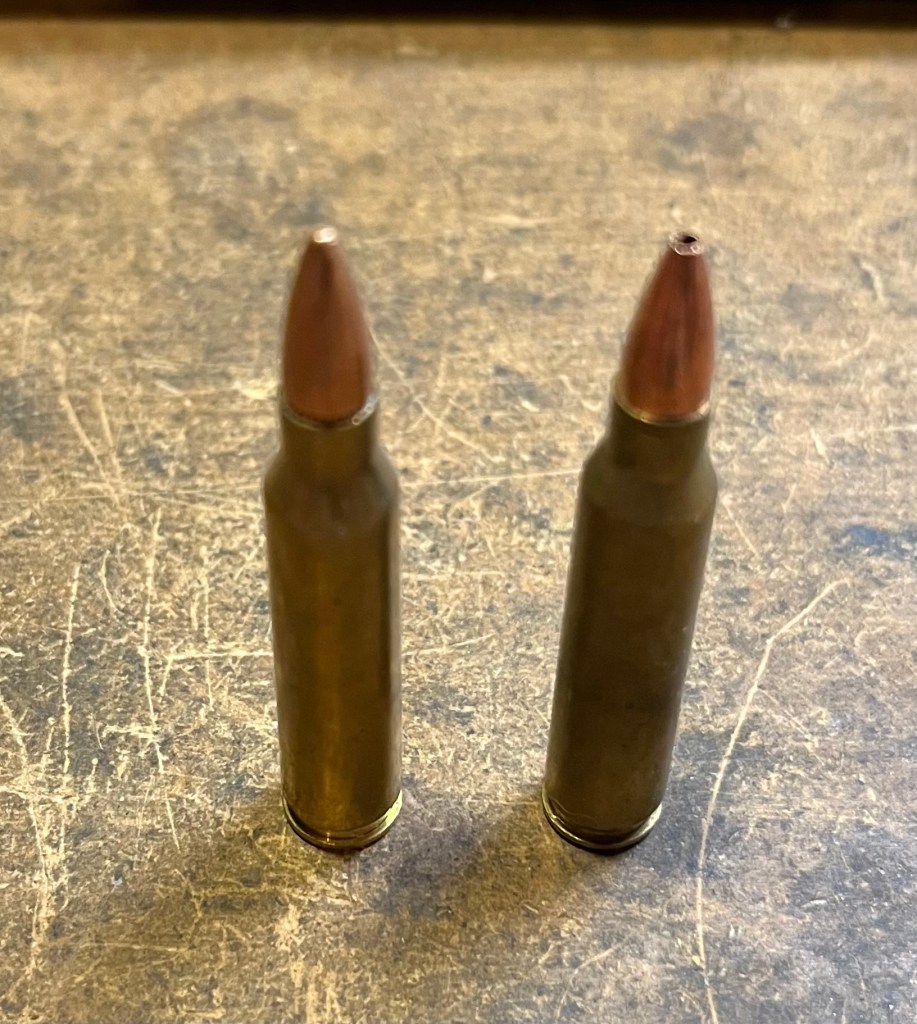
This, dear readers, is the dreaded Weapon of War Assault Rifle Boolet. It is pointy, and is (gasp!) .22 caliber*. Actual identification is 5.56 NATO, with the civilian version known as .223 Remington.

*Ok, I pulled a fast one. The Ubiquitous .22 Long Rifle is .222 inches in diameter; the almost as ubiquitous .223 Remington is .224 inches in diameter. The first is usually a 40 grain weight, while the second was originally 55 grains, but has put on weight in recent years, at 62 grains or even higher. Also, the first runs around 1100 fps while the second is around 3000 fps.

All things considered, the .223/5.56 is a tiny bullet, but it goes very fast. So, F = MV. It gets its increased F from cranking up the V. Is it a “high-powered” round? Eh, no. Its philosophy of use is “wounds pretty well” and takes combatants out of the fight. It’s also small and light so a lot of rounds can be carried. I recall that 8 standard capacity 30 round magazines is basic load out.

Back to bullet types, the military uses FMJ (Full Metal Jacket) rounds – something about some Convention in Geneva – as depicted on the left. But there are a ton of other configurations. The round on the right is FMJHP. By now you know that means Hollow Point.

Moar Beginner’s Bibliography of Boolets.

How about this?

Got a lot to see here. For comparison, on the left, a simple 9 mm RN FMJ (remember, Round Nose Full Metal Jacket). Next, a .357 Sig FN FMJ – Flat Nose FMJ. Then, a .357 Sig JSP – Jacketed Soft Point. A .357 JHP – Jacketed Hollow Point. A .40 S&W FN FMJ – Flat Nose Full Metal Jacket. And finally, a .40 S&W JHP – Jacketed Hollow Point.

Do you begin to see the notation now?

Apropos of nothing, when I took this pic yesterday, it prompted me to change my G 32 from 9 mm back to .357 Sig. Quick barrel and mag swap, and I aired it out at the range today. It’s a shame that .357 Sig did not catch on. For a while, the US Secret Service, and a number of State Highway Patrols used it (great vehicle penetration, I’m told). But the ammo is about twice the price of 9 mm, with the necked down case, it’s more difficult to reload, and it definitely has a blast factor. But when you shoot it, you know that it is a brass balls manly round.

Moar Big, Beautiful Boolets.

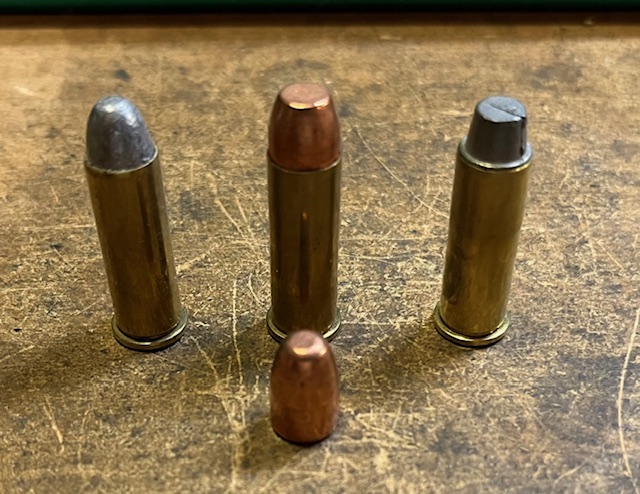
Let’s take a look at some traditional golden oldies. .38 Special has been around since 1898. Here are some different assorted Freedom Pills:

Left to right: LRN – Lead Round Nose. FN FMJ – Flat Nose Full Metal Jacket, with the more traditional RN FMJ – Round Nose Full Metal Jacket- in front. Then LSMWC – Lead Semi Wad Cutter.

So, some new concepts. Flat nose bullets do a couple of things – they make a nice neat hole in paper instead of the sometimes ragged one that round nose bullets make. They also can fit into slightly smaller sized magazines. I’m thinking specifically of .357 Sig, which shoots a flat nosed .355” bullet out of a necked-down .40 Smith & Wesson cartridge. Both .357 and .40 rounds are flat nose and fit the same magazine.

Next new term: what the heck is a “wad cutter”? Imagine shooting a bullet through a phone book (oops, later generations may have to Gurgle that term). A wad cutter neatly cuts a wad of paper. It leaves a very clean hole in paper targets and, lore has it from older cops, people targets. Pictured above is a Semi Wad cutter because it actually has a bit of a bullet nose on it. Below is an actual Wad Cutter with a standard round nose bullet for comparison:

Wait till you see the next round (hah!) of bullet choices!

The BBB 4th of July weekend is over!

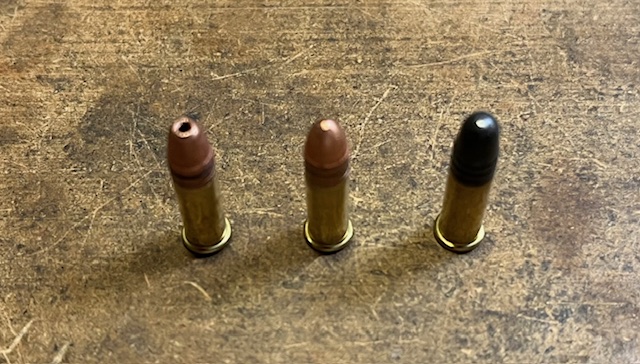
So, Boolets for Bangsticks Beginners. Let’s start with the lowly, but ubiquitous (I love that word!), .22. Take note:

Left is a CCI Mini-Mag Hollow Point, center is a Mini-Mag copper plated Round Nose, and right is a CCI standard. See the differences? The HP is meant to hit a varmint and expand (make bigger hole), the center is a target round, and the right is a slower moving target round. Check out the advertised muzzle velocities:

High accuracy .22 tends to be made of lead, and slower than 1100 fps. Why? The speed of sound is about 1100 fps. If a .22 goes faster than that, then slows down, it gets less stable in the trans-sonic range before it gets down to subsonic. If it starts out subsonic, it stays more stable. Also, the lead gets a better grip on the rifling than copper-coated, making it spin better and therefore more stable.
Pretty complex stuff for the lowly, yet ubiquitous.22, huh?

Rotating back to Revolvers

By now, our aspiring Bangstick Beginner has expended numerous rounds through .22 rifles, pistols, and revolvers. They may have dabbled in shotguns (against previous advice). What is the next step?

Let’s get back to handguns. What is a good progression from .22 in a revolver? How about .38 Special? This is a S&W Model 10 Air Crew revolver knockoff by Taurus. It, too, was purchased just off Ft. Campbell grounds about a half century ago. It came in blued and chromed.

I replaced the original skinny wooden grips with Hogue grips ages ago. They give a much firmer and hand-rounded grip when firing. Nonetheless, this has always shot a bit left of target. I compensated automatically.

Warm-up shots. Let’s see if I can do better.

.38 Special is a mild recoiling round, and was a police standard for ages. A new shooter might want this as an intermediate step before going on in size. Such as .357 Magnum. Why the big leap? Well, .38s fire in .357 just fine. You can have an awesome defensive revolver in .357, but shoot .38s in it for practice. Note the difference in size. The .357 is an eighth of an inch larger and will not fully seat in a .38. Great safety factor.

Tomorrow we will discuss why you do not get your new shooter a .38 “snubbie”. No.

Bad juju!