Moar Beginner’s Bibliography of Boolets.

How about this?

Got a lot to see here. For comparison, on the left, a simple 9 mm RN FMJ (remember, Round Nose Full Metal Jacket). Next, a .357 Sig FN FMJ – Flat Nose FMJ. Then, a .357 Sig JSP – Jacketed Soft Point. A .357 JHP – Jacketed Hollow Point. A .40 S&W FN FMJ – Flat Nose Full Metal Jacket. And finally, a .40 S&W JHP – Jacketed Hollow Point.

Do you begin to see the notation now?

Apropos of nothing, when I took this pic yesterday, it prompted me to change my G 32 from 9 mm back to .357 Sig. Quick barrel and mag swap, and I aired it out at the range today. It’s a shame that .357 Sig did not catch on. For a while, the US Secret Service, and a number of State Highway Patrols used it (great vehicle penetration, I’m told). But the ammo is about twice the price of 9 mm, with the necked down case, it’s more difficult to reload, and it definitely has a blast factor. But when you shoot it, you know that it is a brass balls manly round.

Moar Big, Beautiful Boolets.

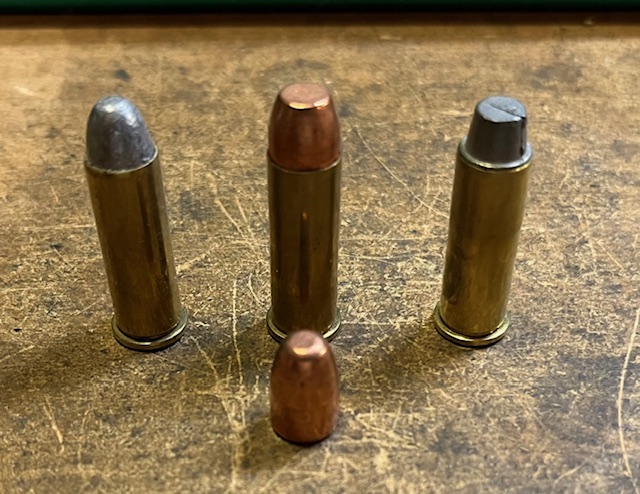
Let’s take a look at some traditional golden oldies. .38 Special has been around since 1898. Here are some different assorted Freedom Pills:

Left to right: LRN – Lead Round Nose. FN FMJ – Flat Nose Full Metal Jacket, with the more traditional RN FMJ – Round Nose Full Metal Jacket- in front. Then LSMWC – Lead Semi Wad Cutter.

So, some new concepts. Flat nose bullets do a couple of things – they make a nice neat hole in paper instead of the sometimes ragged one that round nose bullets make. They also can fit into slightly smaller sized magazines. I’m thinking specifically of .357 Sig, which shoots a flat nosed .355” bullet out of a necked-down .40 Smith & Wesson cartridge. Both .357 and .40 rounds are flat nose and fit the same magazine.

Next new term: what the heck is a “wad cutter”? Imagine shooting a bullet through a phone book (oops, later generations may have to Gurgle that term). A wad cutter neatly cuts a wad of paper. It leaves a very clean hole in paper targets and, lore has it from older cops, people targets. Pictured above is a Semi Wad cutter because it actually has a bit of a bullet nose on it. Below is an actual Wad Cutter with a standard round nose bullet for comparison:

Wait till you see the next round (hah!) of bullet choices!

The BBB 4th of July weekend is over!

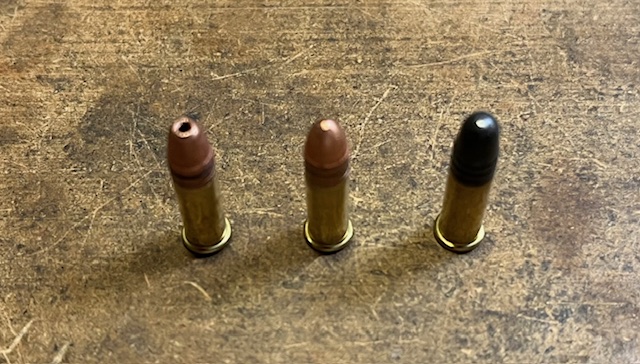
So, Boolets for Bangsticks Beginners. Let’s start with the lowly, but ubiquitous (I love that word!), .22. Take note:

Left is a CCI Mini-Mag Hollow Point, center is a Mini-Mag copper plated Round Nose, and right is a CCI standard. See the differences? The HP is meant to hit a varmint and expand (make bigger hole), the center is a target round, and the right is a slower moving target round. Check out the advertised muzzle velocities:

High accuracy .22 tends to be made of lead, and slower than 1100 fps. Why? The speed of sound is about 1100 fps. If a .22 goes faster than that, then slows down, it gets less stable in the trans-sonic range before it gets down to subsonic. If it starts out subsonic, it stays more stable. Also, the lead gets a better grip on the rifling than copper-coated, making it spin better and therefore more stable.
Pretty complex stuff for the lowly, yet ubiquitous.22, huh?

Rotating back to Revolvers

By now, our aspiring Bangstick Beginner has expended numerous rounds through .22 rifles, pistols, and revolvers. They may have dabbled in shotguns (against previous advice). What is the next step?

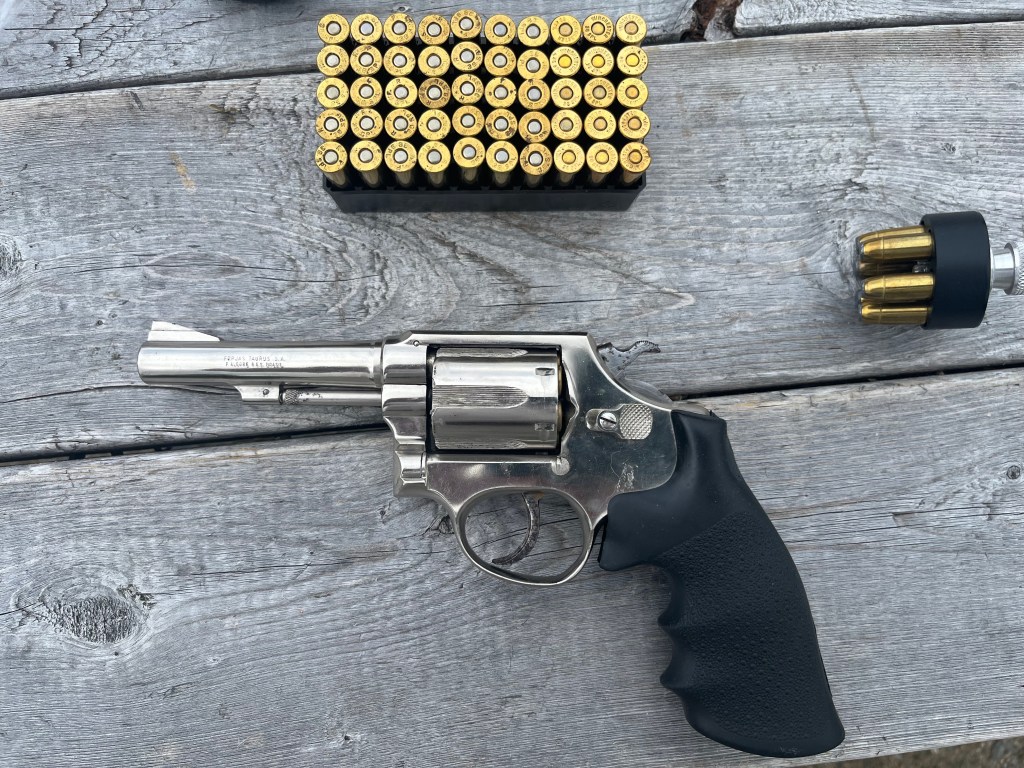
Let’s get back to handguns. What is a good progression from .22 in a revolver? How about .38 Special? This is a S&W Model 10 Air Crew revolver knockoff by Taurus. It, too, was purchased just off Ft. Campbell grounds about a half century ago. It came in blued and chromed.

I replaced the original skinny wooden grips with Hogue grips ages ago. They give a much firmer and hand-rounded grip when firing. Nonetheless, this has always shot a bit left of target. I compensated automatically.

Warm-up shots. Let’s see if I can do better.

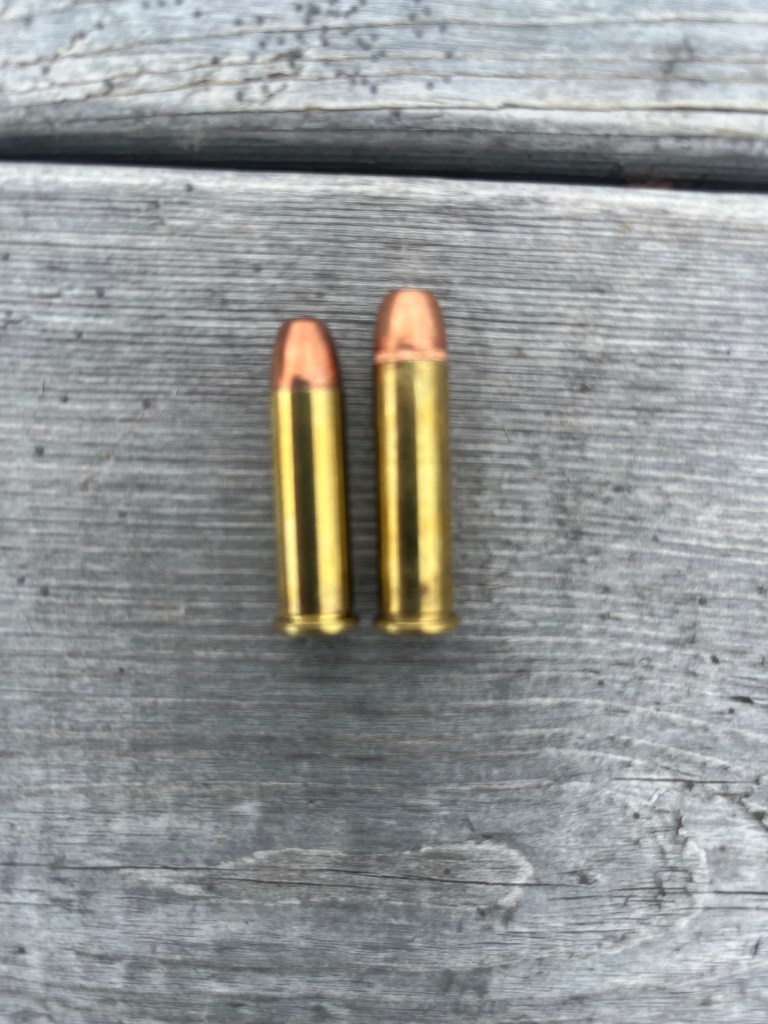
.38 Special is a mild recoiling round, and was a police standard for ages. A new shooter might want this as an intermediate step before going on in size. Such as .357 Magnum. Why the big leap? Well, .38s fire in .357 just fine. You can have an awesome defensive revolver in .357, but shoot .38s in it for practice. Note the difference in size. The .357 is an eighth of an inch larger and will not fully seat in a .38. Great safety factor.

Tomorrow we will discuss why you do not get your new shooter a .38 “snubbie”. No.

Bad juju!

Let’s get the BBB going!

No, I’m not talking about the Big Beautiful Bill. I’m talking Back to Bangsticks for Beginners!
Our story to date has covered .22 caliber firearms, starting with the single shot, bolt action rifle, the 6-shot revolver, and the 10-shot semi-automatic pistol. We now head to the .22 caliber semi-automatic rifle in various magazine capacities.

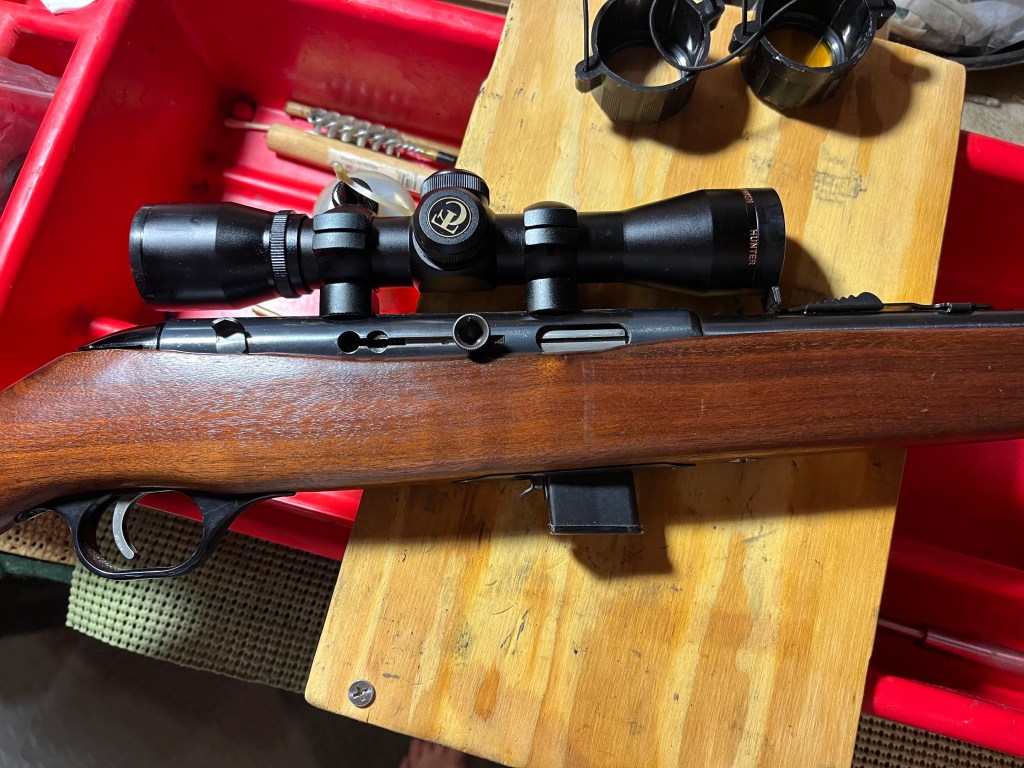
Surely you know that I’m coming back to the Ruger 10-22. But not just yet! Believe it or not, there are other rifles available. In 1972, the first firearm I bought on my own was a used Mossberg Model 352 KC, built between 1967 and 1969 according to the inter tubes.

Originally it had a crappy 1×4 (?) scope where the crosshairs would travel toward 7 o’clock when you increased the magnification. But it was accurate, both with the scope and with the iron sights. And it had a 7 round magazine, quite a step up from my old single shot. The magazine allowed Short, Long, and Long Rifle cartridges with a moveable tab to get the feed angle right.

A Thompson Center Arms on special scope mounts that clamp on to grooves in the sides of the receiver has replaced the original chinesium.
But even better, it has a thing that goes down!

Yes, the fore-end rotated down 90 degrees to make it a truly awesome Assault Rifle (TM).

So what does this step up for beginners get us? A much more stable platform than a handgun, where you have the ability to make follow-up shots without having to lose your sight picture or your grip. Since repeatability is a key factor in accuracy, keeping the rifle in the exact same position relative to your body is critical. And now you can do it 7 times in a row!

There are a ton of semi-auto .22s out there from which to choose (the Ruger 10-22 is ubiquitous, with a huge aftermarket for accessories, making it probably the most successful .22 rifle ever made). But there are other great manufacturers and options: Box magazines, tubular magazines, rotary magazines, drum magazines, they all are available to increase your ammo capacity. Find a rifle that fits your body and your length of trigger pull. It should feel natural and comfortable – you should not have to contort yourself to get a good sight picture and a comfortable trigger finger position.

OK, I think we can go on to a new class of Bangsticks for Beginners – shotguns!

Learn something new every day.

One thing I learned in the military is that equipment should be made so that it can’t be reassembled incorrectly. If there is a way do so, Private Snuffy will find it.

Imagine my surprise when one of my long range guests suffered a major jamming issue with his AR 10. It would fire one round, but the empty brass would jam in the left side of the chamber. Under great force, of course, requiring the release of both pins and complete removal of the lower, then much force on releasing the charging handle. After the brass was removed and the rifle reassembled, we tried loading a round and then ejecting it without firing. This was the result:

Another hard jam on the left side of the chamber, and the bullet now deeply seated. Light bulb goes off. Is it possible that the bolt could be installed 180 degrees out? Now, every M16/AR15 pattern rifle I have disassembled, the bolt cam pin hole is eccentric on one side and round on the other. It is physically impossible to insert the cam pin on the wrong side.
We found the exception – round all the way through. So 50% chance of reassembling it bass-ackwards. Huh.

And what have you been up to?

Mmm, shooting, I guess.

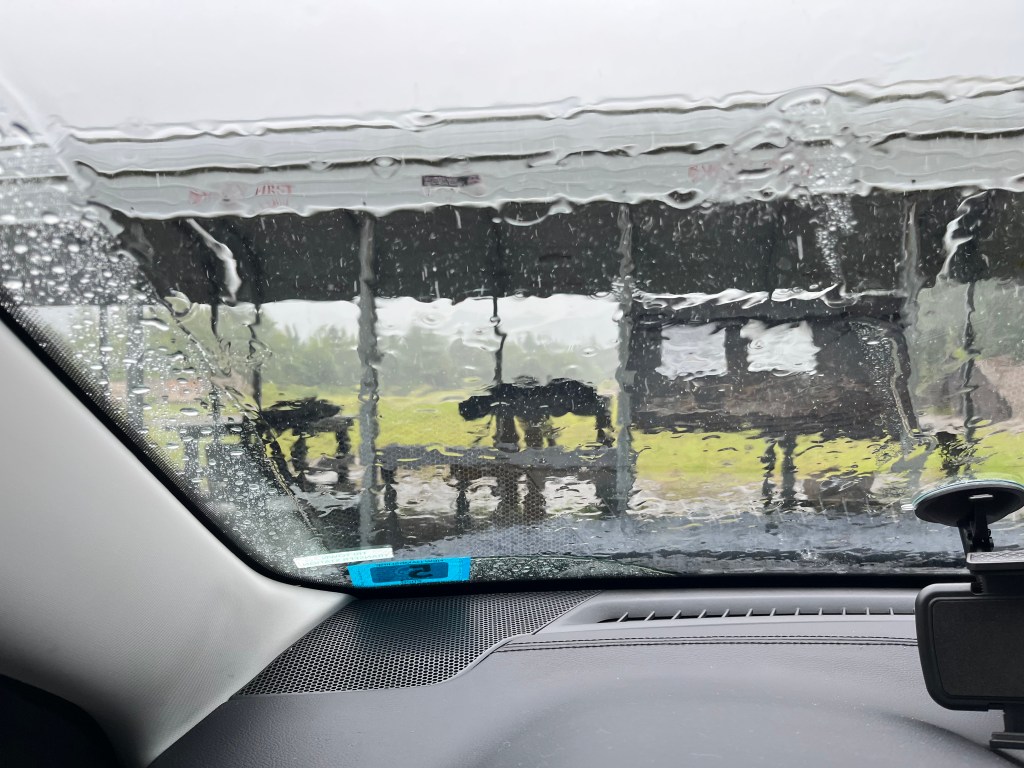
Good thing this is Mrs. Red’s car. I wouldn’t stand for it in mine.

And the detritus of destruction?

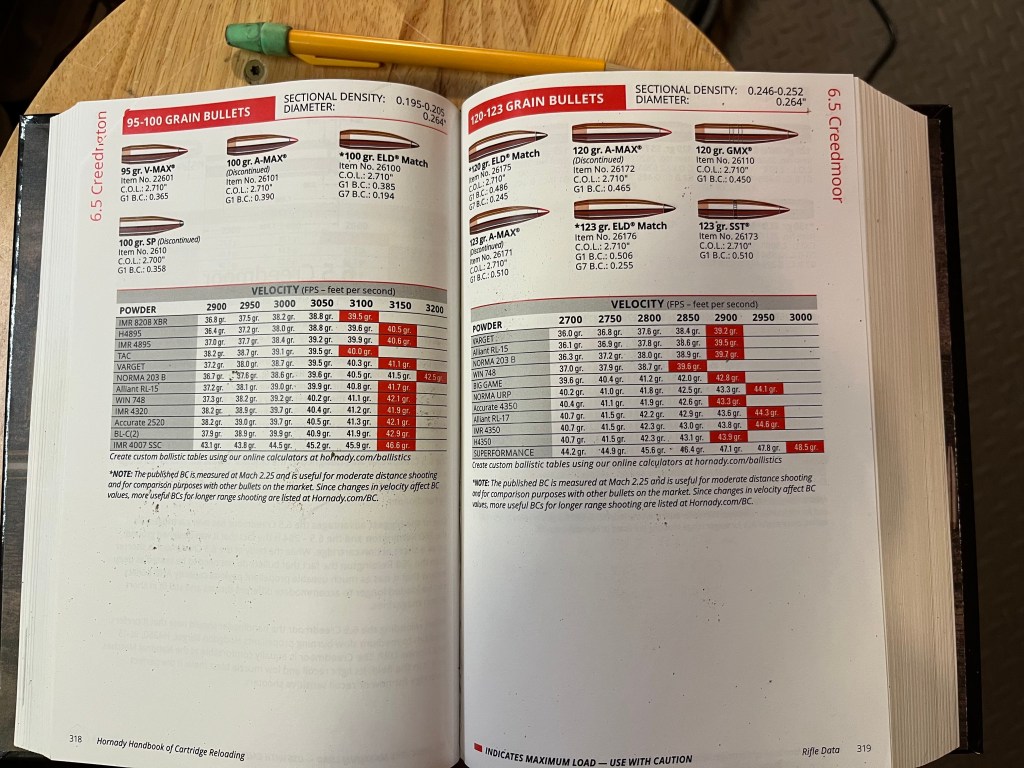
Approximately 150 freshly tumbled cases, once-fired .308 brass, with a few 6.5 Creeds in the mix. And my buds are using the good stuff- Federal Gold Match! Single digit Standard Deviation and Extreme Spread. But as our mentor says, “Yeah. Good practice ammo.

Not so fast there, bucko.

Yesterday I mentioned jumping on to semi-auto .22 rifles in our Bangsticks for Beginners discussion. Then I realized we had skipped some important things on .22 hanguns – actually shooting them! As I was remediating that condition today, I also rembered some stuff I glossed over. Spent cartridge ejection. Let’s cover that now since it has some range safety implications.

You can see the shiny ejection rod poking through the empty chamber. Once the rounds are fired, you go to half-cocked, as if loading, then push down on the spring loaded ejection rod at the front of the barrel. You need to pop out each spent round as you rotate the cylinder. Again, limited ammo and manual ejection slows down the process so beginners can grasp everything fully.

As far as the Ruger SR 22 (and all other semi-auto handguns), when the slide recoils to the rear, it first extracts the spent shell from the chamber, continues toward the rear where it is mechanically extracted and flung to the side, then cocks the trigger/hammer, moves back forward and strips a new round from the top of the magazine and seats it in the chamber. It all sounds very complex and happens fast, but is a simple complex.

Now the Range Safety Tip. Extracted Brass Is Hot! ‘mkay? As much as I appreciate women wearing low cut blouses, that’s a no-no on the range. Same same for open shoes. And an absolute necessity is eye protection (safety glasses for the slow to catch on). Finally, a brimmed hat to help deflect hot brass.

Safety nag over. Let’s shoot!

You can see a round in the cylinder, and the extractor rod tube ahead and aligned with it.

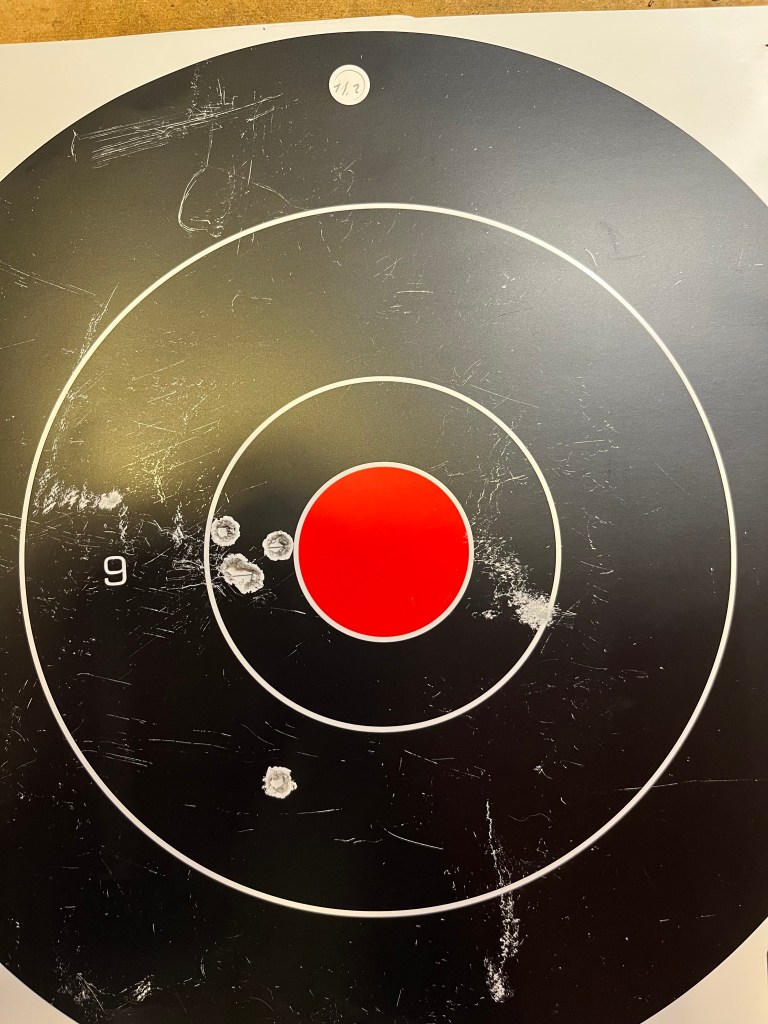
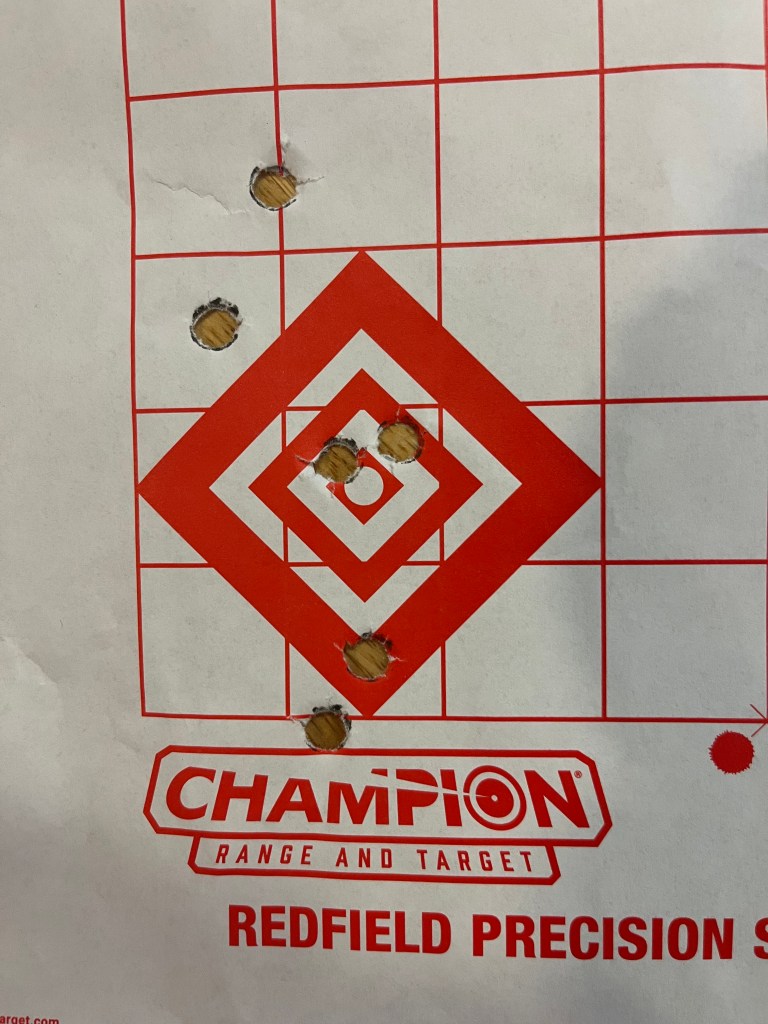
Results? OK, on paper but not very good.

Top is 5 yards, bottom is 7, two-handed grip, Weaver stance (file for future reference). I clearly was not keeping the front iron site down all the way in the rear notch, hence, shooting high. My trigger pull was poor, pushing the rounds left. Back to fundamentals, as certain people always preach. The Ruger? Also inconsistent:

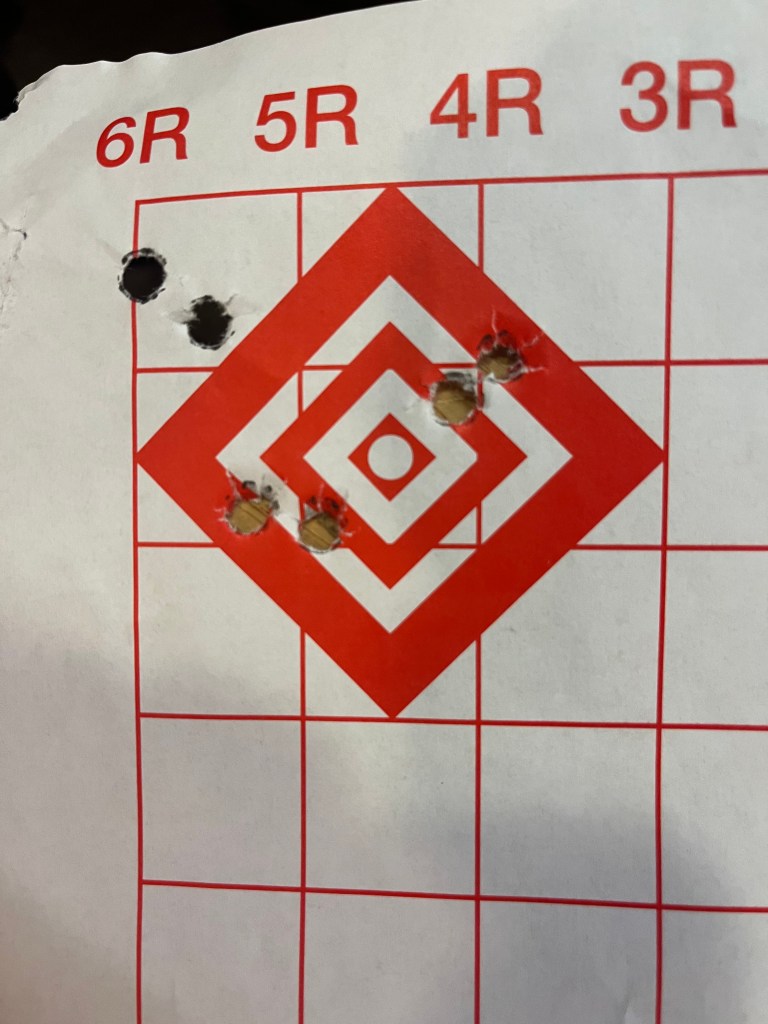
Oh, we can do better than that. Sure, it’s 85 degrees, I’ve been mowing for four hours, and my socks are too tight. 7 yards, RG on the center, Ruger on the end of the right bar:

Practice, practice, practice. Maybe .22 rifles tomorrow. But, a teaser for later. See anything different?

Think hearing protection.

So I went back to the range.

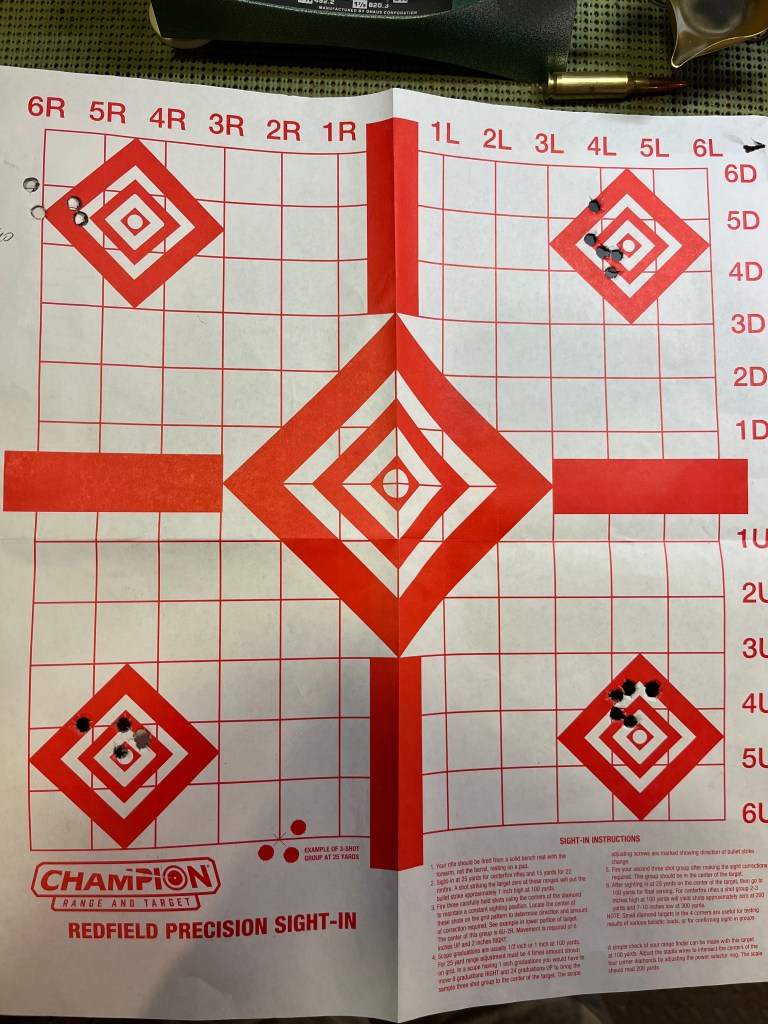
In the rain. The rifle performed flawlessly. The three shots in yellow were Hornady 140 AMax, followed by the three in blue, which were Sierra Game King 140s. Disregard all the .22 holes – it was raining and the target was down there.

I talked about the issue last night on Ace, with the following as maybes: tight chamber, need a small-base die, hot chamber. But I’ll go with this one: Socks too tight, and the Range was angry that day, my friend.