

Cats, Guns, and more. What’s not to love?


I’m going to do a piece or two on beginner guns, but even before that, gun dangerousness. Yes, guns are dangerous. They are intended to be so. That is their original design principle. So, “gun safety” is a bit misleading.
A gun is a force projector. It is the evolutionary result of throwing stones, throwing spears, shooting arrows. It is designed to inflict potentially lethal force against other beings, human and otherwise. All the other uses of guns, plinking, target shooting, trap/skeet, all are secondary to the basic purpose of a firearm. With that in mind, let’s examine how we can control that force.
First, “The Four Rules”. When followed religiously, they ensure that the projection of that force does not result in unintended results.
Discussion:
Thinking about it, if you follow these rules, you will likely never have a negligent discharge. Nope, there are no “accidental” discharges.
When I shoot with someone I have never shot with before, I always go over The Four Rules. If they know anything about shooting, they never complain.
Next up, Guns for Beginners. BTW, beginners never set hands on a gun with me until they repeat and explain The Four Rules to me.
So I was looking at pictures of the sun.




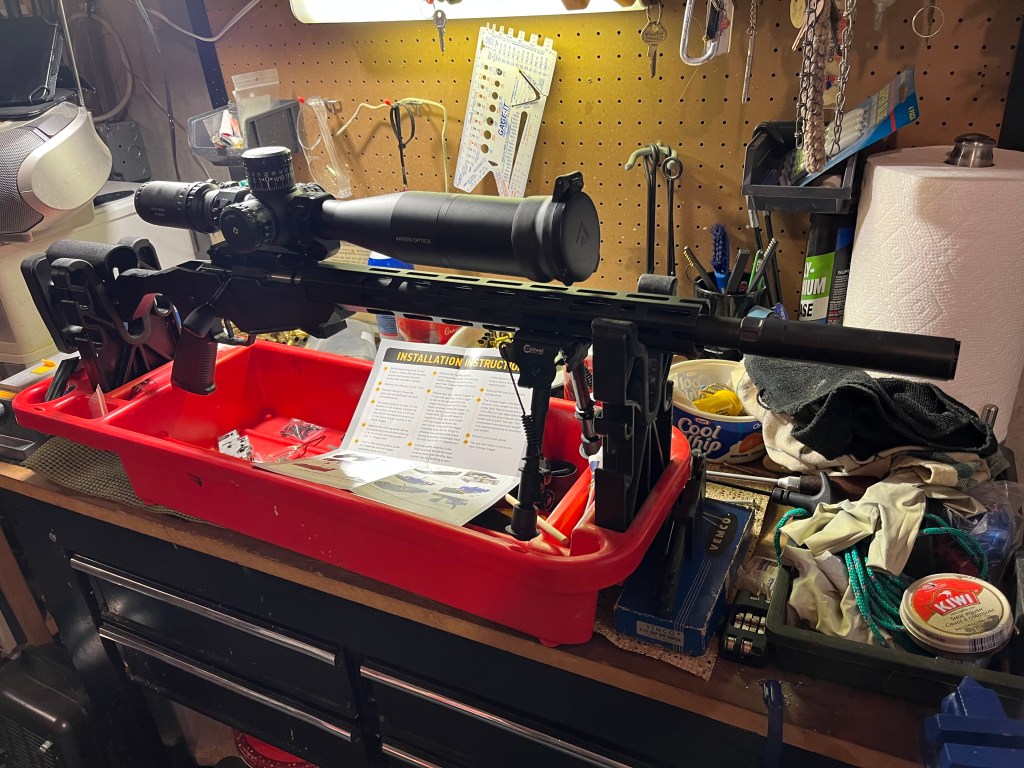
My Ruger Precision Rimfire .22 came from the factory with a decent trigger. A bit heavy on the pull for my liking.
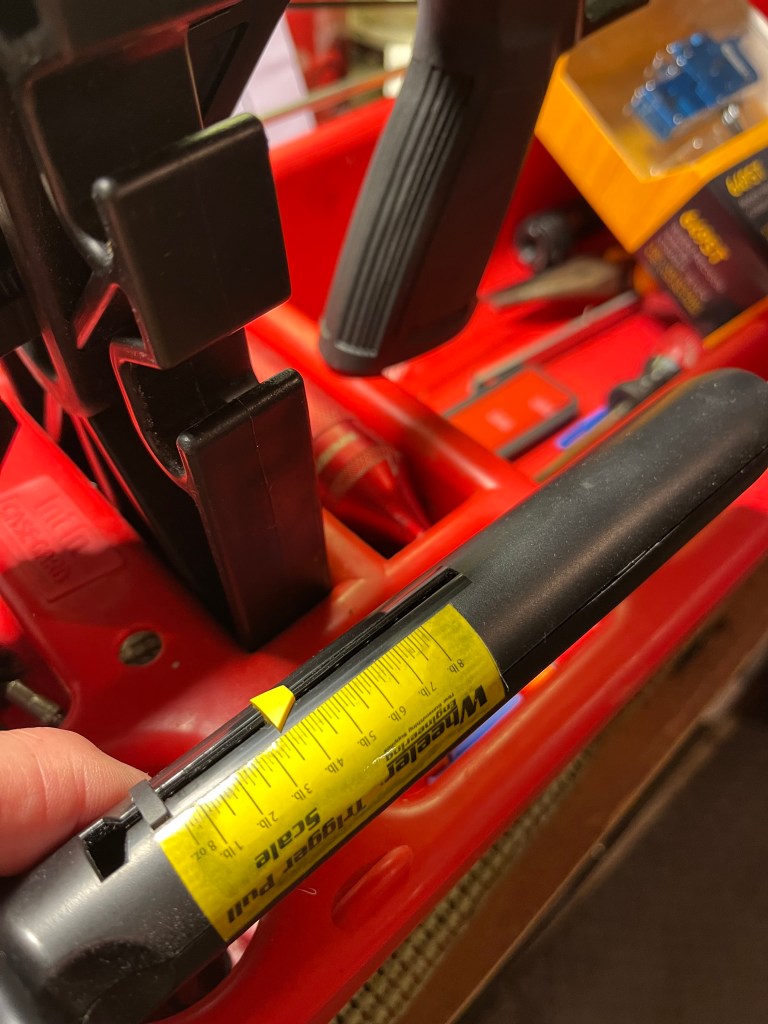
I think it’s time for Timney!

Purty, ain’t she? Easy install, almost a drop-in.
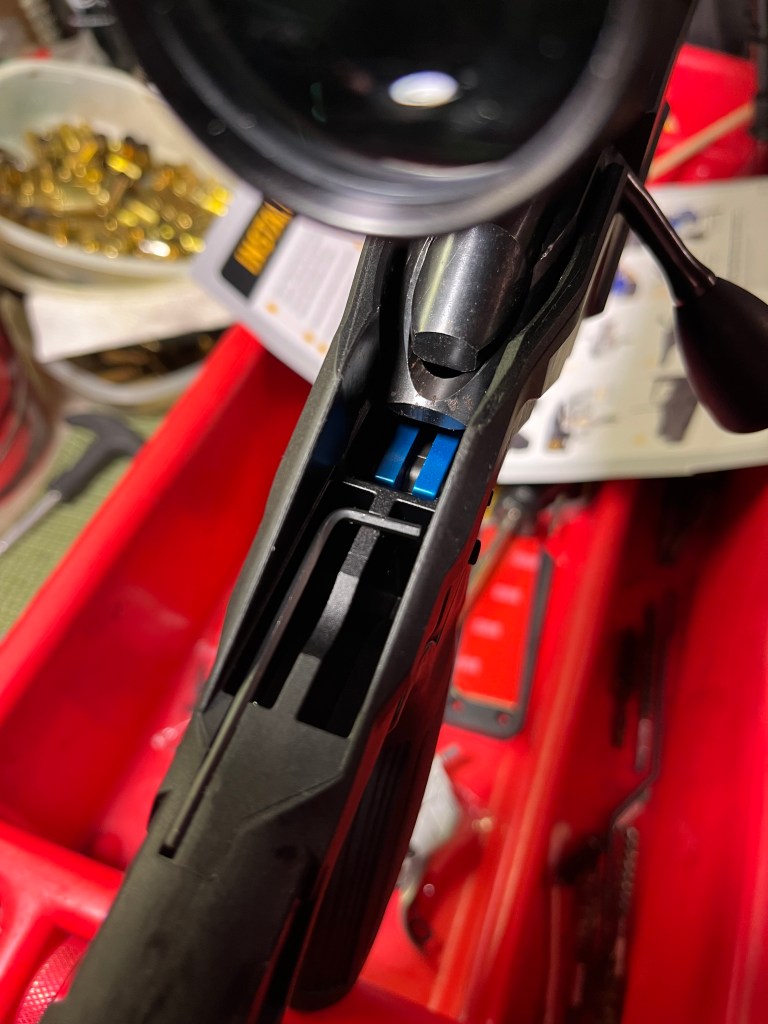
Nice flat trigger.

Finished product.
And how about that trigger pull weight?

And ammo comparison between the Christensen Ranger and the RPR:


PDG, I’d say.
I don’t think so.
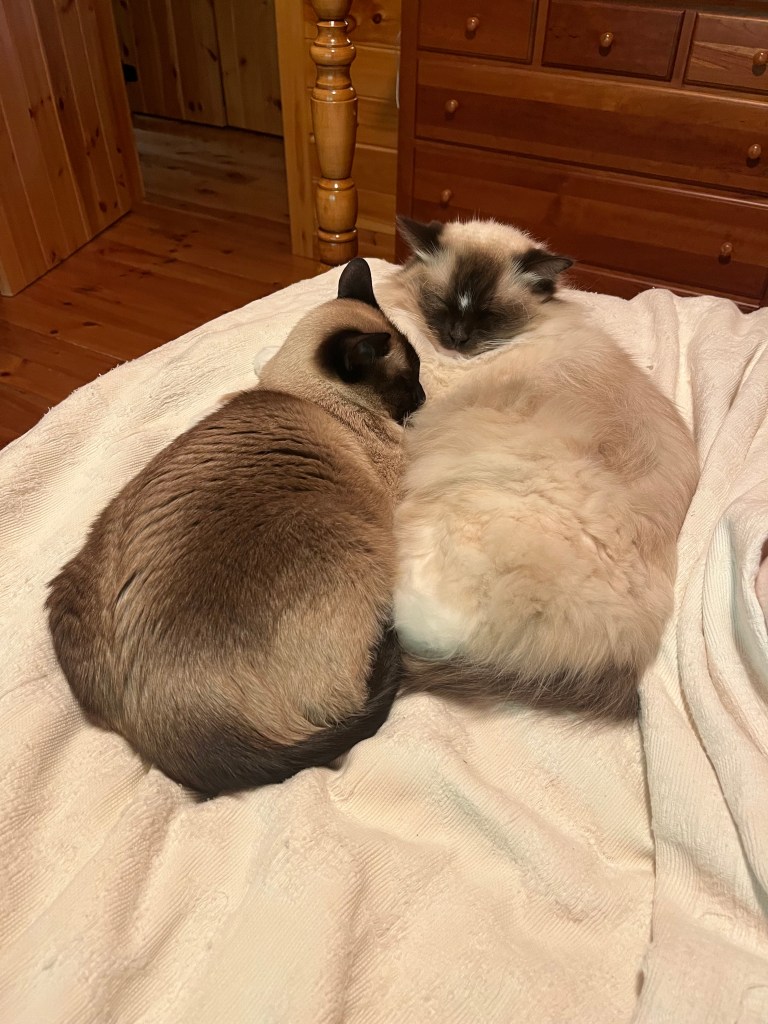
Plenty of Kat napping lately, but not much recording.
And, oh, yeah. From yesterday, an observation. The slower moving 140 merely ripped through the target, while the faster moving 140 and 147 punched neat holes.
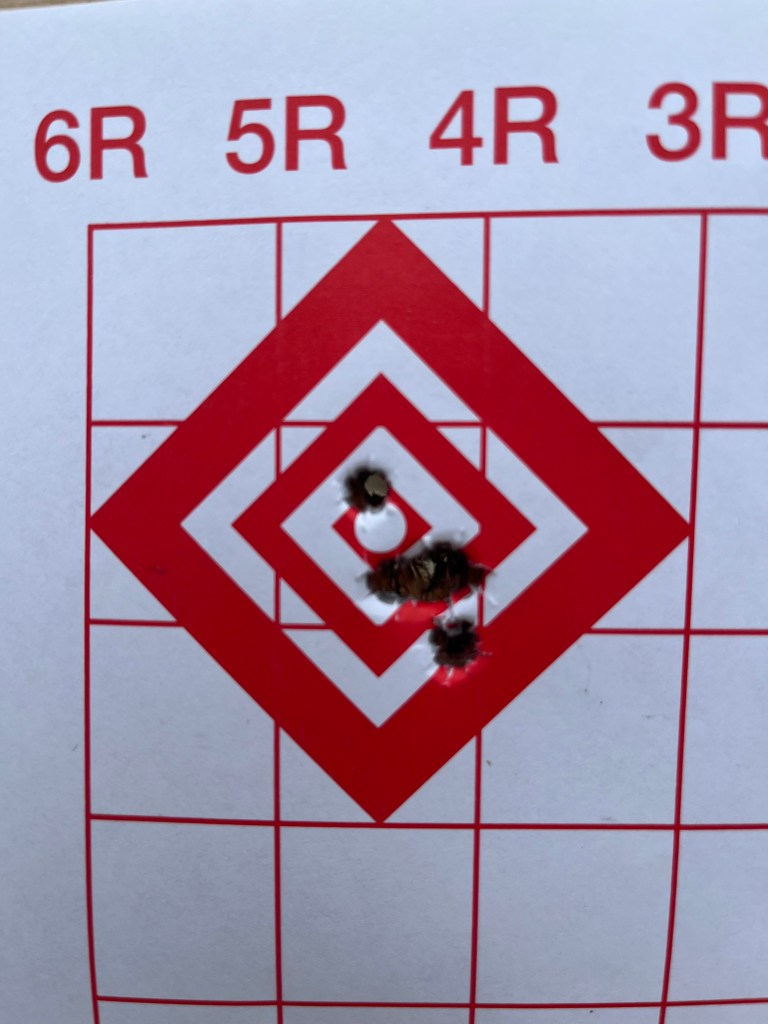


Yep. Cordless, long-distance hole punch.
And just for yucks, yesterday reorganizing my loading bench, I pulled out this:
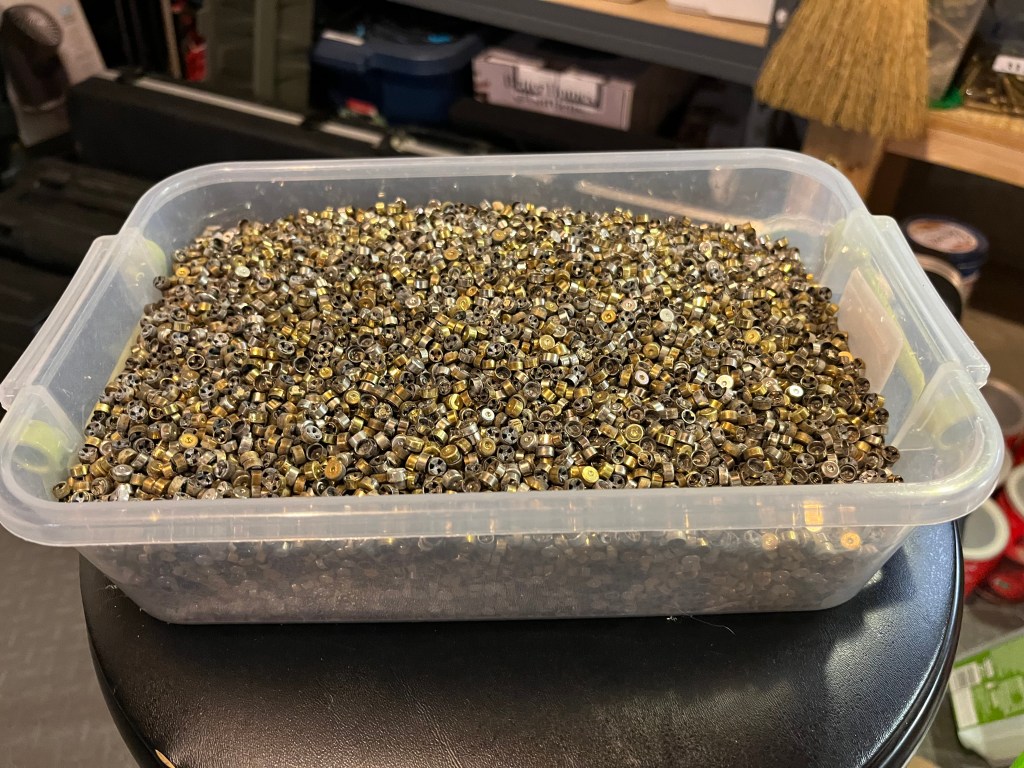
Many happy hours.
I talked to a couple shooting buddies at the club on barrel life for the 6.5. Both said that the first signs they noticed were a slow decrease in velocity, and the groups started spreading out. Over the last five years, my muzzle velocity has decreased from about 2650 to about 2500 fps with 140 grain bullets.
So, today’s project was to up my normal load of Hodgdon 4350 from 39 to 41 grains (that seems to be a standard load for many). DISCLAIMER! Don’t use anything I say here as safe or accurate! This is my rifle, my loads and my experience. Always start out 10% less using anyone’s recipe! This is the Interwebs, ya know.
I also wanted to recheck loads for 147 g. bullets. Back during the last ammo shortage, it was all I could get for awhile. Back then, my rifle didn’t like it as much as 140’s, but I’ve got some and was thinking about wind carrying ability at long range. So, I brought some of those.
First, the obligatory range pic.

And some results.
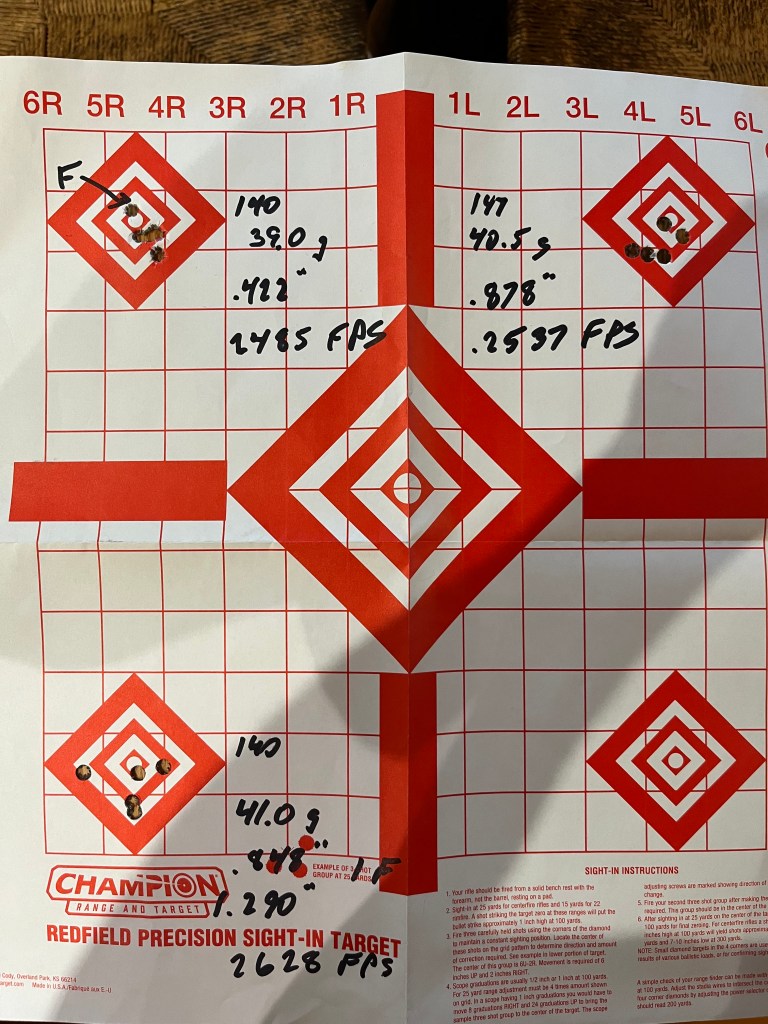
My rifle still prefers the 140 g Hornady ELD-M going a bit slower, at least at 100 yards. You can see that, after my fouling shot (F), the next five rounds were .422”. The faster 140 came in at .848” with a flyer. And the 147 was .878”.
I’ll take all three to the upper range to see if the heavier ones work better at distance.
And, in the meantime, remember:

Si vis pacem, para bellum
Yes, writing about the 9 mm Parabellum reminded me about the above.

You snooze, you lose.
Let’s look at an initial comparison between .380 ACP, 9 mm Luger, and .357 Sig.
Federal 95 grain FMJ .380 being fired from a 3.75” barrel at 980 fps – 203 foot-pounds of energy.
Federal 115 grain FMJ 9 mm being fired from a 4” barrel at 1180 FPS – 355 foot-pounds of energy.
Federal 125 grain FMJ .357 Sig being fired from a 4.5” barrel at 1350 FPS – 506 foot-pounds of energy.
There’s a good article over at TheGunZone.com from May 2024 that stresses that foot-pounds is not the be all and end all. Bullet design, expansion, shot placement and bullet weight all are equally as important. As a general comparison, it does give some idea of effectiveness, though. With the above numbers, the comparison is just as you would expect.
So let’s assume that each bullet is designed properly – I’d say shot placement is the most important. Can I quickly shoot each at Tueller Drill distance of 7 yards with a two-hand grip and make the hits count? Can I do it shooting dominant hand alone? Let’s take a look:
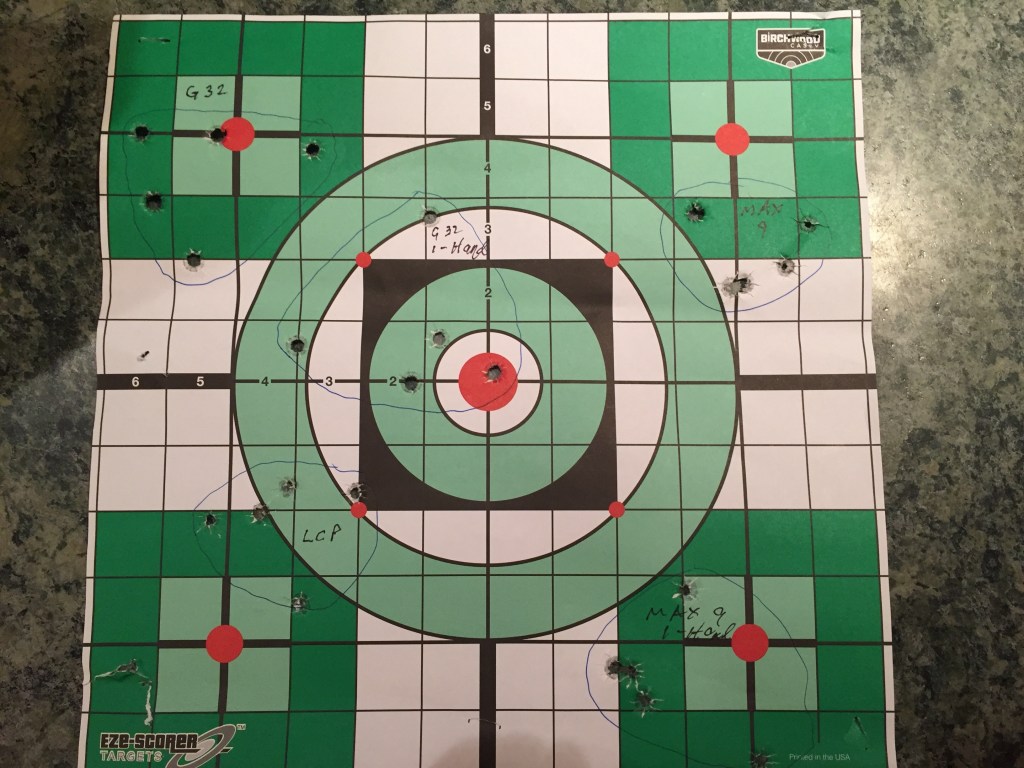
Looks like both the Max 9 and the LCP group around 2”, while the G32 spreads out a bit.
What’s the takeaway, then? For a tiny mouse gun the LCP shoots accurately enough (although in a sudden unexpected defensive gun use situation, I’d bet that grappling distance is more likely than 7 yards. I think Heinlein described it as “bad breath” distance). Proper bullet design, expansion and 200 foot-pounds of energy should be ok.
Same thing with the Max 9, but twice as many rounds and more foot-pounds.
The Glock? If I am knowingly going into a firefight, lots of bullets and lots of energy.
But the final consideration is “which one am I likely to have with me all of the time?”
In real life, I’m a belt and suspenders guy. The LCP is with me always. One of the other two is usually with me as well, depending on season, clothing and perceived threat level. So the answer to the initial question, “How compact is compact?”, is, in my case, small enough to carry concealed.
I’d need to put some height and weight on to carry a 1911 daily. Maybe take a look at the legendary .45 ACP soon.

