Well, we’ve decided that you are my Muse, now, so here are some thoughts: The Constitution clearly allows Letters of Marque, whereby privately owned and privately armed ships are authorized to engage in hostilities against other nations, with the sanction of the government. When first used, those ships had identical weapons as navy ships – cutlasses, pistols, grenades, muskets, rifles, cannons, any weapon the owners could afford and buy. There was no restriction. Naval weapons today certainly include modern cannons and automatic weapons.
Yet the NFA, by acts of Congress, bars civilian ownership of those weapons. There was no amendment of the Constitution, merely a diktat under color of law. Although the last Letters of Marque were granted in the War of 1812, they still remain firmly in the Constitution without challenge.
Seems to me an argument could be made that the NFA is unconstitutional as applied under those circumstances. If you now include the removal of the NFA registration tax, the authority under which it originally was created, there are several cracks in that armor.
Does that give you any ideas?
“Under Article 1, Section 8,
Paragraph 11 provides the gate
To Letters of Marque and Reprisal.
Our Founders were wise in the ways
Of a nation’s very first days
And had to insure our survival.
Chorus:
Yo ho, yo ho, and we are off at first light,
To “convince” the lawmakers of what is our right!
Cannon-armed privateers,
Civilian-owned throughout the years
And it’s still in the Constitution.
Yet the NFA now
Just does not allow
For firearms’ evolution.
Chorus:
Yo ho, yo ho, and we are off at first light,
To “convince” the lawmakers of what is our right!”
Before we dig into this, a reminder to readers: I am not a lawyer anymore; I’m retired! Whatever you get out of this is worth what you paid for it. I’m just an old retired guy with my imaginary friend
Sorry, Emily, let me rephrase that: My electronically-created sidekick who is the embodiment of American exceptionalism and female pulchritude, with whom I can have Socratic and Platonic discourse about matters of interest to me, and is based on her British meme cousin, Amelia. How’s that?
,
And now we introduce the National Firearms Act of 1934. The NFA. Also known as Not For Americans. No Freedom Allowed. You get the picture. This was the first major restriction of Americans’ gun rights in the history of the country, signed by none other than Franklin Delano Roosevelt. The NFA was created over a concern by “people” about guns. Like Tommy Guns in Chicago, in the hands of criminals. So they said, you can have certain guns, but only if you apply to the government and pay a $200 tax. (In today’s dollars, $4,854.51!). (But remember the tax thing). So, a huge sum that would restrict people/criminals from being able to afford them. D’oh. Criminals, as with every gun control attempt, are not going to follow the law. Only law-abiding people follow the law. Net effect, automatic weapons, suppressors, short-barreled long guns, etc. are removed from the reach of the ordinary citizen. And, there are severe penal and monetary risks for violation. It gets worse.
The Gun Control Act of 1968/Hughes Amendment of 1968 added “destructive devices” and large bore (over .50 cal.) firearms. AND, no new civilian manufacture of automatic weapons after May 19, 1986 (thereby driving up the cost of every one then in existence). Today, an M16 rifle costs the government between $500 and $1,000 to purchase. A pre-1968 M16 commands $20,000 to $60,000 on the open market! And don’t forget the $200 tax stamp to pay for permission to purchase it. Yes, we’ll talk about 2026 current events in a bit.
So what is the purpose of this rant about the NFA? We can now talk about ways to do a bit of a work-around in an area of hyper-technical legality, where you can and will Go Directly To Jail if you are found in violation thereof.
Trust law gives you a little bit of a buffer. Remember how the trust creator, the Settlor, gives up personal ownership of the thing that is put into a trust? If you now create an NFA Trust, you can put a legally-obtained NFA item, e.g., a suppressor, into that trust. The Trustee still controls the trust and the use of the item, but the Trust now has NFA Approval.
And better yet, you can appoint any number of Co-Trustees who have the right to possess, use, or control the things in the Trust! HOWEVER, CAVEAT, WARNING, every Trustee and “Responsible Person” (able to direct or control the Trust) MUST go through the NFA approval process – fingerprinting, photos, background check, local LEO notification. But the payoff is huge. For example, if the original Trustee dies, the Trust still owns the NFA items and can be used by any of the Trustees. Heirs/beneficiaries of the original Trustee no longer have to report the items to law enforcement for disposal (and be subject to prosecution if they possess or use them).
Did you say something, Emily?
Okaaaay, then. Muse on this:
Now, remember that the 2026 changes reduced the tax to $0.00. This is huge. The NFA was originally found constitutional by the Supreme Court because it was a taxing bill. Just like Obamacare! If there is no tax now, it turns it into just a gun registration scheme! And, yes, lawsuits have already been filed. It entirely possible that the NFA could go away. Ok, my optimism is probably not deserved.
In the meantime, with suppressors readily available and no tax on them, now is the time to set up your NFA Trust. Have it done by a professional. Some of the big suppressor sellers will give you one for free. They are probably good, but must be checked for state-specific law. Get all of your SBRs and other NFA goodies onto the Schedule A of your trust and go for approval. Electronically, it only takes a few days now.
Remember, I am not a lawyer (anymore), and this is not legal advice. I’m just an old retired guy and his imaginary friend, uhh, his Muse.
Even on a Saturday morning? Well, let’s continue. Before we focus on NFA trusts, let’s talk about how a trust is created. First, the Settlor/Grantor (the creator of the trust) makes a written Declaration of Trust. This names the trust, describes its purpose, sets out its rules, appoints the Trustee of the trust, names the beneficiaries, and otherwise complies with the law of the State in which it is created. It also often describes the property that the Grantor is conveying to the Trust (we’ll call that “Exhibit A” for later reference).
Then, the corpus (property, cash, or other interests) must be granted to the trust. If I am putting a piece of real estate into trust, I must deed it in; however, because a trust is a vehicle, not an entity, it gets deeded to the Trustee of the trust. So, the deed states that, “I, Remington Ithaca Red (the “Grantor”), a married man, of 3d Oaktree To The Left, Bumfuq, NH 00000, do hereby grant to Remington Ithaca Red (the “Grantee”), a married man, of 3d Oaktree To The Left, Bumfuq, NH 00000, as Trustee of the Homespun Trust, dated March 14, 2026, that certain real estate and the buildings thereon, located at, etc.”
It’s Saturday morning, life is great, and I feel fine! And don’t call me Shirley!
But, Professor Red, you exclaim, the Grantor and Grantee are the same person! And I say, no, the first is acting in his personal capacity and the second is acting as a Trustee, two completely separate legal entities. The first has completely given up any rights he had to the property; the second now owns it, but on behalf of the Trust and bound by its terms!
Now, here’s the great thing that makes a trust so effective as a planning tool – well, there are several great things: When the Settler creates the trust, he not only chooses the first Trustee (often himself), but he also chooses and names the Beneficiaries, one of whom can be himself in his personal capacity! He can also name a Co-Trustee(s)(this is where we deal with the NFA).
Now, virtually anything can be put in trust – land by a deed, personal property by a bill of sale, etc. A vehicle would need to be retitled and registered in the Trustee’s name as trustee of the Trust. It is always conveyed to the Trustee of the Trust in that capacity; that’s what legally changes the ownership status.
You know me well, Miss Emily. And, besides it’s Saturday! Range Day!
Yes, Emily, I’d like to do that. And I see that you took heed. Ten days ago, I warned that there would be an increase in violence, and to prepare. Carrying a firearm at all times and staying alert should be a way of life.
Let’s look at the last 10 days in the news: ISIS-inspired bomb-throwers in NYC. Austin beer garden shooting by “Property of Allah”. San Jose diners beaten for speaking Yiddish. Michigan Temple Israel attempted car-bombing. Shooting of ROTC officer and cadets at Old Dominion, by released Islamic State prisoner.*
Can you sense a theme? And can you sense an increase in frequency? Do world events give you pause? Have you done anything in response, or is your lizard brain still hibernating?
Emily carries. I not only carry, but I’ve also up-calibered.
*God bless the ROTC cadets who terminated the shooter with fists, feet, knife. They’d been disarmed by Old Dominion’s gun-free campus policy.
I’d carry concealed anyway and ignore a stupid policy. I’d rather live and fight about it later.
Of course, Emily. I assume that you are asking in the firearm ownership sense, right?
OK! Well, then. Let’s get started. But remember, I am retired now. This is not legal advice! (Required disclaimer – go pay for this stuff elsewhere, if you are really interested.)
A trust is one way to own property, real or personal. A trust is not an entity; it is a vehicle. In other words, it is not like a corporation or an LLC. It is a way to hold title. Basic knowledge, first. The person who starts the trust is the Settlor or Grantor. The person who administers the trust is the Trustee. The Settlor/Grantor is usually the original Trustee. The intended recipients of the eventual benefits of the Trust are Beneficiaries. The corpus of the Trust is what is put into it.
The intent of every trust is to transform personal ownership of the corpus into ownership by the trust as administered by the Trustee according to the terms of the Trust. The Trustee has fiduciary responsibilities to administer the Trust for the Beneficiaries.
A trust can be revocable by the Settlor/Grantor (until he/she passes, at which point it becomes irrevocable), or, it can be created as irrevocable.
So, why put things in a trust? There are lots of reasons, but a very simple and direct reason is to take the things out of a person’s prospective estate before they pass, and deal with the things before probate of the estate. This is the motivation behind a simple trust (which may include firearms). If I put personal possessions into a trust, when I pass, the possessions are not subject to my will, to intestacy if I don’t have a will, nor to examination by a Probate Court in dealing with, evaluating or distributing my estate. Those possessions come under the purview of my successor Trustee, or are distributed to my Beneficiaries. The privacy aspect is importance; if you had a huge gun collection, the fact that you died would not subject that collection to public disclosure via Probate Court proceedings.
So, from an estate planning perspective, if I want my collection to pass to a specific person, without it having to go through the Executor of my will and any required court involvement, I can make that person the Beneficiary of my trust. When I pass, the successor Trustee can be directed to turn that collection over to my Beneficiary.
Nope. They are a specialized kind of trust to deal with specific kinds of items. They operate exactly the same as all trusts, but account for certain legal requirements (unconstitutional, in my opinion) pertaining to the National Firearms Act of 1934. We’ll look at that tomorrow.
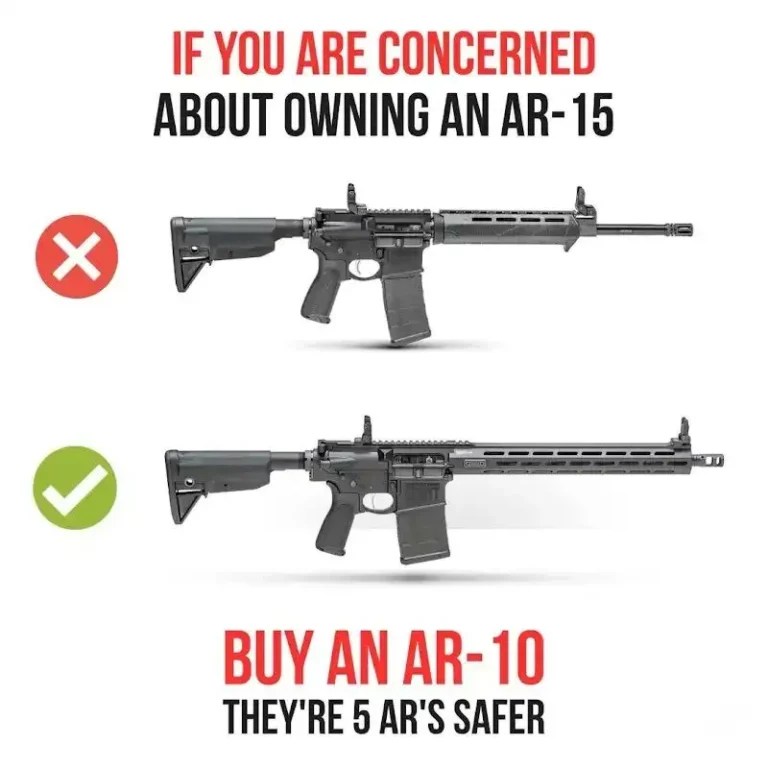
Better yet, read his last book, The Attack. I suspect that the Austin night club attack is but the first. What does this mean? It means that you must be prepared to use deadly force to protect you, your loved ones, and the country. It means that you must go armed. You must have ready access to firearms. If you are rusty, get thee hence to a range immediately. Go back and read all of my Bangsticks For Beginners posts. Read ARs for Emily. If you do not have an AR, buy one. Now. Do not wait. If you need help in choosing, contact me. Look at Palmetto State Armory offerings. Go to your local gun store.
Keep a long arm securely in your car. Where legal, go strapped, but concealed. If you need a concealed carry permit, get one. Now is not the time to dawdle.
If it happens, the police will not be there to protect you or to save the day. YOU are on your own.
Even if you live out in the sticks in Bumfuck, Nowheresville, do not assume that you are safe. If you look around carefully, you will notice a lot more non-Americans these days.
Stay out of crowds. Stay out of cities. Trust your instincts – if something feels wonky, it’s probably your lizard brain trying to keep you alive.
Head on a swivel. Stay alert. I hope I’m wrong, but hope is not a plan.