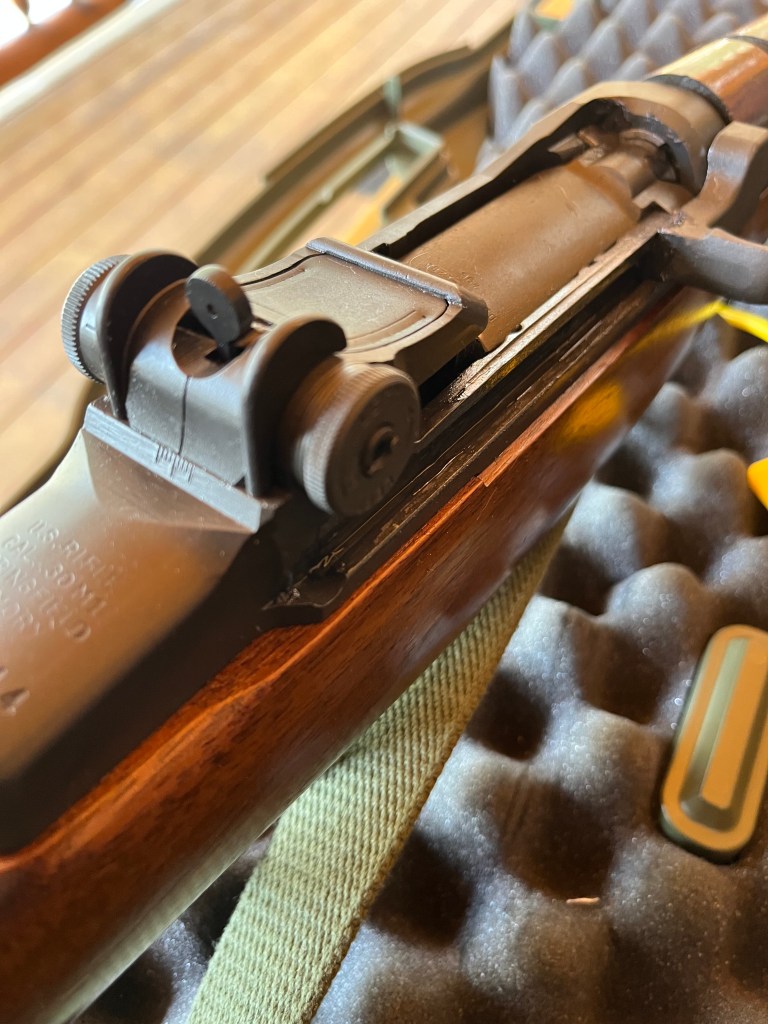
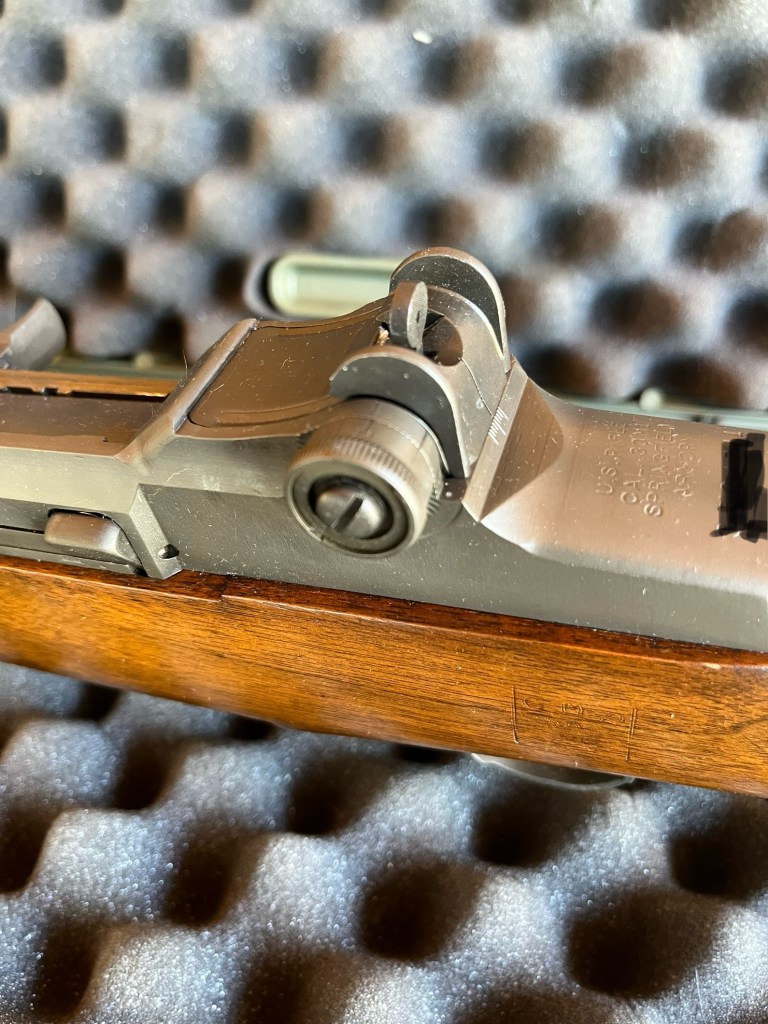
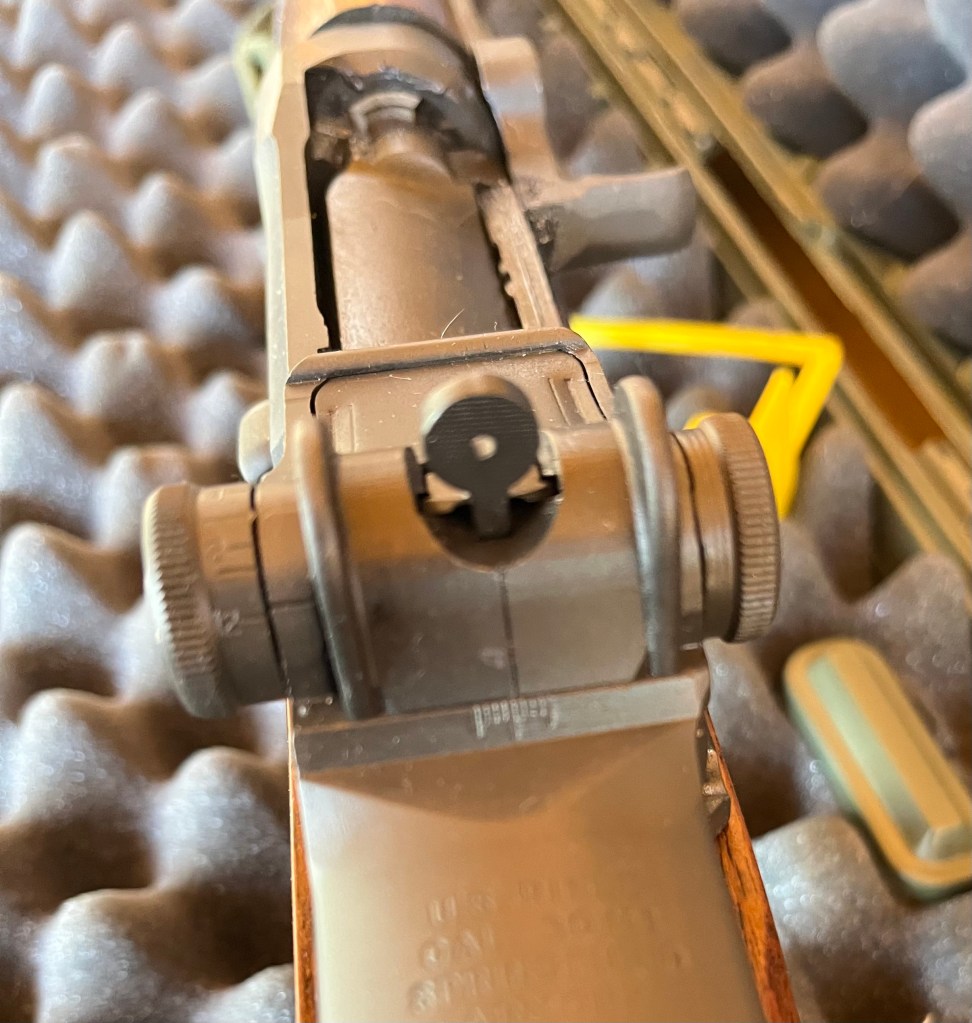
The earlier Garand post was popular. Let’s revisit. I mentioned that I had a problem with elevation zeroing. Back at the bench I disassembled the sight group by unscrewing the captive bolt on the left side and the flat-tipped head on the windage side.
I should have taken a picture of the peep sight when I pulled it out. What a marvelous piece of machinery! It’s a ratchet with the same curve as the upper body of the top of the sight unit. It was in perfect condition with a sheen of clear oil.
By disassembling the unit I had a better understanding of the correct operation. To rotate the elevation knob without it engaging the peep sight ratchet, both the captive bolt and the flat tip head on the windage sight have to be loosened. This allows the elevation knob to be pulled out far enough so that it can be freely rotated. As in to the zeroed position.
Let’s go back to the range!
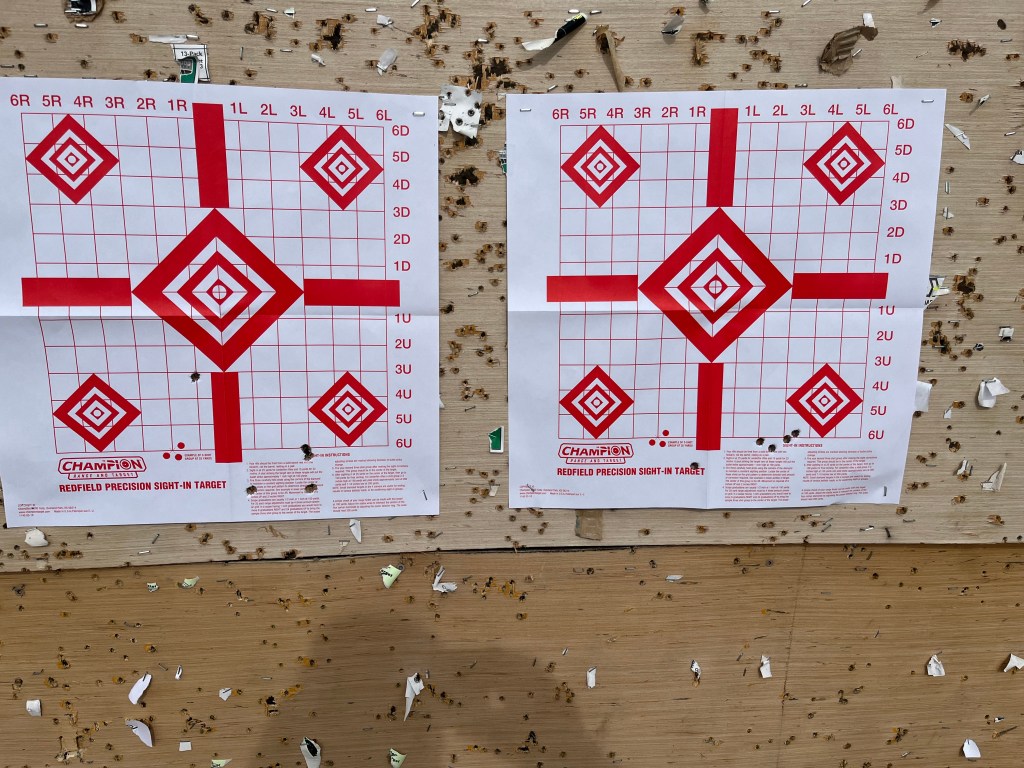
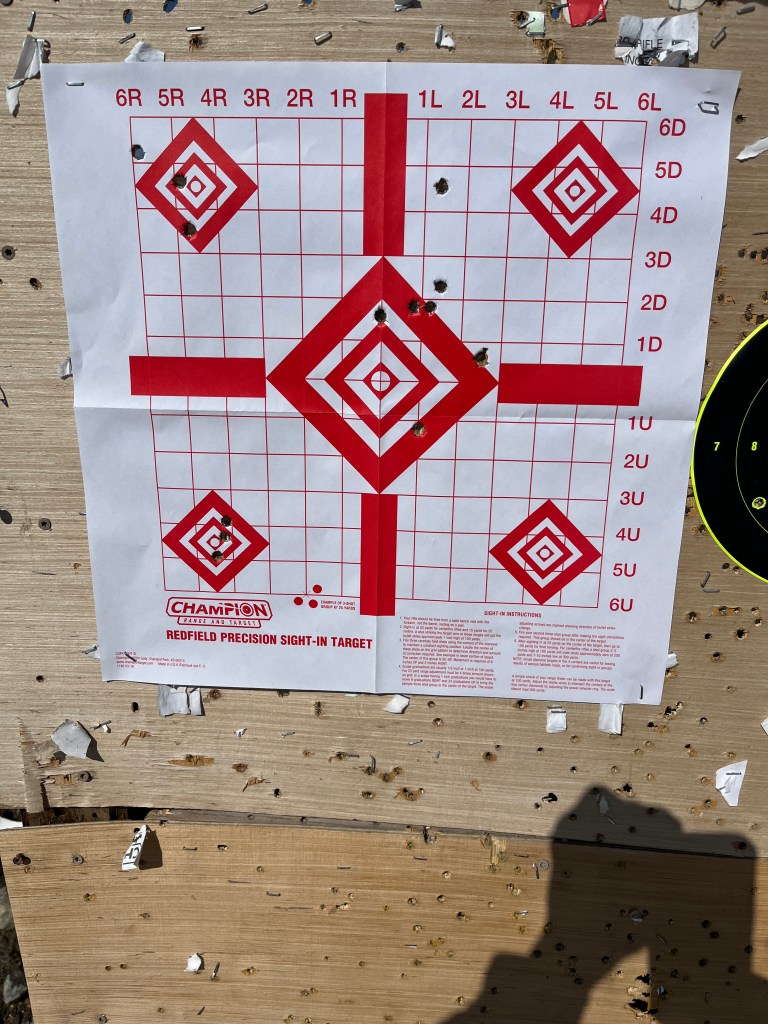
The TM for the Garand says to zero it, start by rotating the knob to its lowest position, then up 8 clicks, then fire to see if it’s close to zero. I did 7 clicks because I don’t need no stinkin’ instructions, and this is what I got:
Left target, circled in red. That’s with the old Greek ammo. I dialed one click right windage (because I can’t leave well enough alone) and used the American Eagle ammo and got the right target. (One of those four shots was later, but I can’t recall which. D’oh.) But the American Eagle is 50 fps slower, so the elevation drop makes sense.
The gradations on the elevation knob are in 100 yard increments going up to 12.
But, damn, those are hard to see with old eyes and snow blind from the bright sun. I might just use some white on them. Anyway, now being zeroed, I tested the marked gradations on steel. At 200, the shot was high – dialing back to 100 put it on target. At 300, it was also high, and dialing down to under 200 brought it on target. Once the Long Range opens up again, I’ll test out to 1100 yards. There will be pictures. And some more drone footage.
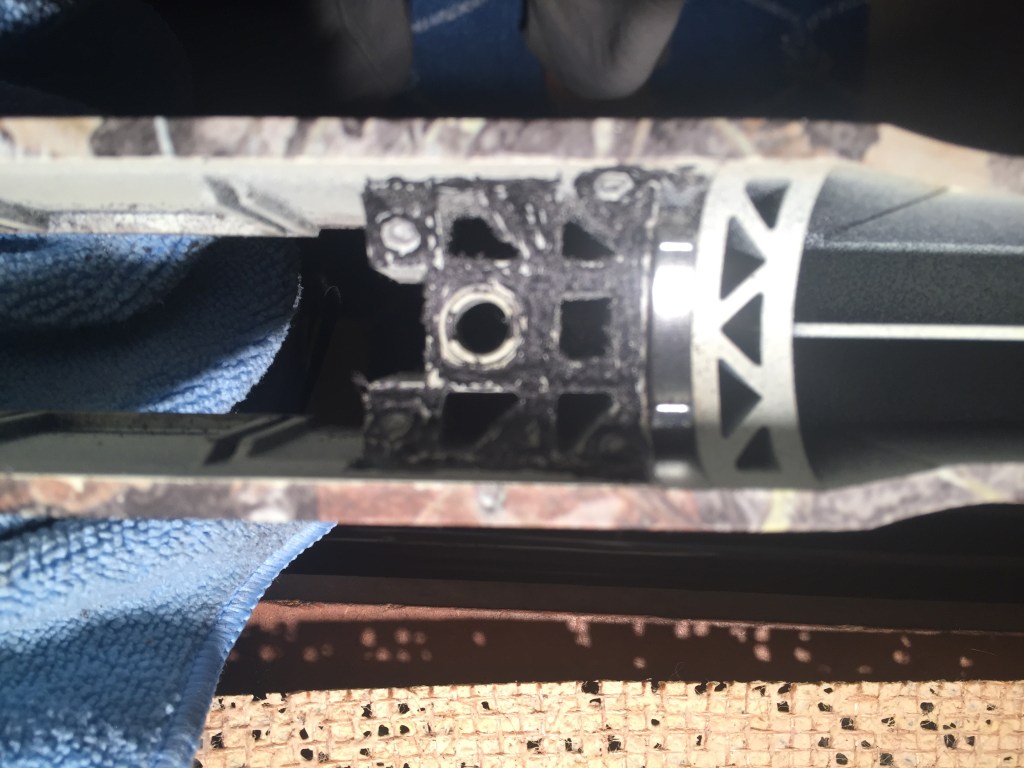
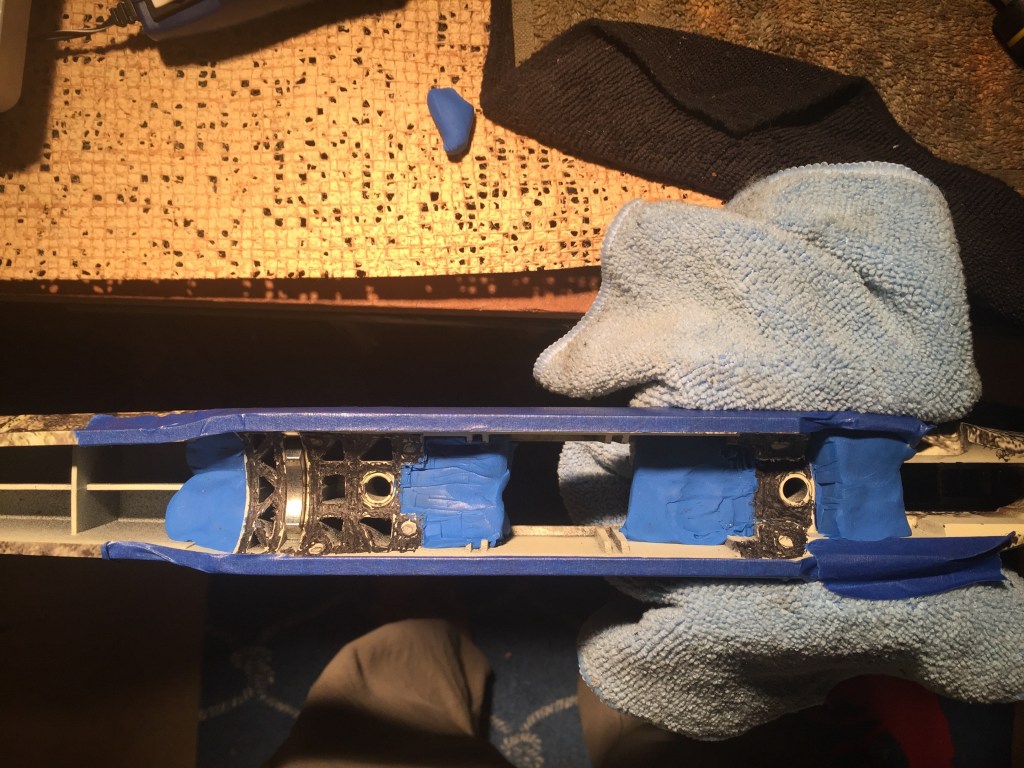
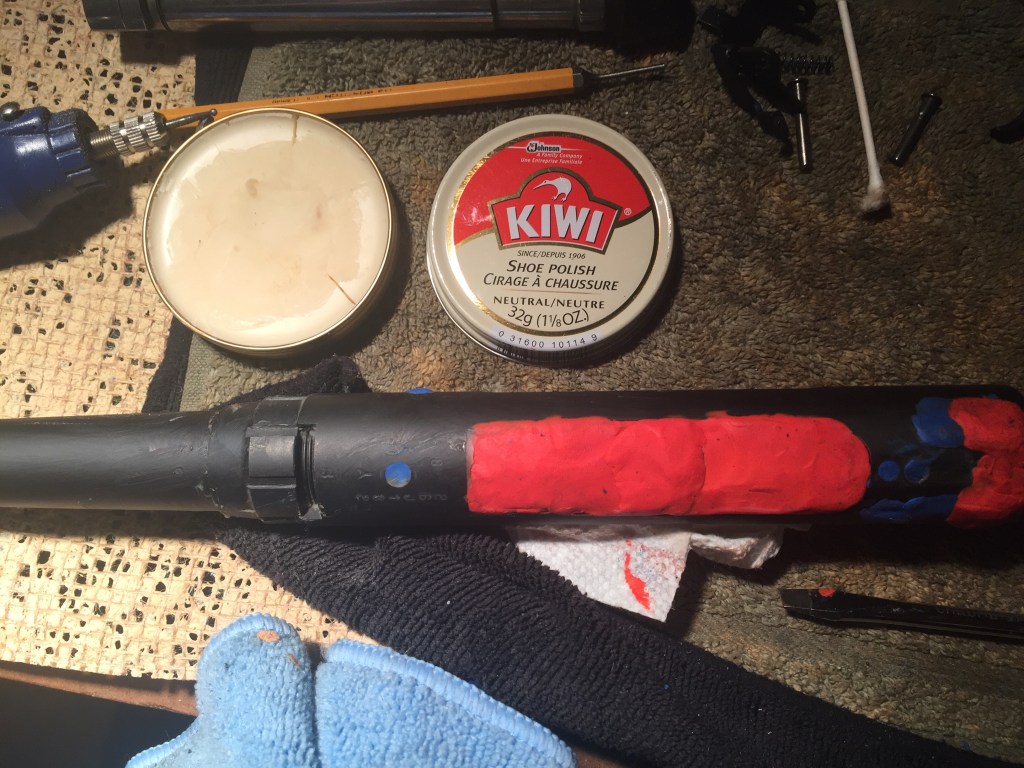
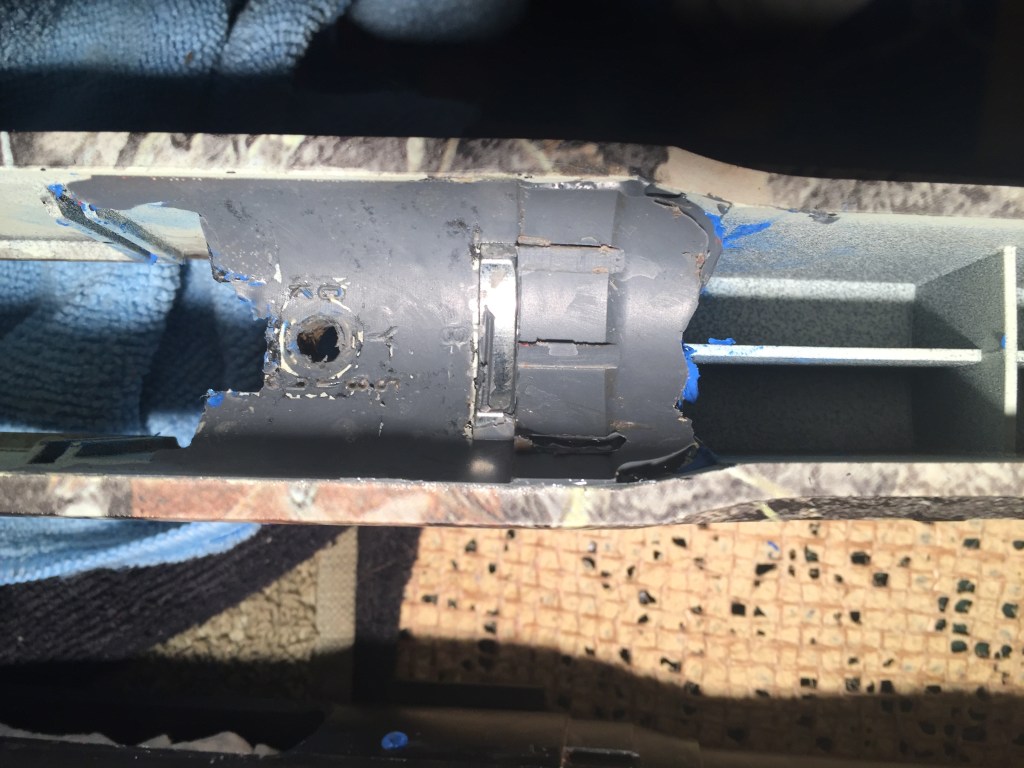
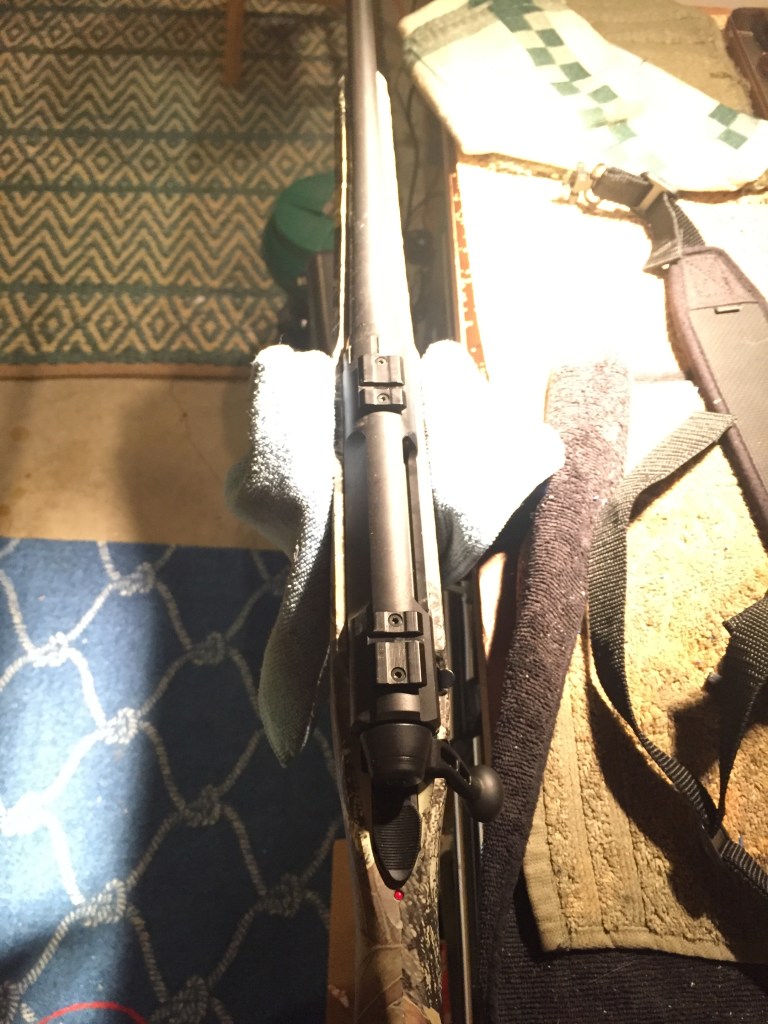
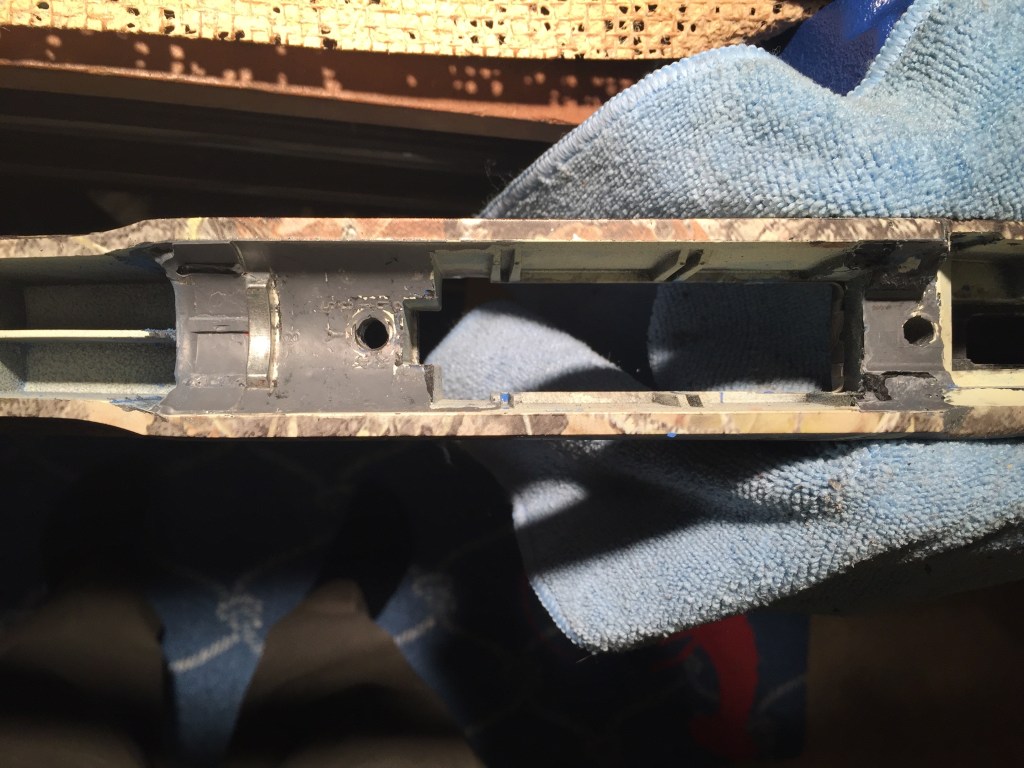
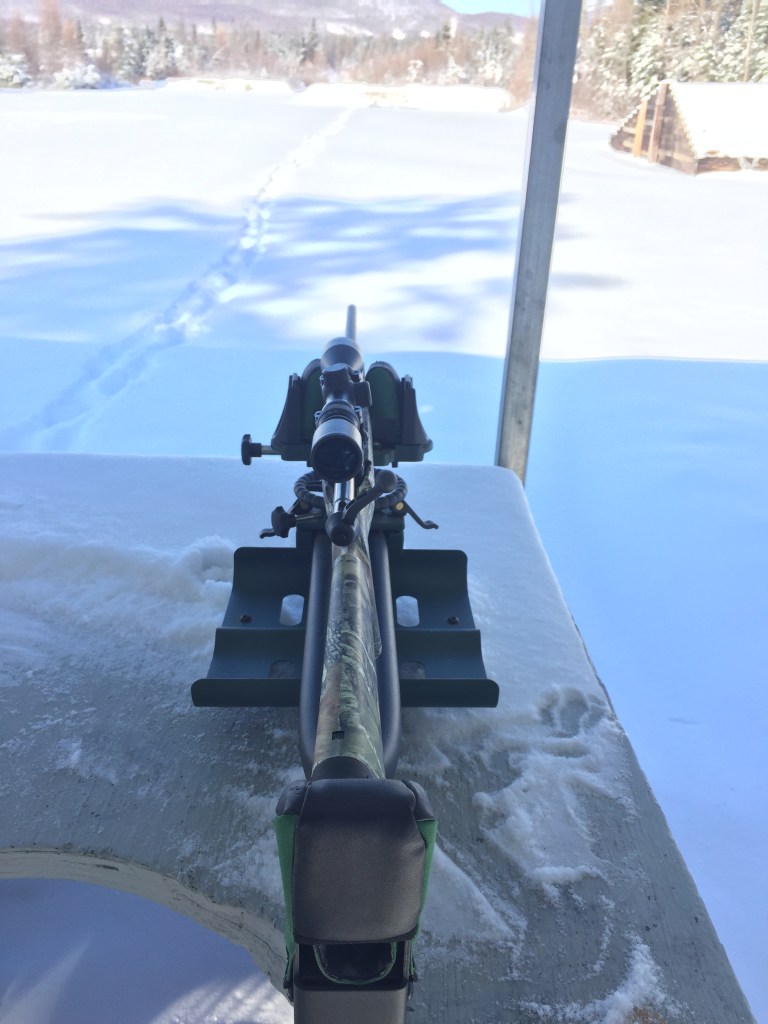
I might as well remember what I did to it. When I bought it, I was looking at just a decent .30-‘06 for general purpose. The Ruger American had just come out and piqued my interest, but my LGS guy suggested the Savage Axis. Ok, LGS guys you trust are good. He also steered me away from Century Arms to a Bushmaster AR, so he had cred. This was one of my first attempts at glass bedding a rifle, so a bit of a learning curve. But I did document it thoroughly. Of course.
If a picture is worth a thousand words, you just got 13,000.
Fouling shot and next two I’ll take. Home-rolled with Hornady 168 g BTHP.
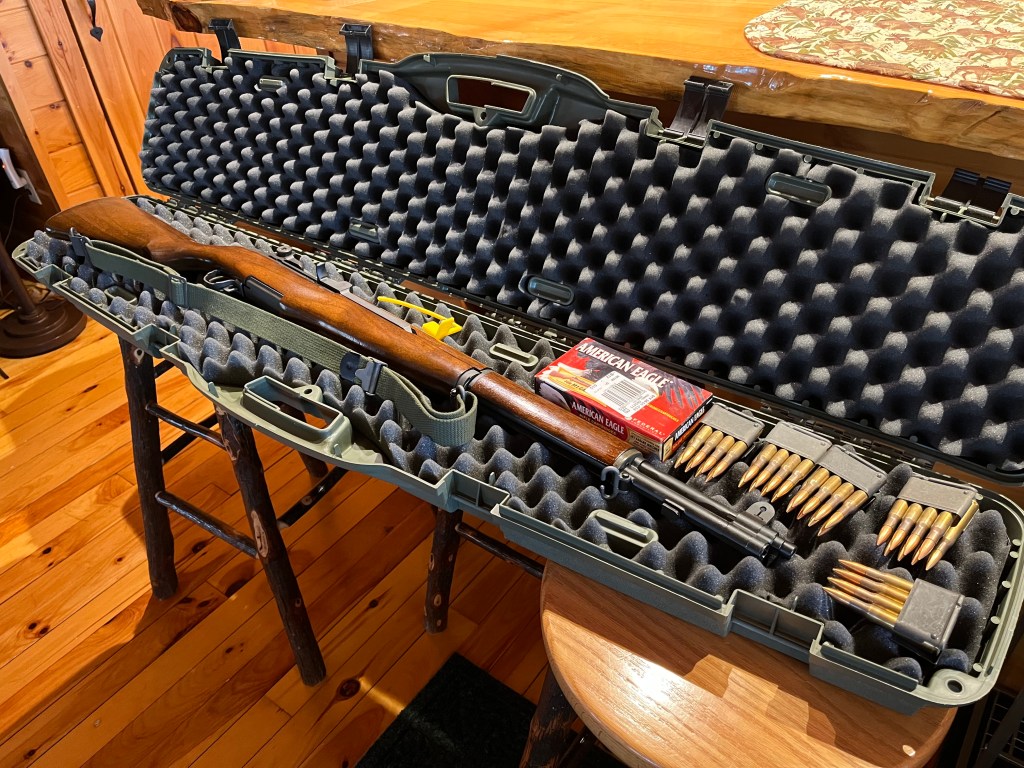
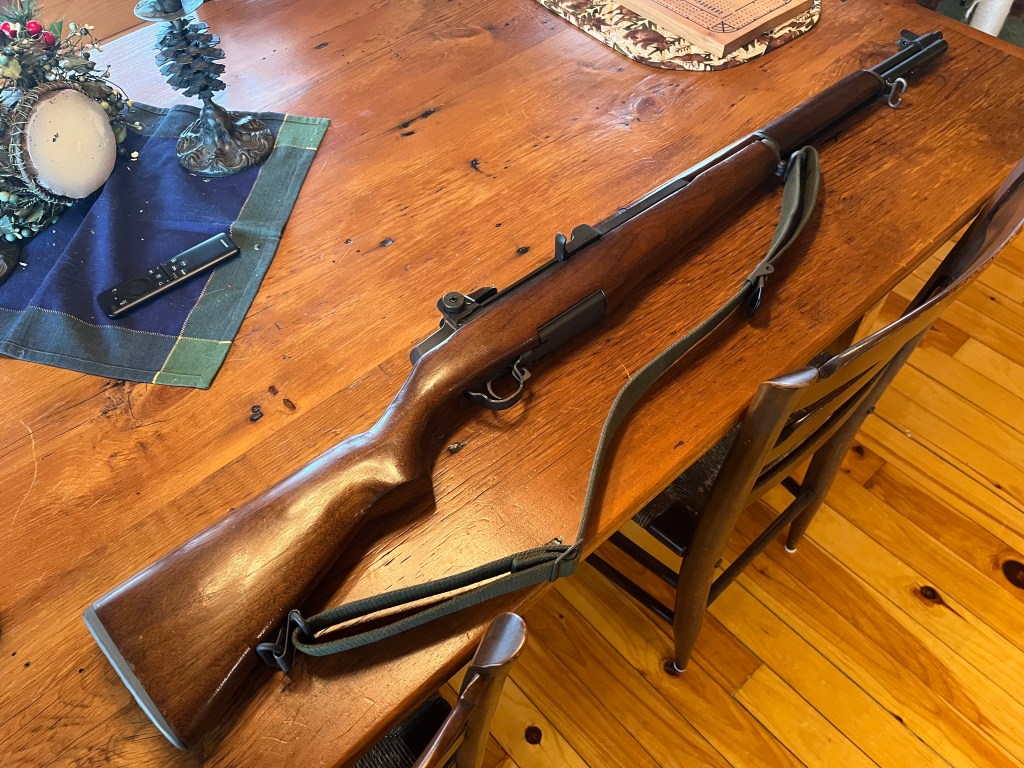
Going from one end of the spectrum to the other – .22 to .30-‘06. About a dozen and a half years ago I got serious about CMP – Civilian Marksmanship Program. The allure of “a Garand for a Grand” was overwhelming. After jumping through minor hoops (belong to a CMP-affiliated gun club, not be a prohibited person, send check),I received at my front door a cardboard box containing a green gun case and a beautiful M-1 Garand rifle. Yes, you heard right, no FFL and right to my door. And I was a resident of a very gun-unfriendly state at the time.
The serial number indicated a manufactured date of March, 1945, probably intended for the invasion of Japan. Thank you, President Truman, no invasion needed. And my dad came home on two feet, so I am here. And so is my Garand. Let’s take a look:
The stock arrived new and unfinished. I applied the Birchwood Tru-Oil, 00 steel wool, Birchwood Gun Wax and elbow grease.
Yesterday I was reorganizing a cabinet and moved several ammo boxes of Greek .30-‘06 made in the mid-70s. I had ordered a thousand rounds from CMP (at less than $0.50 per round, as I recall). The forecast was bluebird and 50 degrees, so a range trip was in order. I wanted to shoot some of the 50 year-old ammo and compare it to some modern American Eagle 150 grain FMJ. I also brought my Savage Axis boltie along as a control test.
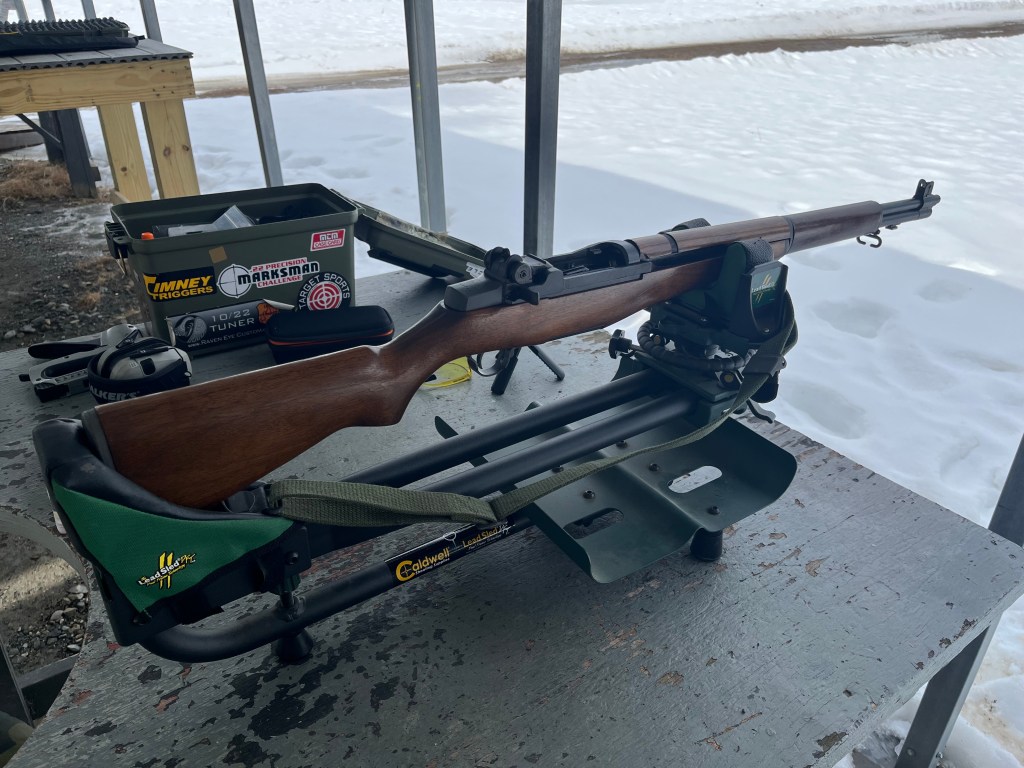
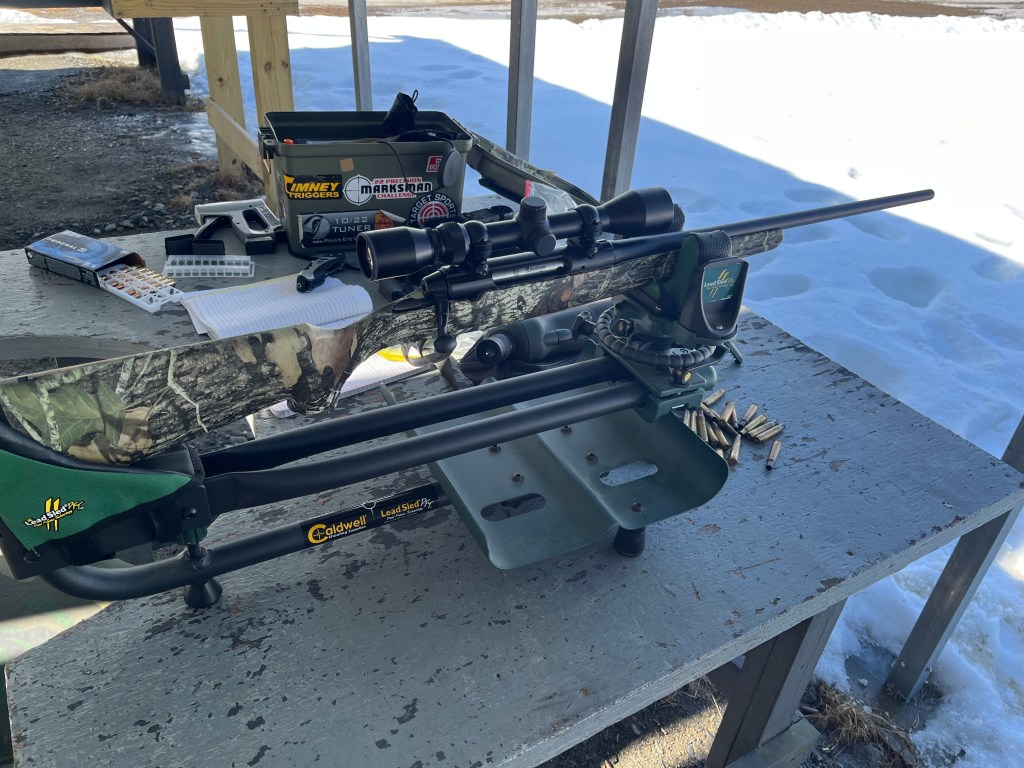
Beautiful day at the range with a beautiful tool:
Yes, it’s in a lead sled. I once shot over a hundred rounds at one sitting and the shoulder bruising was remarkable. So, Greek on the left and American Eagle on the right. One hundred yards with aging eyes that could barely see the center of the target.
Clearly a fouling shot high left, then came together at about 2.5”. The American Eagle grouped nicely at about 1.4” with one flyer. The Greek averaged 2729 fps muzzle velocity, Standard Deviation of 37 and Extreme Spread of 94 fps; the American came in at 2637 fps mv, SD of 21 and ES of 54 fps. Seems as if sitting around for a half century did not faze the old ammo.
Thereafter, I spent a lot of time and all of the ammo I had brought trying to bring up the zero. The elevation knob screw would loosen, but the knob would not loosen enough to reset the zero. Drat. Down to the workshop in a bit.
But I still had the Savage and a box of Federal 180 grain. Not really a fair comparison since the Savage has a 1×9 scope and the ammo is different. But it’s a beautiful day, I’m at the range and have ammo. So:
Upper and lower left. Better group was an inch. So, old and new, same caliber, both effective. The Garand is heavier and much more pleasant to shoot. The Savage is accurate, but light and packs a punch. But there’s nothing like the ping of an en banc clip ejecting.
Well, d’oh. You get up early in the morning and scout those little rascals and blast the heck out of them . .
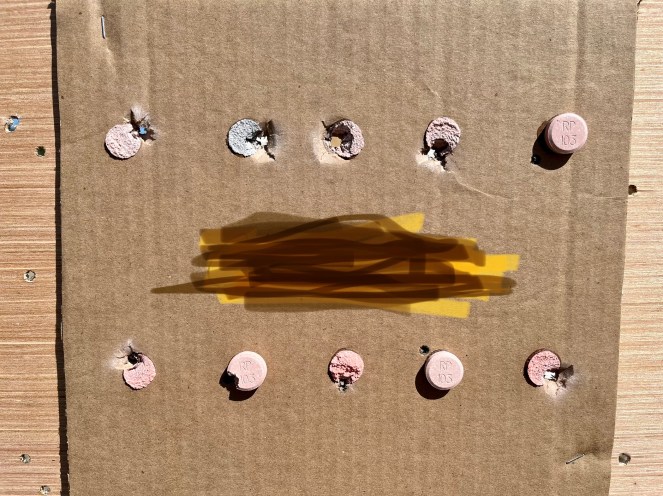
Really, though, you have to get up pretty early in the morning to claim your favorite shooting table at the club. The rock solid one that gives you the best angle on those little devils. Here is the course of fire: Aspirin at 50 yards. Tums at 100. Know Your Limits steel at 150. Same at 200. .22 caliber only, but any rifle you want. Bipod and rear bag only.
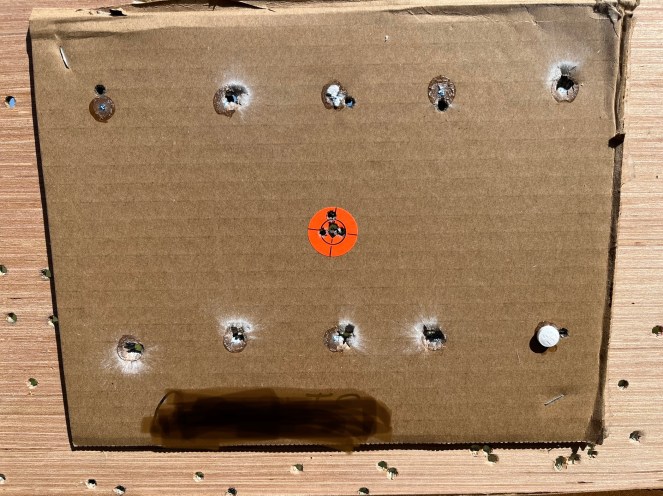
10 aspirin on your individual cardboard target. One fluorescent sighter target. You may take up to 10 sighter shots, but once on the aspirin, you cannot go back. One shot per aspirin. If the round touches any part of the aspirin it is a hit. Yes, black wax streak on the side is a hit. Max score of 10.
Same thing at 100 yards with Tums. Word to the wise – this is the hardest stage.
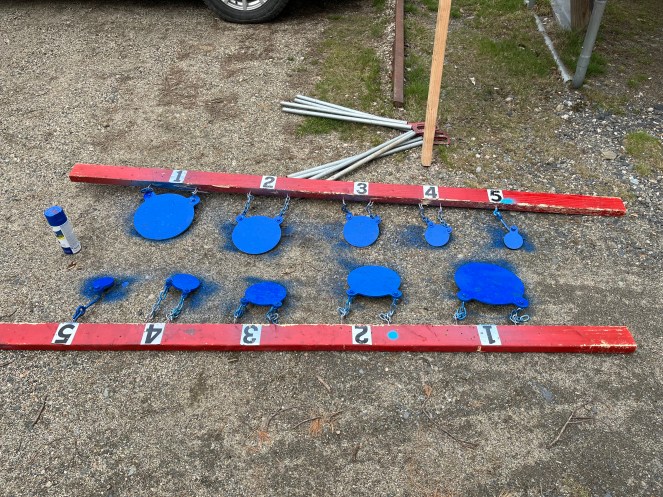
At 150, the 5 hanging KYL targets start at 8” diameter and go down to 2.5”. You must hit each target before going on to the next. Once you hit the smallest one, you keep shooting at it.
200 yards is the same. So max score possible is 40 points. On a great day the winning score is 32-34 points. On a cold winter day in blowing snow, low 20s will win. So what rifle do you use? At least at our club, everyone started out with Ruger 10-22s, and shot CCI Standard. But is wasn’t long before ammo changed to Eley, SK, Wolf, and rifles changed to CZ, Ruger
Precision Rimfire, and the like. My own upgrades were the Christiansen Ranger and the Ruger Precision Rimfire.
Let’s take a look:
This is the best I’ve shot. 9/10. Pretty sure won that day with a 34.
Tums are tuff. At 100, wind really kicks in.
An 8 will keep you in the running.
This is what you are shooting at.
And it looks like this:
Some people say that .22 at 200 yards is similar to large caliber at 1000. I tend to agree. The .22 LR is an anemic round; it gets pushed around by the wind a lot. But it’s been around for a hundred and fifty years and is arguably the most popular caliber. It is hard to shoot well at distance.
But would you stand there and offer to be a target? I don’t think so.















 KatNap Fever!