Now, where was I?

Oh, yeah, shotguns and beginning shooters. Clearly, you don’t expose them to shot guns until they have shot a lot of Bangsticks, and are used to noise, blast and recoil. Then, when they have some shooting time under their belt, you don’t start off with 12 gauge.

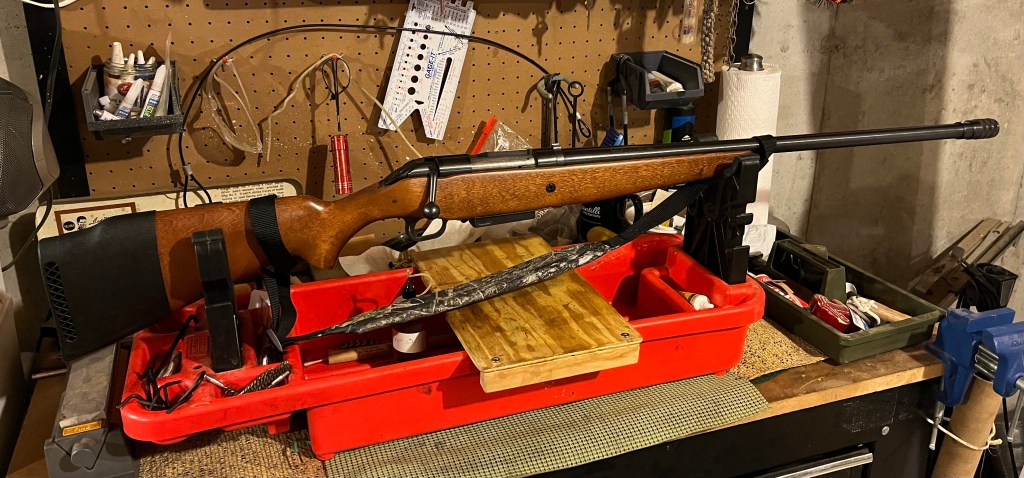
Remember my boltie shotgun? It came from Montgomery Ward (“Monkey Ward” – remember?”, and was made by Western Field.

A Model 172A C-Lect-Choke, and chambered both 2 3/4” and 3” shells. It was a right all-purpose shotgun. Except:

See that brass pin through the neck of the stock? That was a later design change. The gun recoiled so much that the neck would crack. After several years of shooting, mine cracked and got sent off to Monkey Ward; the above is the replacement.

Point being that 12 gauge is not for beginners. Remember that as the gauge number goes up, the barrel diameter gets smaller. It goes 10 gauge (a true Punt Gun – I don’t think they’re made anymore), 12, 16 (also getting rare), 20, 28 and .410. A beginner could start out at .410 (some are made to shoot .45 Colt as well – a multi-use gun), but I think probably a 20 gauge would be a good place to start. Not a bolt gun cuz they are rarely made nowadays, but a pump. The pump is a different style of repeater that we have not mentioned before. I may have brought it up with .22 rifles. There are several very popular ones like Marlin (now recently resurrected by Ruger – yay).

My personal favorite would be the Remington 870. It’s been around forever, functions well, has a great reputation, you can swap out longer and shorter barrels.
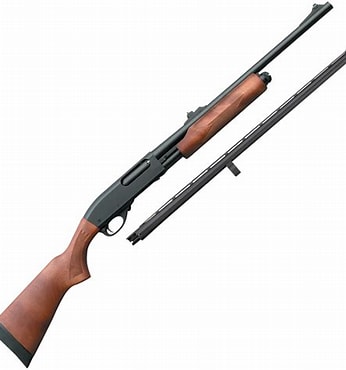
Yeah, that’s a stock photo. Mine has been kidnapped by Jr., and I’m too lazy right now to go break into his safe. But in a manageable gauge like 20, this is a good one to start them shooting trap, skeet, etc. Yup, it’s a Bangstick for an Advanced Beginner.


Next up in Bangsticks for Beginners

This is a bit of a misleading title. A shotgun is more like a Bangtree than a Bangstick. And in the recommended order of Beginning, I’d put this one after rifles larger than a .22. But, since I brought it up before, away we go.

Now, I DON’T recommend the way I did it. After starting out at age 12 with a .22, I decided at 16 that I needed a Man’s Firearm. What better than the vaunted 12 gauge? Oops, best back up. We’ve indirectly covered “caliber”, .22 caliber being (approximately) .22 inches in bullet diameter. What is this “gauge” measurement? Well, by my recollection and by the inner tubes, it means how many balls of lead the size of the barrel diameter would total one pound. So, 12 balls is a 12 gauge, 28 balls a 28 gauge and so on. (However, see the exception, .410 gauge, comparable to .45 caliber Long Colt. Well, never mind, we’ll get to that later).

And what are we firing through this kind of firearm? Well, “shot”. Meaning round pellets as small as .08” up to .22”, then buckshot from .24” to .39”, and then slugs, which are more like fat rifle bullets the diameter of the barrel.

But one major difference – we are not sending shot through a rifled barrel (which imparts stabilizing spin to the bullet). We are sending it through a smooth bore, so it just comes out of the muzzle with no spin and spreads out the further it goes. Which is the raison d’etre for a shot gun – lots of pellets hitting a larger area. For fast moving things like birds. Or squirrels. Or fast, fearsome felons.

So, how’s this for a manly firearm?

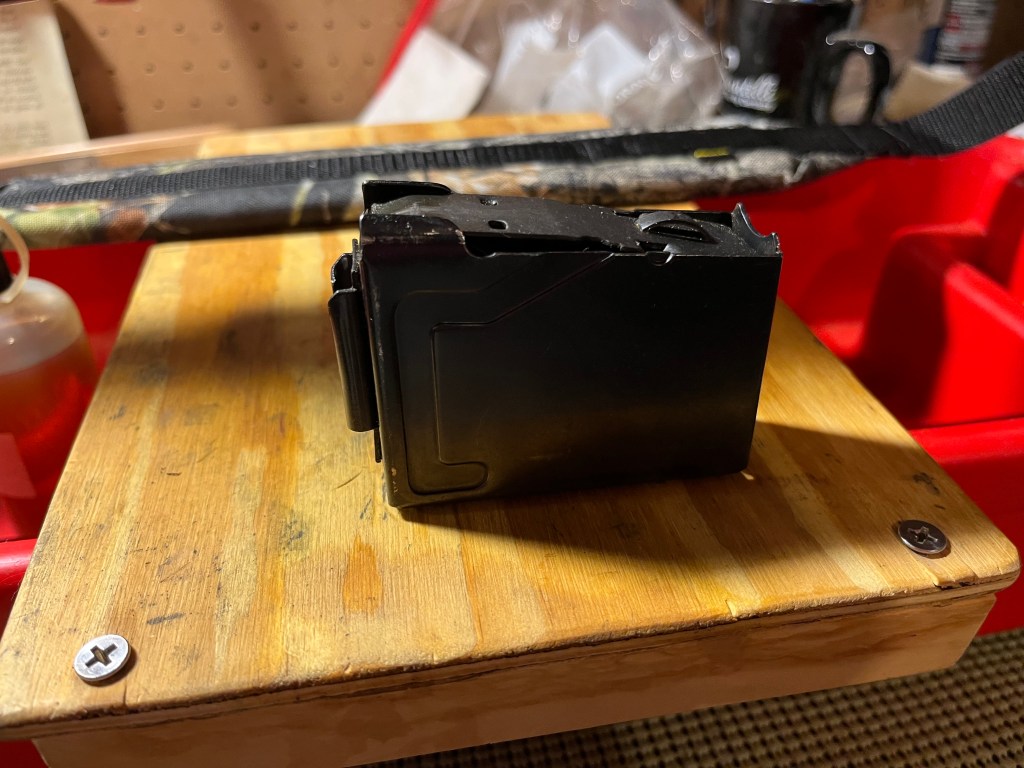
12 gauge, bolt action shotgun. With a 2 round magazine!

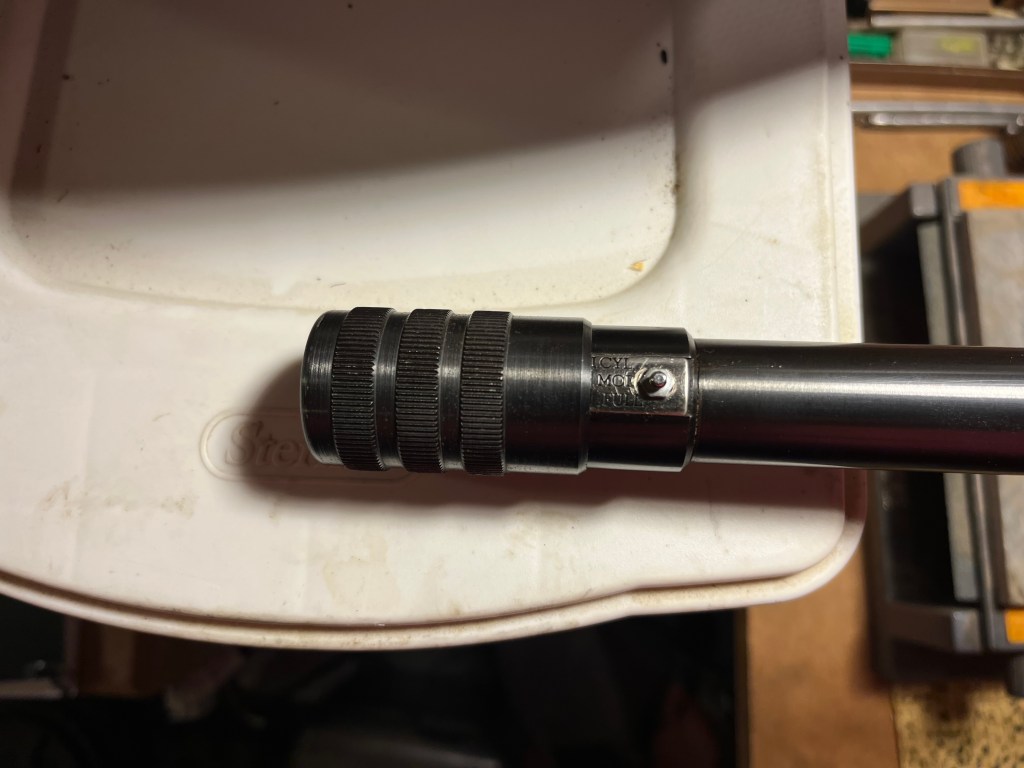
And an adjustable choke on the muzzle!

Improved Cylinder, Modified, and Full choke. Oh. Yeah, choke. It chokes the muzzle diameter to allow a smaller or larger spread of the shot. The “Pattern”.
So, with a basic, entry level shotgun, we’ve been able to cover a lot of shotgun topics. One more thing:

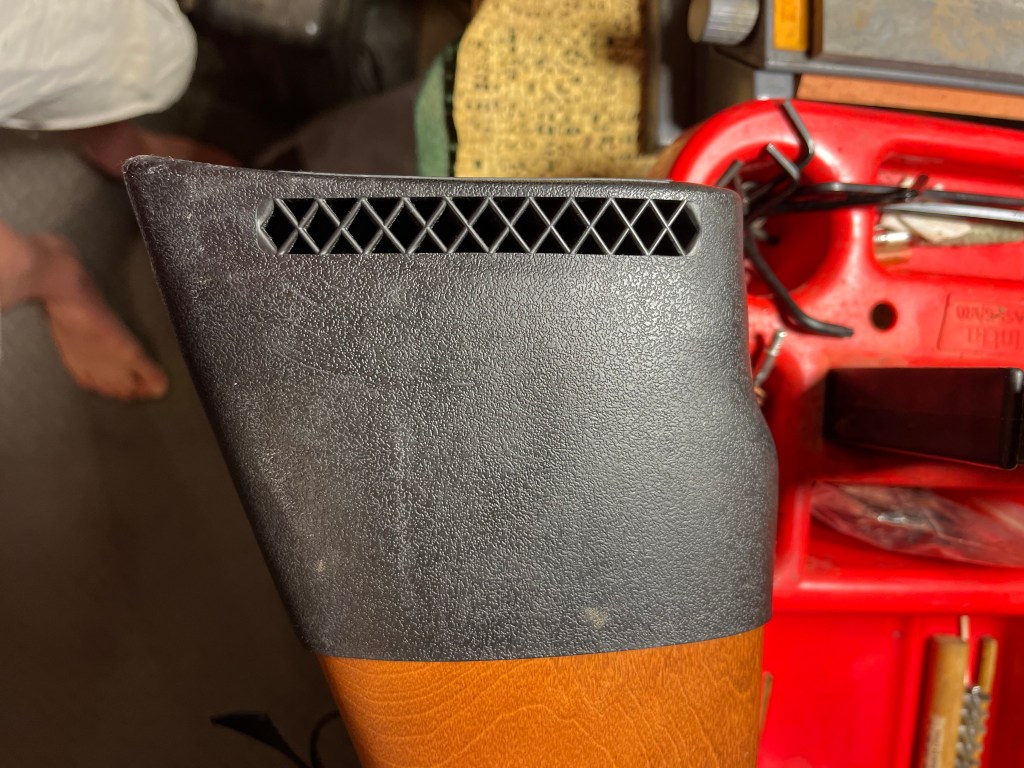
Even with a heavy duty rubber recoil pad, it kicks like a mule. One reason I would start beginners with something else. More to come.

Let’s get the BBB going!

No, I’m not talking about the Big Beautiful Bill. I’m talking Back to Bangsticks for Beginners!
Our story to date has covered .22 caliber firearms, starting with the single shot, bolt action rifle, the 6-shot revolver, and the 10-shot semi-automatic pistol. We now head to the .22 caliber semi-automatic rifle in various magazine capacities.

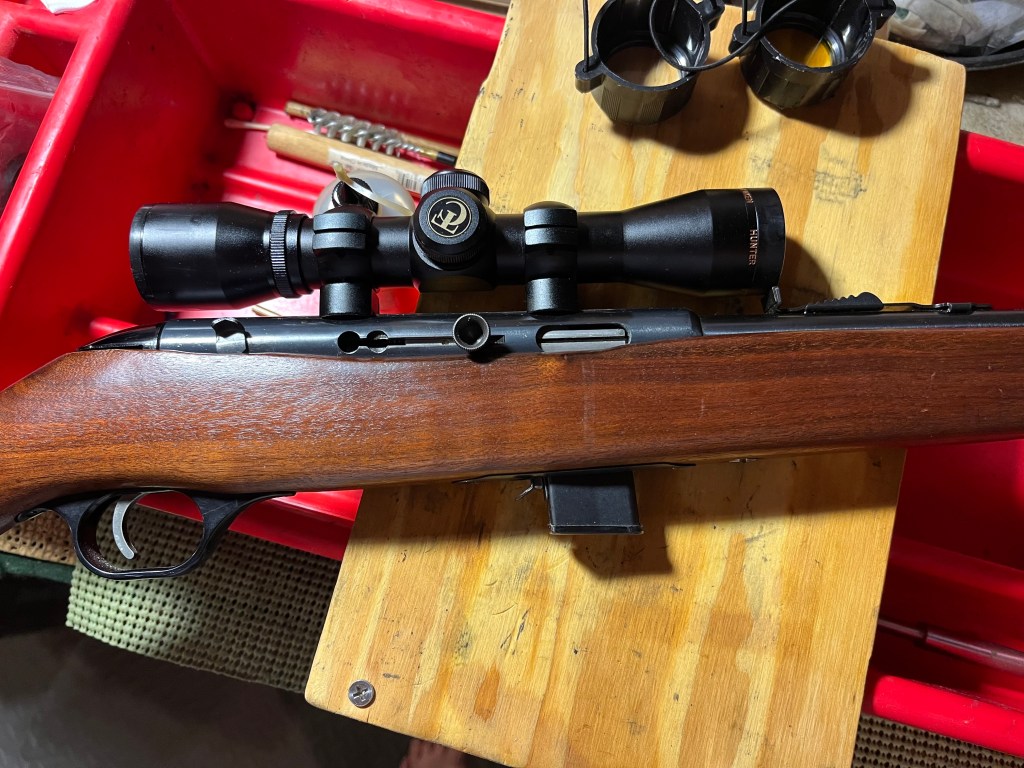
Surely you know that I’m coming back to the Ruger 10-22. But not just yet! Believe it or not, there are other rifles available. In 1972, the first firearm I bought on my own was a used Mossberg Model 352 KC, built between 1967 and 1969 according to the inter tubes.

Originally it had a crappy 1×4 (?) scope where the crosshairs would travel toward 7 o’clock when you increased the magnification. But it was accurate, both with the scope and with the iron sights. And it had a 7 round magazine, quite a step up from my old single shot. The magazine allowed Short, Long, and Long Rifle cartridges with a moveable tab to get the feed angle right.

A Thompson Center Arms on special scope mounts that clamp on to grooves in the sides of the receiver has replaced the original chinesium.
But even better, it has a thing that goes down!

Yes, the fore-end rotated down 90 degrees to make it a truly awesome Assault Rifle (TM).

So what does this step up for beginners get us? A much more stable platform than a handgun, where you have the ability to make follow-up shots without having to lose your sight picture or your grip. Since repeatability is a key factor in accuracy, keeping the rifle in the exact same position relative to your body is critical. And now you can do it 7 times in a row!

There are a ton of semi-auto .22s out there from which to choose (the Ruger 10-22 is ubiquitous, with a huge aftermarket for accessories, making it probably the most successful .22 rifle ever made). But there are other great manufacturers and options: Box magazines, tubular magazines, rotary magazines, drum magazines, they all are available to increase your ammo capacity. Find a rifle that fits your body and your length of trigger pull. It should feel natural and comfortable – you should not have to contort yourself to get a good sight picture and a comfortable trigger finger position.

OK, I think we can go on to a new class of Bangsticks for Beginners – shotguns!

Learn something new every day.

One thing I learned in the military is that equipment should be made so that it can’t be reassembled incorrectly. If there is a way do so, Private Snuffy will find it.

Imagine my surprise when one of my long range guests suffered a major jamming issue with his AR 10. It would fire one round, but the empty brass would jam in the left side of the chamber. Under great force, of course, requiring the release of both pins and complete removal of the lower, then much force on releasing the charging handle. After the brass was removed and the rifle reassembled, we tried loading a round and then ejecting it without firing. This was the result:

Another hard jam on the left side of the chamber, and the bullet now deeply seated. Light bulb goes off. Is it possible that the bolt could be installed 180 degrees out? Now, every M16/AR15 pattern rifle I have disassembled, the bolt cam pin hole is eccentric on one side and round on the other. It is physically impossible to insert the cam pin on the wrong side.
We found the exception – round all the way through. So 50% chance of reassembling it bass-ackwards. Huh.

And what have you been up to?

Mmm, shooting, I guess.

Good thing this is Mrs. Red’s car. I wouldn’t stand for it in mine.

And the detritus of destruction?

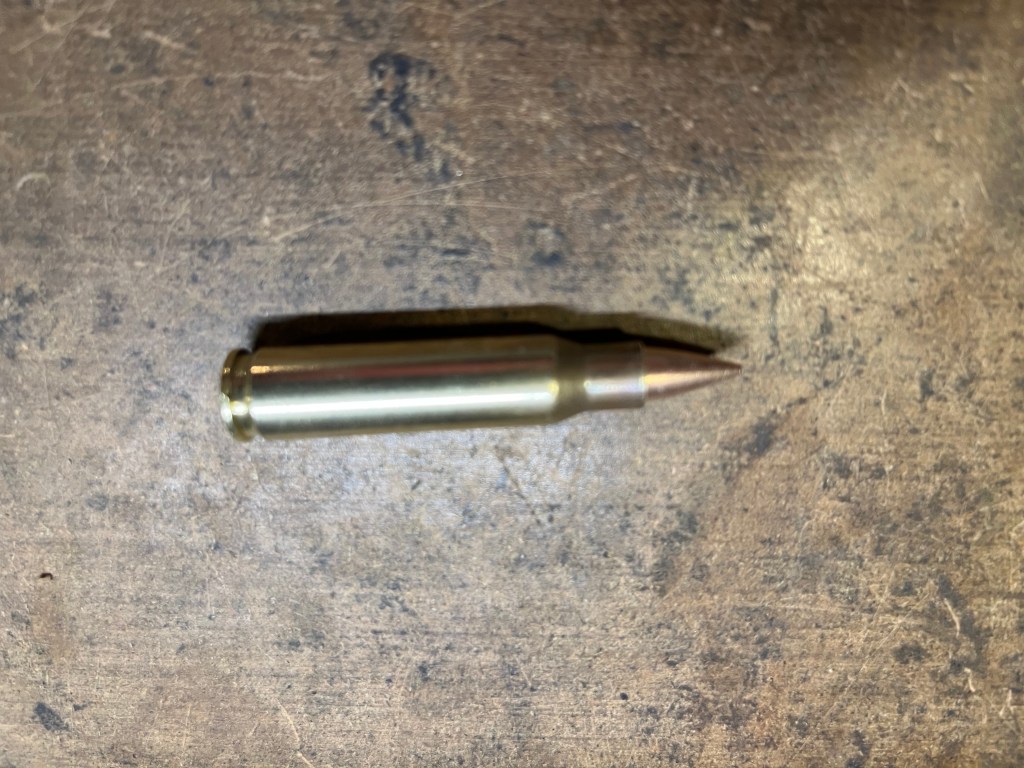
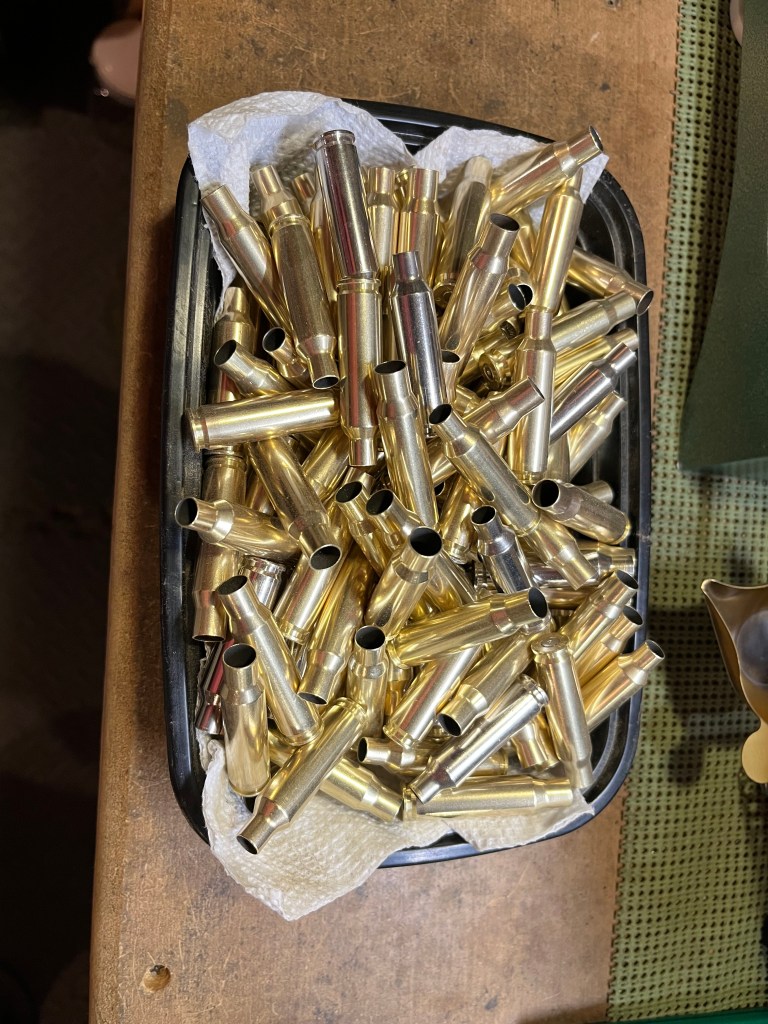
Approximately 150 freshly tumbled cases, once-fired .308 brass, with a few 6.5 Creeds in the mix. And my buds are using the good stuff- Federal Gold Match! Single digit Standard Deviation and Extreme Spread. But as our mentor says, “Yeah. Good practice ammo.