

Cats, Guns, and more. What’s not to love?

Of course it will be the omnipresent Nine Millimeter! AKA 9 mm Parabellum and 9 mm NATO.

Designed by Georg Luger in 1901, it’s been around a long time and has steadily improved as powder and bullet design modernized.
It would be virtually impossible to list the names of all the 9 mm handguns currently in production. Most every manufacturer builds the 9. The interwebs tell me that about 60% of US police forces use the 9 as their standard issue handgun. All branches of the US military carry it. It comes in many sizes and flavors.
So how does the advanced beginner choose one? Try them out. Figure what size fits your hand and allows you to manipulate all of the controls without changing your grip. When you find a few that fit, go shoot them. Many ranges and gun stores will rent guns. If you belong to a range, ask around and see if any members give instruction or will just let you shoot with them – you’ll be surprised at the number of offers you get.
So, Mr. KatNapFever blogger, any suggestions? Why, yes!
Start off with another Germanic designer, Herr Gaston Glock. Glocks in 9 mm are some of the simplest, most reliable designs around. The full sized Glock 17 started it all off:

I find, however, that the compact version, the Glock 19, fits my hands better and can be carried concealed more easily:

Some people love Glocks, some don’t. For the latter, there are lots of alternatives – Smith & Wesson, Colt, Beretta, Taurus, CZ, etc. I guarantee you will find one or more you like.
Now what do you think this was all about?
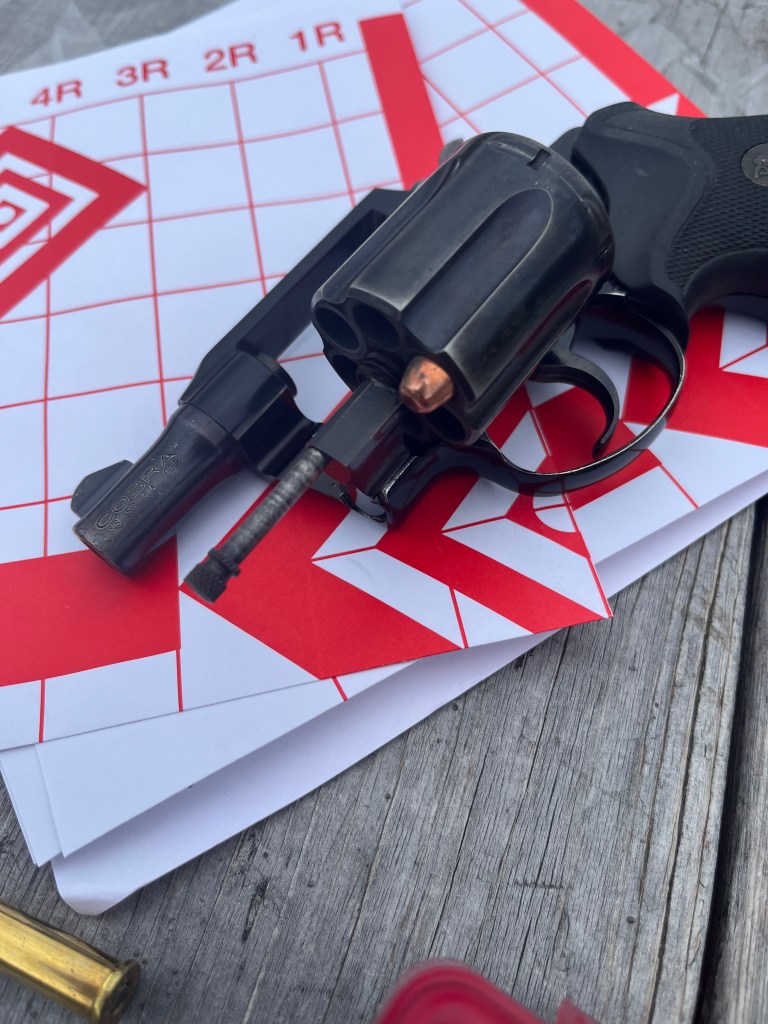
More clues.
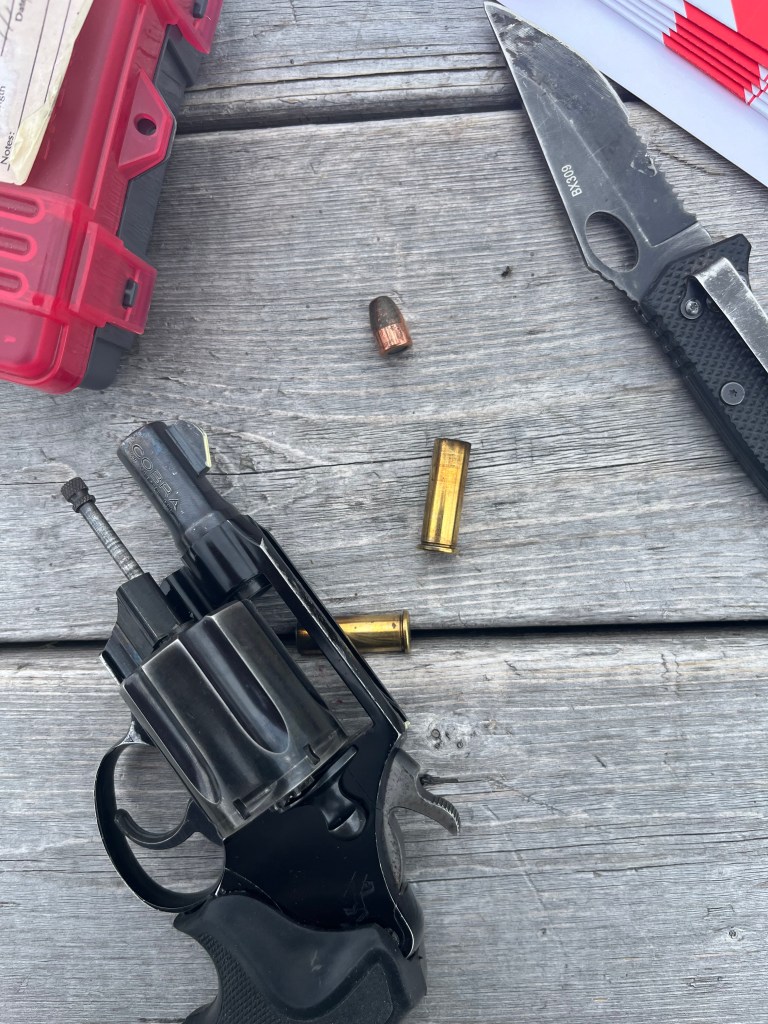
I had not shot .38 Spl in a while. I grabbed the big ole box of UMC and assumed that I was firing all factory ammo. When I looked at the spent rounds, though, the primers were different colors. I suspect that I had topped off one of the factory boxes with some hand loads.
I told you that snubbies are snappy, right? Evidently the recoil from one round was sufficient to unseat a (poorly) seated bullet enough that it partially launched forward. You can see the powder burn on the side of the bullet closest to the forcing cone’s blast. And those are just scrape marks on the side of the bullet, not rifling marks.
And apropos of nothing, did you know that Colt and S&W have opposite revolving cylinders? And that the cylinder latches release in the opposite direction?
And who cares? Well, if you want your hammer cocking to advance the cylinder to a particular bullet, you’ll need to know what direction it revolves. Try it at the range – you’ll see what I mean. The reason I knew I had a malfunction was that the cylinder would not rotate into position. For an obvious reason, once I looked.
Next, midrange calibers for semi-auto new(er) shooters.
Ok, sekrit mission over (plus a couple of lazy days).
When last we visited our (no longer) Beginner and Boomsticks, we were looking at intermediate handgun calibers. Brief aside:

This is the old S&W Model 10 knockoff I’ve been shooting. Isn’t that a beautiful holster? It was a Christmas gift from my BIL some 50 years ago. BUT, before he could buy it (in the People’s Democratic Republic of New Yorkistan), he had to give them the serial number of the gun (at that time in Fort Campbell, Kentucky). RYFKM?
I think we left it on a remonstration that you should not have your sweetie get a snubbie in .38 Special, even though it would fit in her purse nicely. Let’s tale a look.
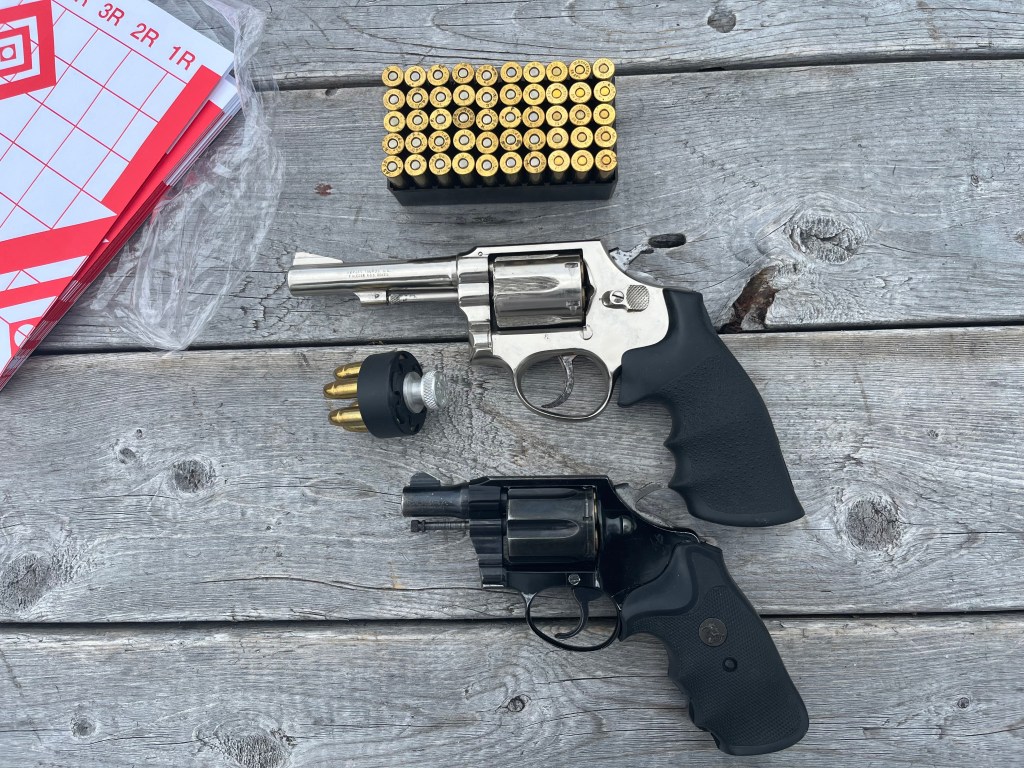
The lower is a Colt snake gun (Cobra? I’m feeling lazy), with a 2” barrel. The original tiny wooden grips have been replaced with Hougues. It shoots the same .38 Special round. But compared to the larger, heavier gun, it is way more snappy. And accuracy suffers.

Snubbie on the right. Even in my Trump-like beautiful hands, it is not particularly comfortable to shoot. And, it has a really small sight radius (distance from front to rear sight), making accuracy difficult. Why burden your sweetie with all the negatives just so it will fit in her purse? You want her to enjoy shooting so she will practice and get competent.
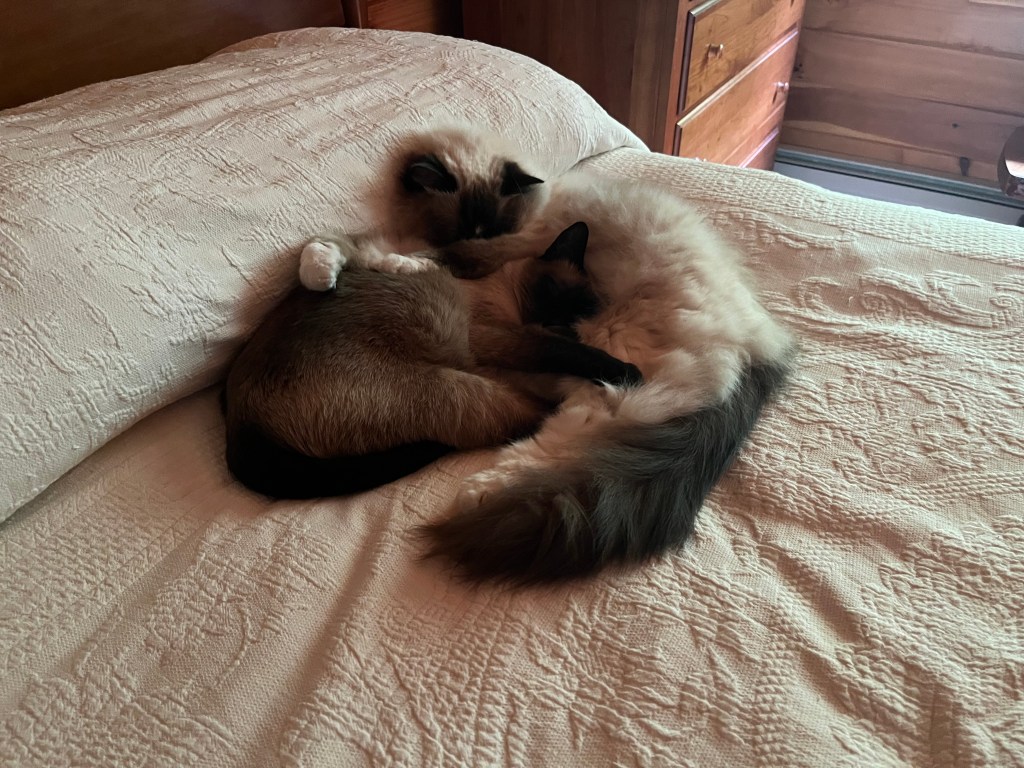
Y’all are just going to have to chill. Like these two:
By now, our aspiring Bangstick Beginner has expended numerous rounds through .22 rifles, pistols, and revolvers. They may have dabbled in shotguns (against previous advice). What is the next step?
Let’s get back to handguns. What is a good progression from .22 in a revolver? How about .38 Special? This is a S&W Model 10 Air Crew revolver knockoff by Taurus. It, too, was purchased just off Ft. Campbell grounds about a half century ago. It came in blued and chromed.
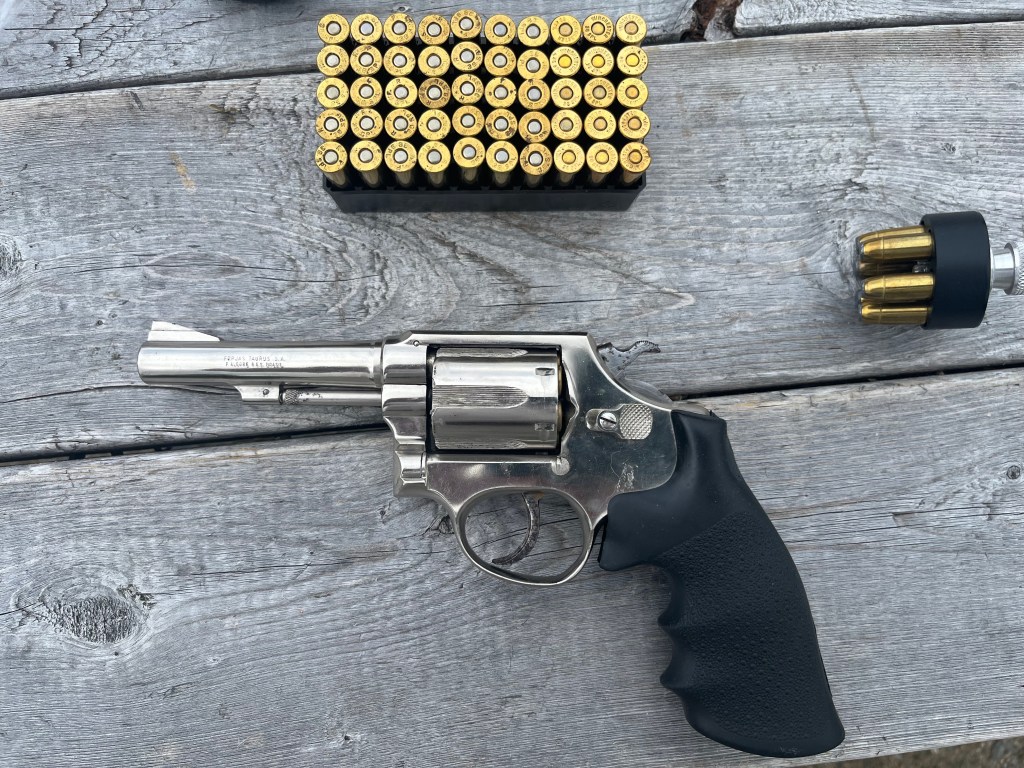
I replaced the original skinny wooden grips with Hogue grips ages ago. They give a much firmer and hand-rounded grip when firing. Nonetheless, this has always shot a bit left of target. I compensated automatically.
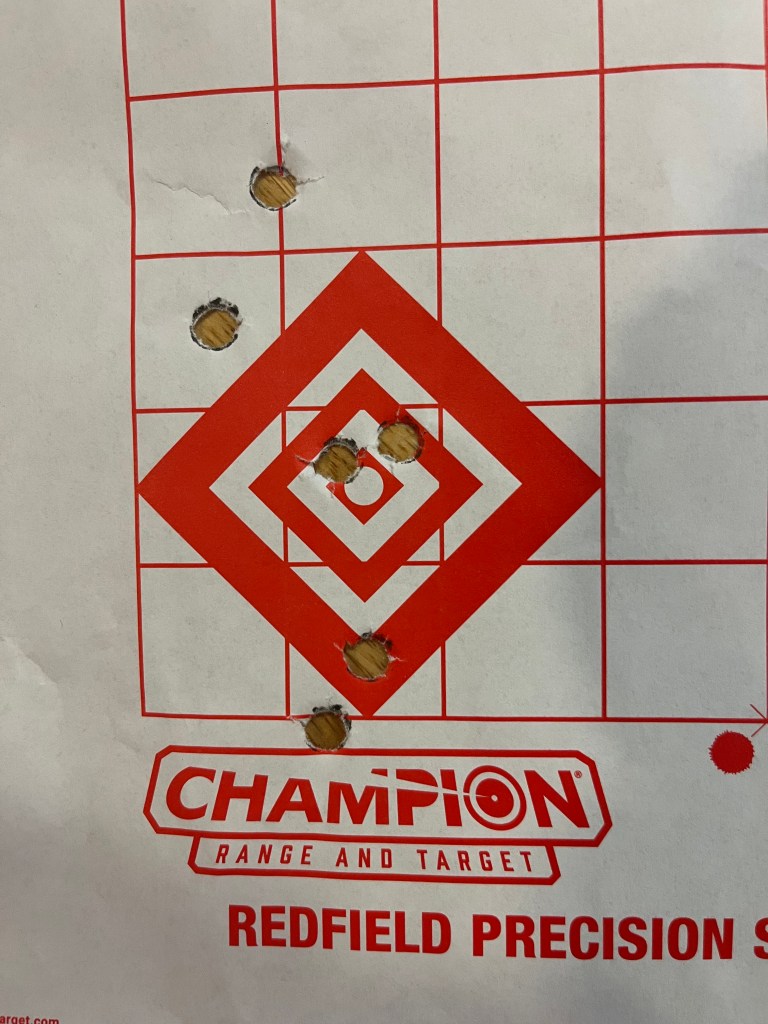
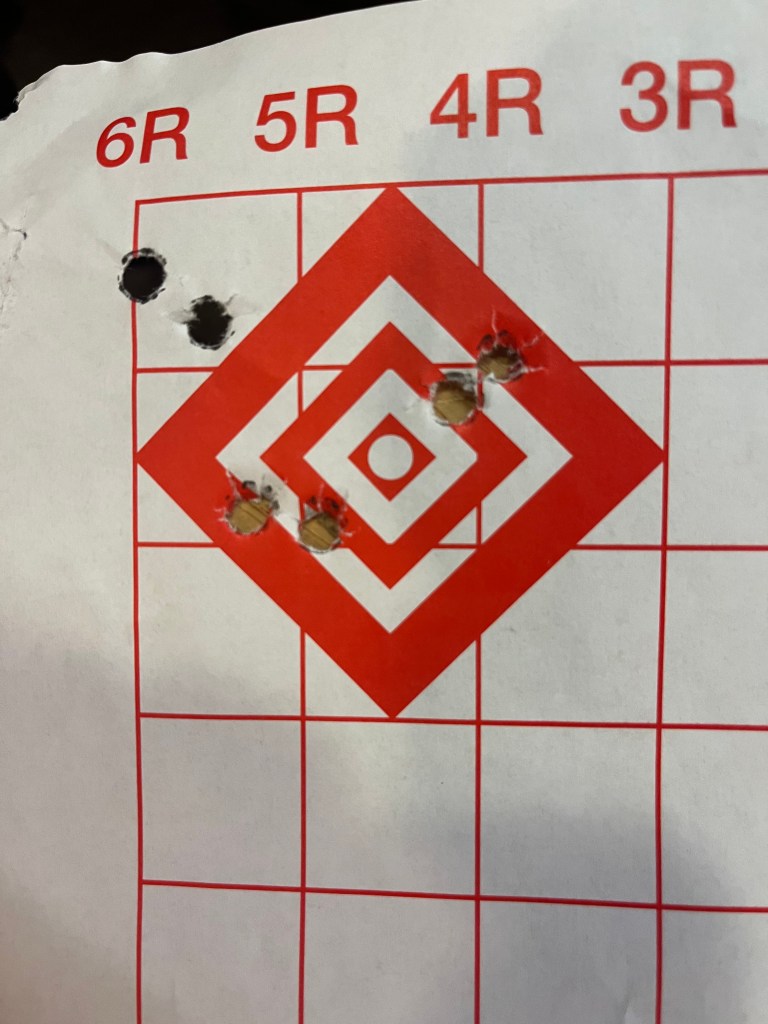
Warm-up shots. Let’s see if I can do better.
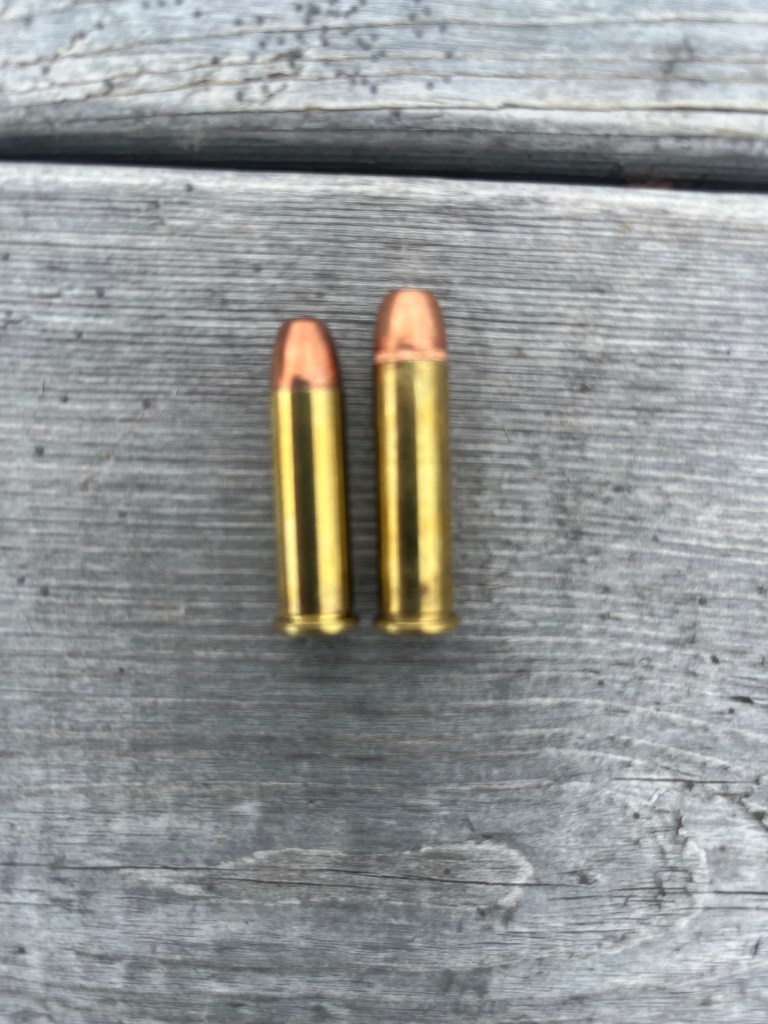
.38 Special is a mild recoiling round, and was a police standard for ages. A new shooter might want this as an intermediate step before going on in size. Such as .357 Magnum. Why the big leap? Well, .38s fire in .357 just fine. You can have an awesome defensive revolver in .357, but shoot .38s in it for practice. Note the difference in size. The .357 is an eighth of an inch larger and will not fully seat in a .38. Great safety factor.

Tomorrow we will discuss why you do not get your new shooter a .38 “snubbie”. No.
Bad juju!
I’m not quite sure, I haven’t thought this through completely. There’s a bit of a gap between the next firearm(s) and an AR – 15. 😇
But we are back to rifles in the next step of Bangsticks for Beginners. There was a time in the past when I was between military and adult child when I wanted to get back into shooting. Existing guns were coming out of child-induced lockdown. I got an invitation to go shoot wild boar/feral hogs in Texas. What to use? I certainly couldn’t break out .22s.
I started a discussion with a fellow at Kittery Trading Post in Freeport, Maine. You know, L.L. Bean land. I had settled on a Ruger Mini 30 shooting an AK 47 round. He said, “Nope, that’s crap for what you want. What about something in .243 Winchester?” Bingo.

OK, another stock photo. So, sue me. But here we have a classic round, a barn-burner cranking along at about 3,000 fps. Magazine fed (and yes, there are 10 round mags available), and accurate out to over 300 yards. Mine did a head shot on a large boar at over 240.
It’s a necked-down .308 (meaning lots of powder capacity), harder hitting than .223, but light recoil. I sort of lucked into it as an intermediate rifle. I have now completely shot out the barrel (and the rifle isn’t made anymore), but anything in .243 is likely to be a good step up for our Beginner (but steadily advancing) shooter.
Oh, yeah, shotguns and beginning shooters. Clearly, you don’t expose them to shot guns until they have shot a lot of Bangsticks, and are used to noise, blast and recoil. Then, when they have some shooting time under their belt, you don’t start off with 12 gauge.
Remember my boltie shotgun? It came from Montgomery Ward (“Monkey Ward” – remember?”, and was made by Western Field.

A Model 172A C-Lect-Choke, and chambered both 2 3/4” and 3” shells. It was a right all-purpose shotgun. Except:

See that brass pin through the neck of the stock? That was a later design change. The gun recoiled so much that the neck would crack. After several years of shooting, mine cracked and got sent off to Monkey Ward; the above is the replacement.
Point being that 12 gauge is not for beginners. Remember that as the gauge number goes up, the barrel diameter gets smaller. It goes 10 gauge (a true Punt Gun – I don’t think they’re made anymore), 12, 16 (also getting rare), 20, 28 and .410. A beginner could start out at .410 (some are made to shoot .45 Colt as well – a multi-use gun), but I think probably a 20 gauge would be a good place to start. Not a bolt gun cuz they are rarely made nowadays, but a pump. The pump is a different style of repeater that we have not mentioned before. I may have brought it up with .22 rifles. There are several very popular ones like Marlin (now recently resurrected by Ruger – yay).
My personal favorite would be the Remington 870. It’s been around forever, functions well, has a great reputation, you can swap out longer and shorter barrels.
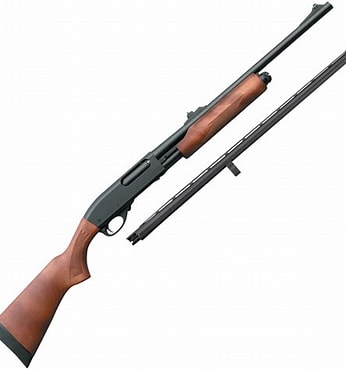
Yeah, that’s a stock photo. Mine has been kidnapped by Jr., and I’m too lazy right now to go break into his safe. But in a manageable gauge like 20, this is a good one to start them shooting trap, skeet, etc. Yup, it’s a Bangstick for an Advanced Beginner.
Me, too!
 KatNap Fever!