
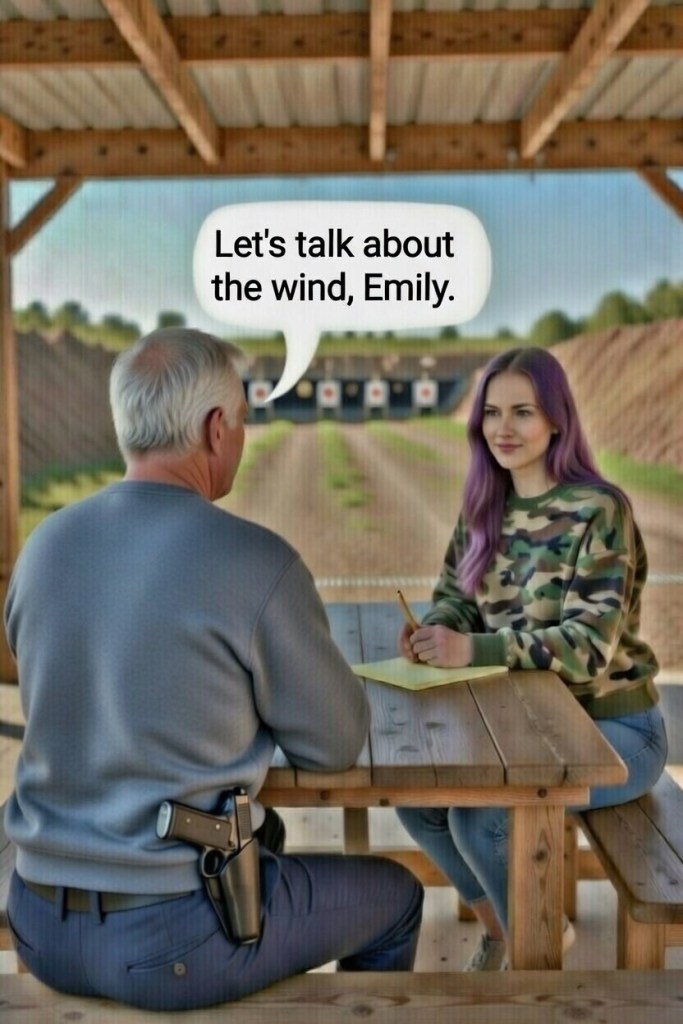
First, all of the shooting that we have been doing is focused on removing as many variables as possible. We try to keep everything the same and repeatable – stance, grip, trigger pull, sight picture and more. The same ammo, adjustments for Density Altitude. We know the exact muzzle velocity of the round. We know the elevation we need to dial in to get a specific range.
BUT, the one variable we cannot control is the wind. And it changes every second. It can be head on or from behind. It can be various angles of crosswind, And it can be various strengths. What that means is that we are going have to, at the very last second or two, adjust our aim point to account for this additional vector. Luckily, some very smart people have come before us.
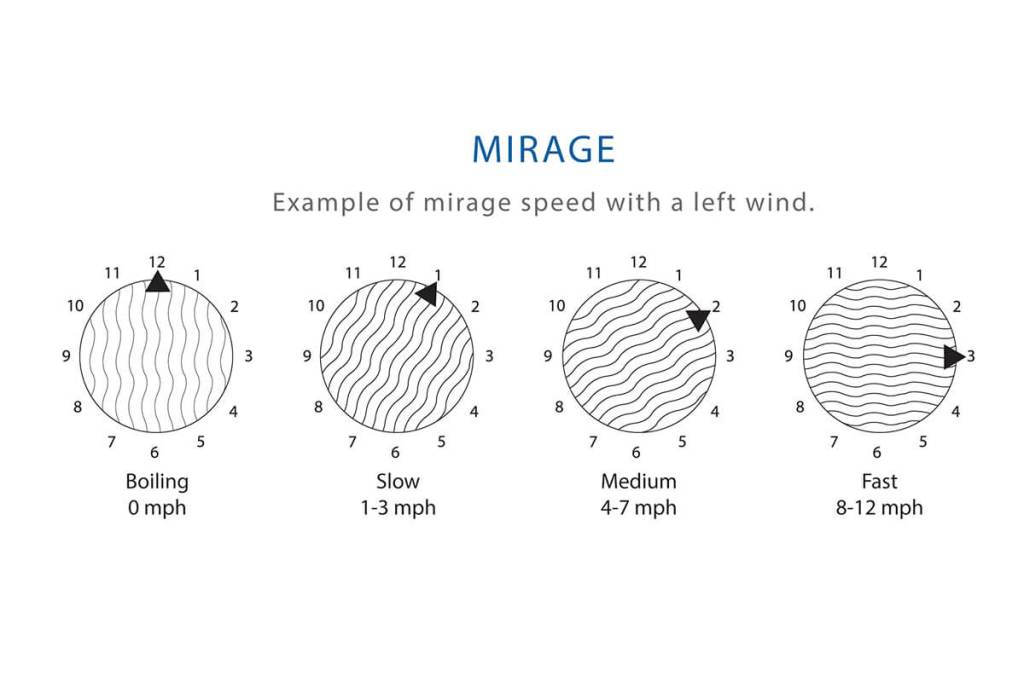
This particular diagram shows how the air moves in various wind conditions. Believe it or not, your scope (and your spotter’s scope) will show warm air currents rising. This is called “mirage” and is an excellent way to predict the wind’s effect.
You can also look at dust, smoke, flags, branches, grass and so on to read the wind,
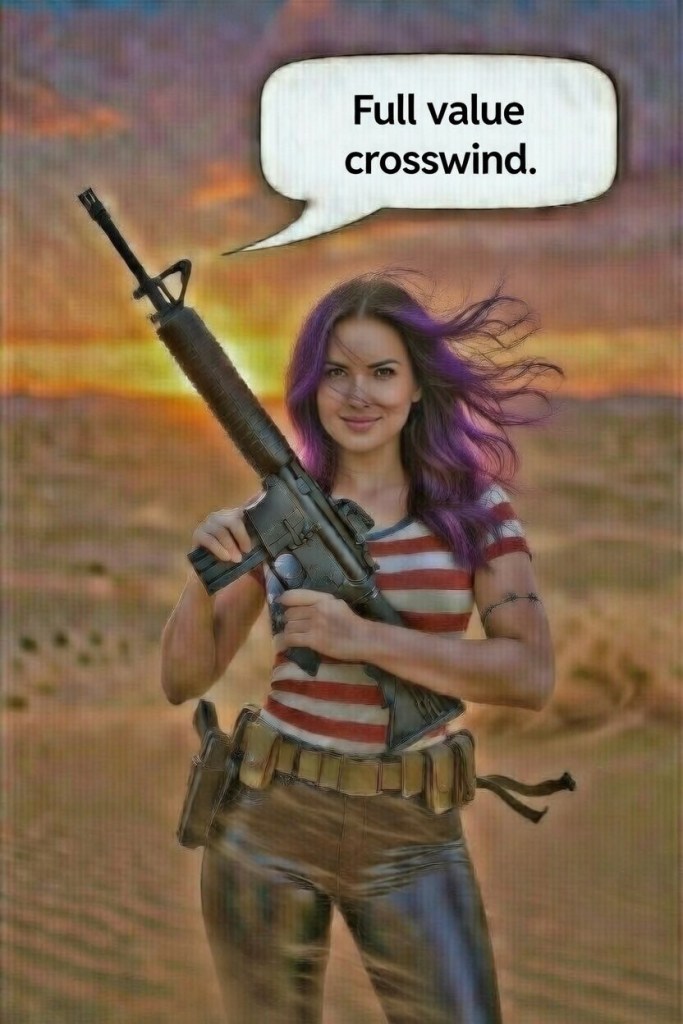
Hah! Yes, but only where you are, not out at the target.
We also just introduced a new player – your “spotter”. Sure, you can try to spot your shots yourself, but I’ve wasted hundreds of rounds doing so. The shooter should be concentrating on the mechanics of the shot. The spotter will have a wider angle of view, will be giving you the wind correction, and is more likely to see the “trace” of the bullet as it moves through the air (yes, if you are immediately behind the shooter and the atmospheric conditions are right, you can literally see the air being disturbed as the bullet passes through it). The spotter will use that view to see where the bullet is headed, and hopefully see/hear it hit the target, or make a splash in the dirt around it.
With this information, the spotter will instruct the shooter – “Come up one MOA and right two MOA.” The shooter can then shoot offset on his crosshairs, or manually dial in the correction on the scope. After another shot, there will be a hit or another correction.
In the real world of precision shooting, the spotter is the more experienced of the two, because he has more experience calling the wind and the shot.
We’ll talk about wind values in a bit.

 KatNap Fever!