

When last we visited Emily, she had shown us how to load and make safe her AR 15. Now, she is ready to shoot.
But how do you aim? How do you hit what you are aiming at?
Great questions! First, you aim using sights, that sounds simple. But nooo. There are as many sights as there are AR variants. So, let’s start with the basics – “iron sights”. That really means “not optical” sights. They are mechanical and are made of steel, aluminum or plastic. They can look like this, front and rear:
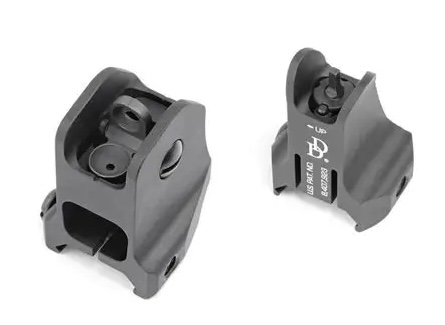
And you look through them like this:

Simple, right?

Here, you can see Emily aiming off to the right of the target with the early “carrying handle” and fixed front sight of the original M16 and AR 15.


Precisely because they are simple. No batteries, no fragile optics, and they are hard to damage. They are good out to several hundred yards (depending on your eyes). If you are looking at an AR 15 for general self defense, you can sight in iron sights so that they are zeroed at 25 and 300 meters, and the bullet will only rise a few inches in between. That means you can aim at the center of mass of any target within that range and you will ballistically be guaranteed of a hit.
That is why you will see most AR platforms with BUS – Back Up Sights – in addition to optics, red dots, thermals, etc. When all else fails, you can fall back to the simple solution.
These are the targets that the US military sets out at 25 meters (just over 27 yards). By shooting at these close up targets, you can make the required adjustments to the front and rear sights to zero the rifle to the center of the target.
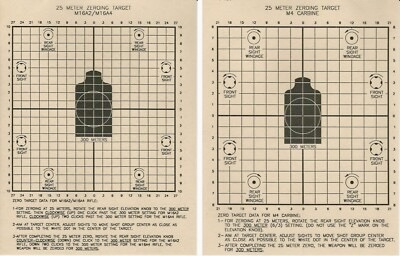
Uncle Sam has made it extremely easy for Pvt. Snuffy to follow these directions. Once zeroed, it will hit the center of the target at both 25 and 300 meters. That’s because the bullet trajectory looks like this:
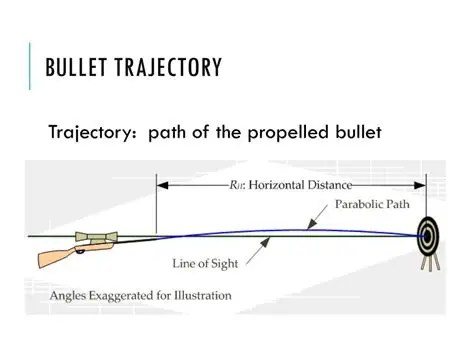
You can see that the first vertical line is at 25 meters where the bullet climbs through the line of sight, continues climbing and then descends through the line of sight at 300 meters.


 KatNap Fever!