
This is about what a load of rifle powder should look like.

Well, “powder” is a misnomer. They actually are little cylindrical grains. Here’s one:
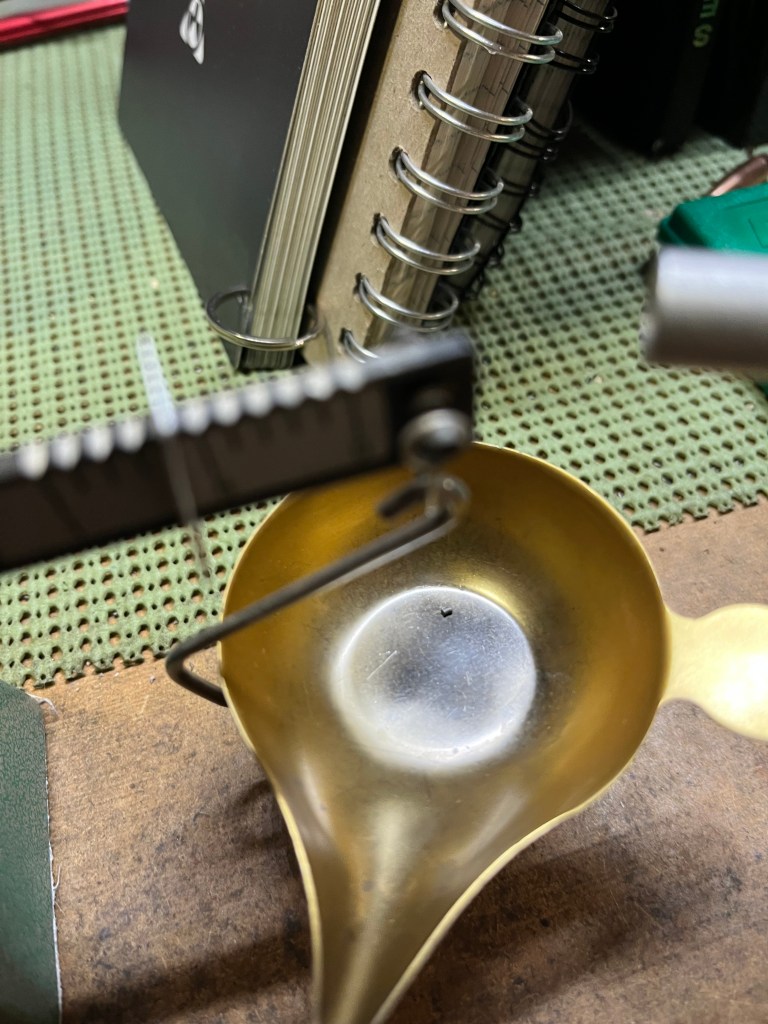
Now, serious reloaders trickle the last few of these into a case to make them all weigh the same. You measure your success with a chrono that tells you your muzzle velocity average, the standard deviation, and the extreme spread of muzzle velocity – fastest and slowest.
Standard deviation in the single digits and extreme spread in the teens is the Holy Grail – your rounds are very close to being identical.
I’ve loaded thousands of rounds and, as I trickle the last grain or two, I’ve often wondered what the difference a single grain could make. OK, yeah, very geeky.
Warning, simple math coming up.
I set my balance beam on one tenth of a Grain of powder (note weight unit versus description of a “grain” of powder). For Accurate 4350, a tenth of a Grain consists of 4 or 5 grains of powder. My best load for 120 g. 6.5 is 43.8 Grains, or 438 one tenth Grains. Multiplying that by 5 and 6 grains per tenth of a Grain gives 2190 and 2428 grains of powder per load. Dividing muzzle velocity of 2750 fps by the number of grains in a load gives 1.256 and 1.132 fps. So, every grain of powder contributes something over 1 feet per second.
Not much, huh? Ever hear of tolerance stacking? Remember, there are many other variables, such as bullet weight, case capacity, neck tension and primer capability, just as a few examples. When all those other tolerances are stacked up, that’s when you see standard deviation and extreme spread start to build.
Boy, that was geeky.

 KatNap Fever!